ANKARA, Turkey (AP) — A cycling-enthusiast governor rode into an unexpected political storm in Turkey when he found himself sacked after photos of him in snug cycling shorts went viral. He has since also become the center of a campaign pressing for his return to office amid an outpouring of affection.
Mehmet Fatih Cicekli, the governor of Ardahan province in eastern Turkey, was removed from his post on July 17 by a presidential decree signed by President Recep Tayyip Erdogan. While no reason was given for his dismissal, it came after some Turkish politicians criticized him for wearing cycling tights during a public event promoting the sport and for posting the photos on social media.
Inan Akgun Alp, a member of the main opposition Republican People’s Party, accused Cicekli of allegedly prioritizing social media over official duties, adding the tight attire was inappropriate for a governor.
“He goes around in tights, spends all day cycling, with bodyguards in front of him, cycling in tights until the evening,” the T-24 news website quoted Alp as saying during a parliamentary debate last week. “A governor cannot wander around the city center like this.”
Samil Tayyar, a former legislator from Erdogan’s ruling party, which has roots in Turkey’s Islamic movement, said the attire was contrary to cultural norms, especially in a conservative, traditional province like Ardahan. He argued that other politicians wore sweatpants while cycling.
“People can wear whatever they want in their private lives, but a governor cannot visit the public in tights while on duty; it does not align with the seriousness of the state. In a traditional social setting like Ardahan, it is completely unacceptable,” Tayyar wrote on X.
Cicekli, who was appointed governor in January by Erdogan, defended himself by arguing that what he wore was normal cycling attire.
“(We will) keep pedaling. I am an athlete who practices sailing, rowing and cycling. The clothes I’m wearing are sportswear,” T-24 quoted him as saying.
A petition campaign to try and get him reinstated has gathered more than 10,000 signatures, with supporters arguing that the governor was engaged in important work in Ardahan, promoting sports, youth activities and bicycle tourism, the opposition-leaning Halk TV reported.
In an emotional farewell to his supporters in Ardahan on Wednesday, Cicekli said: “I believe that I have not let down those who vouched for me and stood by me throughout my journey until now. I believe that this is the greatest honor of all.”
As he left Ardahan, a province that borders both Armenia and Georgia, local cyclists accompanied his vehicle to send him off as a show of support, Halk TV reported.
Nacho Sánchez Amor, a member of the European Parliament from Spain who serves as the rapporteur on Turkey, expressed support for Cicekli and suggested Alp was promoting the ruling party’s “Islamist conservative agenda.”
__
Associated Press reporter Ayse Wieting in Istanbul contributed to this report.

Governor of Ardahan province Mehmet Fatih Cicekli, left, takes part in a popular cycle tour to promote tourism, in Ardahan, eastern Turkey, Sunday, April 26, 2026. (Halil Ibrahim Ataman/IHA via AP)
The average long-term U.S. mortgage rate climbed this week to its highest level in nearly 12 months, pushing up borrowing costs for prospective homebuyers at a time when rising oil prices are already squeezing household budgets.
The benchmark 30-year fixed rate mortgage rate rose to 6.58% from 6.55% last week, mortgage buyer Freddie Mac said Thursday. One year ago, the average rate was 6.74%.
The rate has ticked higher three weeks in a row. Higher mortgage rates can add hundreds of dollars a month in costs for borrowers, limiting homebuyers’ purchasing power. As rates rise, that can lead prospective home shoppers to delay buying a home, one reason U.S. home sales have been sluggish this year.
Borrowing costs on 15-year fixed-rate mortgages, often sought by borrowers refinancing a home loan, also rose this week. That average rate increased to 5.96% from 5.93% last week. A year ago, it was at 5.87%, Freddie Mac said.
Mortgage rates are influenced by several factors, from the Federal Reserve’s interest rate policy decisions to bond market investors’ expectations for the economy and inflation. They generally follow the trajectory of the 10-year Treasury yield, which lenders use as a guide to pricing home loans.
Rates have been mostly rising this year as the conflict in Iran has driven crude oil prices sharply higher, stoking expectations of hotter inflation. That’s pushed up long-term bond yields relative to where they were before the conflict began in late February, causing mortgage rates to trend higher.
The 10-year Treasury yield was 4.7% at midday Thursday on the bond market, up from 4.57% a week ago. It was just 3.97% in late February, before the war broke out.
Rising oil prices as violence escalates in Iran are threatening to worsen inflation, just as it had begun to decelerate by more than economists expected. That in turn could push the Federal Reserve to raise interest rates.
The central bank doesn’t set mortgage rates, but its decisions to raise or lower its short-term rate are watched closely by bond investors and can ultimately affect the yield on 10-year Treasurys.
The average rate on a 30-year mortgage is now the highest it’s been since Aug. 21, when it was at 6.58%. As recently as late February, the average rate dropped slightly below 6% for the first time since late 2022.
While average long-term mortgage rates remain lower than they were at this time last year, their upward trajectory has weighed on home sales this year. While seasonally adjusted sales of previously occupied U.S. homes were up 0.7% from January to June compared to the same period last year, they're still hovering close to a 4-million annual pace far short of the historic norm that is closer to 5.2-million.
The trend has extended the national housing market slump that began in 2022, when mortgage rates began to climb from pandemic-era lows. Sales of previously occupied U.S. homes were essentially flat last year, stuck at a 30-year low.
As mortgage rates remain elevated, that will mean a slower summer housing market, said Lisa Sturtevant, chief economist at Bright MLS.
“It’s not just about rates for homebuyers, but rather the full financial picture of buying,” she said. “Home prices hit record highs this summer in many markets across the U.S. while higher gas prices and concerns about overall inflation rising have created more financial strain for would-be buyers.”
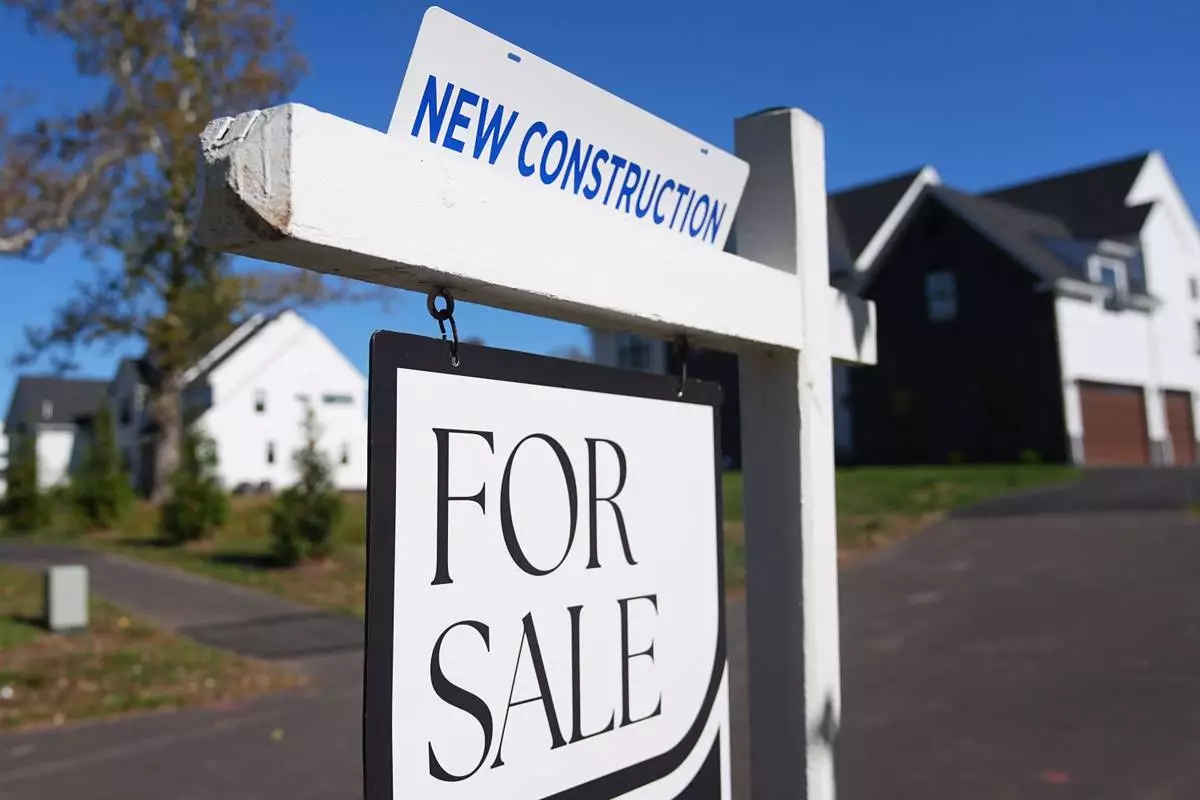
FILE - A sign is posted for a new home for sale in Ambler, Pa., Oct. 16, 2025. (AP Photo/Matt Rourke, File)