President Donald Trump on Thursday said an agreement being reached with Saudi Arabia for a civilian nuclear program requires the kingdom to normalize relations with Israel through the Abraham Accords. In a post on social media, the Republican president said the deal doesn’t allow for enrichment of uranium. Nonproliferation experts have raised concerns that the deal fails to include guardrails to prevent enrichment of uranium to weapons-grade levels.
Meanwhile, two shootings in Maine and Houston over the span of a week have led to fierce criticism that there’s not enough oversight of Immigration and Customs Enforcement. At least 10 people have died in encounters with immigration agents since Trump launched the crackdown after retaking office, and in the Maine shooting, family members of the officer who opened fire say he had a history of violent behavior and never should have been given a badge and gun.
Here's the latest:
The Houthis’ SABA news agency said the rebels had struck two tankers, the Encelia and the Layla, in the Red Sea, leading to fires on both. There were no reports of casualties.
It was their first reported attack on a vessel since they announced a blockade of Saudi-linked shipping through the Bab el-Mandeb Strait earlier this week in retaliation for the kingdom’s blockade on Yemen and a recent attack on the international airport in Yemen’s rebel-held capital, Sanaa.
Bab el-Mandeb, at the southern tip of the Arabian Peninsula, is a vital shipping chokepoint connecting the Red Sea to the Gulf of Aden. Around 12% of the world’s trade, including a fourth of global container traffic, passes through there.
The Houthi attacks put at risk oil shipments from Saudi Arabia’s Yanbu port on the Red Sea and present a “double whammy” on top of the disruption in the Strait of Hormuz, said maritime data and analysis firm Lloyd’s List Intelligence.
Brent crude oil briefly topped $100 a barrel for the first time since May as increased fighting in the Middle East threatens to slow the global flow of crude.
Wall Street, meanwhile, is sinking early Thursday with sharp drops for two of its most influential stocks, Alphabet and Tesla.
The S&P 500 dropped 1.1% in early trading. The Dow Jones Industrial Average pulled back 415 points, and the Nasdaq composite lost 1.7%.
Stocks sank under the pressure of rising oil prices, which raise costs for many businesses and divert their customers’ dollars away to pay higher prices for fuel.
▶ Read more
It could allow for the building of a uranium enrichment facility in Saudi Arabia following a joint U.S.-Saudi study, according to a person familiar with the matter who was not authorized to comment publicly and spoke on the condition of anonymity.
The agreement is expected to be submitted to Congress for review, according to the U.S. and Saudi governments.
The agreement doesn’t include the International Atomic Energy Agency’s Additional Protocol, which would allow for more monitoring, inspections and verification, according to a second person familiar with the decision.
— Collin Binkley and Aamer Madhani
A key Republican lawmaker says he believes special counsel Jack Smith may have lied to Congress while testifying about his investigation of Trump and the Justice Department should consider prosecuting him. Lawyers for Smith deny the allegation and say he testified truthfully.
Rep. Jim Jordan of Ohio, the chairman of the House Judiciary Committee, referred Smith to the Justice Department on allegations he made false statements during closed-door testimony about whether he had obtained records of lawmakers while investigating Trump’s efforts to overturn his 2020 presidential election loss.
The referral, sent Wednesday, centers on a December 2025 exchange in which Smith was asked about subpoenas that prosecutors had issued for the toll records of some Republican lawmakers as part of the investigation. Toll records show the time, date, length of call and phone numbers involved but do not reveal the content of the communication.
▶ Read more
President Trump says he is “very disappointed” in Yemen’s Houthis and has threatened “major military punishment” against the Iran-backed rebels if their attacks on ships continue.
The president said on social media Thursday that “if they do this again, the U.S. will hold Iran responsible, in that the Houthis are a Surrogate and/or Proxy of Iran, and major military punishment will be inflicted upon Iran and, of course, the Houthis, themselves.”
Trump said the Houthis had previously been acting “very responsibly” after facing U.S. strikes last year in response to rebel attacks on commercial vessels. “Unfortunately, now they are starting up again, shooting at two Saudi Arabian ships last night,” he said.
▶ Read more
There’s a place for exiled opposition leader María Corina Machado in Venezuela’s future government if that’s what the people want, the U.S. secretary of state said.
Rubio noted that a lot of work is needed to create the conditions for an election following the U.S. raid that ousted leader Nicolás Maduro in January, including security on the streets, creating an electoral council to accurately count the votes, a free press and more.
“There’s a lot of change to happen,” Rubio told reporters. What it “requires is patience, persistence. We have to stay on top of it, because these transitions do take some time. They don’t need to take a decade or even five or seven years, but they take more than a few weeks.”
As acting President Delcy Rodríguez’s government and members of the opposition-controlled 2015 National Assembly, which the U.S. earlier recognized, head into a reconciliation process, Rubio said the U.S. is “there to facilitate it, not to dictate it.”
The Trump administration is poised to help end the “senseless war” in Ukraine but Rubio acknowledged there’s no quick path to a deal.
After holding talks in Manila with his Russian counterpart, Sergey Lavrov, Rubio told reporters that diplomacy will require sustained effort and new ideas.
Rubio alluded to how U.S.-mediated talks have stalled, calling them “unsuccessful or at least unfruitful” in the past but insisted that President Trump was committed to the work “if conditions and factors have changed to make that possible.”
“That’s been the challenge — an end that both sides can accept. And we’ve tried and we’ll continue to try to see if we can, you know, find a middle ground that brings this about. And we’re prepared to play that role if the opportunity presents itself,” Rubio said.
“The price will continue to get higher every single night until they come to their senses,” U.S. Secretary of State Marco Rubio told reporters while traveling in the Philippines.
He insisted Iran is “begging” for a deal but Trump “doesn’t see a lot of utility in responding to their overtures at this point, because, frankly, Iran is clearly not ready to make a deal, at least not one they’re willing to to live by.”
A day earlier. he said the U.S. was open to diplomacy.
Trump on Wednesday warned Iran that the U.S. will destroy one Iranian bridge or power plant each time Iran shoots at a ship in the Strait of Hormuz. Iranian Foreign Minister Abbas Araghchi responded by saying the country’s defense doctrine was an “eye for an eye.”
“The president’s policy is a head for an eye,” Rubio said. “They will pay a very heavy price for the things they’re doing.”
In a post on social media, the Republican president said the deal doesn’t allow for enrichment of uranium. Nonproliferation experts have raised concerns that the deal fails to include guardrails to prevent enrichment of uranium to weapons-grade levels.
Trump’s post said the agreement “will be approved, but is totally subject to Saudi Arabia joining the very respected and successful Abraham Accords.” He added that “The United States is not opposed to Civil (Non-Enriched) Nuclear Facilities.”
Trump has sought to build on the 2020 agreements, which expanded the number of Arab states with diplomatic ties with Israel.
▶ Read more
The House adopted a Republican-only $95 billion budget proposal Wednesday, a long-shot effort to fund the Iran war and other White House priorities over objections from Democrats and a few GOP holdouts in a final push before the midterm elections.
House Republicans were divided over the plan, with conservatives wary because there are no offsetting budget cuts. But Speaker Mike Johnson plunged ahead, viewing the go-it-alone process as the best chance to usher Trump’s priorities through the split Congress, despite skepticism in the Senate.
The vote tally was 216-214, with two Republicans and one independent joining Democrats in opposition.
Democrats argued the money should be spent at home, particularly on efforts to lower costs for Americans.
Congress is at a standstill over the U.S. war against Iran — unable to stop Trump’s military strikes, but not having authorized the use of American military force — and politically torn over having to provide billions of taxpayer dollars to pay for it. Most Americans disapprove of Trump’s Iran strategy, according to a recent AP-NORC poll.
▶ Read more
One Immigration and Customs Enforcement officer has been referred for discipline over a use-of-force incident since the beginning of the Trump administration, said Democratic members of the House Homeland Security Committee after a briefing with ICE officials Wednesday about body cameras, vehicle stops and training.
The closed-door briefing for committee members comes in the wake of two shootings in which ICE officers shot and killed two immigrants they were trying to arrest, raising concerns over the agency’s tactics at a time that it's ratcheting up its arrests.
The shootings in Maine and Houston over the span of a week have led to fierce criticism that there’s not enough oversight of the agency key to President Donald Trump’s mass deportation agenda. At least 10 people have died in encounters with immigration agents since Trump launched the crackdown after retaking office, and in the Maine shooting, family members of the ICE officer who opened fire say he had a history of violent behavior and never should have been given a badge and gun.
▶ Read more
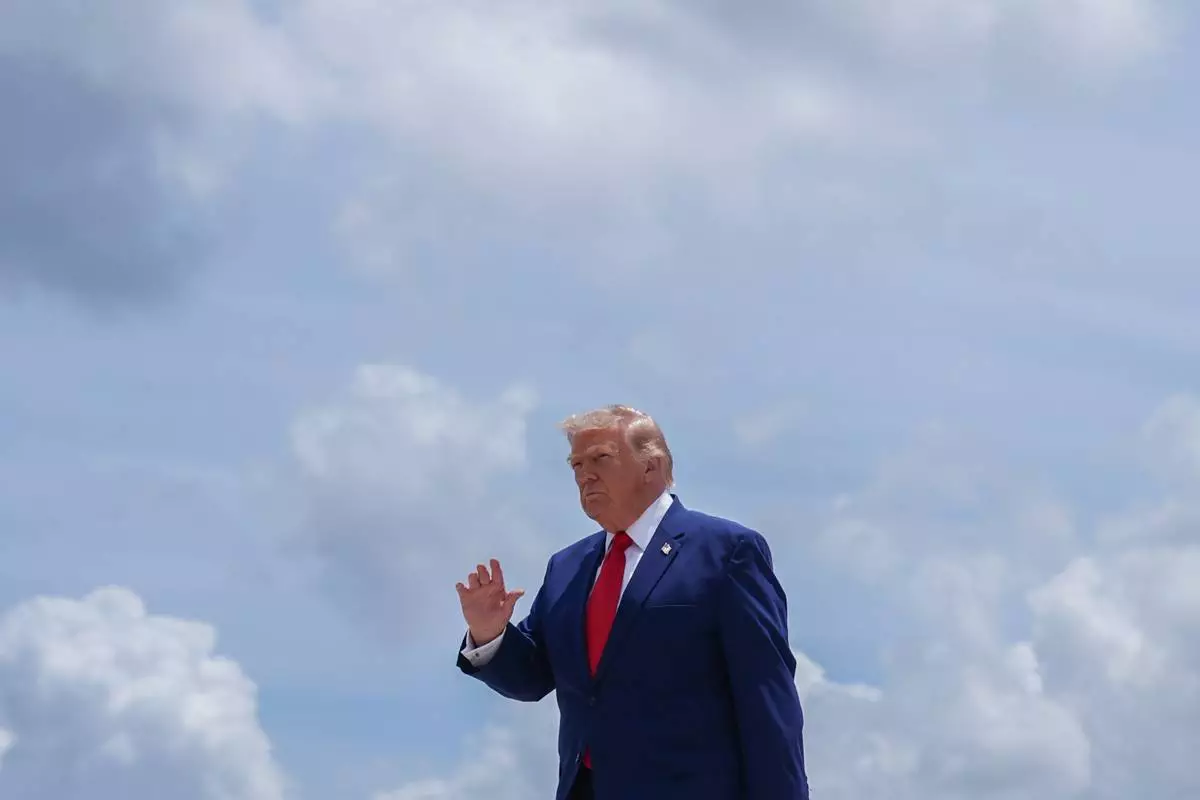
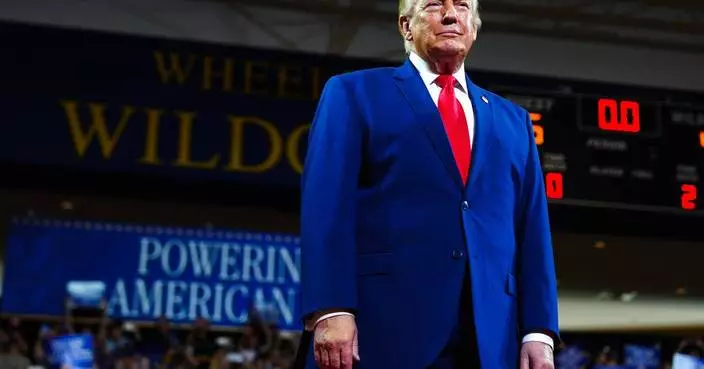
President Donald Trump waves to reporters after arriving on Air Force One at Dobbins Air Reserve Base, Wednesday, July 22, 2026, in Marietta, Ga. (AP Photo/Julia Demaree Nikhinson)
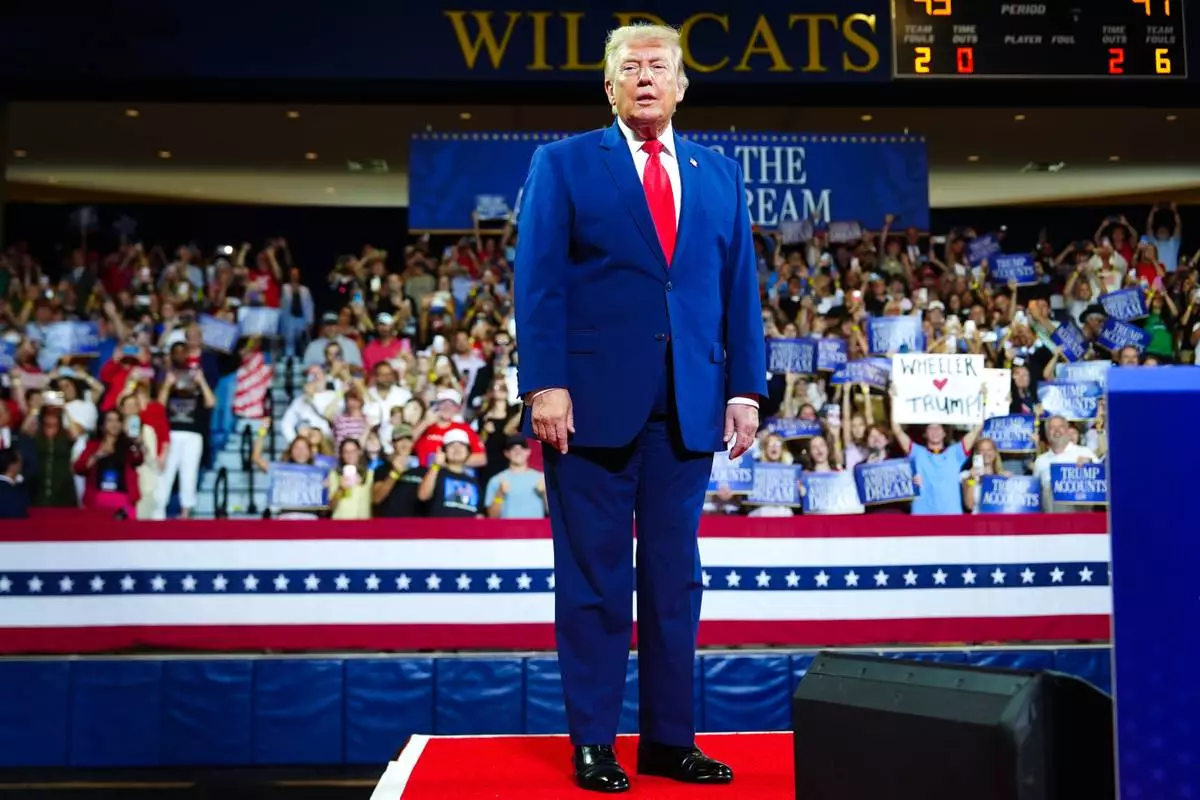
President Donald Trump arrives to speak at Wheeler High School, Wednesday, July 22, 2026, in Marietta, Ga. (AP Photo/Julia Demaree Nikhinson)
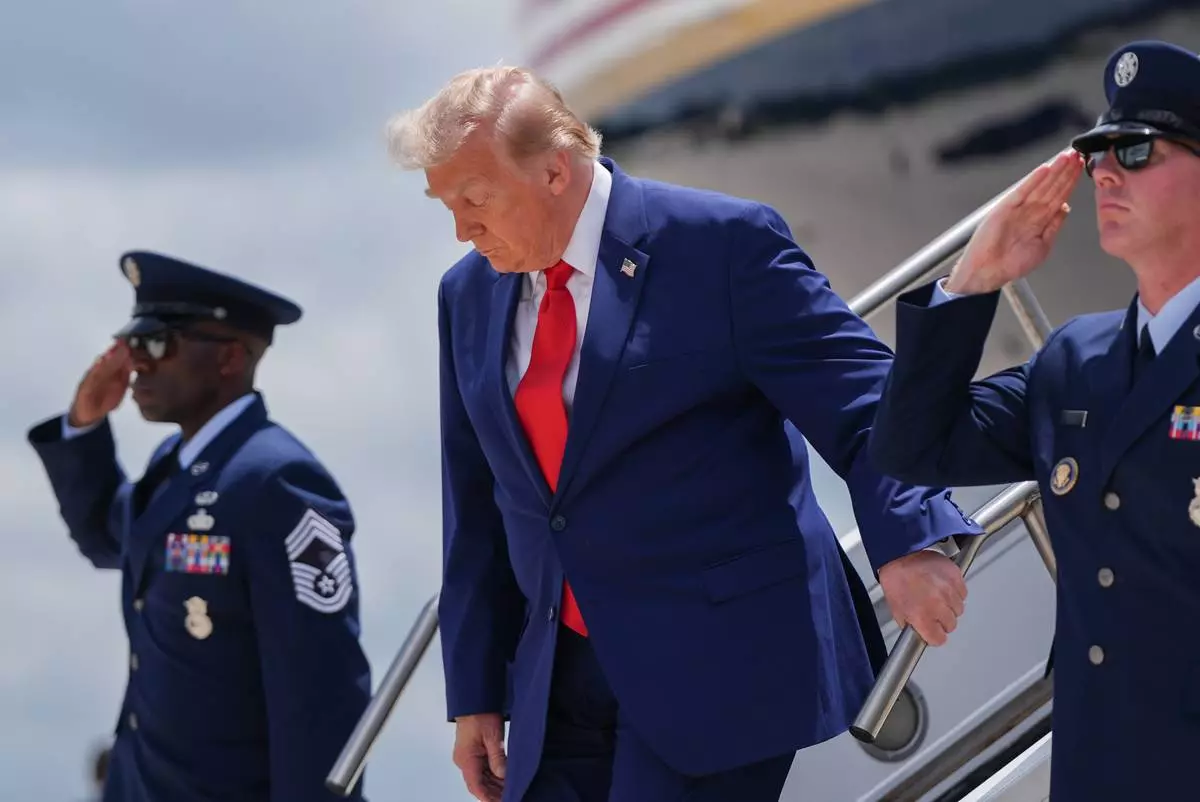
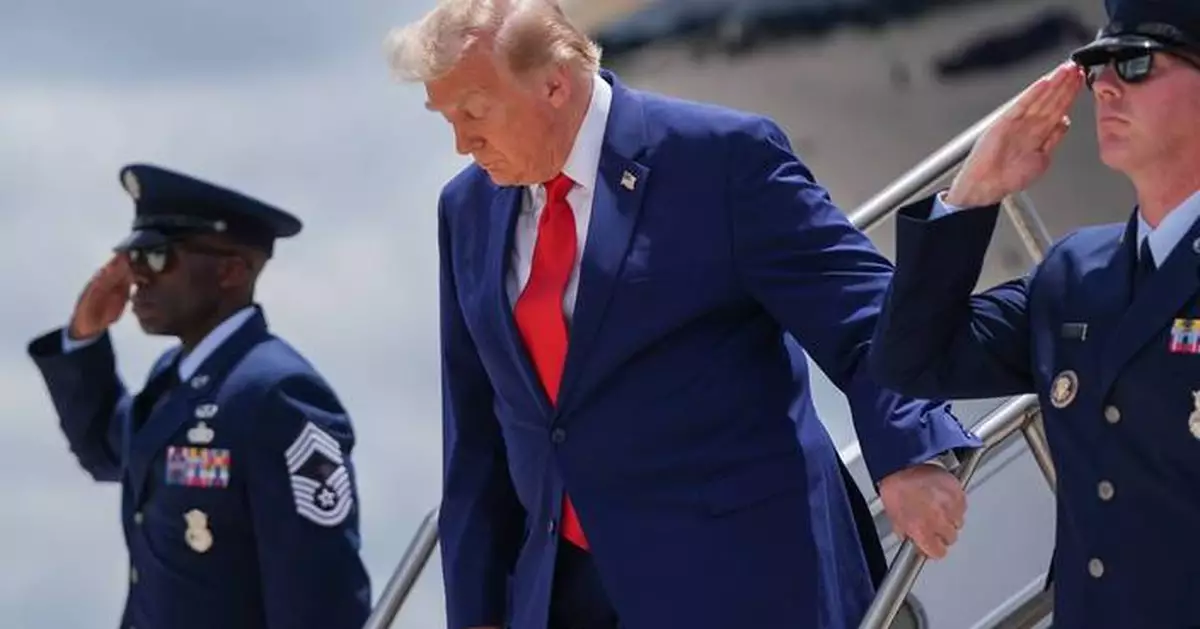
President Donald Trump arrives on Air Force One at Dobbins Air Reserve Base, Wednesday, July 22, 2026, in Marietta, Ga. (AP Photo/Julia Demaree Nikhinson)