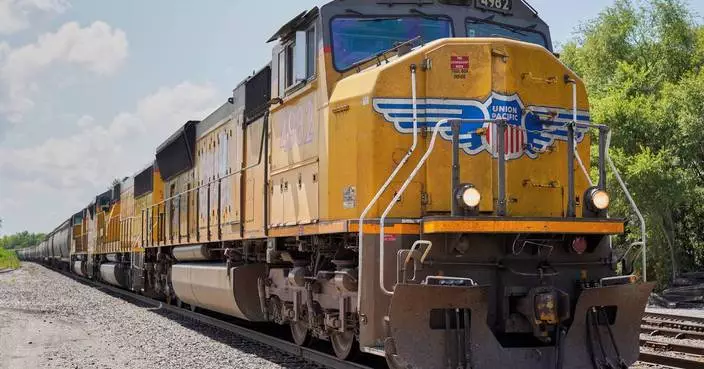
NEW YORK (AP) — Oil prices are jumping again Thursday as increased fighting in the Middle East threatens to slow the global flow of crude. Wall Street, meanwhile, is sinking following sharp drops for two of its most influential stocks, Alphabet and Tesla.
The S&P 500 dropped 1% and may be heading for its first back-to-back weekly loss since March. The Dow Jones Industrial Average was down 516 points, or 1%, as of 10 a.m. Eastern time, and the Nasdaq composite was 1.8% lower.
Stocks sank under the pressure of rising oil prices, which raise costs for many businesses and limit their customers’ ability to spend. The price for a barrel of Brent crude oil, the international standard, climbed 6.7% to $100.40.
Earlier in the morning, it touched its highest price in two months following attacks on two Saudi oil tankers in the Red Sea. The attacks threaten another avenue that oil companies can use to transport their crude from the Middle East to customers worldwide, along with the Strait of Hormuz.
Underscoring the importance of the sea route for the economy, U.S. President Donald Trump threatened “major military punishment” against the Houthi rebels in Yemen, who are backed by Iran, if they keep attacking ships.
It was just a few weeks ago that Brent had dropped below $72 per barrel, roughly back to where it was before the United States and Iran attacked Iran to begin their war, on hopes that the Strait of Hormuz would fully reopen to oil tankers.
The jumps in oil prices are threatening to reaccelerate inflation. That in turn could push the Federal Reserve and other central banks to raise interest rates, which would slow economies and undercut prices for stocks and other investments.
The European Central Bank held interest rates steady at its meeting Thursday. But traders are banking on a nearly 36% chance the Fed will hike rates at its meeting next week. That's up from less than the 12% probability seen a week ago, according to data from CME Group
That helped push the yield on the 10-year Treasury up to 4.70% from 4.67% late Wednesday and from just 3.97% before the war with Iran began. That’s a significant increase, and it’s already helped bring long-term U.S. mortgage rates to their highest levels in nearly a year.
Stocks of companies with big fuel bills fell to sharp losses on worries about higher expenses.
American Airlines lost 8.6% even though it reported a much bigger profit for the spring than analysts expected, something that usually sends a stock’s price higher. It raised airfares, which helped it offset its higher fuel prices, during the latest quarter.
Southwest Airlines gave back 4.7%, even though it also reported better profit and revenue than analysts expected. It wrung more profit out of each $1 of its revenue during the spring, even with higher fuel prices.
One of the heaviest weights on the U.S. stock market was Tesla, which sank 12.6% after Elon Musk’s electric-vehicle company reported a weaker profit for the latest quarter than analysts expected. Because it’s one of the largest stocks in the S&P 500 by market value, its stock has more influence on the index than nearly every other.
One of the few that’s larger is Alphabet, and its stock fell 6.2% even though the parent company of Google delivered stronger profit and revenue than analysts expected.
Investors seemed to be focusing instead on how much more Alphabet said it’s set to spend on artificial-intelligence investments. CEO Sundar Pichai said AI demand helped its cloud revenue growth accelerate to 82% last quarter, but unease nevertheless remains about whether all the billions of dollars Alphabet is pouring into the technology will pay off in terms of productivity and profits.
Such worries have been shaking the AI industry broadly in recent weeks, leading to big swings for the overall stock market.
In stock markets abroad, indexes fell sharply in Europe as oil prices jumped. France’s CAC 40 dropped 1.5% for one of the larger losses.
Indexes earlier in the day were stronger in Asia, where South Korea’s Kospi jumped 4.4%.
AP Business Writers Matt Ott and Elaine Kurtenbach contributed to this report.

The screen showing the Korea Composite Stock Price Index (KOSPI) is displayed at a dealing room of Hana Bank in Seoul, South Korea, Wednesday, July 15, 2026. (AP Photo/Lee Jin-man)

A man walks in front of an electronic stock board showing Japan's Nikkei 225 index at a securities firm Wednesday, July 15, 2026, in Tokyo. (AP Photo/Eugene Hoshiko)
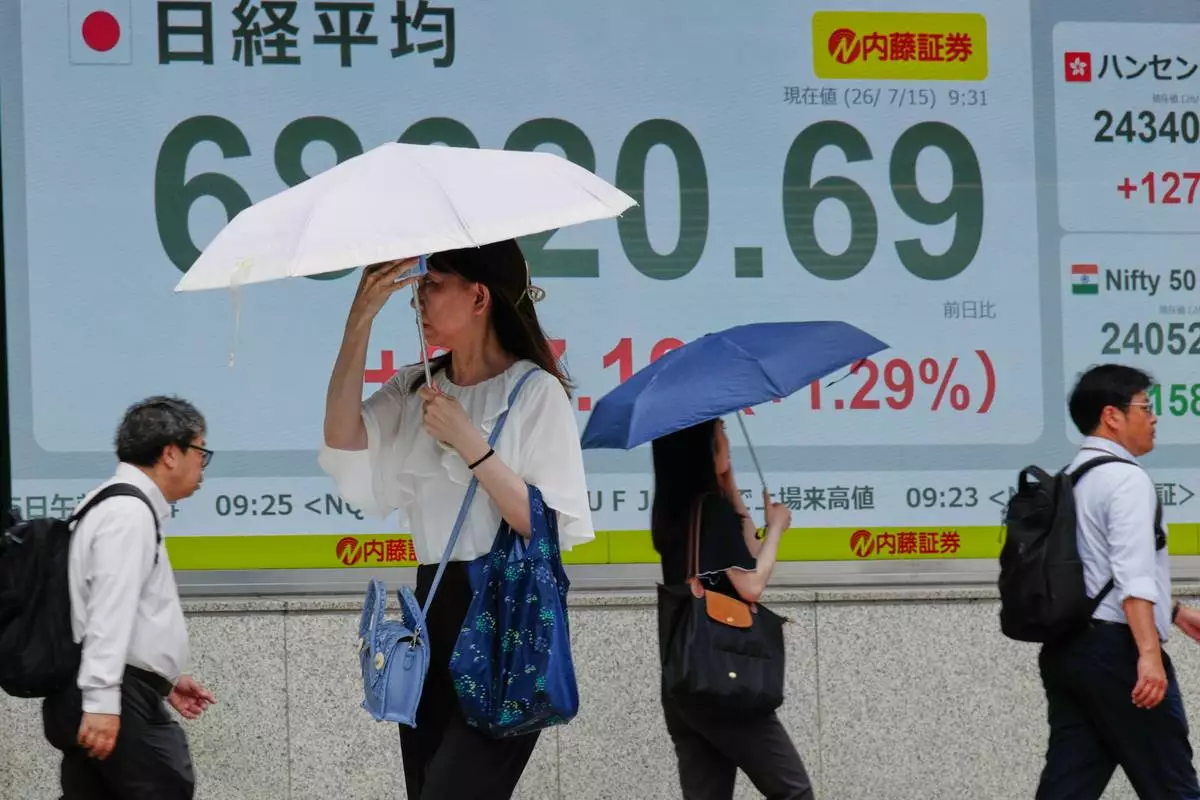
People walk in front of an electronic stock board showing Japan's Nikkei 225 index at a securities firm Wednesday, July 15, 2026, in Tokyo. (AP Photo/Eugene Hoshiko)
DAKAR, Senegal (AP) — The fastest-growing Ebola outbreak in history has killed more than 1,000 people in eastern Congo as health officials race to contain a virus with no approved vaccine or treatment.
An update from Congo’s public health institute on Wednesday said there have been 2,536 confirmed Ebola cases and 1,033 deaths, with at least 738 patients in isolation or hospitalized.
The outbreak declared on May 15 is unlike most previous instances of Ebola spreading through communities because the Bundibugyo virus responsible has no approved vaccines or treatments.
It is mostly concentrated in remote Ituri province, which accounts for nearly 90% of cases, but there have been others confirmed in five provinces including one of Congo’s largest cities, Kisangani, and in neighboring Uganda.
Here is what to know about the outbreak:
While Congolese officials say the sharp rise in cases appears to be slowing, they caution the outbreak has not yet peaked. The latest report by the country's public health institute says transmission remains sustained, with recent fluctuations in cases likely influenced by reporting delays and ongoing data consolidation.
Contact tracing continues to lag, with only around 77% of known contacts monitored nationwide, well below the 95% target health officials say is needed to interrupt transmission.
Responders are struggling to understand how far the Ebola outbreak has spread and how much worse it might become.
U.S. Centers for Disease Control and Prevention researchers last month used computer modeling and found that in a worst-case scenario, the current Ebola outbreak could approach the worst in history.
The West Africa epidemic in 2014-2016 caused more than 11,000 deaths and took about eight months from the first case to reach 1,000 deaths.
The new outbreak’s origin is still a medical mystery. The vast majority of cases are emerging from unknown chains of transmission, the World Health Organization said.
The WHO continues to assess the risk from the outbreak as “very high” inside Congo and “high” in Uganda and neighboring countries, citing cross-border spread, frequent population movement and ongoing transmission in eastern Congo.
The agency says the global risk of spread is low, noting Ebola spreads through direct contact with the bodily fluids of an infected person rather than through the air, making it much harder to spread than respiratory viruses.
While WHO says additional imported cases are likely as the outbreak grows, those cases have so far been rapidly detected and contained without leading to sustained transmission outside the affected region.
The CDC echoed that assessment in its latest situation report, saying Ebola doesn’t spread like respiratory viruses such as flu or COVID-19.
“You cannot get Ebola from being near someone,” the agency said.
The CDC also notes that people infected with Ebola are not contagious until they develop symptoms, making case identification and contact tracing easier than with diseases that spread before symptoms appear.
The vast majority of Ebola cases are concentrated in Congo.
In neighboring Uganda, 20 cases have been confirmed, including two deaths. All cases were linked to imported infections from Congo and are concentrated in the capital Kampala. No new Ebola cases have been reported since June 21 and the WHO has discharged its final patient, beginning the 42-day countdown used to declare the end of an outbreak.
A positive case of Ebola was identified in France in a doctor traveling from Congo in June. He has since fully recovered and was discharged from the hospital earlier this month.
The United States currently bars most recent travelers from Congo from entering the country and requires U.S. citizens to spend 21 days outside Congo before returning, while travelers from neighboring Uganda and South Sudan who are allowed to enter are routed through designated airports for Ebola screening.
U.S. plans to build an Ebola quarantine facility in Kenya for Americans evacuated from Congo have been met with legal challenges and a series of protests in Kenya, including some that have turned violent.
Lack of trust and resistance from locals remain one of the biggest obstacles to containing the outbreak, according to authorities and health workers.
Rumors about Ebola treatment centers, fears of isolation and resistance to safe burials have led some people to avoid testing or seek care only after becoming critically ill.
The response also has been hampered by conflict. Fighting involving the Rwanda-backed M23 rebels, attacks by the Islamic State-linked Allied Democratic Forces and mass displacement have complicated surveillance, contact tracing and access to affected communities.
At least 16 people were killed in an attack Wednesday by suspected ADF rebels in a village in Ituri province, local authorities said Thursday.
Unlike previous Ebola outbreaks, the Bundibugyo virus driving the epidemic has no approved vaccine or treatment. Although testing capacity has expanded since the outbreak began, responders say the virus continues to spread faster than they can contain it.
“There’s never been an Ebola outbreak that started with so many cases because it was so late to be identified,” said Trish Newport, emergency program manager for Médecins Sans Frontières (Doctors Without Borders), who has been working in Congo.
Earlier this month, researchers began the first clinical trial of potential treatments for the Bundibugyo virus, enrolling patients at an Ebola treatment center in Ituri province. The WHO said it could take months and as many as 1,000 participants to determine whether either of the two experimental treatments is effective.
Associated Press writers Mike Stobbe in New York and Prosper Heri Ngorora in Bunia, Congo, contributed to this report.
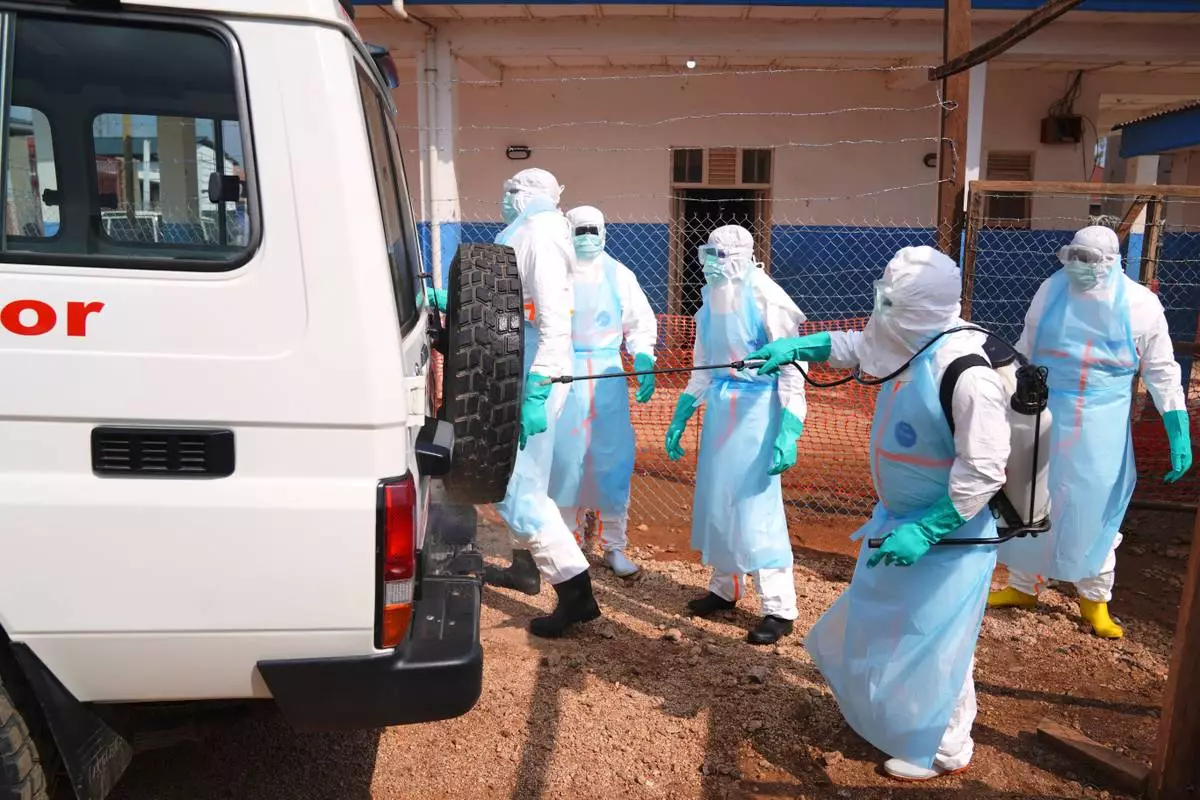
Health workers disinfects an ambulance at Ebola Treatment Center at Bunia General Hospital in Ituri, Congo, Wednesday, July 22, 2026. (AP Photo/Dirole Lotsima Dieudonne)
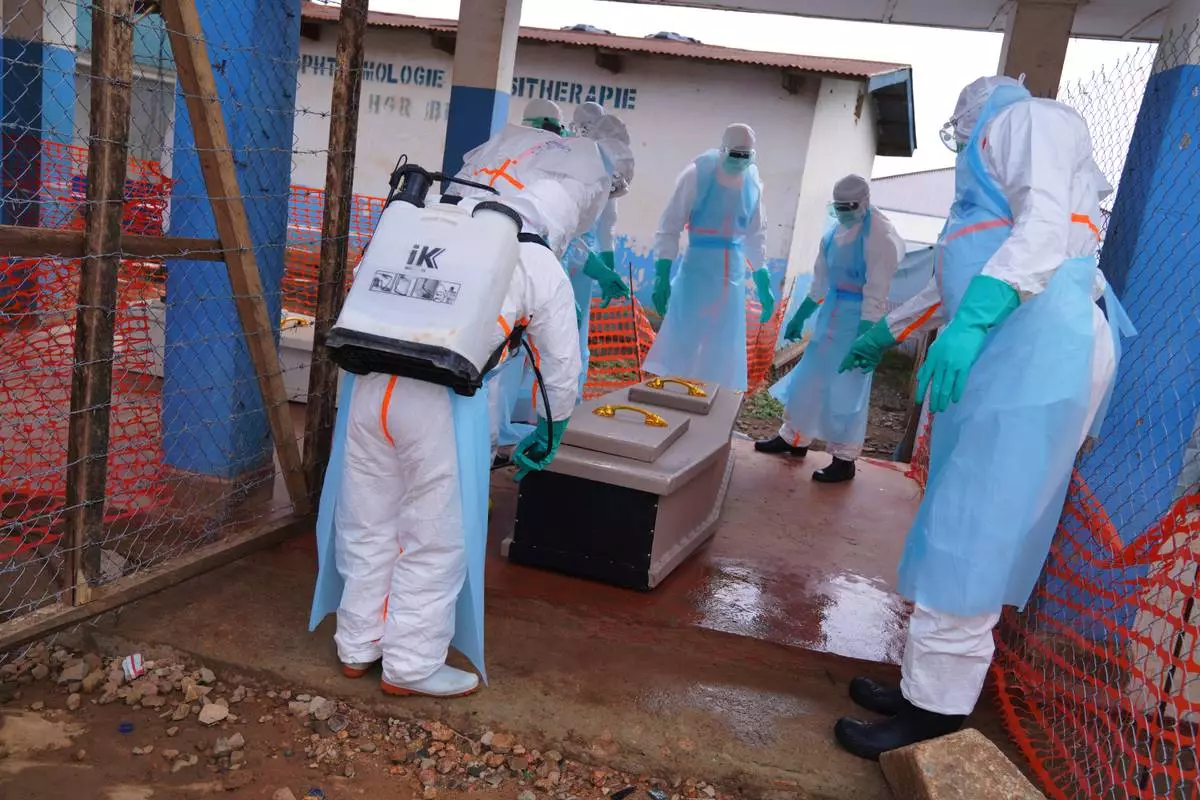
Health workers disinfect a coffin of an Ebola victim at Ebola Treatment Center at Bunia General Hospital in Ituri, Congo, Wednesday, July 22, 2026. (AP Photo/Dirole Lotsima Dieudonne)
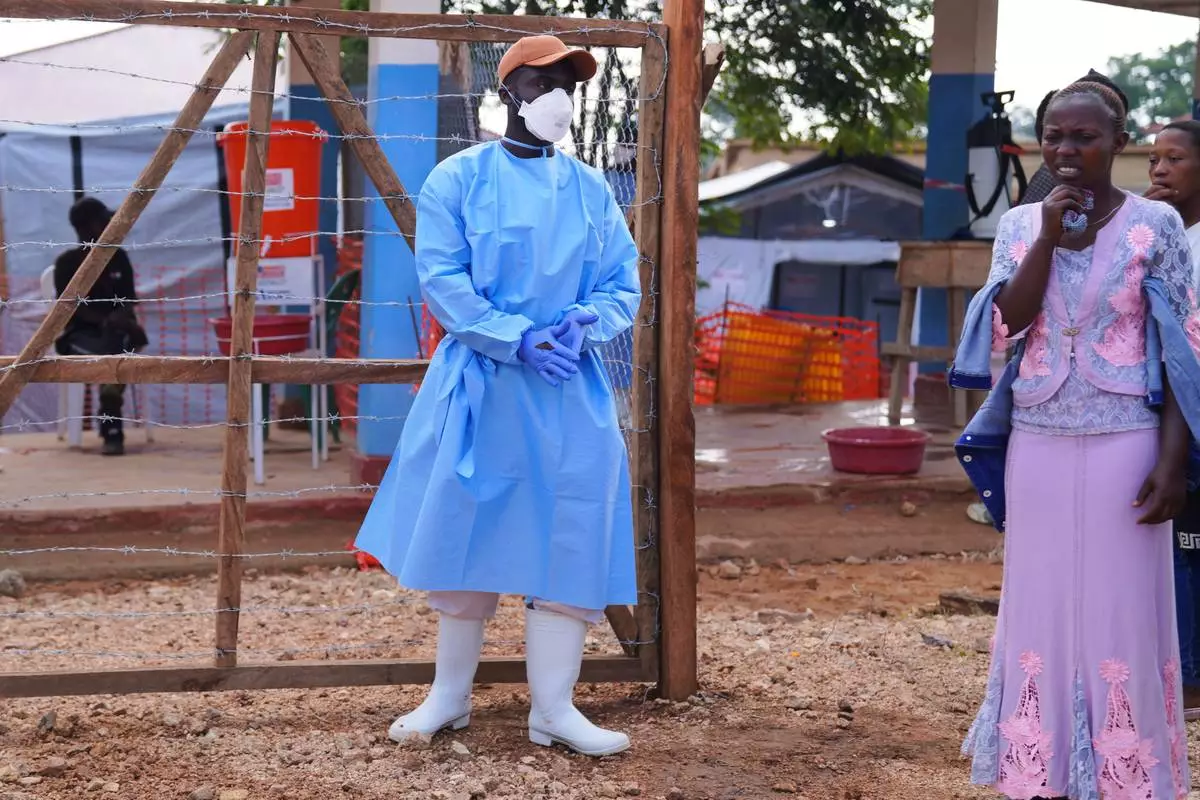
Residence watch as health workers carry a coffin of an Ebola victim at Ebola Treatment Center at Bunia General Hospital in Ituri, Congo, Wednesday, July 22, 2026. (AP Photo/Dirole Lotsima Dieudonne)
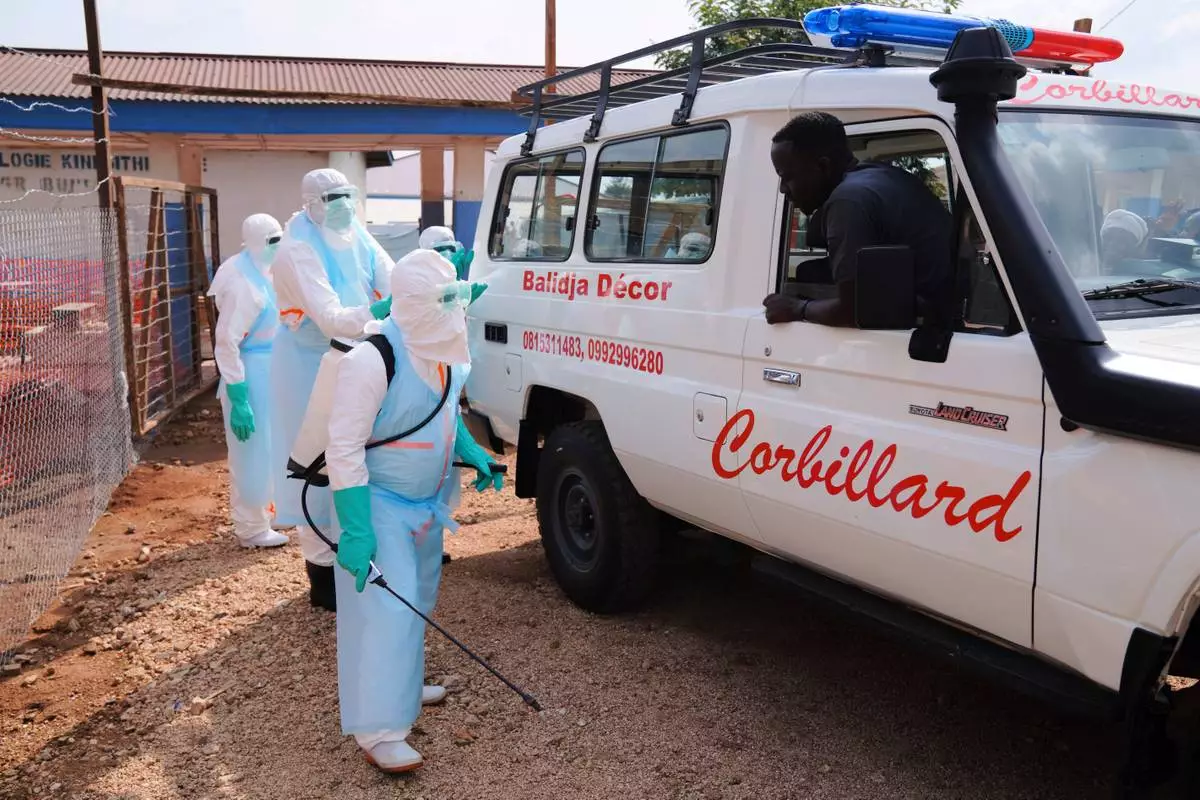
Health workers disinfects an ambulance at Ebola Treatment Center at Bunia General Hospital in Ituri, Congo, Wednesday, July 22, 2026. (AP Photo/Dirole Lotsima Dieudonne)
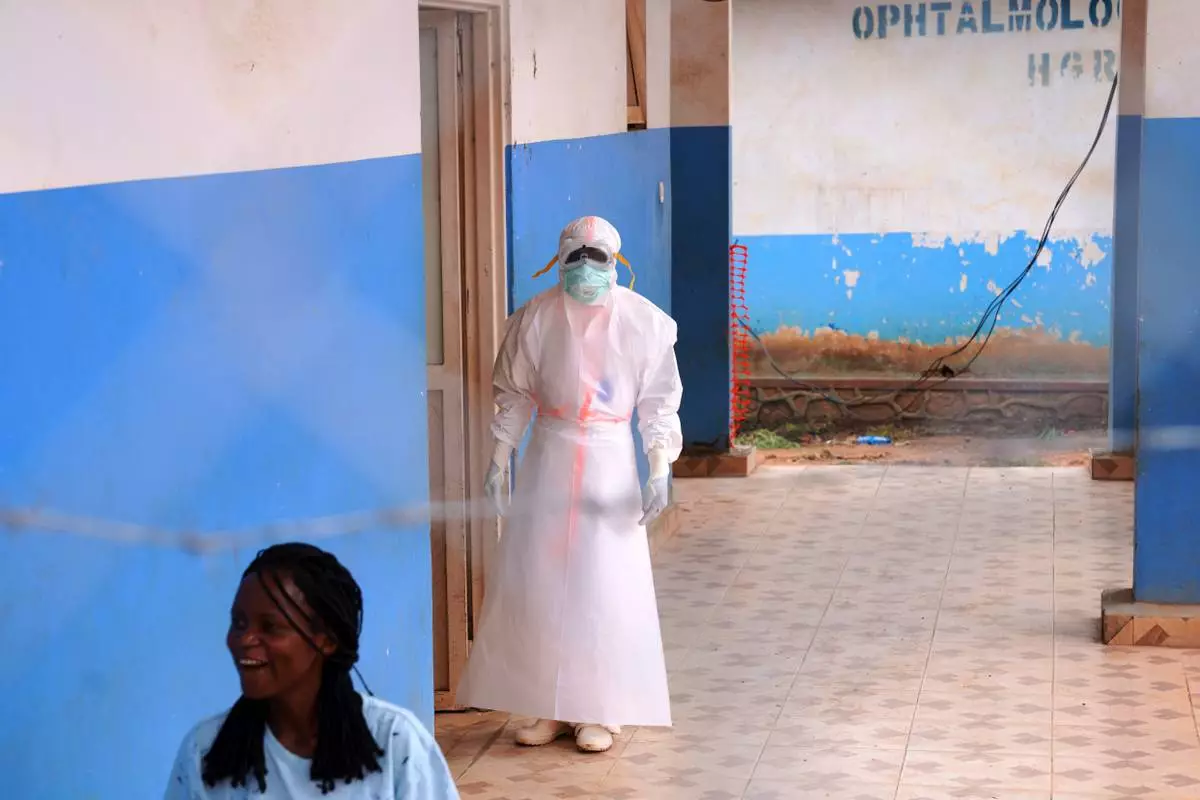
A health worker, wearing protective gear, stands outside the Ebola Treatment Center at the Bunia General Hospital in Ituri, Congo, Wednesday, July 22, 2026. (AP Photo/Dirole Lotsima Dieudonne)