NEWPORT BEACH, Calif.--(BUSINESS WIRE)--Jul 23, 2026--
NovoMed PARTNERS, a new healthcare innovation and growth platform founded by a team of trusted medtech entrepreneurs and executive operators, today officially launched its operations.
This press release features multimedia. View the full release here: https://www.businesswire.com/news/home/20260723298195/en/
Founded by Ramin Mousavi, former CEO of CathWorks, and an accomplished group of co-founders, Mike Feher,Fabian Ngo, and Natalie Sickler, NovoMed PARTNERS brings together an executive leadership team with decades of experience building category-defining medical technology companies. Together, the founding partners have built and led high-performing organizations that developed transformative technologies, generated industry-leading clinical evidence, commercialized innovative products globally, and completed multiple strategic acquisitions recognized as industry benchmarks.
NovoMed PARTNERS was founded to partner with visionary entrepreneurs, investors, strategic partners, physicians, and healthcare innovators to accelerate innovation, build enduring companies, and improve patient lives.
“NovoMed PARTNERS was built on a simple belief—that extraordinary companies are created by extraordinary people working with a shared purpose,” said Ramin Mousavi, Founder, Chairman & CEO of NovoMed PARTNERS. “Our mission is to partner with exceptional entrepreneurs, visionary investors, and innovative healthcare companies to accelerate growth, create lasting value, and bring meaningful technologies to patients faster.”
A Three-Pillar Platform
NovoMed PARTNERS operates through three complementary business pillars designed to support companies across every stage of their lifecycle.
NovoMed Portfolio Companies
NovoMed Portfolio Companies invests in, builds, and actively supports a focused portfolio of innovative healthcare and medical technology companies, providing strategic leadership, operational expertise, executive talent, commercialization guidance, and governance to accelerate sustainable growth and maximize long-term value creation.
NovoMed Advisory Services
NovoMed Advisory Services provides strategic advisory services to medical technology companies, investors, boards of directors, and private equity firms navigating critical inflection points. Drawing on decades of executive leadership experience, the team advises companies, investors, boards, and private equity firms on corporate strategy, fundraising, commercialization, clinical evidence generation, organizational scaling, leadership development, mergers and acquisitions, value creation, and exit planning.
NovoMed Studio
NovoMed Studio serves as the firm's collaboration and content engine, bringing together physicians, entrepreneurs, investors, and strategic partners to discuss and debate meaningful unmet clinical needs and breakthrough ideas. Through original content and thought leadership, the Studio connects the global medtech ecosystem while elevating the innovation shaping the future of healthcare.
Built by Operators, for Operators
Unlike traditional investment groups, consulting firms or incubators, NovoMed PARTNERS is built and led by operators who have successfully navigated every stage of the company lifecycle—from concept and product development to global commercialization, organizational scaling, strategic partnerships, and successful acquisitions. The founding team has earned a reputation for assembling exceptional leadership teams, cultivating high-performance cultures, executing complex global growth strategies, generating industry-leading clinical evidence, and creating significant value for patients, physicians, employees, investors, and shareholders.
“Our experience has taught us that breakthrough innovation alone is not enough,” Mousavi added. “Building enduring companies requires exceptional leadership, disciplined execution, world-class talent, and an unwavering commitment to patients. That is where NovoMed PARTNERS is uniquely positioned to help.”
A Long-Term Commitment to Transformative Healthcare Innovation
NovoMed PARTNERS was founded with a long-term vision to become one of the industry's premier company-building platforms, helping shape the future of medical technology through strategic investment, operational excellence, and entrepreneurial partnership.
By combining proven operating experience, deep industry relationships, and a passion for innovation, NovoMed PARTNERS aims to become the partner of choice for entrepreneurs, investors, and healthcare companies building transformative businesses that improve patient outcomes worldwide.
AboutNovoMed PARTNERS
NovoMed PARTNERS is a healthcare innovation, investment, and advisory platform dedicated to building the next generation of transformative medical technology companies. Through its three integrated pillars—NovoMed Portfolio Companies, NovoMed Advisory Services, and NovoMed Studio—the firm partners with entrepreneurs, investors, physicians, and healthcare organizations to create, scale, and commercialize breakthrough innovations that improve patient care and deliver long-term stakeholder value. For more information, visit our website www.novomedpartners.com and follow us on LinkedIn, X, YouTube, and Instagram @NovoMedPARTNERS.

NovoMed PARTNERS at LSI ASIA 2026 in Singapore, from left, Mike Feher, Ramin Mousavi, Natalie Sickler, and Fabian Ngo
DAKAR, Senegal (AP) — The fastest-growing Ebola outbreak in history has killed more than 1,000 people in eastern Congo as health officials race to contain a virus with no approved vaccine or treatment.
An update from Congo’s public health institute on Wednesday said there have been 2,536 confirmed Ebola cases and 1,033 deaths, with at least 738 patients in isolation or hospitalized.
The outbreak declared on May 15 is unlike most previous instances of Ebola spreading through communities because the Bundibugyo virus responsible has no approved vaccines or treatments.
It is mostly concentrated in remote Ituri province, which accounts for nearly 90% of cases, but there have been others confirmed in five provinces including one of Congo’s largest cities, Kisangani, and in neighboring Uganda.
Here is what to know about the outbreak:
While Congolese officials say the sharp rise in cases appears to be slowing, they caution the outbreak has not yet peaked. The latest report by the country's public health institute says transmission remains sustained, with recent fluctuations in cases likely influenced by reporting delays and ongoing data consolidation.
Contact tracing continues to lag, with only around 77% of known contacts monitored nationwide, well below the 95% target health officials say is needed to interrupt transmission.
Responders are struggling to understand how far the Ebola outbreak has spread and how much worse it might become.
U.S. Centers for Disease Control and Prevention researchers last month used computer modeling and found that in a worst-case scenario, the current Ebola outbreak could approach the worst in history.
The West Africa epidemic in 2014-2016 caused more than 11,000 deaths and took about eight months from the first case to reach 1,000 deaths.
The new outbreak’s origin is still a medical mystery. The vast majority of cases are emerging from unknown chains of transmission, the World Health Organization said.
The WHO continues to assess the risk from the outbreak as “very high” inside Congo and “high” in Uganda and neighboring countries, citing cross-border spread, frequent population movement and ongoing transmission in eastern Congo.
The agency says the global risk of spread is low, noting Ebola spreads through direct contact with the bodily fluids of an infected person rather than through the air, making it much harder to spread than respiratory viruses.
While WHO says additional imported cases are likely as the outbreak grows, those cases have so far been rapidly detected and contained without leading to sustained transmission outside the affected region.
The CDC echoed that assessment in its latest situation report, saying Ebola doesn’t spread like respiratory viruses such as flu or COVID-19.
“You cannot get Ebola from being near someone,” the agency said.
The CDC also notes that people infected with Ebola are not contagious until they develop symptoms, making case identification and contact tracing easier than with diseases that spread before symptoms appear.
The vast majority of Ebola cases are concentrated in Congo.
In neighboring Uganda, 20 cases have been confirmed, including two deaths. All cases were linked to imported infections from Congo and are concentrated in the capital Kampala. No new Ebola cases have been reported since June 21 and the WHO has discharged its final patient, beginning the 42-day countdown used to declare the end of an outbreak.
A positive case of Ebola was identified in France in a doctor traveling from Congo in June. He has since fully recovered and was discharged from the hospital earlier this month.
The United States currently bars most recent travelers from Congo from entering the country and requires U.S. citizens to spend 21 days outside Congo before returning, while travelers from neighboring Uganda and South Sudan who are allowed to enter are routed through designated airports for Ebola screening.
U.S. plans to build an Ebola quarantine facility in Kenya for Americans evacuated from Congo have been met with legal challenges and a series of protests in Kenya, including some that have turned violent.
Lack of trust and resistance from locals remain one of the biggest obstacles to containing the outbreak, according to authorities and health workers.
Rumors about Ebola treatment centers, fears of isolation and resistance to safe burials have led some people to avoid testing or seek care only after becoming critically ill.
The response also has been hampered by conflict. Fighting involving the Rwanda-backed M23 rebels, attacks by the Islamic State-linked Allied Democratic Forces and mass displacement have complicated surveillance, contact tracing and access to affected communities.
At least 16 people were killed in an attack Wednesday by suspected ADF rebels in a village in Ituri province, local authorities said Thursday.
Unlike previous Ebola outbreaks, the Bundibugyo virus driving the epidemic has no approved vaccine or treatment. Although testing capacity has expanded since the outbreak began, responders say the virus continues to spread faster than they can contain it.
“There’s never been an Ebola outbreak that started with so many cases because it was so late to be identified,” said Trish Newport, emergency program manager for Médecins Sans Frontières (Doctors Without Borders), who has been working in Congo.
Earlier this month, researchers began the first clinical trial of potential treatments for the Bundibugyo virus, enrolling patients at an Ebola treatment center in Ituri province. The WHO said it could take months and as many as 1,000 participants to determine whether either of the two experimental treatments is effective.
Associated Press writers Mike Stobbe in New York and Prosper Heri Ngorora in Bunia, Congo, contributed to this report.
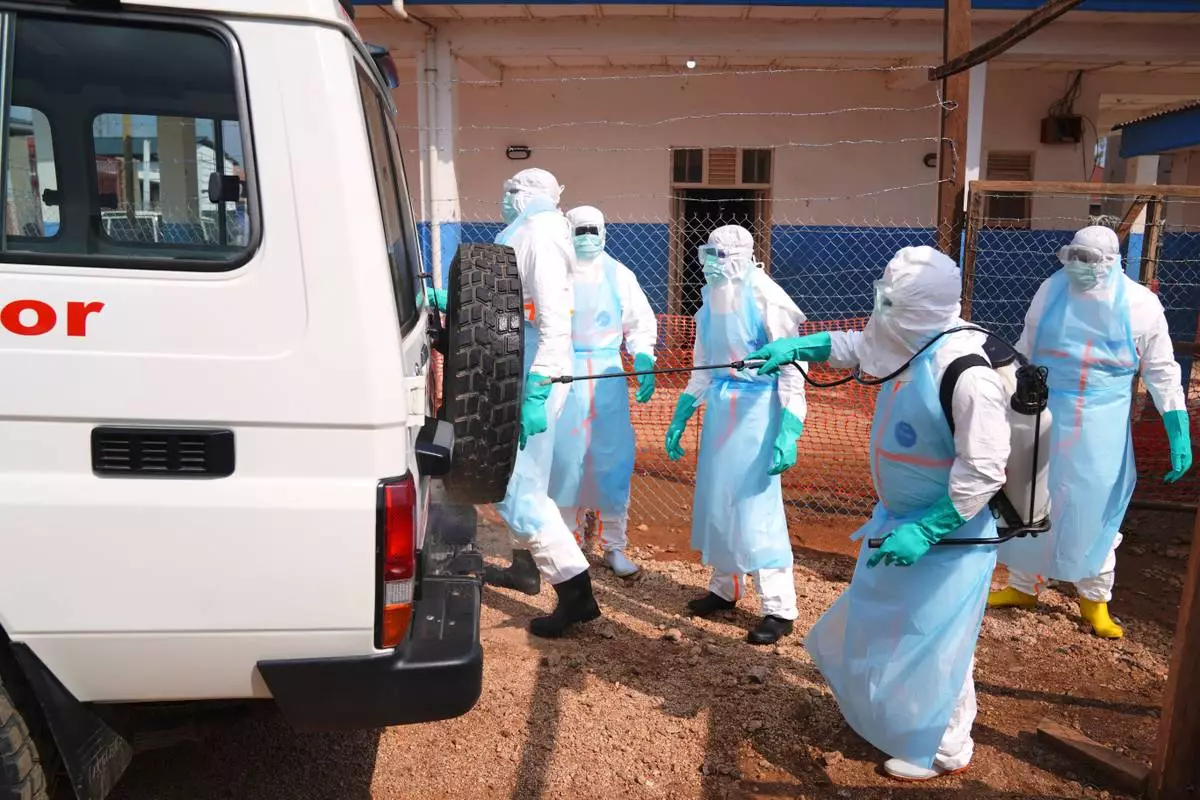
Health workers disinfects an ambulance at Ebola Treatment Center at Bunia General Hospital in Ituri, Congo, Wednesday, July 22, 2026. (AP Photo/Dirole Lotsima Dieudonne)
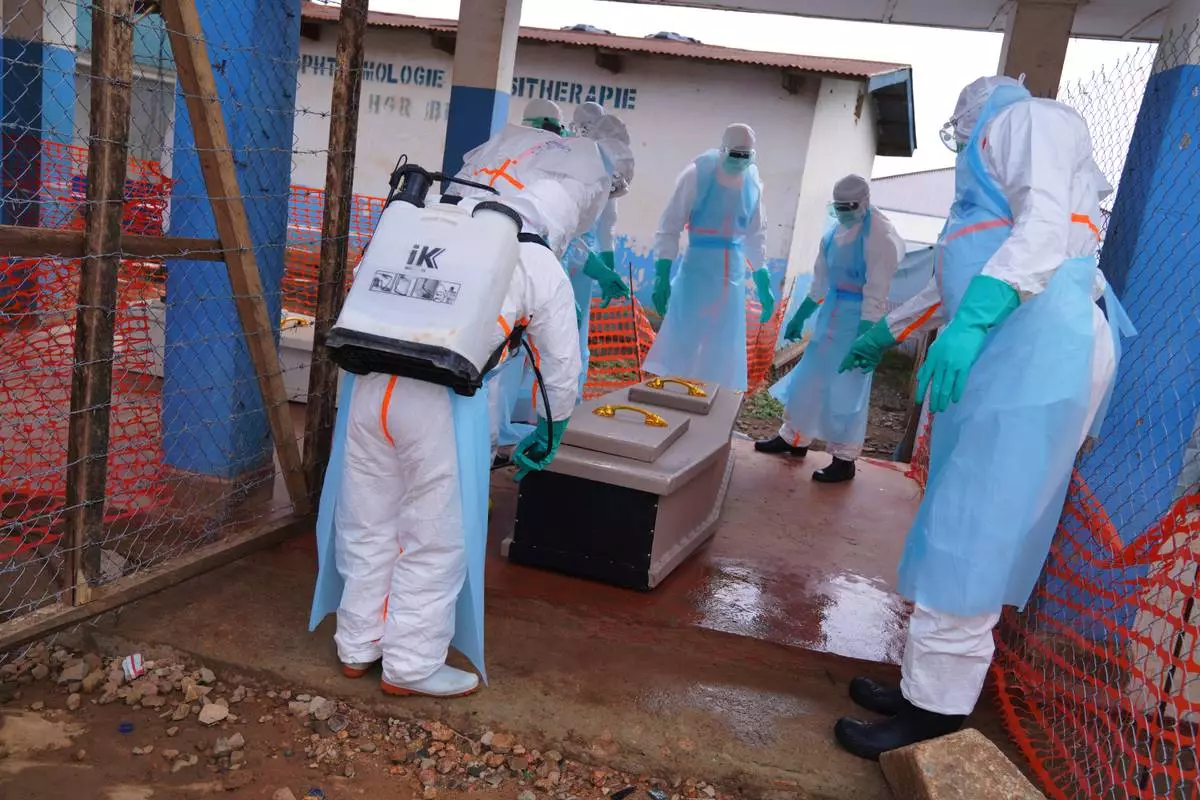
Health workers disinfect a coffin of an Ebola victim at Ebola Treatment Center at Bunia General Hospital in Ituri, Congo, Wednesday, July 22, 2026. (AP Photo/Dirole Lotsima Dieudonne)
Residence watch as health workers carry a coffin of an Ebola victim at Ebola Treatment Center at Bunia General Hospital in Ituri, Congo, Wednesday, July 22, 2026. (AP Photo/Dirole Lotsima Dieudonne)
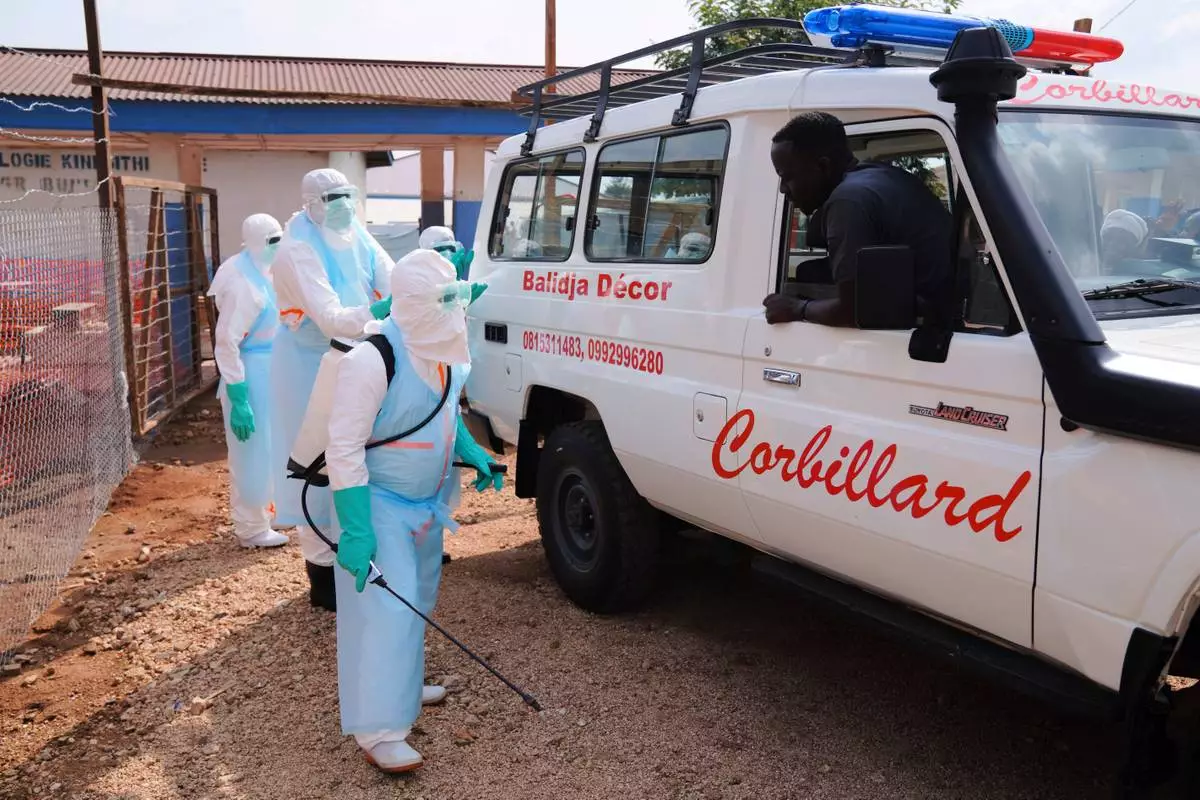
Health workers disinfects an ambulance at Ebola Treatment Center at Bunia General Hospital in Ituri, Congo, Wednesday, July 22, 2026. (AP Photo/Dirole Lotsima Dieudonne)
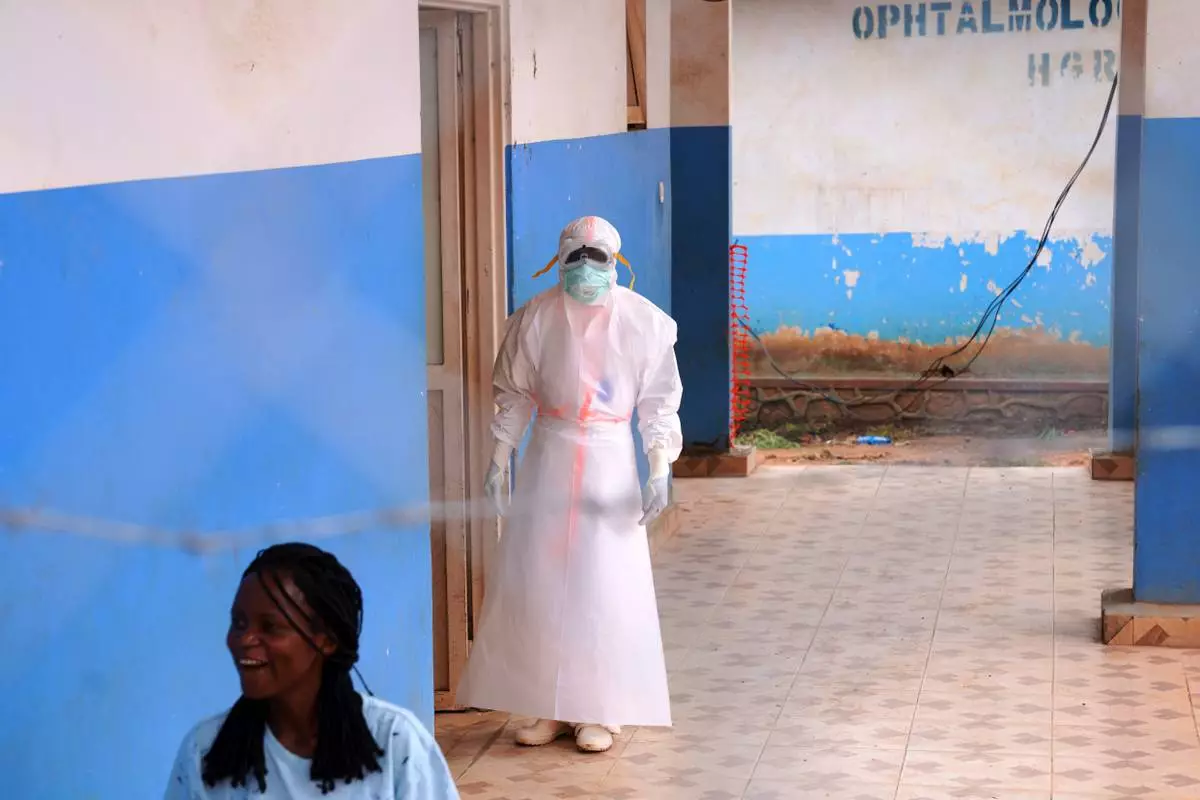
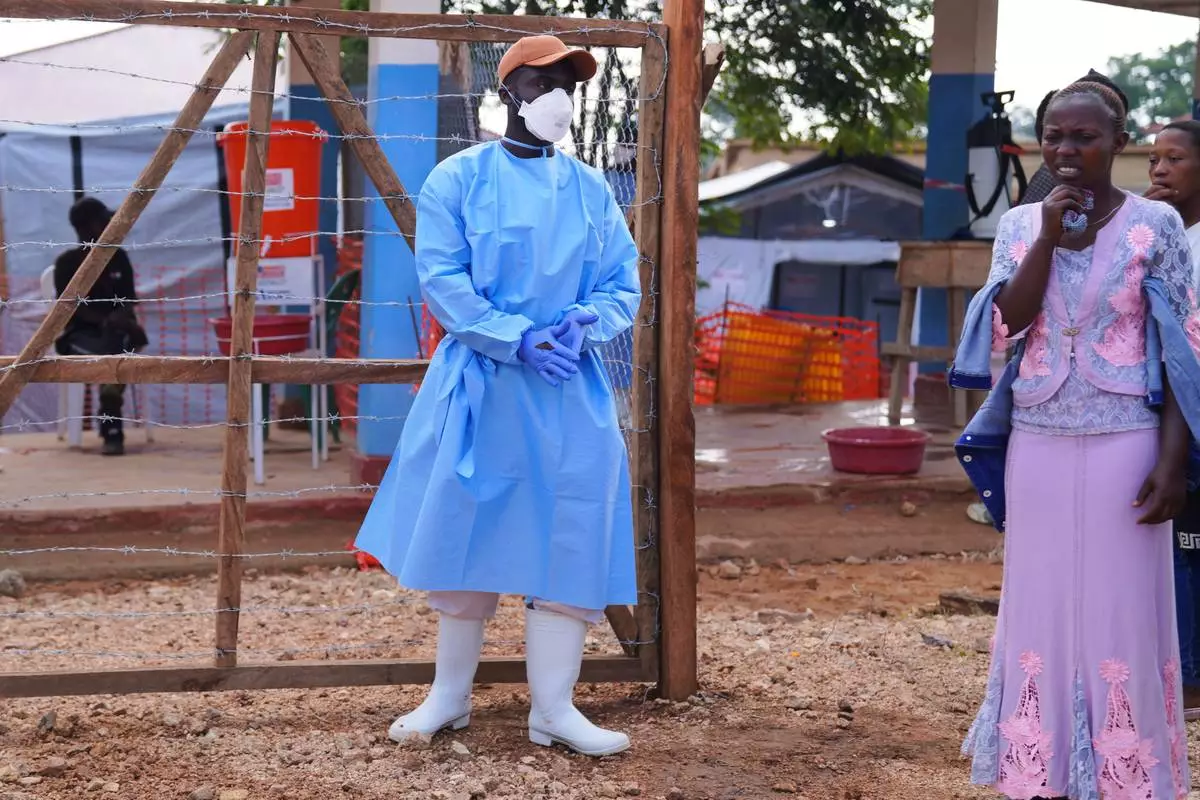
A health worker, wearing protective gear, stands outside the Ebola Treatment Center at the Bunia General Hospital in Ituri, Congo, Wednesday, July 22, 2026. (AP Photo/Dirole Lotsima Dieudonne)