SAN JUAN, Puerto Rico (AP) — Gun Owners of America and Gun Owners Foundation are suing the government of the U.S. Virgin Islands and its police commissioner as a fight over the Second Amendment deepens.
The nonprofits are asking a federal judge to allow nonresidents to apply for and be issued licenses to carry concealed handguns in the U.S. territory.
The lawsuit filed this week asserted that Florida resident Sean Dale Henry, a member of Gun Owners of America and supporter of Gun Owners Foundation, called the U.S. Virgin Islands’ police department multiple times to apply for such a license.
“Henry has been unable to get the USVI police to so much as pick up the telephone,” the lawsuit states. “The fact that the USVI police do not answer their phone makes (Henry’s) need to keep and bear arms for his own self-defense all the more vital.”
A spokesperson for the U.S. territory’s government did not immediately respond to a message seeking comment.
The lawsuit filed Monday notes that Henry plans to visit the U.S. Virgin Islands at least twice in upcoming months and seeks to bring a concealed gun for self-defense purposes.
“The Second Amendment doesn’t end at the shoreline,” Luis Valdes, the U.S. Virgin Islands’ outreach director for Gun Owners of America, said in a statement. “Americans don’t lose their constitutional rights simply because they travel to a U.S. territory.”
It is the second time the U.S. Virgin Islands’ government and its police commissioner are sued over the Second Amendment.
In December, the U.S. Justice Department sued the U.S. territory, accusing it of obstructing and systematically denying American citizens the right to possess and carry guns. It cited local laws including that applicants must demonstrate “good reason to fear death or great injury to his person or property,” and have “two credible persons” vouch for their need of a firearm.
At the time, the U.S. Virgin Islands’ government said it was “committed to protecting constitutional rights while maintaining public safety.”
In a February court filing, the U.S. Virgin Islands accused the U.S. government of coming to court “with unclean hands" and of employing hundreds of thousands of law enforcement officers it accused of depriving people of their “rights, privileges and immunities secured and protected by the 1st, 2nd, 4th , 5th and 14th amendments.”
“The United States of America cannot come to the court with unclean hands and seek to enjoin others while engaging in such blatant, violative, and abusive patterns and practices itself,” the filing read.
That case is still making its way through court.

FILE - The owner of a shooting range prepares to load bullets in his 9mm semi-automatic handgun for a demonstration on June 23, 2022, in New York. (AP Photo/Bebeto Matthews, File)
The average long-term U.S. mortgage rate climbed this week to its highest level in nearly 12 months, pushing up borrowing costs for prospective homebuyers at a time when rising oil prices are already squeezing household budgets.
The benchmark 30-year fixed rate mortgage rate rose to 6.58% from 6.55% last week, mortgage buyer Freddie Mac said Thursday. One year ago, the average rate was 6.74%.
The rate has ticked higher three weeks in a row. Higher mortgage rates can add hundreds of dollars a month in costs for borrowers, limiting homebuyers’ purchasing power. As rates rise, that can lead prospective home shoppers to delay buying a home, one reason U.S. home sales have been sluggish this year.
Borrowing costs on 15-year fixed-rate mortgages, often sought by borrowers refinancing a home loan, also rose this week. That average rate increased to 5.96% from 5.93% last week. A year ago, it was at 5.87%, Freddie Mac said.
Mortgage rates are influenced by several factors, from the Federal Reserve’s interest rate policy decisions to bond market investors’ expectations for the economy and inflation. They generally follow the trajectory of the 10-year Treasury yield, which lenders use as a guide to pricing home loans.
Rates have been mostly rising this year as the conflict in Iran has driven crude oil prices sharply higher, stoking expectations of hotter inflation. That’s pushed up long-term bond yields relative to where they were before the conflict began in late February, causing mortgage rates to trend higher.
The 10-year Treasury yield was 4.7% at midday Thursday on the bond market, up from 4.57% a week ago. It was just 3.97% in late February, before the war broke out.
Rising oil prices as violence escalates in Iran are threatening to worsen inflation, just as it had begun to decelerate by more than economists expected. That in turn could push the Federal Reserve to raise interest rates.
The central bank doesn’t set mortgage rates, but its decisions to raise or lower its short-term rate are watched closely by bond investors and can ultimately affect the yield on 10-year Treasurys.
The average rate on a 30-year mortgage is now the highest it’s been since Aug. 21, when it was at 6.58%. As recently as late February, the average rate dropped slightly below 6% for the first time since late 2022.
While average long-term mortgage rates remain lower than they were at this time last year, their upward trajectory has weighed on home sales this year. While seasonally adjusted sales of previously occupied U.S. homes were up 0.7% from January to June compared to the same period last year, they're still hovering close to a 4-million annual pace far short of the historic norm that is closer to 5.2-million.
The trend has extended the national housing market slump that began in 2022, when mortgage rates began to climb from pandemic-era lows. Sales of previously occupied U.S. homes were essentially flat last year, stuck at a 30-year low.
As mortgage rates remain elevated, that will mean a slower summer housing market, said Lisa Sturtevant, chief economist at Bright MLS.
“It’s not just about rates for homebuyers, but rather the full financial picture of buying,” she said. “Home prices hit record highs this summer in many markets across the U.S. while higher gas prices and concerns about overall inflation rising have created more financial strain for would-be buyers.”
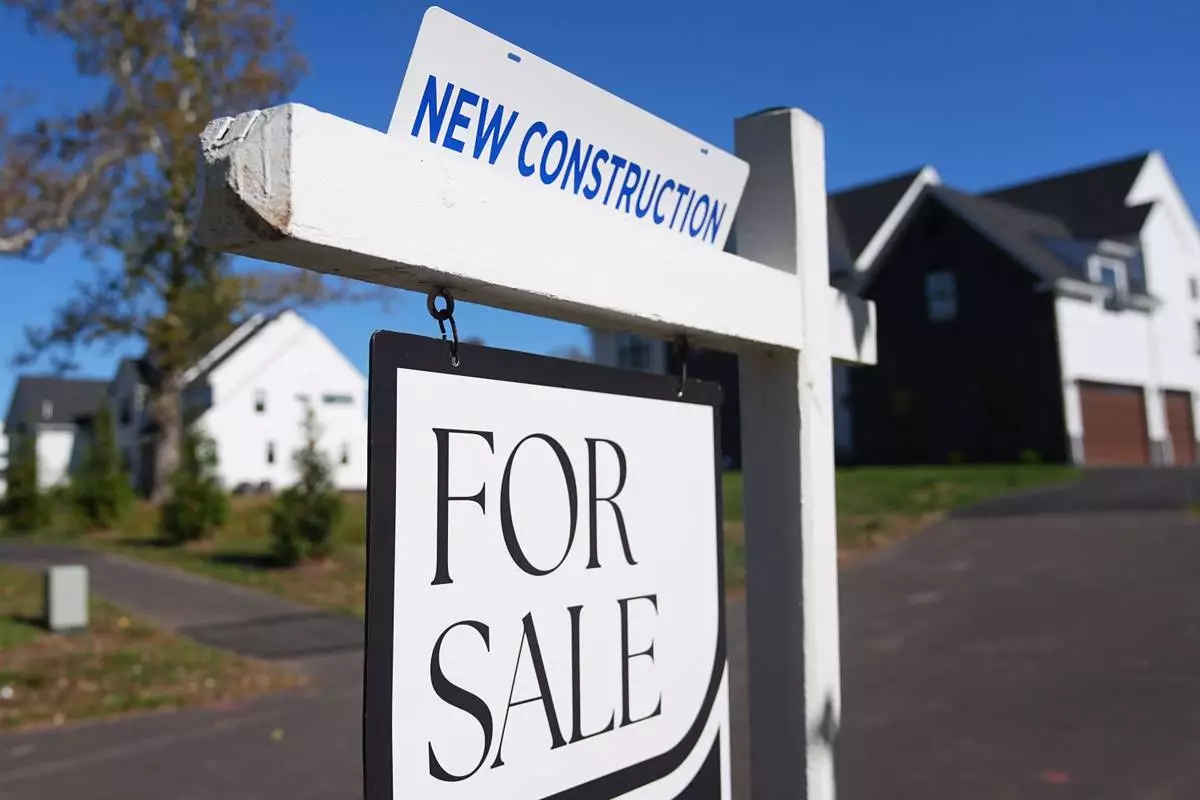
FILE - A sign is posted for a new home for sale in Ambler, Pa., Oct. 16, 2025. (AP Photo/Matt Rourke, File)