Skip to Content Facebook Feature Image

A model Indigenous territory in Brazil's Amazon seeks protection from criminal gangs

News

A model Indigenous territory in Brazil's Amazon seeks protection from criminal gangs
News

News

A model Indigenous territory in Brazil's Amazon seeks protection from criminal gangs

2026-07-24 07:25 Last Updated At:07:30

SAO PAULO (AP) — The Ashaninka Indigenous people — who recovered their territory in the Brazilian border with Peru from settlers three decades ago, established and sustained their own governance, and grew crops while protecting the forest — have long been a success story for communities across the Amazon. But now, their way of life is under a violent threat.

Gangs and drug traffickers are increasingly encroaching on Ashaninka land and using the rivers in the Amazon and adjacent land for drug routes. Ashaninka leaders say they’ve reported violent episodes — as recent as this month — and asked for protection, including a meeting with Brazilian officials in the capital on Thursday. Security forces have been deployed. But in this region, their presence is usually temporary, while the threats remain permanent, various Indigenous groups say.

The invasion of Ashaninka territory is part of a broad transformation of the Amazon border as criminal routes expand, through what experts call the Solimoes River route.

Indigenous territories are key to this route. Experts say protecting Indigenous land is one of the most effective ways to curb deforestation in the Amazon, the world’s largest rainforest and a key regulator of global climate. But the very forests these communities help protect leave them vulnerable: Dense tree cover in remote, hard-to-reach areas offers attractive hiding sites for drug traffickers.

Despite appeals to authorities, Ashaninka and other Indigenous people say the Brazilian government's help falls short.

“There is an institutional and intercultural blind spot in the public security services provided to Indigenous peoples,” said Maj. Jonatas Soares, a police officer based in the border city of Tabatinga, in Brazil’s Amazonas state near Colombia and Peru.

“The state formally recognizes their territories, yet it fails to translate that presence into continuous protection tailored to their specific needs.”

The Solimoes River route, which includes a series of navigable rivers flowing from the Peruvian border to Manaus in Brazil, has become a primary route over the past decade for moving cocaine produced in Peru, Colombia and Bolivia to the Brazilian ports on the Atlantic coast, where it is then funneled into domestic and overseas markets, particularly in Europe.

This route is now mostly controlled by the Brazilian gang Red Command, according to Col. César Mello, a retired Amazonas state police officer and professor at the Federal University of Para and the University of the State of Amazonas.

The remote location of Indigenous territories, lack of government oversight, language barriers and cultural differences “make Indigenous peoples a vulnerable population and an attractive source of labor for criminal organizations,” said Col. Mello.

Criminal groups often recruit Indigenous youth by offering them money and status in communities where economic opportunities are scarce. When that doesn't work, they use violence, Col. Mello added.

The Ashaninka have become an enduring block to trafficking networks in Peru and Brazil.

In the past, drug traffickers approached the community seeking to build a clandestine airstrip inside their territory. The Ashaninka refused.

“We have a long history of opposing any kind of illegal activity,” said Francisco Piyãko, coordinator of the Organization of Indigenous Peoples of the Jurua River.

Local tensions escalated earlier this month after a group of armed men reportedly invaded the Kampa Indigenous territory, located along the winding Amonia River in the western Amazon. On July 6, a group of five Spanish-speaking men, carrying machine guns, threatened families and searched for the territory’s main leaders.

Piyãko filed a formal complaint with Acre state authorities and the Brazilian Army, prompting the deployment of security forces.

“It’s one thing for outsiders to enter our territory to steal resources, like timber and wildlife. But this was different. They entered our land looking for our leaders, intending to kill them,” Piyãko said.

Brazil’s Ministries of Indigenous Peoples and Justice did not respond to requests for comment. The Brazilian Army and the Acre state government’s press office also did not respond.

The Foreign Ministry said its representatives would welcome the Ashaninka leaders in Brasilia to hear their concerns and assess further applicable actions with Peru's government.

Earlier this year, Brazilian Supreme Court Justice Flávio Dino ordered the federal government to intensify efforts against criminal organizations operating in the Amazon, citing official records and investigations that showed their growing presence and threat to Indigenous communities.

The community is shaken by the recent threats but determined to resist. Piyãko stressed, however, that confronting armed criminal groups is not the Indigenous responsibility but the duty of the state — both Brazil and Peru.

“They allowed this to happen through their absence, so they bear that responsibility,” he added.

—-

The Associated Press’ climate and environmental coverage receives financial support from multiple private foundations. AP is solely responsible for all content. Find AP’s standards for working with philanthropies, a list of supporters and funded coverage areas at AP.org.
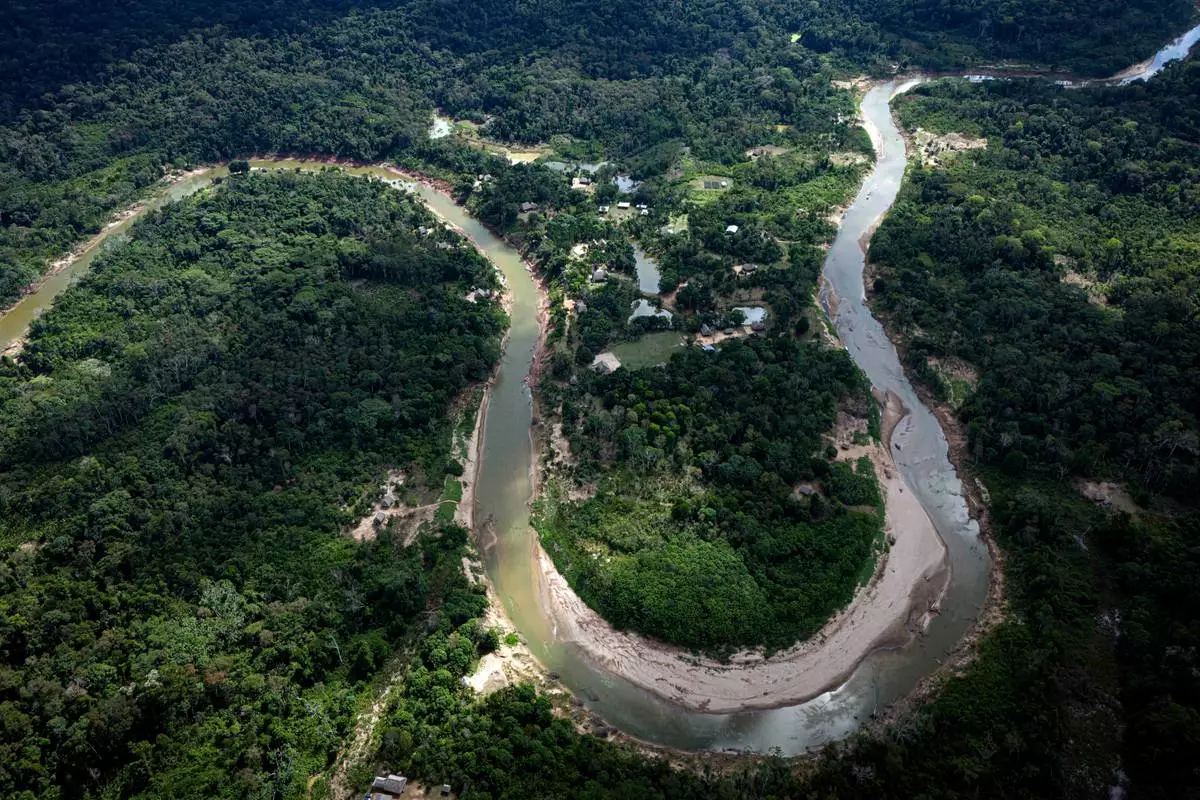
FILE - Ashaninka's territory sits along the winding Amonia River in Acre state, Brazil, June 22, 2024. (AP Photo/Jorge Saenz, File)
FILE - Ashaninka's territory sits along the winding Amonia River in Acre state, Brazil, June 22, 2024. (AP Photo/Jorge Saenz, File)

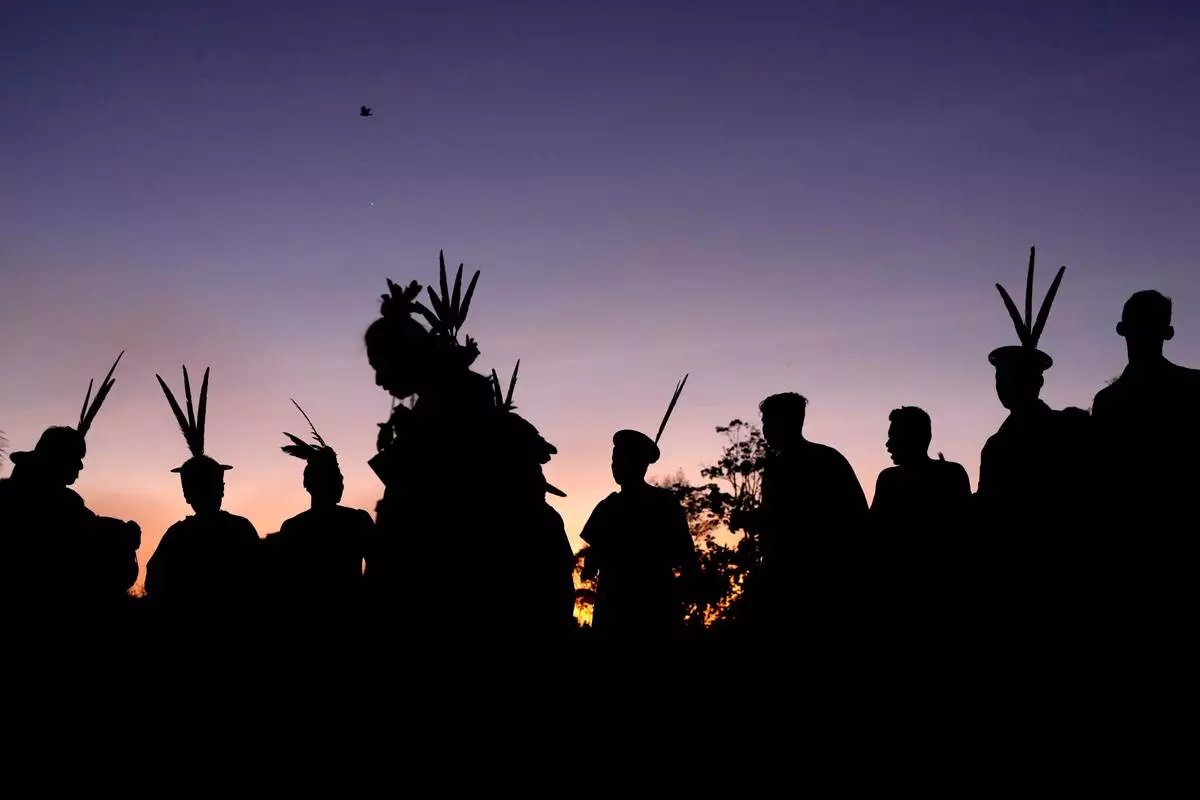
FILE - Ashaninka Indigenous people from Brazil and Peru dance and sing at dawn during the annual celebration recognizing the Ashaninka territory in the Apiwtxa village, Acre state, Brazil, June 24, 2024. (AP Photo/Jorge Saenz, File)

FILE - Ashaninka Indigenous people from Brazil and Peru dance and sing at dawn during the annual celebration recognizing the Ashaninka territory in the Apiwtxa village, Acre state, Brazil, June 24, 2024. (AP Photo/Jorge Saenz, File)
OMAHA, Neb. (AP) — Union Pacific struck a deal with Canadian National to secure that rival's support for its proposed $85 billion acquisition of Norfolk Southern railroad.

The deal to create the nation's first transcontinental railroad has been divisive within the industry because it would concentrate so much market power in the hands of one company that would control more than 40% of all rail traffic and reduce the number of major freight railroads in the United States down to five. BNSF and CPKC have both strongly opposed the merger, and CSX has raised concerns about how it would affect the competitive balance in the industry. But now Canadian National said it will support it after winning concessions from Union Pacific.

The U.S. Surface Transportation Board is just beginning to review the proposed $85 billion merger, but it has demanded more information from the railroads by the end of the month before it will move forward. Shippers have also lined up on both sides of the deal with some excited about the promises of faster cross-country deliveries while other companies mainly in the chemical and agriculture industries worry about the possibility of higher rates and service problems.

UP CEO Jim Vena said he believes these agreements with Canadian National will address many of the competitive concerns with the merger because CN will gain permission to be able to serve any customers that will see significantly reduced shipping options after the merger. And CN will take over Norfolk Southern's ownership of smaller railroads in St. Louis and Kansas City to ensure the merged railroad will never control the majority of those operations.

“This is truly more compelling today than we ever looked at it before,” Vena said Thursday as he discussed Union Pacific's second-quarter earnings. “We think we have a strong case.”

Canadian National will also gain access to tracks between St. Louis and Kansas City where there was the most overlap between UP and NS, and CN will be able to use a key rail yard in Kansas City that will help that railroad compete better for business to and from Mexico. Union Pacific will get the ability to move more traffic around the congested tracks in Chicago.

“As the rail industry considers significant structural change, it is essential that customers continue to benefit from meaningful competition and choice,” CN President and CEO Tracy Robinson said.

But BNSF spokesperson Zak Andersen said these agreements show what can already be accomplished through cooperative agreements between railroads without all the disruptions of a merger that would leave many customers with fewer competitive shipping options.

“UP is required to demonstrate that the benefits it claims can only be achieved through a merger. Its own agreement with CN shows the opposite. The benefits UP highlights can be pursued today without a merger, and significant portions of the arrangement are not even contingent on merger approval,” Andersen said.

BNSF and CPKC railroads have said clearly they don't believe the merger is a good idea, and neither one is interested in pursuing a deal with another railroad right now. While CSX has expressed concerns about the merger creating competitive imbalance in the industry, that railroad brought in CEO Steve Angel last fall who has experience in mergers and acquisitions.

Norfolk Southern CEO Mark George said that demand for rail shipping is up right now across much of the economy. That started after the Iran war began but became more widespread through the spring. But he said that if gas prices remain high long enough, it could hurt the consumer and the growth in shipping volume that both NS and UP reported Thursday could reverse.

The Surface Transportation Board will review the merger under a tough new standard it adopted in 2001 after a series of disastrous rail mergers in the 1990s that led to shipment delays of weeks or even months. These untested rules require any merger of the six largest railroads to be in the public interest and show that it will enhance competition. When the Surface Transportation Board approved the first major rail merger in more than two decades three years ago, it used a less stringent standard allowing Canadian Pacific’s $31 billion acquisition of Kansas City Southern.

Vena remains optimistic the deal will get approved.

“The merger is going to close. It’s just too compelling for the country, but it would be a mistake for this deal not to close,” Vena said.

But critics have said the merger seems designed more to benefit Wall Street investors than the companies that rely on the railroads to ship their products and deliver the raw materials they need.

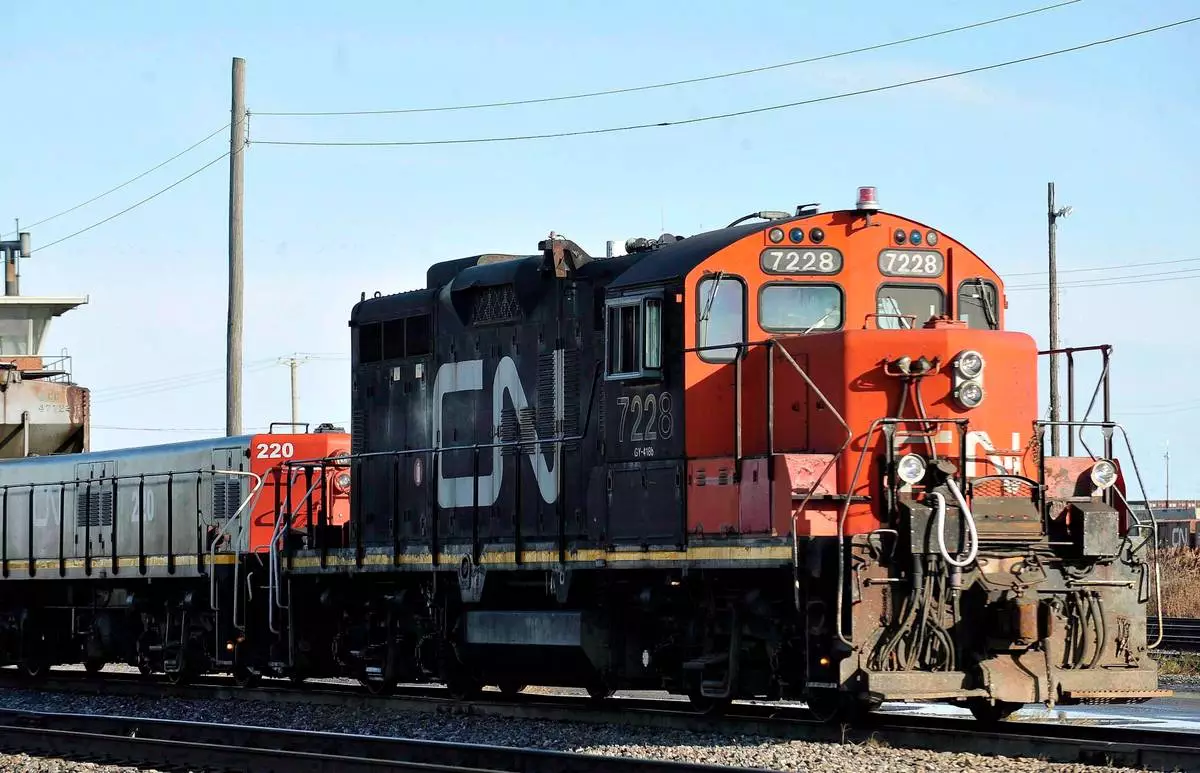
FILE - A Canadian National locomotive goes through the Canadian National Taschereau yard in Montreal, Saturday, Nov. 28, 2009. (Graham Hughes/The Canadian Press via AP, File)

FILE - A Canadian National locomotive goes through the Canadian National Taschereau yard in Montreal, Saturday, Nov. 28, 2009. (Graham Hughes/The Canadian Press via AP, File)

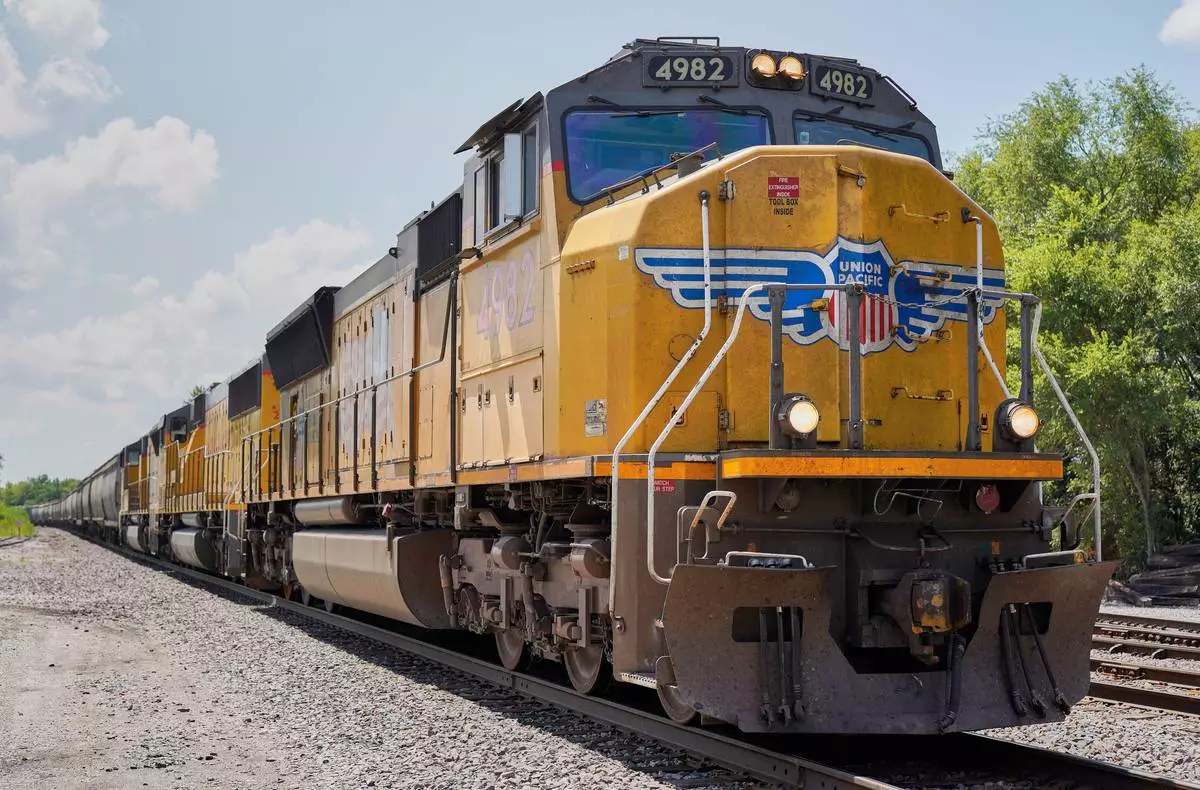
FILE - A Union Pacific train travels through Union, Neb., July 31, 2018. (AP Photo/Nati Harnik, File)

FILE - A Union Pacific train travels through Union, Neb., July 31, 2018. (AP Photo/Nati Harnik, File)

Recommended Articles