Iranian patients are facing a critical shortage of medicine amid tensions with the United States that is preventing the effective treatment of debilitating diseases.
Months after international sanctions against Iran intensified, compounded by ongoing war, the lives of hemophilia patients have been pushed to the brink.
"One worrying aspect is that patients are left without medicines, leaving them to suffer from bleeding and lasting physical damage," said Dr. Shadi Tabibian, a hematologist.
Until about a year ago, medicines for rare-disease patients were still being imported despite trade restrictions, but the recent war and tighter sanctions have brought the import process to a complete halt.
"If we can't get the medicine, the first problem is that even brushing our teeth causes gum bleeding. Beyond that, we face the constant risk of brain bleeding, joint bleeding, and nosebleeds. Even a small cut could become life-threatening, as our blood won't clot-and that could ultimately lead to death," said Ehsan Mohammadzadeh, a hemophilia patient.
The lack of access to critical treatments has substantially increased patients' agony.
"Patients are being forced to revert to older treatments, including blood products that can only be injected at hospitals. This not only takes more time but also requires hospitalization. Before, we had access to a medicine called Humate, which we could inject ourselves at home," said Atefeh Kheirabadi, another hemophilia patient.
Damage to hundreds of health facilities has disrupted care for 10 million people-including 2.2 million children. For bleeding disorder patients, the clock is ticking faster than ever.
"When I can't get my medicine, my bleeding confines me to my home. I can't go to work, I can't exercise, and I can't even use public transportation. My entire life is severely impacted," said Kheirabadi.
The U.S. and Israeli strikes in March, along with blast waves and shrapnel, caused the total collapse of several research buildings and severely crippled the Pasteur Institute of Iran, the country's oldest medical and scientific institution.
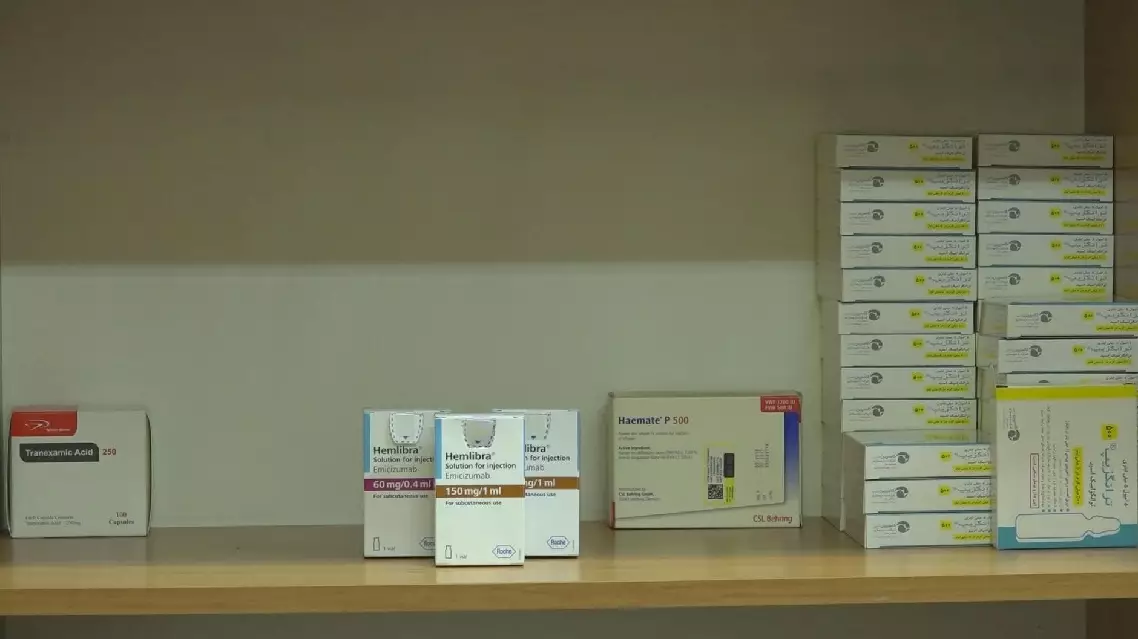
Iran faces critical shortage of medicine