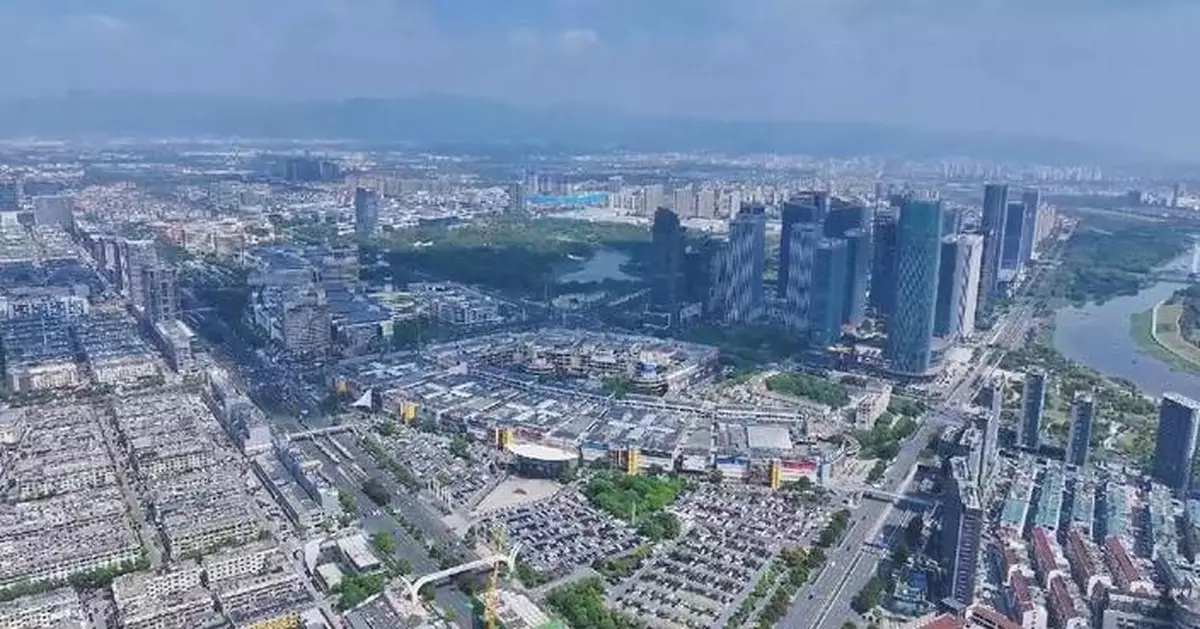
The unlikely success story of the small city of Yiwu in east China's Zhejiang Province in emerging as a global trading powerhouse has been hailed as a model of development, with the growth of its small commodities market into a key hub for domestic and foreign traders putting the city on the map.
Chinese President Xi Jinping has consistently highlighted the "Yiwu Development Experience" as a successful model for county-level economic growth, and has personally overseen how the city has leveraged its international competitiveness and fully utilized global markets to achieve such rapid growth today.
During his tenure as the acting governor and then Party secretary of Zhejiang, Xi visited Yiwu, emphasizing the importance of adapting to local conditions and fostering a market-driven economy. In April this year, he reiterated the need to further summarize and apply this experience, noting how Yiwu's specialty as a small commodities hub has created a vast market and a significant industry.
Located in central Zhejiang, Yiwu initially lacked geographical advantages, being neither coastal nor bordering other regions, with limited resources and a weak industrial base. This scarcity, coupled with a dense population, fostered a centuries-old tradition of commerce, famously known as "trading chicken feathers for sugar."
Inspired by China's reform and opening-up policies in the late 1970s, local residents spontaneously set up street markets. Recognizing this grassroots initiative, Yiwu decided in 1982 to officially open its small commodity market, embarking on a county-level development path centered on trade.
"For us, developing according to local conditions meant leveraging Yiwu's long-standing tradition and culture of valuing commerce. As people's living standards improved, their demand for goods diversified. Yiwu seized the opportunity, starting with selling needles and threads, and selling whatever the market needed. By the 1990s, it had become the largest small commodity market in the country," Hu Aifen, then deputy director of the Yiwu Municipal Party Committee Office, recalled.
The early 2000s, marked by China's entry into the World Trade Organization (WTO), presented both opportunities and challenges for Yiwu. While Chinese goods gained access to international markets, foreign retail giants also entered the domestic scene.
Wang Shuhua, a now 48-year-old merchant, recalled the pressure after starting out her crafts business back then.
"Before, our market relied on good quality, low prices, and small profits but quick turnover. But with large foreign supermarkets coming in, and the domestic market gradually saturating, our business model faced difficulties," she said.
Amidst this uncertainty, in December 2002, Xi Jinping, then secretary of the Communist Party of China (CPC) Zhejiang Provincial Committee, was just two months into his role in Zhejiang, and paid a visit to Yiwu.
As he stopped by the newly-opened Yiwu International Trade City, he was briefed on the concerns of local businesses. He affirmed Yiwu's position and role, and said that the city's goal of building an international commercial city did align with its development realities. He encouraged Yiwu to aspire for global recognition through its small commodities enterprises, emphasizing its strong foundations and favorable conditions.
During his time in Zhejiang, Xi conducted nearly a dozen detailed investigations into Yiwu, making it a crucial observation point for county-level development across the province. He offered a key insight for the city, saying that a region without prominent resource advantages can completely stand out against the competition by enhancing its international competitiveness and fully utilizing global resources and markets.
Following this guidance, Yiwu expanded its horizons and set its sights on wooing the international markets. It promoted itself at the Canton Fair, China's largest and longest trade show, and set up advertisements at the bustling Guangzhou Baiyun Airport to entice visitors, and organized the International Small Commodity Fair. It also set up overseas product pavilions and encouraged merchants to participate in international exhibitions to actively engage in global supply and demand matching. To overcome language barriers, Yiwu offered free English classes, enabling merchants like Wang Shuhua to grow their skills and secure their first foreign trade orders.
These initiatives propelled the Yiwu Small Commodity Market into a period of rapid development, driven by both domestic and international trade.
"From traditional small commodity trading, to buying nationwide and selling nationwide, and then to buying globally and selling globally, Yiwu implemented a strategy of promoting industry through commerce and linking industry with trade, thereby fostering the comprehensive economic development of Yiwu." said Hua Zhongkui, then director of the Yiwu Municipal Bureau of Foreign Trade and Economic Cooperation (Yiwu Municipal Bureau of Commerce).
Capitalizing on the cost-effectiveness of Chinese products, Yiwu transformed into the world's largest small commodity wholesale market in less than three years. It fostered 25,000 industrial enterprises, establishing over 20 advantageous industries such as hosiery, accessories, and zippers. By 2005, Yiwu's international trade volume surpassed its domestic trade volume for the first time.
After extensive research, Xi recognized that Yiwu's experience offered significant insights for development across Zhejiang. Starting in August 2005, he issued continuous directives to summarize and publicize the "Yiwu Development Experience", which has led to a comprehensive report on the city's development.
The report systematically summarized Yiwu's practices since the reform and opening-up period began. These included prioritizing commerce for urban development, promoting industrial linkage, integrating urban and rural areas, fostering harmonious development, enriching cultural heritage, and ensuring proactive governance.
In June 2006, Xi revisited Yiwu to promote its development experience, holding a symposium in the Hengtang Village where he profoundly elaborated on its meaning.
"Yiwu's development is 'unfathomable' development, 'creating something out of nothing' development, and 'turning stone into gold' development. A fundamental starting point for learning from the 'Yiwu Development Experience' is to connect with reality, learning how Yiwu, based on its local conditions and historical traditions, pioneered a development path suited to its unique characteristics; learning how Yiwu respected the pioneering spirit of the masses and promoted their creative practices. This essence must be grasped," said Xi.
Over the past two decades, Yiwu has consistently adhered to the principles of adapting to local conditions, integrating into the broader national strategy, relying on the masses, and embracing reform and innovation, following the direction set by Xi.
Today, the "Yixin'ou" China-Europe freight train departs from Yiwu, journeying to over 50 countries and regions on its expansive cross-continental route. The Yiwu International Trade City brings together more than 2.1 million types of goods across 26 major categories, with a trade network spanning more than 230 countries and regions.
Last year, Yiwu's total import and export value reached 836.5 billion yuan (over 119 billion U.S. dollars), with its export scale ranking first among all county-level cities nationwide, highlighting its importance as a global trading hub and its undoubted success as an exporting powerhouse.
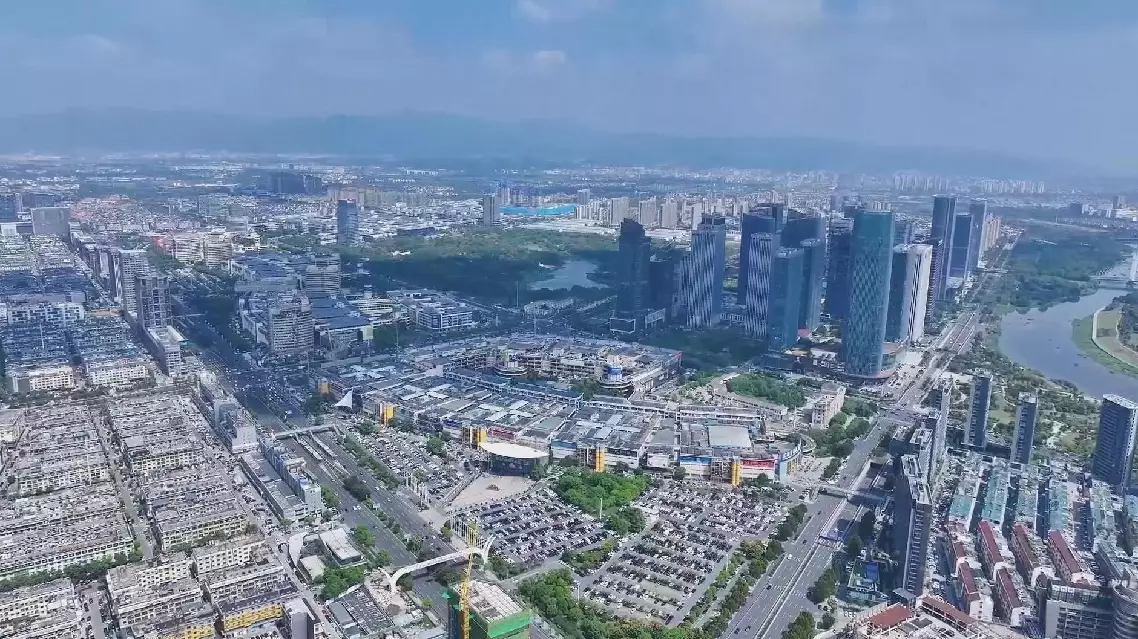
From roadside stalls to "world's supermarket," Yiwu charts China's path of county-level development