Subsidiary legislation relating to operation of Hong Kong Port Area at Huanggang Port gazetted today
The Government today (July 24) published in the Gazette six pieces of subsidiary legislation relating to the operation of the Huanggang Port Hong Kong Port Area and the Related Extended Areas (collectively referred to as the Hong Kong Port Area), so as to tie in with the actual operational needs of the Hong Kong Port Area after the Huanggang Port Hong Kong Port Area Ordinance (Cap. 659) (the Ordinance) comes into operation on July 31, 2026.
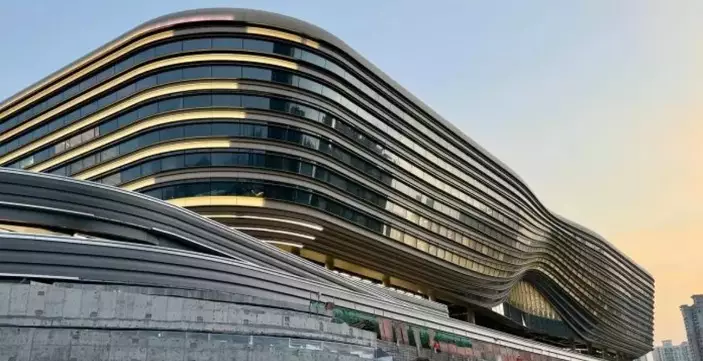
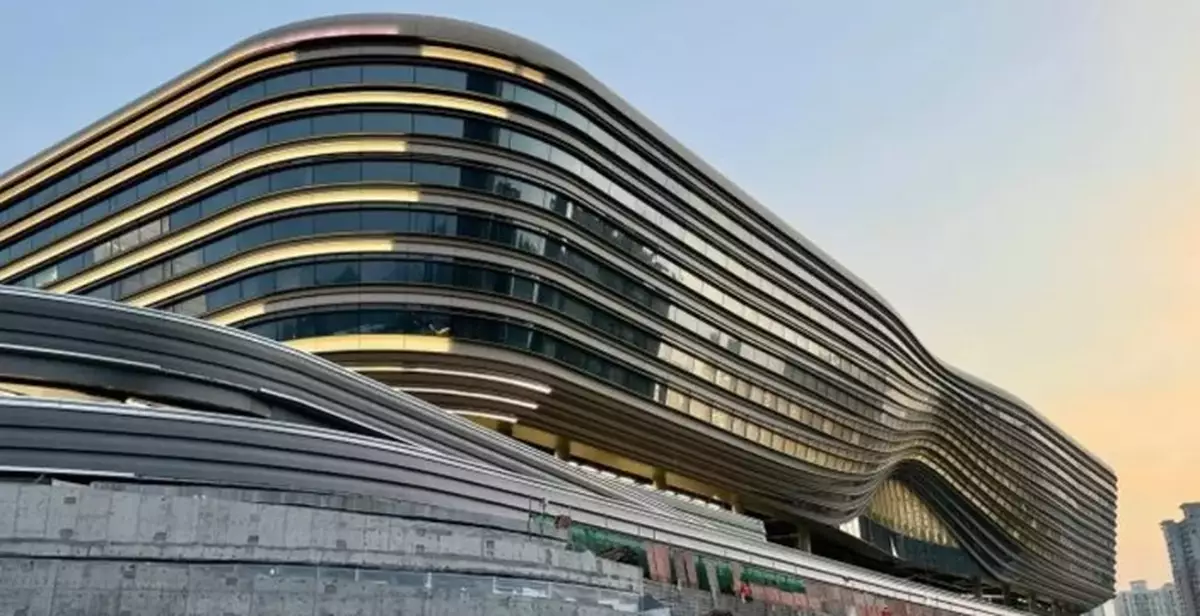
The new Huanggang Port, Photo source: reference image
The redeveloped Huanggang Port in Shenzhen will implement the colocation arrangement and is positioned as the most important 24-hour passenger land boundary control point between Hong Kong and Shenzhen. The Ordinance has been gazetted on July 20, 2026, providing the legal basis for the declaration of the Hong Kong Port Area and the application of the laws of Hong Kong in the Hong Kong Port Area. To tie in with the supporting arrangements for the administration of the Hong Kong Port Area as a closed area, the designation of detention facilities, traffic and transport management, and the provision of public mobile radiocommunications services, etc, the Government has made six pieces of subsidiary legislation. These six pieces of subsidiary legislation will come into operation on July 31, 2026, at the same time with the Ordinance.
The six pieces of subsidiary legislation are as follows:
(1) the Huanggang Port Hong Kong Port Area (Permission to Enter) Notice made by the Commissioner of Police under section 38A of the Public Order Ordinance (Cap. 245), granting general permission to cross-boundary drivers, passengers and travellers to enter or leave the closed area of the Hong Kong Port Area;
(2) the Immigration (Places of Detention) (Amendment) (No. 2) Order 2026, and the Immigration Service (Designated Places) (Amendment) (No. 2) Order 2026 made by the Secretary for Security respectively under section 35(1) of the Immigration Ordinance (Cap. 115), and section 13A(9) of the Immigration Service Ordinance (Cap. 331), setting up detention quarters at the Hong Kong Port Area for the Immigration Department to carry out its routine immigration control and law enforcement duties;
(3) the Cross-boundary Movement of Physical Currency and Bearer Negotiable Instruments Ordinance (Amendment of Schedule 1) Notice 2026 made by the Commissioner of Customs and Excise under section 33(1) of the Cross-boundary Movement of Physical Currency and Bearer Negotiable Instruments Ordinance (Cap. 629), adding "Huanggang Port Hong Kong Port Area" as a specified control point in Schedule 1 to that Ordinance, so that any person arriving in Hong Kong via that control point who is in possession of a large quantity of currency and bearer negotiable instruments (CBNIs) (i.e. CBNIs of a total value more than HK$120,000) is required to make a declaration for the CBNIs concerned to the Customs and Excise Department;
(4) the Road Traffic (Registration and Licensing of Vehicles) (Amendment) Regulation 2026 made by the Secretary for Transport and Logistics under section 6 of the Road Traffic Ordinance (Cap. 374), extending the permitted area for taxis licensed to be available for hire or to carry passengers within the New Territories to all roads in the Hong Kong Port Area; and
(5) the Telecommunications (Huanggang Port Hong Kong Port Area) (Exemption from Licensing) Order made by the Chief Executive in Council under section 39 of the Telecommunications Ordinance (Cap. 106), exempting Mainland mobile network operators as approved by the Mainland authorities from the licensing requirement, so that such operators may provide public mobile radiocommunications services in the Hong Kong Port Area.
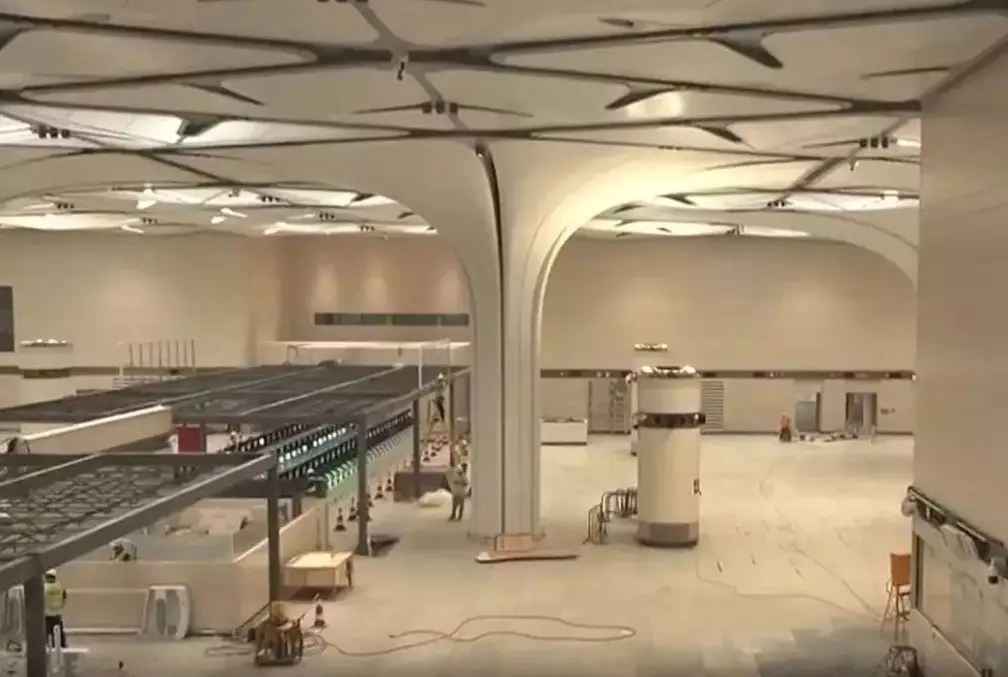
The new Huanggang Port, Photo source: reference image
A Government spokesman said, "The aforementioned subsidiary legislation will come into operation on July 31, 2026, on the same day as the Ordinance and when the Hong Kong Port Area is commissioned, enabling various departments to discharge their duties in the Hong Kong Port Area in accordance with the law. It will also facilitate the preparatory work for the official opening of the Huanggang Port to the public, including a series of system tests, trials and drills to be conducted jointly with the Mainland authorities, to ensure that all operational and clearance arrangements are sound and comprehensive."
The Government briefed the Panel on Security of the Legislative Council (LegCo) on the relevant legislative proposals on March 27, 2026, and the Panel expressed support for the early opening of the Huanggang Port to the public. A LegCo brief on the Huanggang Port Hong Kong Port Area Bill (the Bill) was issued on July 14, 2026, which outlined the legislative proposals for the aforesaid six pieces of subsidiary legislation with the respective drafts attached for LegCo's preview. Subsequently during the deliberation on the Bill at the House Committee meeting on July 16, 2026, members raised no objection to the legislative proposals for the subsidiary legislation.
In accordance with the established procedures, the Government will table the relevant subsidiary legislation before the LegCo for negative vetting at the meeting following their publication in the Gazette. Details of the various pieces of subsidiary legislation are set out in the LegCo brief issued by the Government today.

The new Huanggang Port, Photo source: reference image
Employers and employees should make work arrangements in times of rainstorm warnings
The Labour Department (LD) today (July 27) reminded employers to make prior work arrangements for employees during and after rainstorm warnings and extreme conditions as early as possible. These arrangements not only can ensure the safety of employees and smooth operation of organisations, but also are conducive to maintaining good labour relations.
Formulate work arrangements
Employers should make prior work arrangements and contingency measures which are reasonable and practical. In drawing up and implementing the relevant arrangements, employers should give prime consideration to employees' safety and the feasibility of employees travelling to and from their workplaces, etc. To avoid unnecessary disputes between employers and employees, employers should ensure that all employees are informed of and agree to the relevant work arrangements in advance. The work arrangements should cover the following areas:
* arrangements in respect of reporting for duty;
* arrangements in respect of early release from work;
* arrangements in respect of work resumption (e.g. the number of hours within which employees should resume duty after the relevant warning signal is cancelled or when extreme conditions come to an end, and when safety and traffic conditions allow);
* arrangements in respect of remote work (if applicable);
*arrangements regarding wages and allowances (e.g. calculation of wages and allowances in respect of reporting for duty); and
* arrangements for staff required to report for duty in times of adverse weather or extreme conditions.
"Employers should conduct an early and realistic assessment of whether there is any need for staff to report for duty at workplaces when rainstorm warning or extreme conditions are in force. In making the assessment, employers should take into account the safety of employees, the business nature, operational needs and urgency of service of their organisations, with due regard to the manpower requirements, staffing establishment and circumstances of individual employees, and keep the number of staff required to report for duty at workplaces to the minimum as far as possible," a spokesman for the LD said.
Work arrangements in times of adverse weather and extreme conditions
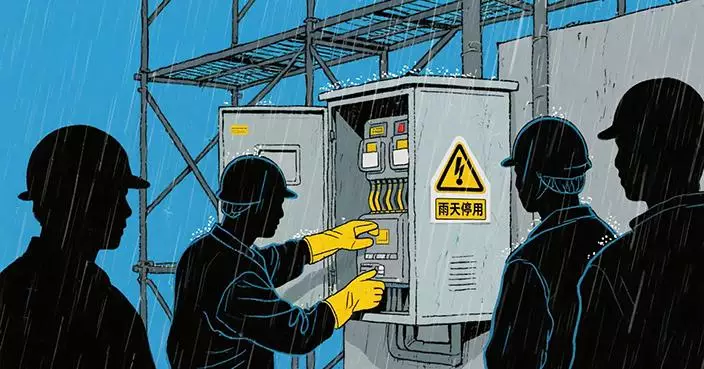
If a Red or Black Rainstorm Warning Signal is issued within working hours, employees working indoors should continue to work as usual unless it is dangerous to do so. Supervisors of employees working outdoors or in exposed areas should suspend outdoor duties as soon as practicable. They should arrange for their employees to take shelter temporarily and resume duty only when weather conditions permit. If the Black Rainstorm Warning Signal is still in force at the end of working hours, employees should stay in a safe place until the heavy rain has passed. Employers should also make available to employees a suitable area in the workplace as temporary shelter from wind and rain.
If the Government makes an extreme conditions announcement, except for those required to report for duty at workplaces according to prior agreements made with employers, employees should stay where they are or in safe places, instead of heading for work. Employees already on duty at workplaces could continue to work as usual in a safe manner. If the workplaces are in danger, employers should arrange to release staff from work early where practicable and safe to do so or arrange for them to take temporary shelter in a safe place. If working time ends while extreme conditions are still in force, employers can release employees from workplaces in a safe manner or provide a suitable area as temporary shelter for those still at workplaces.
If it is necessary for employees to report for duty at workplaces under adverse weather or extreme conditions, employers should discuss and agree with them in advance the duty arrangements and contingency measures. If public transport is suspended or only maintains a limited service when the Black Rainstorm Warning Signal or extreme conditions are in force, employers should provide safe transport services for employees travelling to and from workplaces, or grant them an additional travelling allowance.
The spokesman also reminded employers to observe the statutory liabilities and requirements under the Employment Ordinance, Occupational Safety and Health Ordinance, Factories and Industrial Undertakings Ordinance, Employees' Compensation Ordinance and Minimum Wage Ordinance.
Comply with requirements of legislation
"Tropical cyclones and rainstorms are natural calamities. If employees are not required to report for duty, or are released from workplaces early, or are unable to report for duty at workplaces or resume work on time, etc due to adverse weather, extreme conditions or other environmental factors beyond their control, employers should not deduct their wages, good attendance bonus, or allowances, nor require employees to compensate subsequently for the loss of working hours in response to the aforementioned situations, or reduce employees' entitlements to annual leave, statutory holidays or rest days under the Employment Ordinance to compensate for the loss of working hours resulting from the issuance of adverse weather warnings or the extreme conditions announcement," the spokesman said.
Employers have an obligation to provide and maintain a safe working environment for their employees under the Occupational Safety and Health Ordinance and the Factories and Industrial Undertakings Ordinance. If employees are required to work in times of tropical cyclone warnings, rainstorm warnings or extreme conditions, employers should ensure that the risks at work are reduced as far as reasonably practicable. Moreover, under the Employees' Compensation Ordinance, employers are liable to pay compensation for injuries or deaths incurred when employees are travelling by a direct route from their residence to their workplace, or from their workplace back to their residence after work, four hours before or after working hours on a day when Tropical Cyclone Warning Signal No. 8 or higher, a Red or Black Rainstorm Warning Signal or extreme conditions are in force.
The LD's latest revised "Code of Practice in Times of Adverse Weather and 'Extreme Conditions'" sets out the relevant guidelines in a reader-friendly and concise manner, reiterating the three major principles for formulating work arrangements under adverse weather and extreme conditions, including formulating work arrangements in advance, giving prime consideration to employees' safety, and complying with requirements of labour legislation, and incorporating corporate examples for reference. The booklet can be obtained from branch offices of the Labour Relations Division or downloaded from the department's webpage (www.labour.gov.hk/eng/public/wcp/Rainstorm.pdf).
Source: AI-found images