The central parity rate of the Chinese currency renminbi, or the yuan, weakened 33 pips to 6.7939 against the U.S. dollar Friday, according to the China Foreign Exchange Trade System.
In China's spot foreign exchange market, the yuan is allowed to rise or fall by 2 percent from the central parity rate each trading day.
The central parity rate of the yuan against the U.S. dollar is based on a weighted average of prices offered by market makers before the opening of the interbank market each business day.
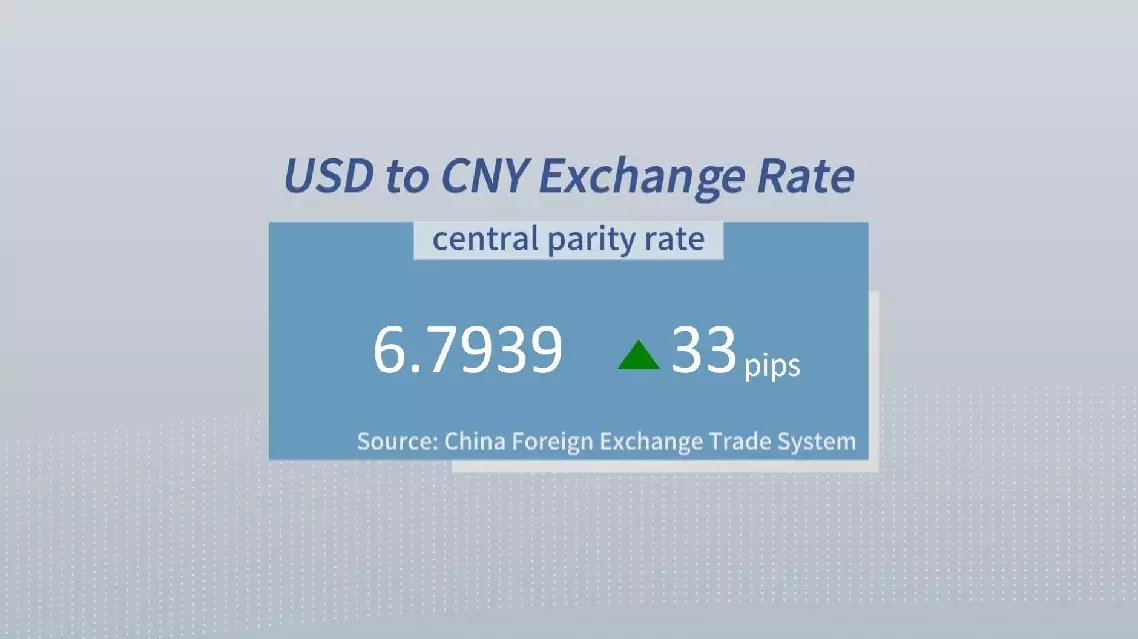
Chinese yuan weakens to 6.7939 against USD Friday
A group of Japanese people gathered on Thursday in Tokyo to protest the government's ongoing push to expand military capabilities, including steps that could erode Japan's postwar pacifist principles.
Japanese Defense Minister Shinjiro Koizumi said in a recent program that Japan should discuss policies related to nuclear weapons without any taboos, triggering strong concern within Japan and from the international community.
During the protest, people voiced strong opposition to the government's defense strategies, including potential changes to Japan's three non-nuclear principles, under which the country pledges not to possess, produce or allow the introduction of nuclear weapons.
"Japan has always identified itself as the world's only victim of atomic bombings. Therefore, Japan must resolutely abide by the Three Non-Nuclear Principles it has upheld thus far," said a protester.
Other protesters criticized the government's broader military buildup, arguing that it contradicts the nation's pacifist constitution, such as boosting the "enemy base strike capability," which refers to Japan's ability to launch counterstrikes against adversary bases before actual damage occurs, if it determines that an attack is imminent.
"Although the government claims this is for 'defense,' it is actually violating Article 9 (the 'peace clause' that renounces war and bans 'war potential') of the Japanese Constitution. For instance, it is enhancing the 'enemy base strike capability.' Despite its repeated claim to strictly observe the 'exclusively defense-oriented' principle, the Japanese government has continuously deployed these offensive weapons. I think these actions are highly problematic," said a protester.
"Absolutely, we cannot allow this [military expansion] to happen. Young people today do not know about the history. Unlike in China, Japan lacks a systematic educational approach to teaching the realities of wartime history. Therefore, we must constantly tell young people about the devastating and tragic consequences of war. I hope that today's politicians, such as [Japanese Prime Minister Sanae] Takaichi and Koizumi, will seriously study the history of the Showa era," said another protester.
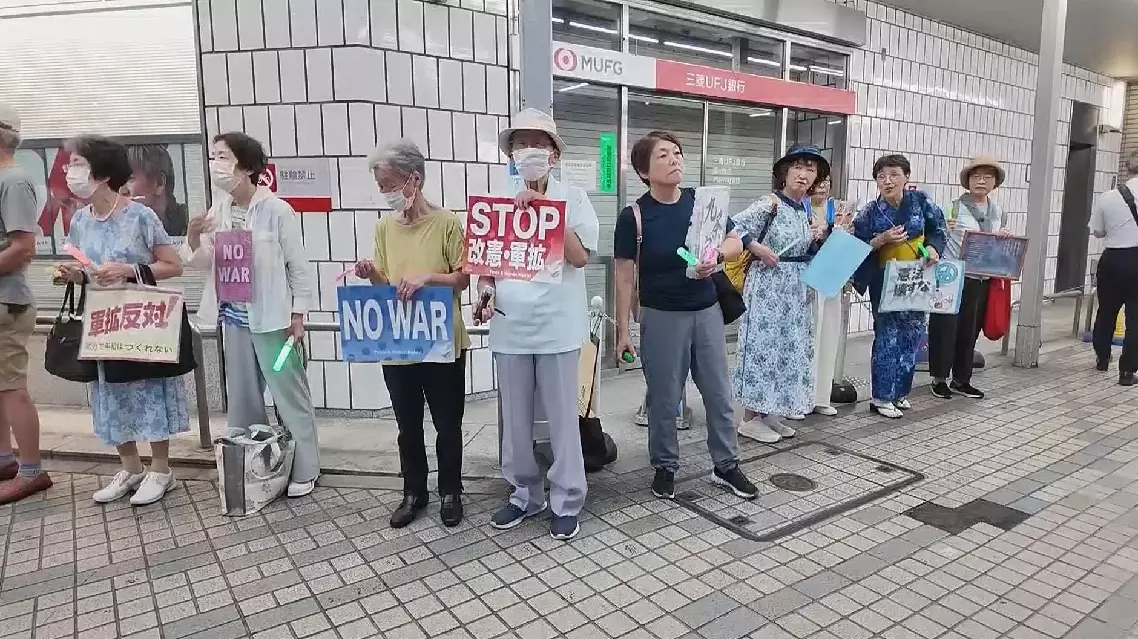
Japanese protest against gov't military expansion push