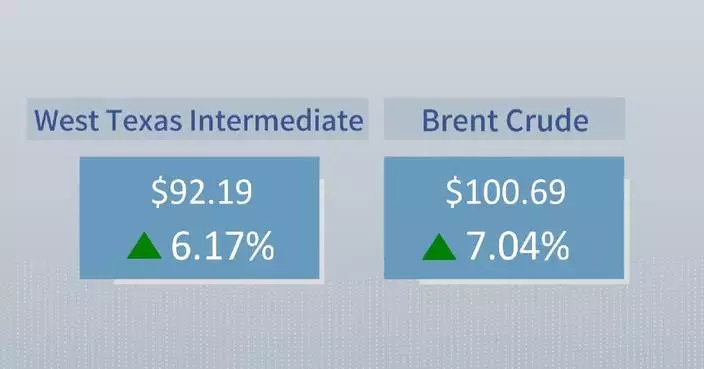
U.S. stocks suffered heavy losses on Thursday as higher capital expenditure guidance from Alphabet and Tesla rattled investor confidence, while global oil prices surged past 100 U.S. dollars a barrel amid persistent Middle East hostilities.
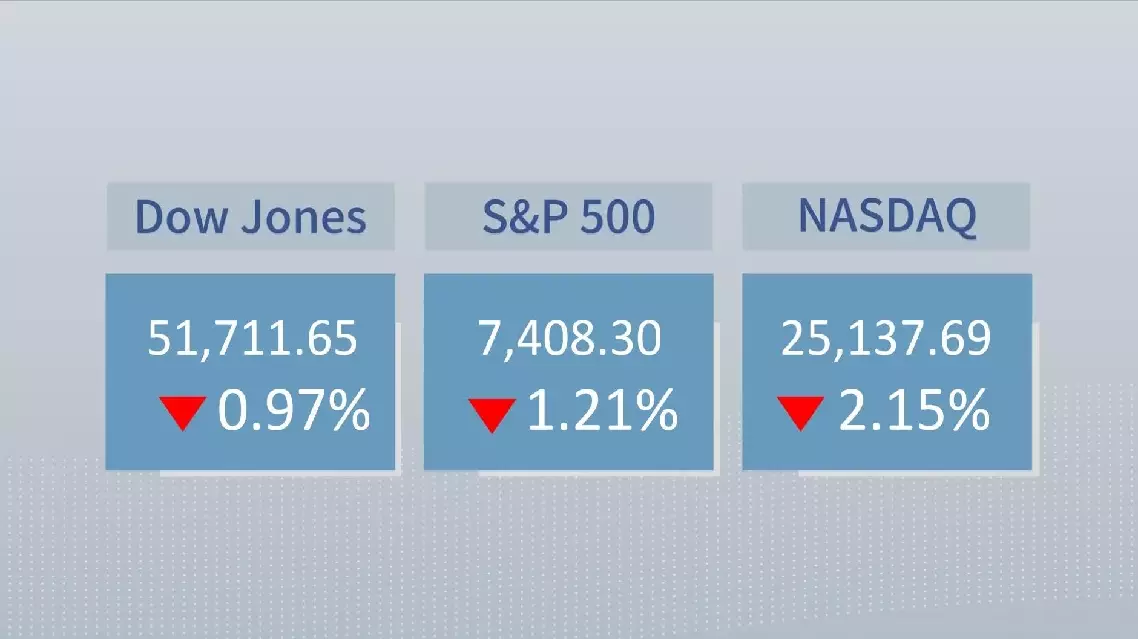
The Dow Jones Industrial Average fell by 506.93 points, or 0.97 percent, to 51,711.65. The Standard and Poor's 500 sank 90.66 points, or 1.21 percent, to 7,408.3. The Nasdaq Composite Index shed 553.21 points, or 2.15 percent, to 25,137.69.
Seven of the 11 primary Standard and Poor's 500 sectors ended in the red, with communication services and consumer discretionary leading the laggards by losing 5.2 percent and 5.12 percent, respectively. Meanwhile, industrials and health led the gainers by rising 1.77 percent and 1.29 percent, respectively.
The broader market decline was driven by a sharp sell-off across "The Magnificent Seven" technology heavyweights following Wednesday's after-hours quarterly disclosures. Although Google parent Alphabet posted fundamentally solid financial results, the company's decision to raise its capital expenditure guidance stoked intense market scrutiny regarding near-term return on investment for AI infrastructure. Alphabet lost nearly 7 percent on Thursday.
Concurrently, Tesla plummeted 14.52 percent after delivering a significant second-quarter earnings miss. Tesla CEO Elon Musk further cautioned that 2026 will be a "massive capex year" as the firm aggressively ramps up investments in Optimus humanoid robotics, autonomous robotaxis, and specialized data center capacity. The cautious sentiment spilled over to peer mega-cap growth equities, pulling Amazon and Meta Platforms down 4.57 percent and 3.36 percent, respectively.
U.S. stocks plunge as Alphabet, Tesla shares tumble
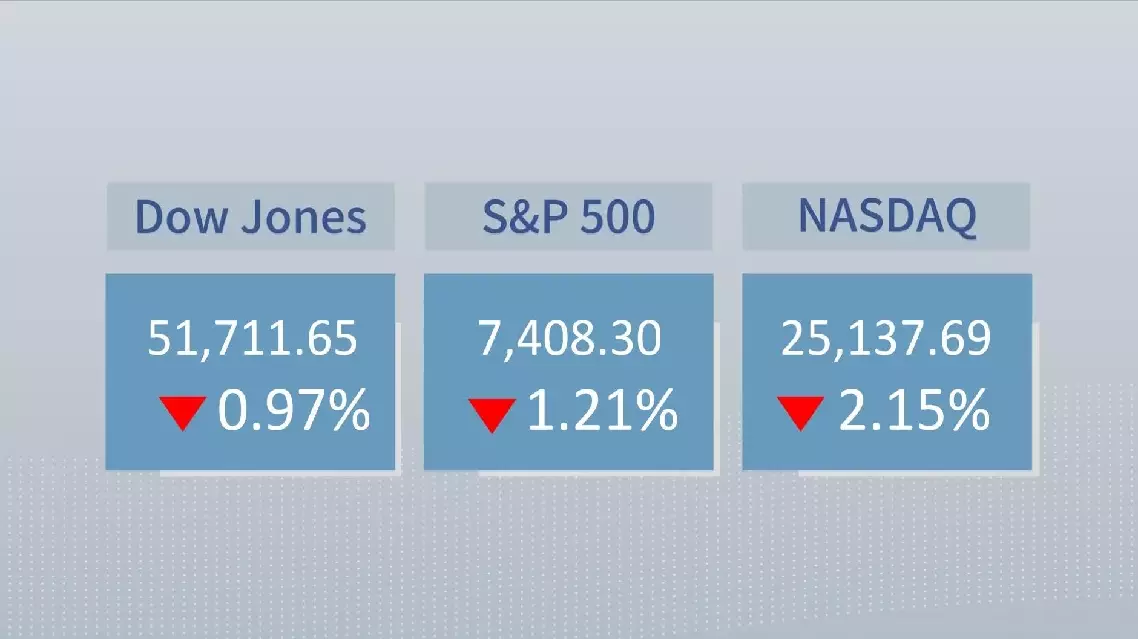
U.S. stocks plunge as Alphabet, Tesla shares tumble
A group of Japanese people gathered on Thursday in Tokyo to protest the government's ongoing push to expand military capabilities, including steps that could erode Japan's postwar pacifist principles.
Japanese Defense Minister Shinjiro Koizumi said in a recent program that Japan should discuss policies related to nuclear weapons without any taboos, triggering strong concern within Japan and from the international community.
During the protest, people voiced strong opposition to the government's defense strategies, including potential changes to Japan's three non-nuclear principles, under which the country pledges not to possess, produce or allow the introduction of nuclear weapons.
"Japan has always identified itself as the world's only victim of atomic bombings. Therefore, Japan must resolutely abide by the Three Non-Nuclear Principles it has upheld thus far," said a protester.
Other protesters criticized the government's broader military buildup, arguing that it contradicts the nation's pacifist constitution, such as boosting the "enemy base strike capability," which refers to Japan's ability to launch counterstrikes against adversary bases before actual damage occurs, if it determines that an attack is imminent.
"Although the government claims this is for 'defense,' it is actually violating Article 9 (the 'peace clause' that renounces war and bans 'war potential') of the Japanese Constitution. For instance, it is enhancing the 'enemy base strike capability.' Despite its repeated claim to strictly observe the 'exclusively defense-oriented' principle, the Japanese government has continuously deployed these offensive weapons. I think these actions are highly problematic," said a protester.
"Absolutely, we cannot allow this [military expansion] to happen. Young people today do not know about the history. Unlike in China, Japan lacks a systematic educational approach to teaching the realities of wartime history. Therefore, we must constantly tell young people about the devastating and tragic consequences of war. I hope that today's politicians, such as [Japanese Prime Minister Sanae] Takaichi and Koizumi, will seriously study the history of the Showa era," said another protester.
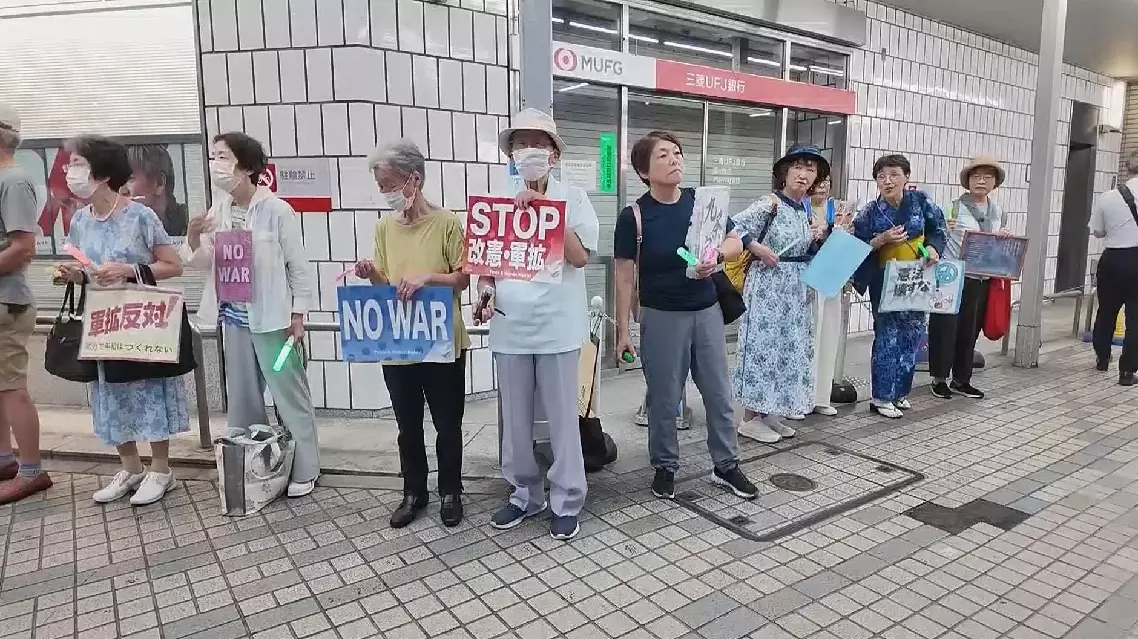
Japanese protest against gov't military expansion push