SEOUL, South Korea (AP) — A United Nations committee voted Friday to inscribe a major archaeological site in the West Bank and a set of castles in southern Lebanon as World Heritage sites, despite objections from Israel, which had urged the committee to reject the bids.
The decision at a U.N. Educational, Scientific and Cultural Organization meeting in South Korea came days after Israel’s Foreign Ministry urged the committee to reject efforts to designate the small West Bank town of Sebastia and the Lebanese castles, calling the nominations a “weaponization of cultural heritage.”
At their meeting in Busan, members of the UNESCO committee decided to place Sebastia and five castles in Lebanon’s Mount Amel area on both the World Heritage List and the List of World Heritage in Danger after reviewing the nominations on an emergency basis, citing ongoing conflicts in the Middle East.
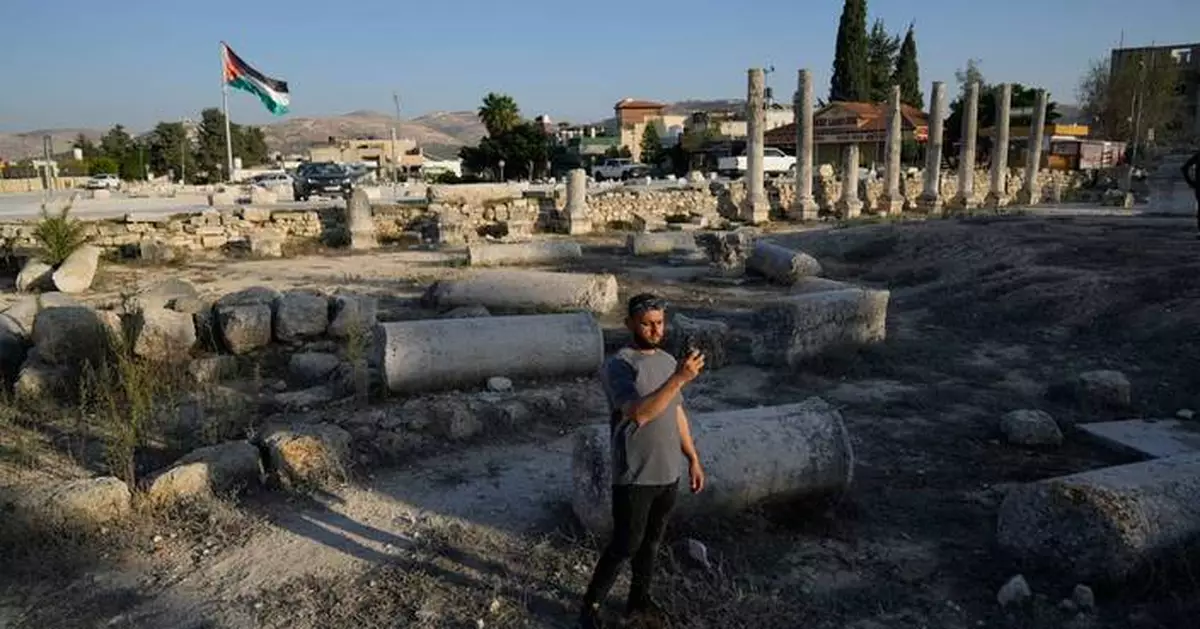
Sebastia, a hilltop town about 10 kilometers (6 miles) northwest of Nablus in the Israeli-occupied West Bank, is identified by scholars as ancient Samaria, capital of the biblical Kingdom of Israel. The area’s archaeological remains span the Iron Age, Roman, Byzantine and Islamic periods. Christian and Islamic tradition holds that John the Baptist was buried there, according to a UNESCO website.
Sebastia’s nomination, first submitted by the Palestinian delegation to UNESCO in 2012, argued that World Heritage status was needed to help preserve the site, saying it remains largely undeveloped under Israeli control and requires additional conservation despite attracting tourists.
The designation comes as Israel, which does not recognize a Palestinian state, moves to expropriate large swaths of land around the site, even as it faces pressure to crack down on violence by Israeli settlers in the Palestinian territory.
The five castles in the Mount Amel region are recognized for their layered architectural heritage, combining Crusader, Ayyubid, Mamluk and local influences, reflecting the evolution of fortified architecture over nearly nine centuries, according to a UNESCO description.
Adel Naim Daoud Atieh, a member of the Palestinian delegation to UNESCO, said the World Heritage designation rewards the perseverance of Sebastia’s residents, “who have protected this extraordinary site through generations, despite occupation, restrictions, and repeated attempts to separate them from their own heritage.”
Israel withdrew from UNESCO in 2019, accusing the organization of being biased against it and of downplaying its historical ties to the Holy Land. A member of the Israeli delegation, who are attending the Busan meetings as observers, said it was a “shame politicization has ruined UNESCO and led to mockery of history.”
In Tuesday’s statement, Israel’s Foreign Ministry accused the Palestinian delegation of waging a “hostile, one-sided campaign” at UNESCO by falsely portraying Sebastia as an area facing an emergency, calling the effort a political attempt to “erase the site’s profound, well-documented Jewish and Christian history.”
Israel’s Foreign Ministry also took objection to efforts to list Beaufort Castle in southern Lebanon as a World Heritage site. The castle was part of the nomination covering five castles in the Mount Amel area.
The ministry said Hezbollah, an Iran-backed militant group, has turned Beaufort Castle into a military stronghold by building tunnels beneath the site and launching rockets from the area, and accused UNESCO of ignoring those developments.
UNESCO and the Lebanese embassy in South Korea declined to comment on the Israeli claims about Hezbollah. At Friday’s meeting, a Lebanese delegate said the castles have been used “only for cultural and tourism purposes” since Israel’s withdrawal from southern Lebanon in 2000 and accused Israeli media of circulating images of tourist facilities as military tunnels.
The UNESCO committee on Wednesday placed another Lebanese site, Tyre, an ancient Phoenician city in the southern part of the country, on the list of world heritage sites in danger.
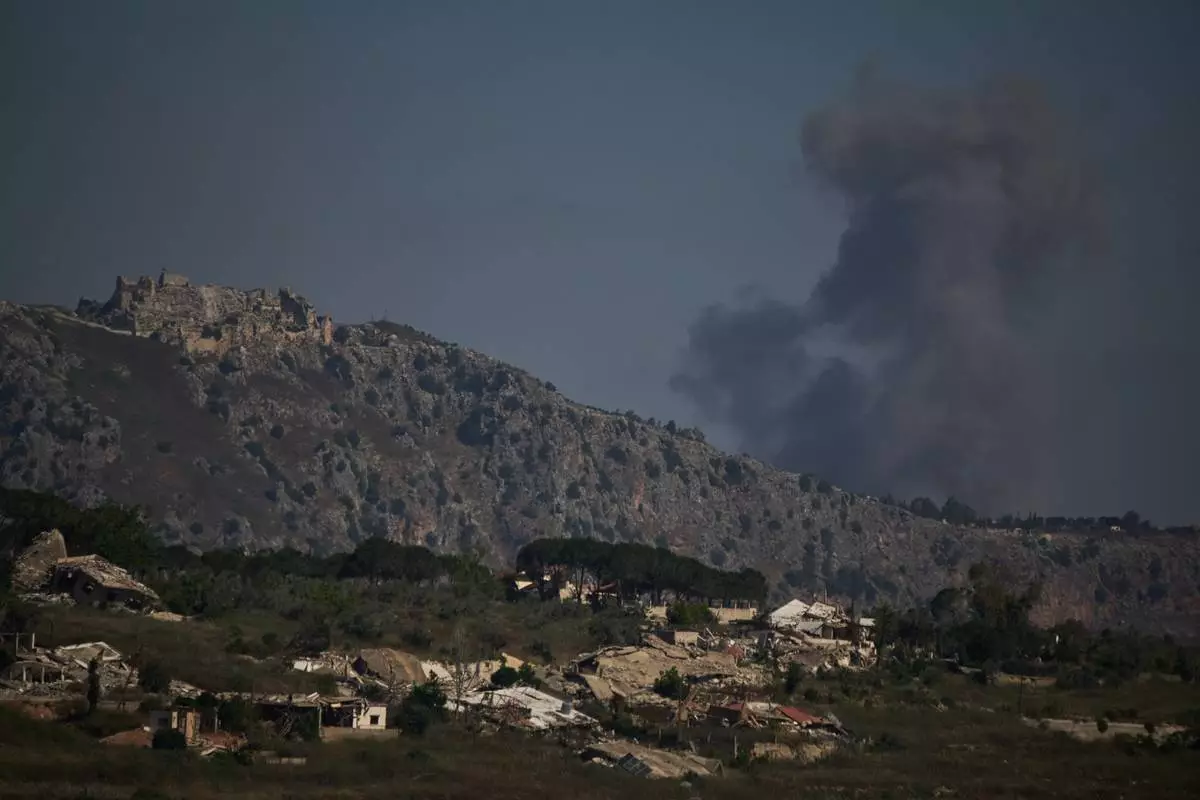
FILE - Smoke rises to the sky in an area near Beaufort Castle following an Israeli military strike in southern Lebanon as seen from northern Israel, Friday, June 19, 2026. (AP Photo/Leo Correa, File)
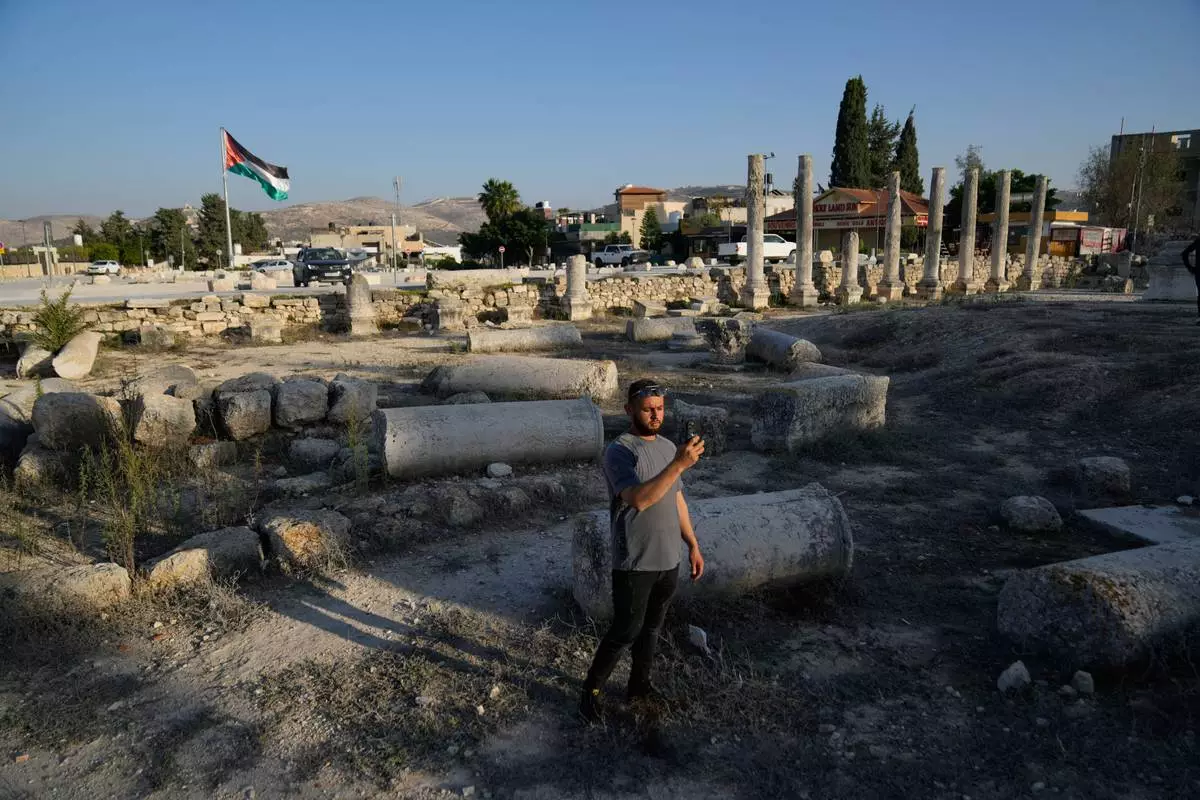
FILE - A Palestinian visitor takes a photo at the Roman historical site in the West Bank town of Sebastia Thursday, Nov. 20, 2025. (AP Photo/Nasser Nasser, File)
CHAPINERIA, Spain (AP) — Spain’s government declared a national emergency Friday after wildfires forced the evacuation of some 10,000 people from villages near Madrid, while in southern France more than 60,000 residents fled their homes, including by boat, to escape two major blazes.
“We are experiencing a dramatic situation, not just in several Spanish regions but also in neighboring countries,” Spanish Prime Minister Pedro Sánchez wrote on X.
“My solidarity with all the people who have been affected and been forced to leave their homes.”
Authorities in southwestern France ordered more mass evacuations along the Atlantic coast because of the large wildfires. France’s Interior minister Laurent Nunez said 40,000 people have been evacuated in the Gironde department, and 23,000 in the Landes.
Spain and France both asked fellow European Union members for help.
“We will soon be able to rely on reinforcements including two Croatian Canadair firefighting aircraft, two Portuguese Air Tractor aircraft, and two heavy-lift Black Hawk helicopters from the Czech Republic and Slovakia,” French President Emmanuel Macron said.
Spanish Interior Minister Fernando Grande-Marlaska said that Italy and Greece are each sending two Canadair water-dumping airplanes.
Southern Europe has seen multiple large fires this summer. Europe is the world’s fastest-warming continent, with temperatures increasing twice as quickly as the global average since the 1980s, according to the European Union’s Copernicus Climate Change Service. Scientists warn that climate change is exacerbating the frequency and intensity of heat and dryness, making the region more vulnerable to wildfires.
The national emergency in Spain means that the nation’s interior ministry, which controls police and security forces, has taken charge of overseeing the firefighting efforts by Spain’s regions as they struggle to battle multiple blazes that are being fanned by a heatwave. Another large fire in the central province of Ávila prompted national authorities to step in.
“All around the town was smoke and fire, I was scared. Everything was fire and smoke, people were nervous,” 33-year-old Joaquin Espinosa, a fishmonger in the village of Chapinería, located an hour west of Madrid, told The Associated Press.
The regional government of Madrid, which spans a wide area around the capital city, said 10,000 people had been evacuated from different villages as multiple fires raged out of control late on Thursday.
“In my 60 years I have never seen something like this in my village, I have never seen fire of these dimensions,” Francisco Martínez, the mayor of Burgohondo, whose 1,500 residents were preventively evacuated in Ávila, told Spain’s national broadcaster TVE.
Spain's military emergency brigades and national firefighting brigades have mobilized to support regional firefighting units and water-dumping aircraft. Spanish Minister for the Ecological Transition Sara Aagesen said that Spain has seen an 1,140 square kilometers (440 square miles) already burned this year, more than five times the burned terrain it had through the first half of 2025.
Grande-Marlaska said that in addition to the major fires in Madrid and in Ávila that have required the national government to get directly involved, there are nine serious fires in other parts of Spain.
Temperatures are expected to top 39 degrees Celsius (102 Fahrenheit) in parts of Spain on Friday, with a high of 44 C (111 F) in Almeria in the southeast.
Spanish television showed video taken by retreating residents of walls of flames topped by long plumes of smoke advancing through woods and scrublands. High winds and hilly terrain complicated efforts by firefighters, who combated the blazes with firetrucks and bulldozers.
This year's fires include Spain's second-largest ever fire that consumed some 320 square kilometers (120 square miles) in recent days in the province of Guadalajara north of Madrid. Thirteen people were also killed in a fire in southern Spain earlier this month, the deadliest fire in recent memory for Spain.
Sánchez called on Wednesday for a pact between political parties to fight climate change that he said is key to adapting to a more fire-prone climate.
In France, some 100 square kilometers (38 square miles) have been burned by the blaze that has been raging since Wednesday near the touristic Cap Ferret peninsula.
Located just 60 kilometers (37 miles) from Bordeaux, the peninsula offers stunning landscapes and sandy beaches as well as oyster-farming villages and upmarket resorts.
More than 20,000 people had already been evacuated from towns and vacation resorts on Thursday. The new evacuations were carried out by road, with boat shuttles provided for people who could not travel by their own means.
Hundreds of firefighters have been deployed and additional ground and aerial reinforcements have been sent to tackle the blaze. Meanwhile, another major wildfire burned further south down the coast in the municipalities of Biscarrosse and Parentis-en-Born. It remained uncontained as strong winds did not help firefighters.
In Italy, wildfires continued to ravage parts of Sicily, with the central-western province of Agrigento particularly hard hit.
Italy’s national fire department reported late Thursday that it had mounted over 1,400 operations since last weekend, 240 of which were in the Agrigento area. By Friday, seven of Sicily’s nine provinces remained at the highest level of alert for wildfires, with only the eastern coastal provinces of Messina and Catania registering a lower risk level, the civil protection reported in its daily bulletin.
Fueled by temperatures that have topped 40C (104F), low humidity and winds, the blazes have forced scattered evacuations and were blamed for the death of a firefighter responding to a fire in Caltanissetta.
Globally, 2025 was the third-hottest year on record, bringing severe heat waves across Europe. Scientists warn that climate change is exacerbating the frequency and intensity of heat and dryness especially in southeastern Europe, making the region more vulnerable to health impacts and wildfires.
Petrequin reported from Paris. Wilson reported from Barcelona, Spain. Nicole Winfield in Rome contributed to this report.
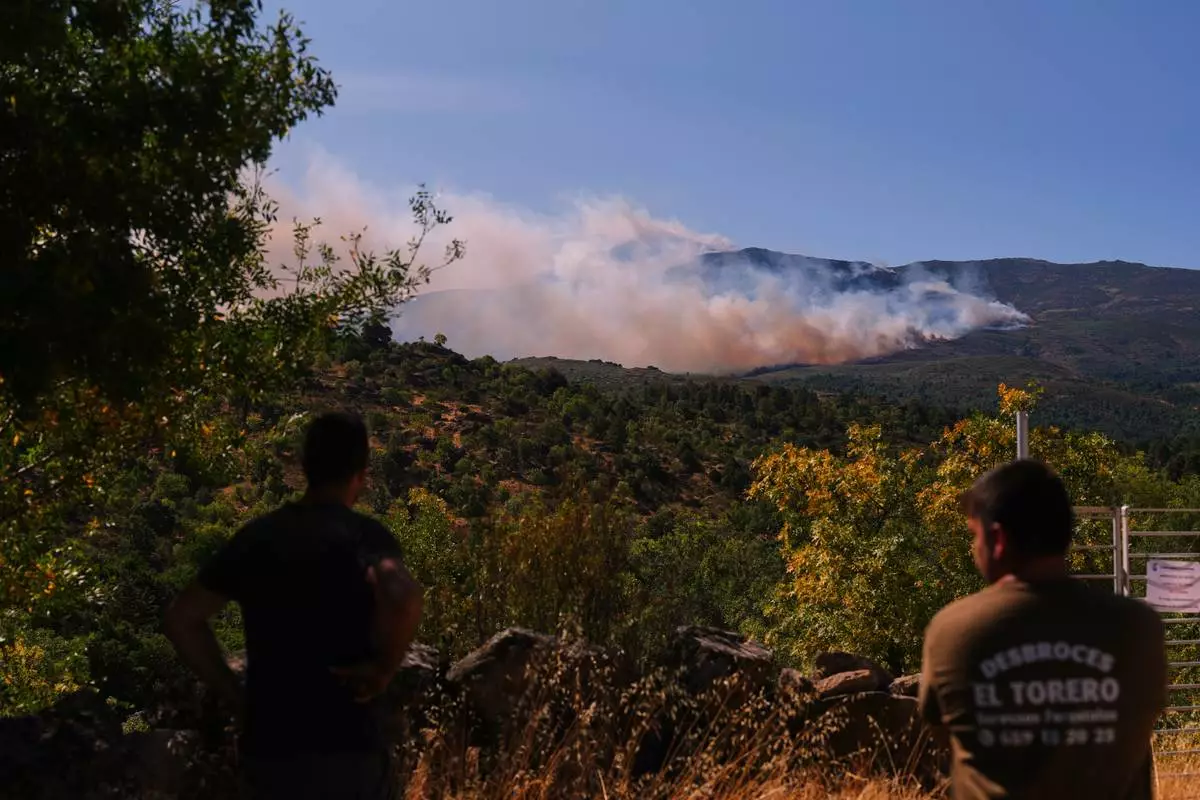
Smoke and flames rise as a wildfire advances near Burgohondo, Ávila province, Spain, Friday, July 24, 2026. (AP Photo/Manu Fernandez)
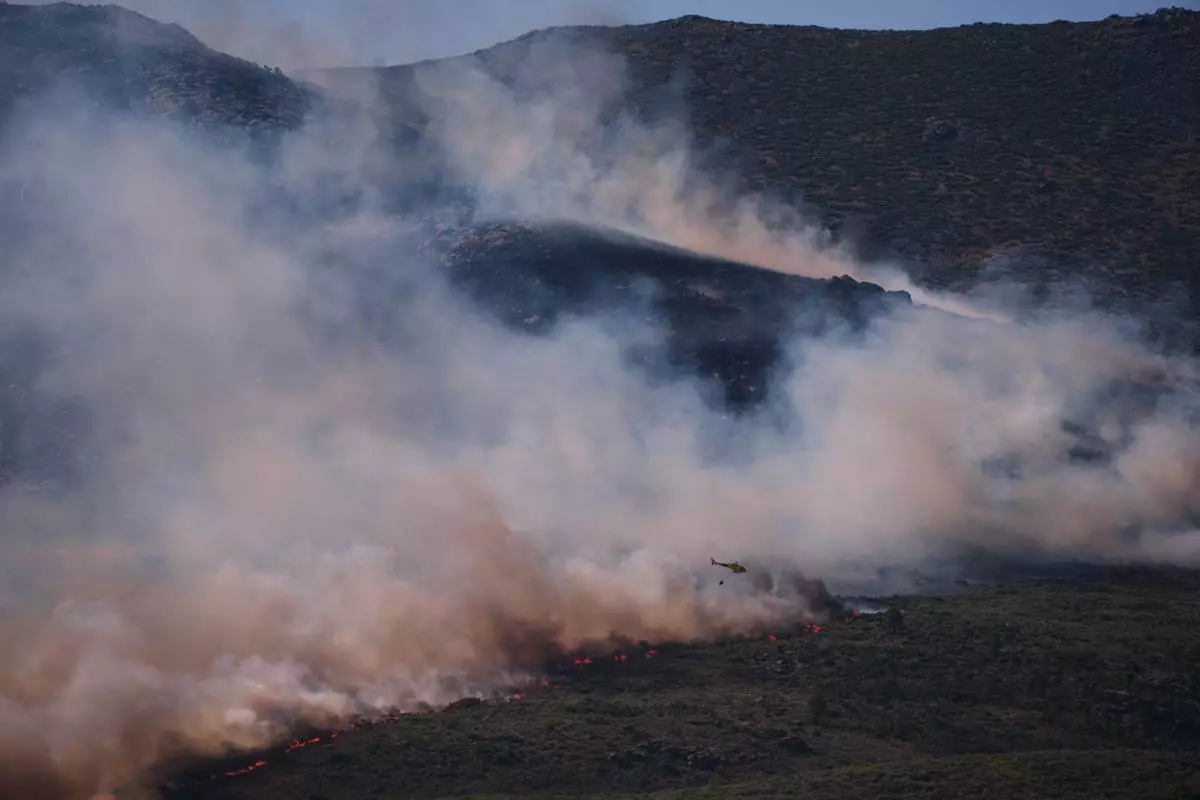
A firefighting helicopter drops water on the flames as a wildfire advances near Burgohondo, Ávila province, Spain, Friday, July 24, 2026. (AP Photo/Manu Fernandez)
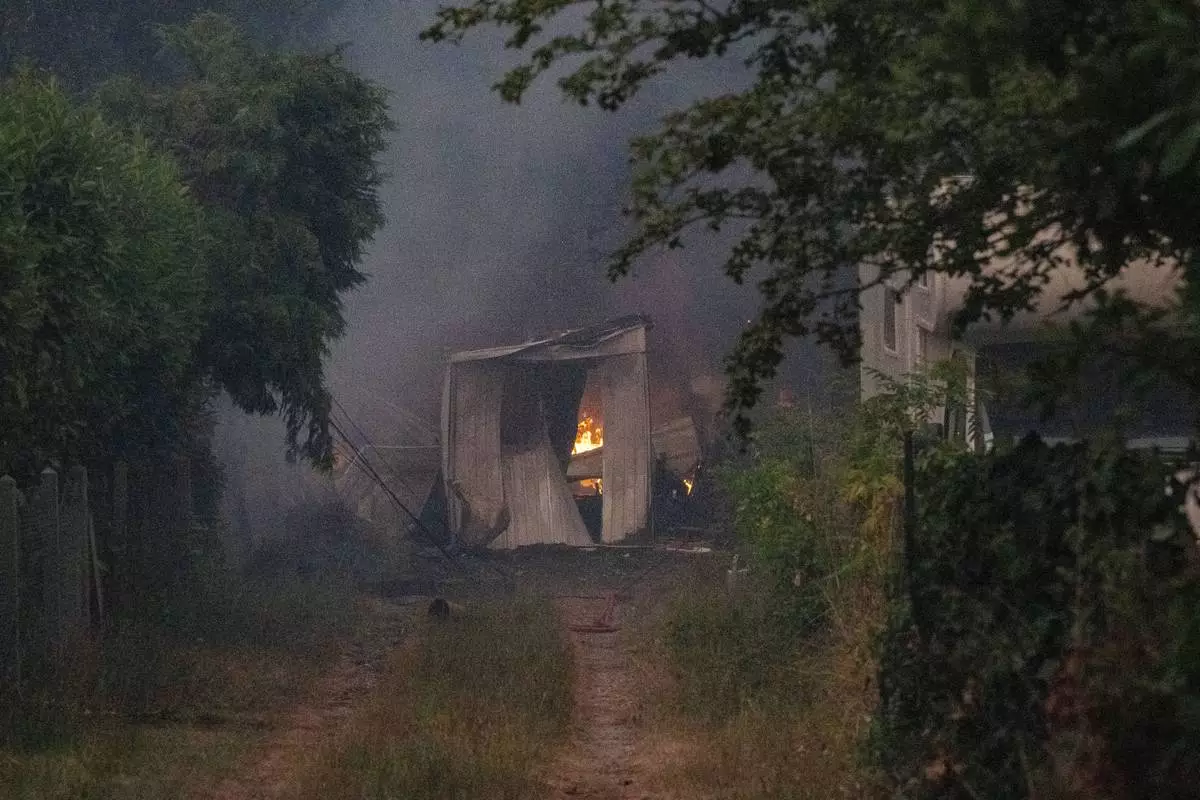
A burning barn is seen next to a farm house during wildfires near Le Porge, western France, Thursday, July 23, 2026. (AP Photo/Caroline Blumberg)
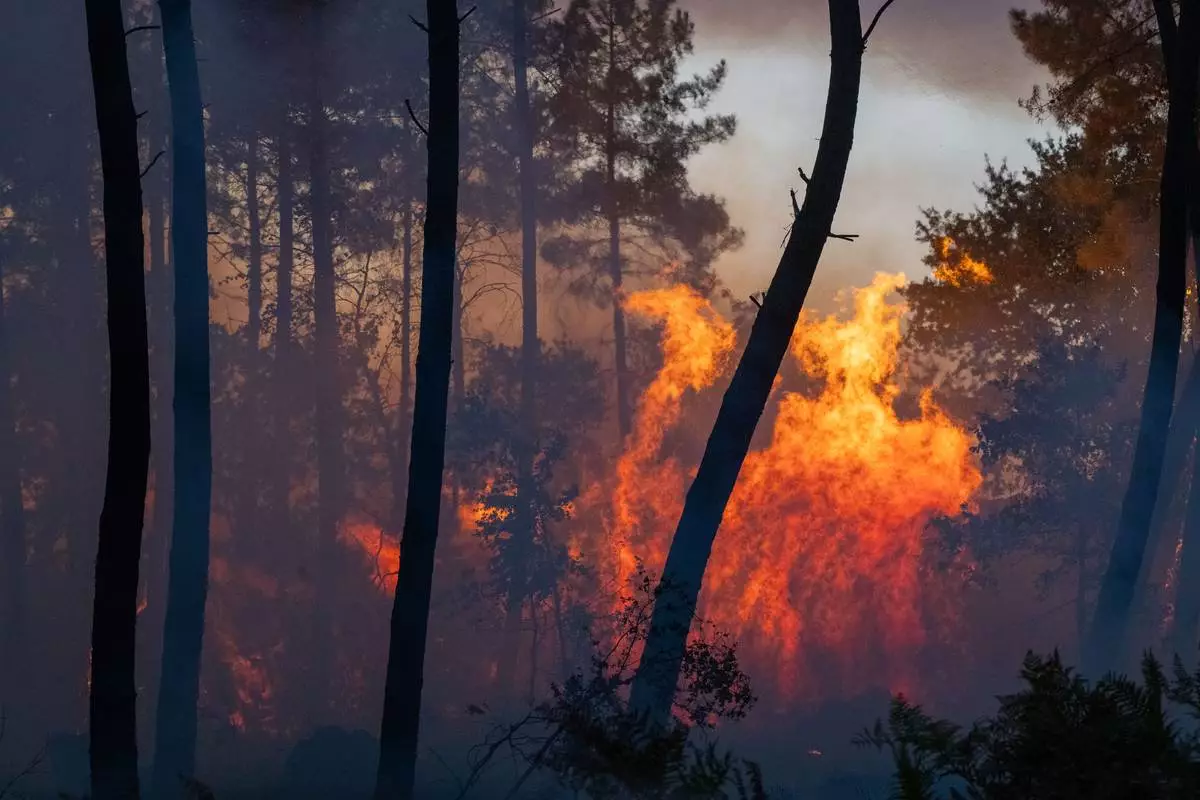
Wildfires advance near Le Proge region, western France, Thursday, July 23, 2026. (AP Photo/Caroline Blumberg)
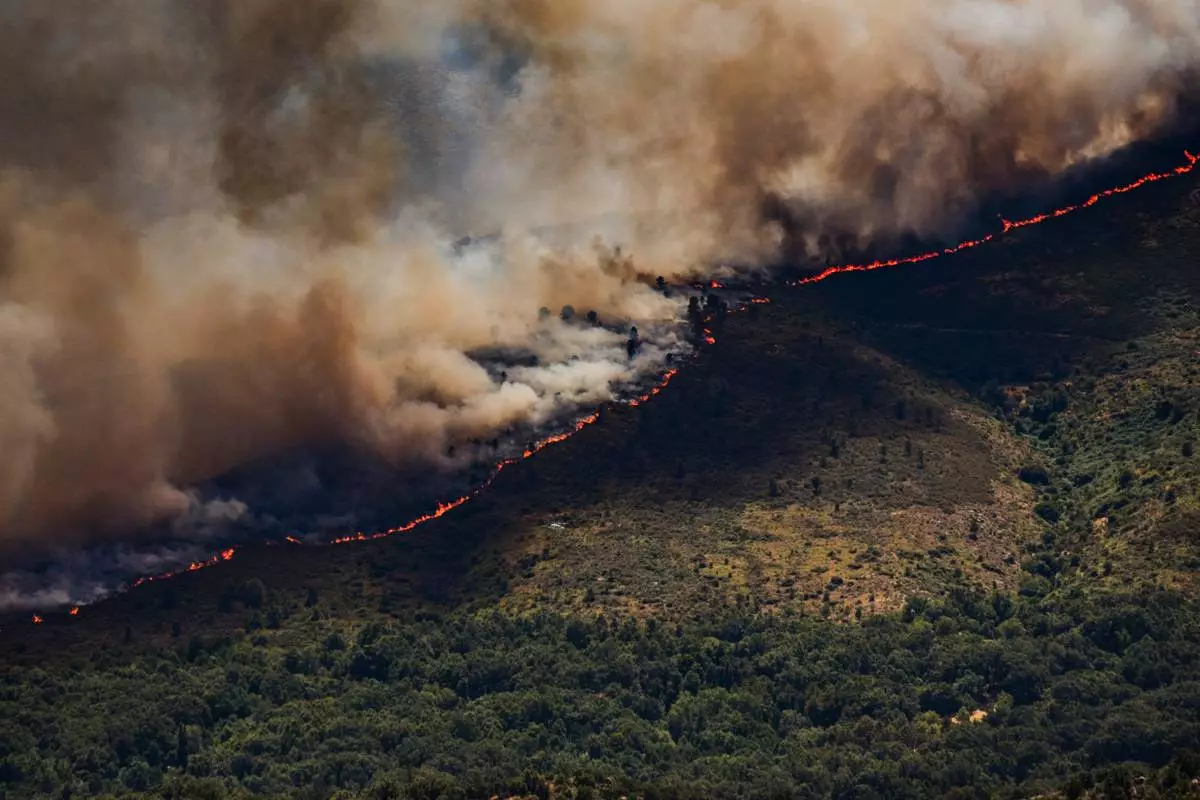
A wall of flames advances as a wildfire burns near Burgohondo, in Ávila province, Spain, Thursday, July 23, 2026. (Mateo Lanzuela/Europa Press via AP)
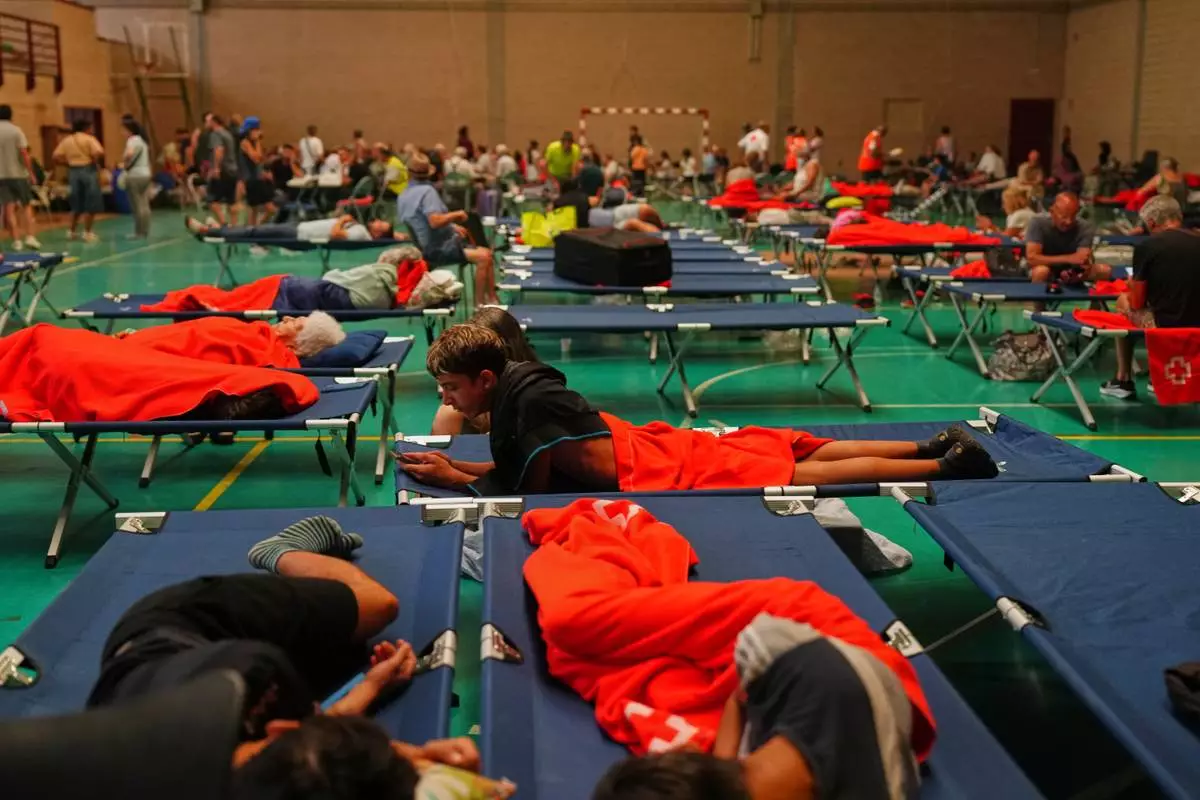
Residents spend the night at a sports center after being evacuated from their homes because of the threat of a wildfire in Cebreros, Ávila province, Spain, Friday, July 24, 2026. (AP Photo/Manu Fernandez)
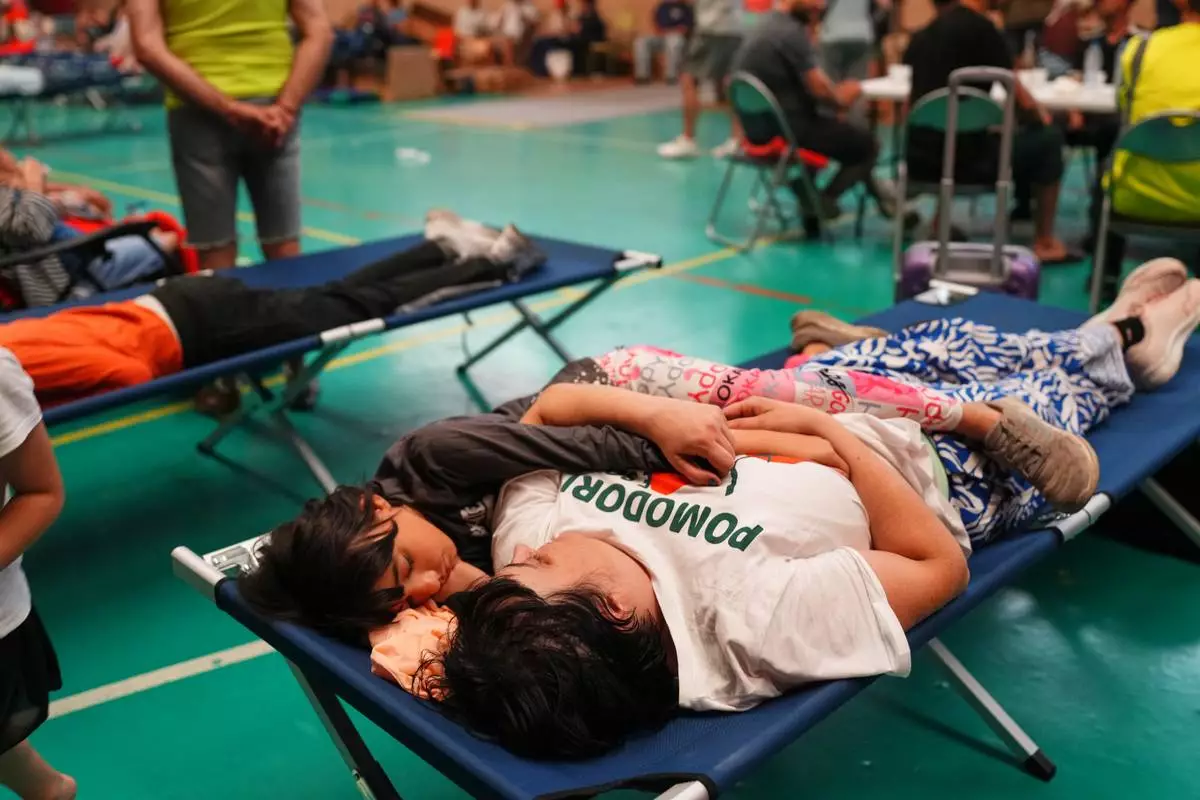
Residents spend the night at a sports center after being evacuated from their homes because of the threat of a wildfire in Cebreros, Ávila province, Spain, Friday, July 24, 2026. (AP Photo/Manu Fernandez)
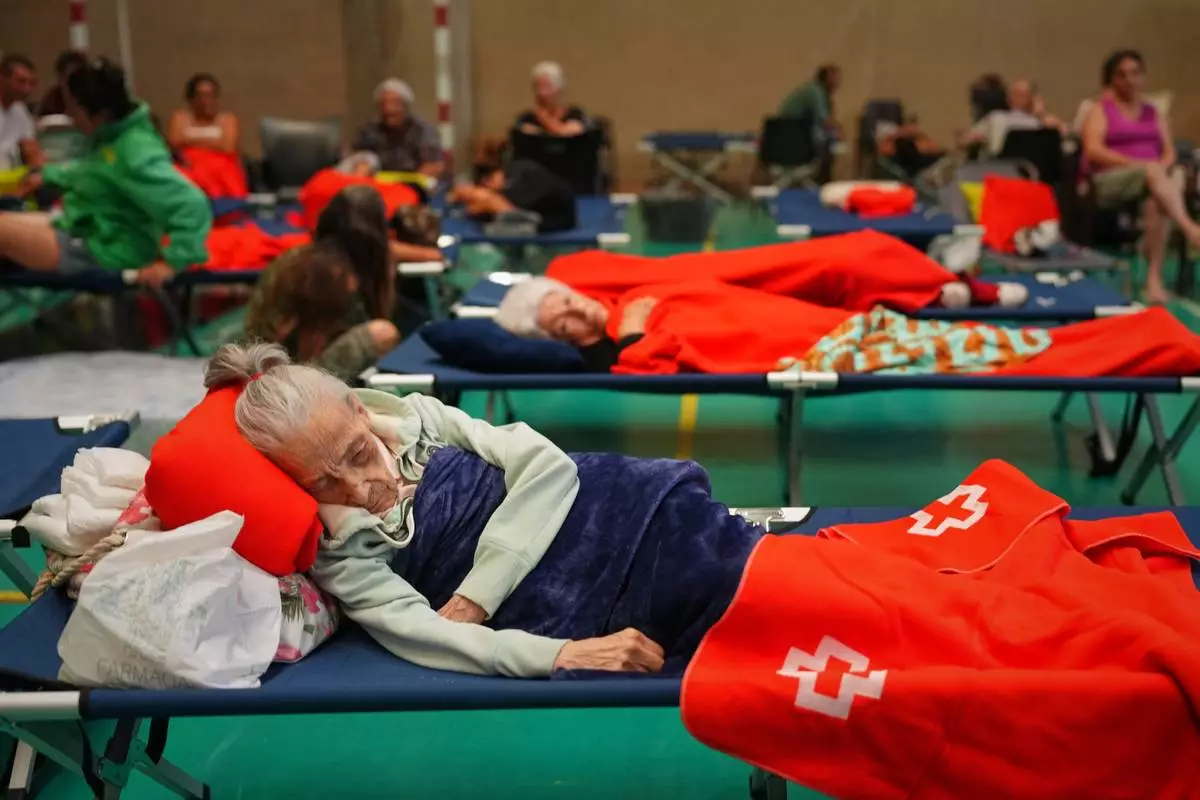
Residents spend the night at a sports center after being evacuated from their homes because of the threat of a wildfire in Cebreros, Ávila province, Spain, Friday, July 24, 2026. (AP Photo/Manu Fernandez)