Skip to Content Facebook Feature Image

Spain coach De la Fuente says Argentina's conduct after World Cup final was 'unacceptable'

Sport

Spain coach De la Fuente says Argentina's conduct after World Cup final was 'unacceptable'
Sport

Sport

Spain coach De la Fuente says Argentina's conduct after World Cup final was 'unacceptable'

2026-07-24 18:58 Last Updated At:19:00

GENEVA (AP) — As FIFA investigates Argentina’s conduct after the World Cup final, Spain coach Luis de la Fuente has described the incidents as “intolerable and unacceptable.”

FIFA asked one of its disciplinary prosecutors Monday to report back on testy on-field confrontations after Spain’s 1-0 win in extra time Sunday to dethrone the defending champion.

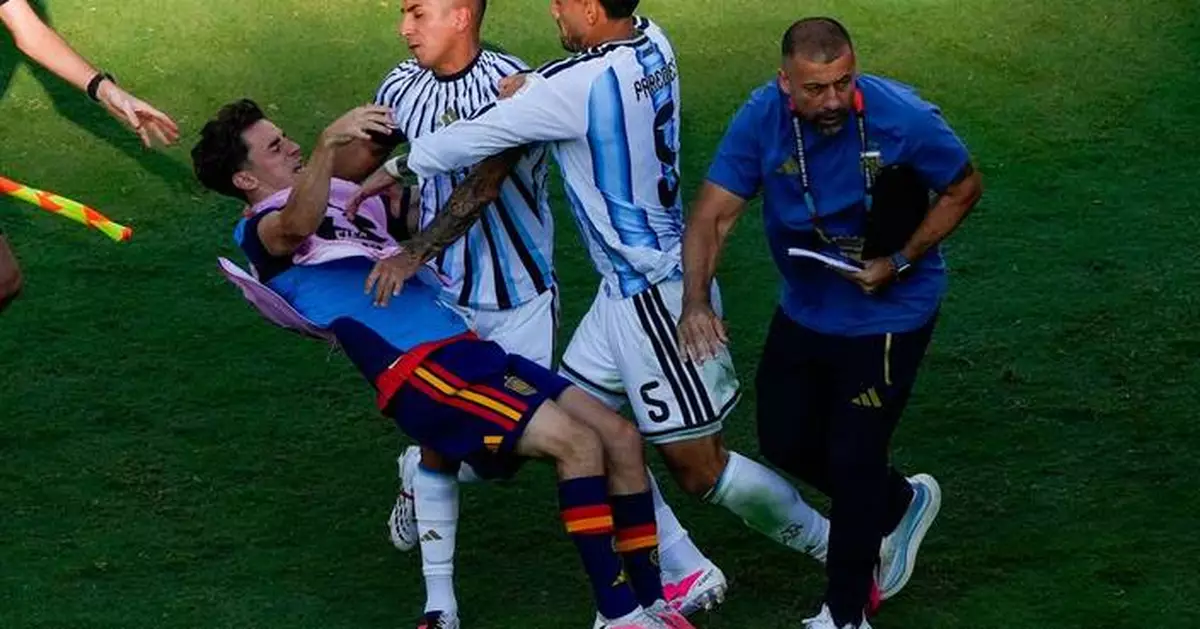
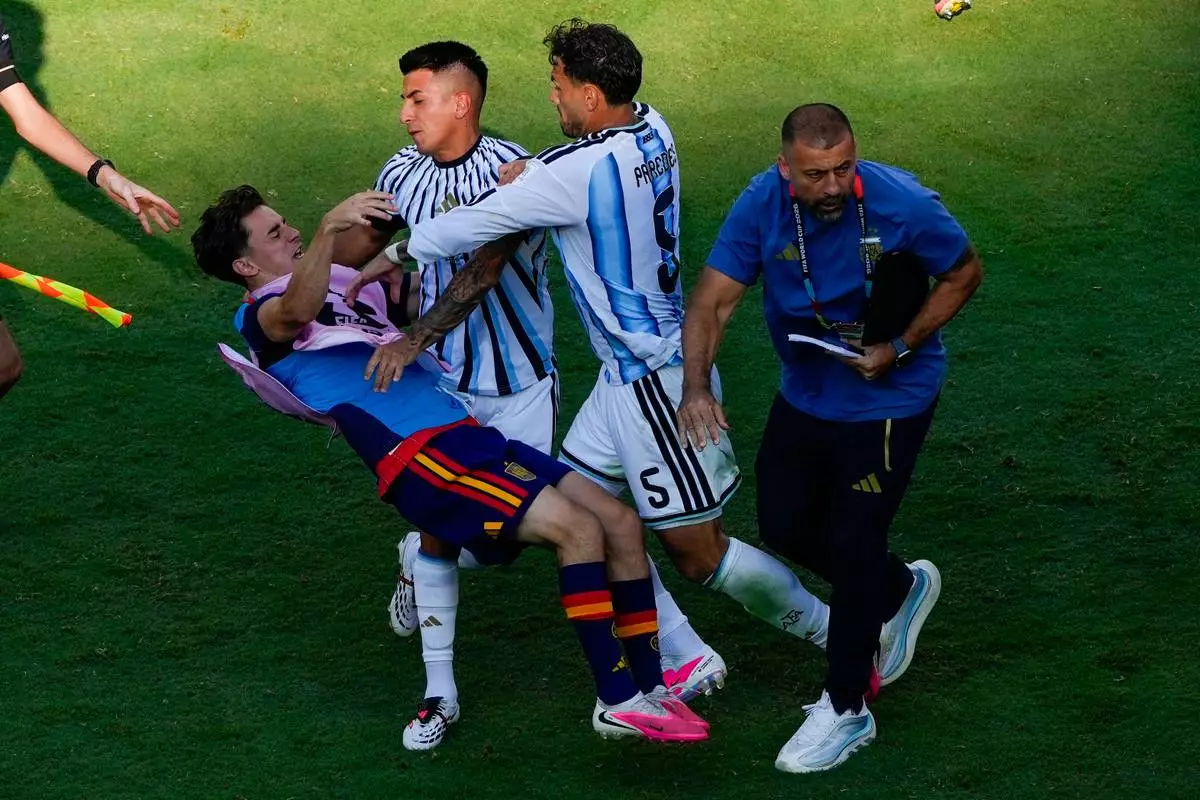
Argentina midfielder Leandro Paredes physically tangled with Spain players Eric Garcia and Gavi, and Spain captain Rodri was hit in the stomach as he ran past Argentina defender Nahuel Molina.

“It cannot be allowed,” De la Fuente told Spanish public broadcaster TVE on Thursday, adding he did not see the incidents at the time while “celebrating with other people.”

“In any case, I find it intolerable and unacceptable from players of that caliber, whom I had been praising in the days before and who have a magnificent coach,” the Spain coach said.

FIFA has given no details of the remit for its investigator, or if witness statements could be sought from Spain players and staff.

Argentina assistant coach Roberto Ayala apologized Wednesday for his confrontation with Dani Olmo, which he described as a shove and not a punch.

De la Fuente praised his players in the TVE interview for how they handled the situation at MetLife Stadium.

“I want to highlight our behavior in the face of that kind of aggression and provocation,” the coach said. “Our players always kept their composure and behaved like true professionals.”

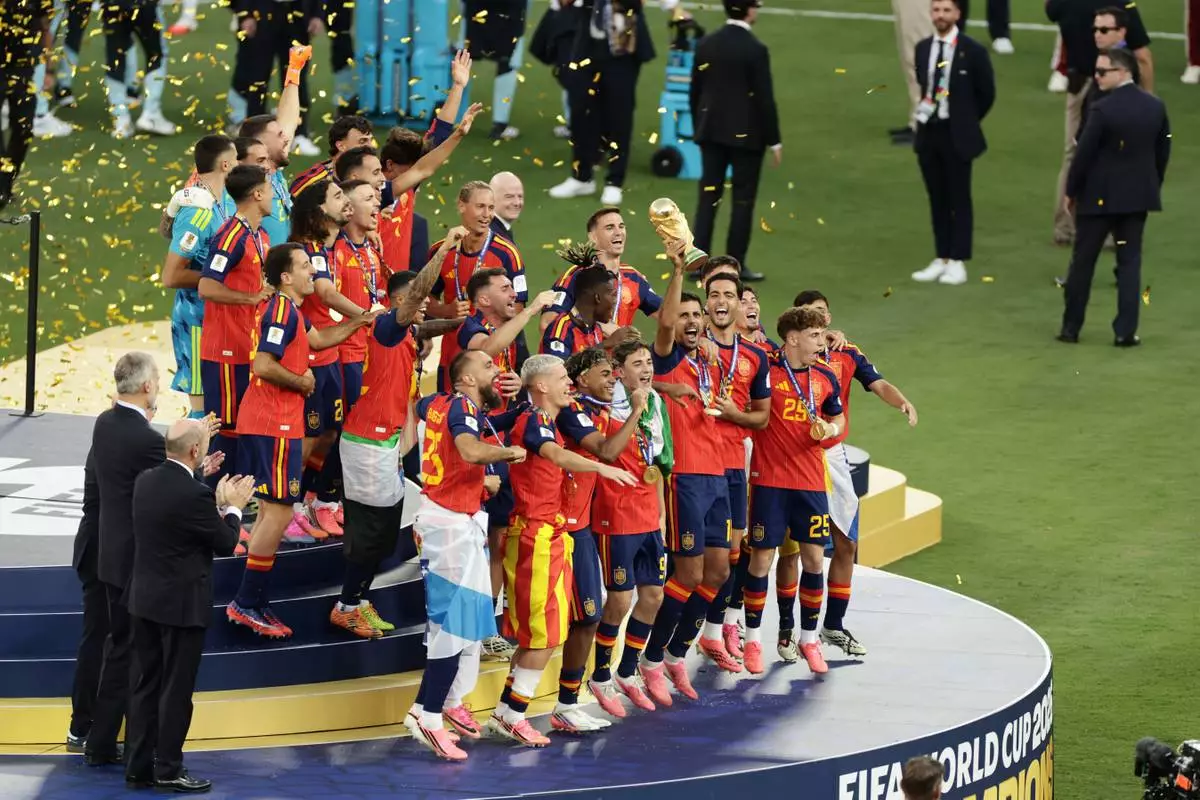
The Spain squad stood in a guard of honor for Argentina players walking to the podium to get their medals from U.S. President Donald Trump. Minutes later, when Rodri lifted the trophy, most of the Argentina squad turned their backs on the ceremonial moment.

FIFA disciplinary rules allow a special prosecutor to “request the opening of disciplinary proceedings and propose that disciplinary measures be imposed on member associations, clubs and individuals.”

FIFA gave no timetable for any cases, and it is unclear when any potential bans for Argentina players would apply as the team does not have competitive games scheduled in the coming months.

AP soccer: https://apnews.com/hub/soccer and AP World Cup coverage
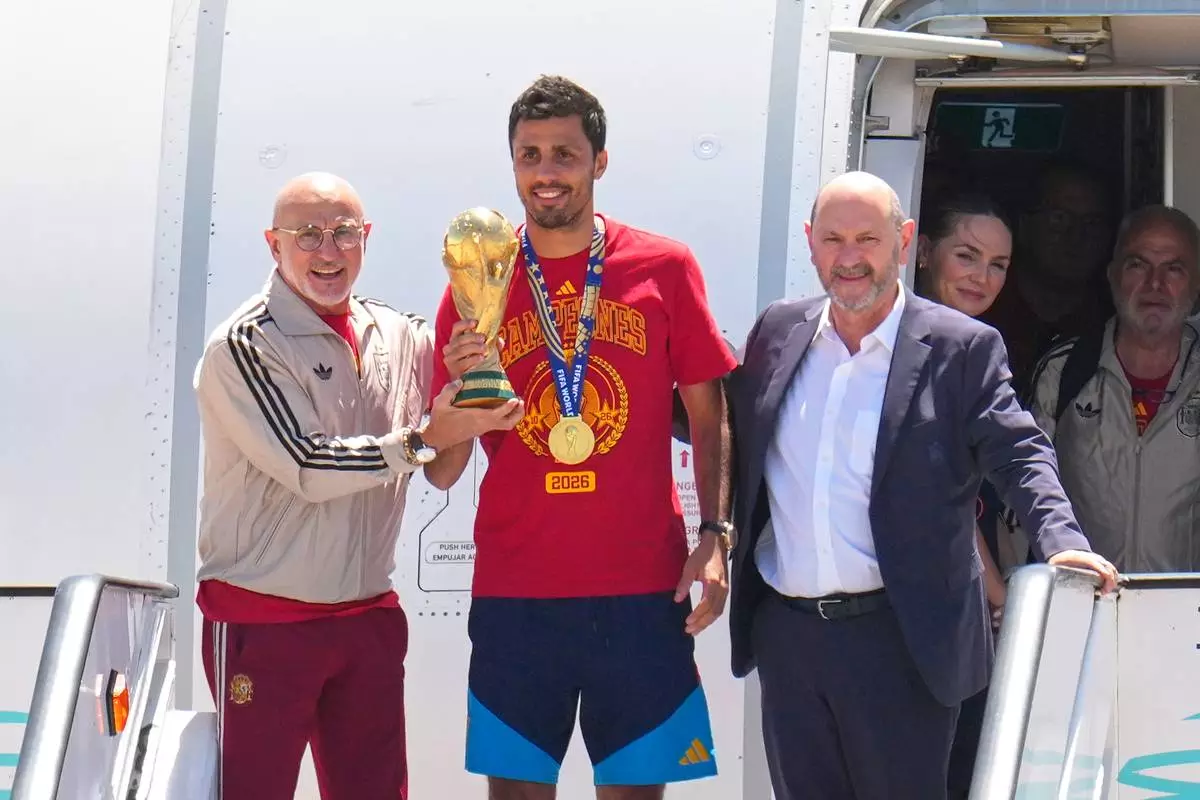
Spain's Rodrigo Hernandez holds the World Cup trophy alongside Spain head coach Luis de la Fuente, left, and Royal Spanish Football Federation President Rafael Louzan as they arrive at Madrid airport on Monday, July 20, 2026, after Spain defeated Argentina in the World Cup final. (AP Photo/Manu Fernandez)
Spain's Rodrigo Hernandez holds the World Cup trophy alongside Spain head coach Luis de la Fuente, left, and Royal Spanish Football Federation President Rafael Louzan as they arrive at Madrid airport on Monday, July 20, 2026, after Spain defeated Argentina in the World Cup final. (AP Photo/Manu Fernandez)

Spain celebrates with the trophy after the World Cup final soccer match between Spain and Argentina in East Rutherford, N.J., near New York, Sunday, July 19, 2026. (AP Photo/Adam Hunger)
Spain celebrates with the trophy after the World Cup final soccer match between Spain and Argentina in East Rutherford, N.J., near New York, Sunday, July 19, 2026. (AP Photo/Adam Hunger)

Spain's Gavi, left, falls as he scuffles with Argentina's Leandro Paredes (5) and Thiago Almada during the World Cup final soccer match between Spain and Argentina in East Rutherford, N.J., near New York, Sunday, July 19, 2026. (AP Photo/Yuki Iwamura)


Spain's Gavi, left, falls as he scuffles with Argentina's Leandro Paredes (5) and Thiago Almada during the World Cup final soccer match between Spain and Argentina in East Rutherford, N.J., near New York, Sunday, July 19, 2026. (AP Photo/Yuki Iwamura)

BRUSSELS (AP) — The European Commission on Friday said it found TikTok had not adequately protected children’s privacy rights on its platform by allowing adults to view the accounts of minors.

The action exposed children to cyberbullying, unwanted contact and predatory behavior, commission spokesperson Thomas Regnier said.

“Children’s content must never be visible to strangers,” he said. If TikTok does not take steps called for by the European Union's landmark Digital Services Act, “minors are exposed to predators, to grooming and to cyberbullying,” Regnier said, adding that children aged 13 to 15 can “easily” change their accounts from private to public and the private accounts of minors aged 16 to 17 can be seen by anyone on the internet. “We do not accept this,” Regnier said. “Putting default settings for minors is not a beauty contest under the DSA. It must be effective.”

The investigation comes on the heels of back-to-back crackdowns on Big Tech by Brussels, which has led the world in regulating tech behemoths including Meta and Apple.

TikTok can now defend itself and reply to the findings. If unsatisfied with the Chinese firm’s response, the European Commission could issue a so-called non-compliance decision and possible fine worth up to 6% of the company’s total annual revenue.

The Chinese social media firm, whose parent company ByteDance is based in Beijing, said in a statement it would review Brussels' findings and “continue to engage constructively with the Commission.”

“Protecting minors online is a goal we share, and we are committed to building on our strong track record of continuous improvement,” TikTok said in a statement.

If unsatisfied with the firm’s response, the commission could issue a so-called non-compliance decision and possible fine worth up to 6% of the company’s total annual revenue.

The commission estimates most of TikTok's 170 million users in the EU are children, with 7% of children aged 12 to 15 spending four to five hours daily on the app.

The 27-nation European Union found in February that TikTok had breached another aspect of its digital rule book with an “addictive design” of features such as autoplay and infinite scrolling that could harm the physical and mental health of users and minors especially.

FILE - A view of the TikTok app logo, in Tokyo, Japan, Sept. 28, 2020. (AP Photo/Kiichiro Sato, File)

FILE - A view of the TikTok app logo, in Tokyo, Japan, Sept. 28, 2020. (AP Photo/Kiichiro Sato, File)

Recommended Articles