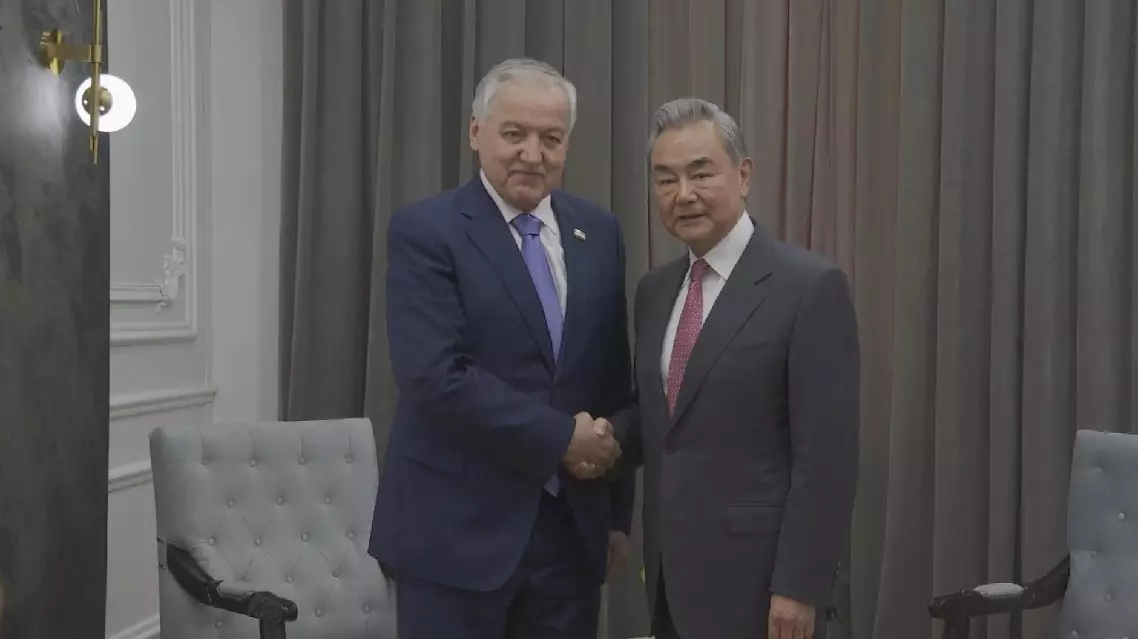
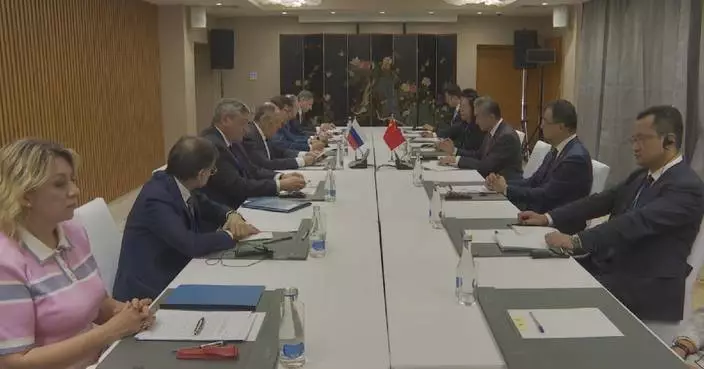
Chinese Foreign Minister Wang Yi attended the Meeting of the Council of the Ministers of Foreign Affairs of the Shanghai Cooperation Organization (SCO) Member States in Kyrgyzstan on Friday.
Foreign ministers of SCO member states, the SCO secretary-general, and the director of the Executive Committee of the SCO Regional Anti-Terrorist Structure also attended the meeting.
Wang, also a member of the Political Bureau of the Communist Party of China (CPC) Central Committee, said the Tianjin Summit of the SCO mapped out a strategic blueprint for the organization's development over the next decade and opened a new stage of high-quality development. Over the past year, China has implemented the major initiatives proposed by Chinese President Xi Jinping and contributed to regional development through concrete actions, he said.
Wang said seven cooperation platforms in green industry, digital economy, scientific and technological innovation, energy, higher education, vocational and technical education, and artificial intelligence have been launched, generating more than 160 projects.
Wang said the action plan for high-quality development of economic and trade cooperation has been steadily implemented, with trade between China and other SCO member states continuing to grow.
Noting that this year marks the 25th anniversary of the SCO, Wang said the SCO has consistently upheld the Shanghai Spirit of mutual trust, mutual benefit, equality, consultation, respect for diversity of civilizations, and pursuit of common development, continuously expanding the path of a new type of international relations and multilateral cooperation.
Wang said the development strategy for the next decade makes clear that member states will deepen cooperation and make greater contributions to building a more democratic and just multipolar world.
Wang put forward four proposals:
First, the SCO should continue to uphold the Shanghai Spirit as its fundamental guiding principle in handling internal affairs and conducting external exchanges, strengthen strategic mutual trust, maintain solidarity and coordination, firmly support one another, and remain open and inclusive, so as to illuminate the way toward building a community with a shared future for humanity.
Second, the SCO should strengthen the firewall for peace and stability by consistently advocating dialogue to settle disputes, consultation to resolve differences and cooperation to safeguard peace, while properly addressing regional and international hotspot issues. It should accelerate the establishment of the "four security centers" to enhance the region's capacity to respond to security risks and challenges.
Third, the SCO should inject stronger momentum into win-win development by strengthening synergy between national development strategies and regional cooperation initiatives, pursuing high-quality Belt and Road cooperation, fostering new growth drivers in trade and investment, connectivity, scientific and technological innovation, green industry, digital economy and artificial intelligence, and jointly safeguarding industrial and supply chains to deliver more development outcomes.
Fourth, the SCO should build a model zone for global governance by safeguarding the authority and role of the United Nations, upholding the purposes and principles of the UN Charter and the basic norms governing international relations, and working together with nearly 160 participants in the Global Governance Initiative and over 120 UN member states who support deeper cooperation with the SCO to explore an effective global governance model with broad participation. The SCO should also improve its own operational mechanisms and welcome more countries to join the organization.
Noting that this year marks the 105th anniversary of the founding of the CPC and the first year of China's 15th Five-Year Plan period, Wang said that under the leadership of the CPC, China will always remain a builder of world peace, a contributor to global development and a defender of the international order.
He said the SCO has always been a priority in China's neighborhood diplomacy, adding that China stands ready to work with other member states to carry forward the Shanghai Spirit, strengthen the SCO, and jointly create a brighter future for both the region and the world.
Participants highly commended Kyrgyzstan's work as the rotating chair and spoke highly of the SCO's achievements over the past 25 years. They agreed that the SCO has become the world's largest regional organization in terms of geographical coverage and population, as well as an important pillar of the multipolar world, making significant contributions to regional and global peace, stability and development.
Facing an increasingly volatile international situation, they stressed the need to uphold the purposes and principles of the UN Charter, further carry forward the Shanghai Spirit, enhance strategic mutual trust, safeguard respective national sovereignty and territorial integrity, combat the "three evil forces" and transnational organized crime, expand practical cooperation in fields including energy, connectivity and the digital economy, promote dialogue among civilizations, and resolve hotspot issues through dialogue and negotiation.
They also called for improving the SCO's working mechanisms to enable the organization to make decisions more efficiently and pragmatically, amplify the SCO's voice, and actively respond to global challenges.
The meeting adopted a statement of the Council of the Ministers of Foreign Affairs of SCO Member States and signed relevant resolutions on preparations for the SCO Bishkek Summit.
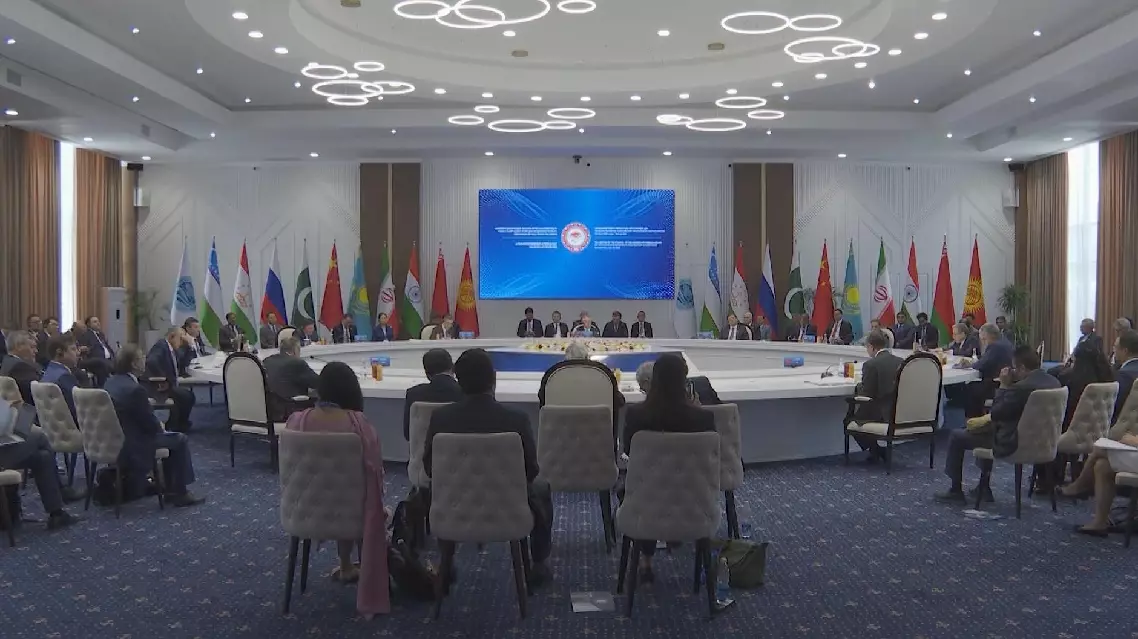
Chinese FM attends meeting of foreign ministers of SCO member states