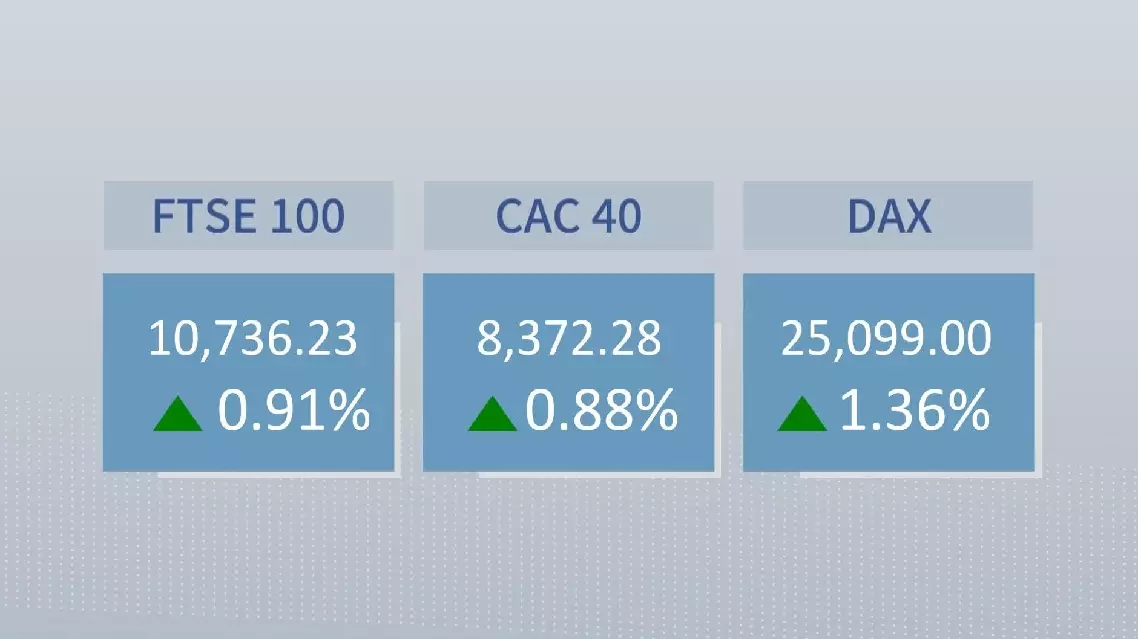
European stocks closed higher across the board on Friday.
The United Kingdom's FTSE 100 index rose 0.91 percent to close at 10,736.23 points. France's CAC 40 index gained 0.88 percent to finish at 8,372.28 points. Germany's DAX index advanced 1.36 percent to end the session at 25099.00 points.
European stocks close higher on Friday
A grassroots official from Gari Village in Ya'an City of southwest China's Sichuan Province has led locals to conquer immense difficulties to build a road at an altitude of 4,000 meters, turning the once-isolated community into a thriving tourist destination, paving the way towards a prosperous life.
This is a story from a China Global Television Network (CGTN) documentary titled "4,000m Altitude: They Built a Road Straight to the Sky".
Due to its extreme altitude, Gari Village lacked a proper road more than a decade ago, forcing residents to hike in and out on foot.
Refusing to let his village remain cut off from the world, Asheng, the local Party chief, made it his mission to change their fate. Mobilizing the villagers, he led them in overcoming immense geographical and logistical hurdles to finally carve a road through the high-altitude terrain.
The road opened the gates to Dawagengzha, a stunning natural attraction whose name translates to "magic mountain" in the Tibetan language. As word of this natural wonder spread, tourists began to arrive. However, a new challenge quickly emerged: the village lacked hotels and other tourism infrastructure, meaning visitors couldn't stay overnight.
Recognizing the bottleneck, Asheng took the initiative once again, converting his own house into the village's first homestay.
Seeing the success of Asheng's venture, hesitant villagers quickly followed suit.
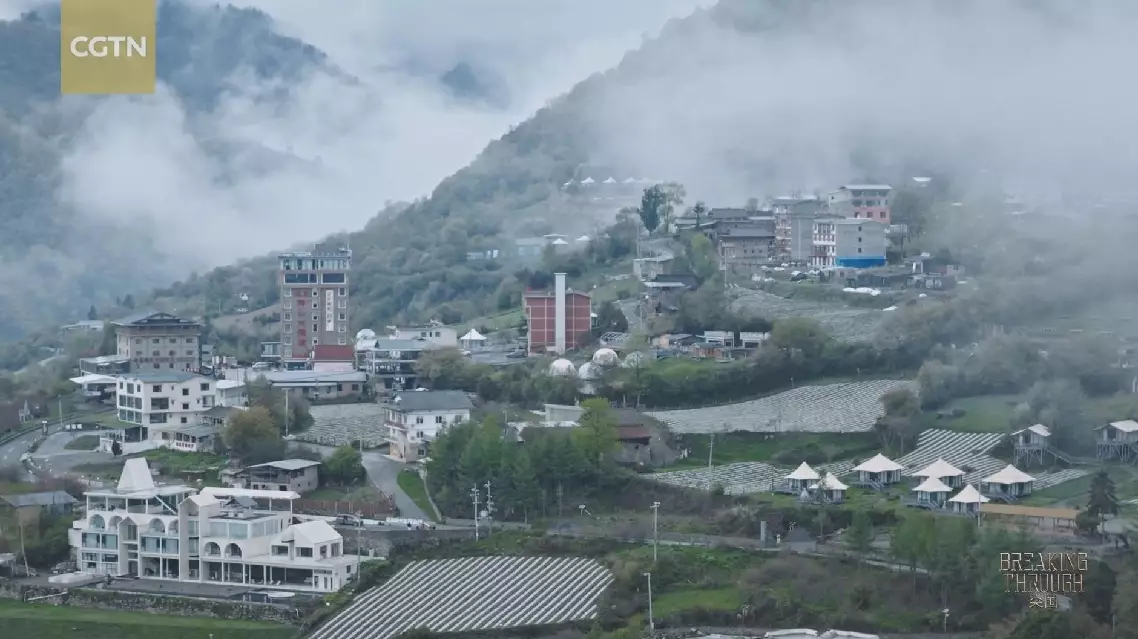
Today, Gari Village is home to 158 distinctive homestays, forming a thriving hospitality cluster known as "Cloud Dawagengzha". Campsites, inns, and wooden cabins now dot the mountain landscape.
In 2024, the village welcomed over one million tourist arrivals, generating a revenue of 120 million yuan (about 17.94 million U.S. dollars). The momentum has only continued to grow. During the autumn foliage season in 2025, the village recorded an average weekly tourism revenue exceeding 1.5 million yuan.
Looking ahead, Asheng said he will continue to explore ways to improve the lives of his fellow villagers.
The documentary is part of CGTN's "Breaking Through" series, which traces China's journey from the historic Long March to its modern-day achievements, highlighting the resilience, ingenuity, and determination of its people.
Building road at 4,000m, grassroots official leads locals to prosperity: documentary