A grassroots official from Gari Village in Ya'an City of southwest China's Sichuan Province has led locals to conquer immense difficulties to build a road at an altitude of 4,000 meters, turning the once-isolated community into a thriving tourist destination, paving the way towards a prosperous life.
This is a story from a China Global Television Network (CGTN) documentary titled "4,000m Altitude: They Built a Road Straight to the Sky".
Due to its extreme altitude, Gari Village lacked a proper road more than a decade ago, forcing residents to hike in and out on foot.
Refusing to let his village remain cut off from the world, Asheng, the local Party chief, made it his mission to change their fate. Mobilizing the villagers, he led them in overcoming immense geographical and logistical hurdles to finally carve a road through the high-altitude terrain.
The road opened the gates to Dawagengzha, a stunning natural attraction whose name translates to "magic mountain" in the Tibetan language. As word of this natural wonder spread, tourists began to arrive. However, a new challenge quickly emerged: the village lacked hotels and other tourism infrastructure, meaning visitors couldn't stay overnight.
Recognizing the bottleneck, Asheng took the initiative once again, converting his own house into the village's first homestay.
Seeing the success of Asheng's venture, hesitant villagers quickly followed suit.
Today, Gari Village is home to 158 distinctive homestays, forming a thriving hospitality cluster known as "Cloud Dawagengzha". Campsites, inns, and wooden cabins now dot the mountain landscape.
In 2024, the village welcomed over one million tourist arrivals, generating a revenue of 120 million yuan (about 17.94 million U.S. dollars). The momentum has only continued to grow. During the autumn foliage season in 2025, the village recorded an average weekly tourism revenue exceeding 1.5 million yuan.
Looking ahead, Asheng said he will continue to explore ways to improve the lives of his fellow villagers.
The documentary is part of CGTN's "Breaking Through" series, which traces China's journey from the historic Long March to its modern-day achievements, highlighting the resilience, ingenuity, and determination of its people.
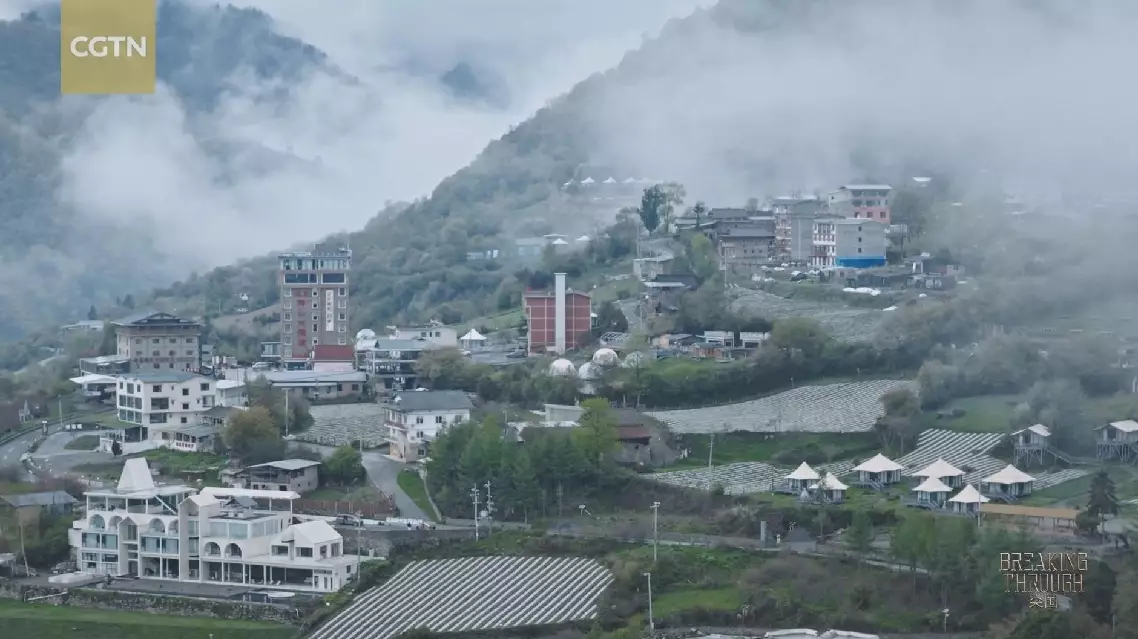
Building road at 4,000m, grassroots official leads locals to prosperity: documentary
A new China Global Television Network (CGTN) documentary explores how the historic Long March spirit is driving modern innovation, as young Chinese researchers and engineers are channeling this relentless drive to overcome critical bottlenecks in the EV and AI industries.
Titled "The Source of AI: Not a Single Rock Goes to Waste", the documentary highlights the pioneering journeys of Zhong Yu and He Pengyu.
Two years ago, Zhong made a pivotal career shift, leaving a long-established automaker to return to China and join Farasis Energy, a homegrown battery manufacturer based in Ganzhou City of east China's Jiangxi Province.
Working around the clock, Zhong and his team are developing solid-state batteries. This next-generation technology promises higher energy density and enhanced safety, having the potential to completely disrupt the current automotive landscape.
Through his research, Zhong is determined to establish China as a global leader in the battery sector.
While Zhong focuses on the power sources of the future, He Pengyu is tackling the foundational raw materials required for the EV and AI boom.
The rapid expansion of these sectors has triggered a massive surge in demand for copper and rare earth elements. However, extracting and separating these valuable minerals from raw ore has long been a formidable technical hurdle.
Without advanced equipment, China's mining industry once relied on grueling, inefficient manual sorting.
Determined to change this paradigm after returning from his studies in France, He founded HPY Sorting. The company has developed a revolutionary AI-driven optical ore sorting system capable of automatically separating waste rock from valuable ore.
Processing up to 300 tons of ore per hour, this intelligent sorting technology is now deployed in mines across the world, replacing tasks that once relied on human experience with precision-driven algorithms and automated machinery.
He Pengyu hopes that through his innovation, not a single rock goes to waste.
The documentary is part of CGTN's "Breaking Through" series, which traces China's journey from the historic Long March undertaken by the Red Army nine decades ago to its modern-day achievements, highlighting the resilience, ingenuity, and determination of its people.
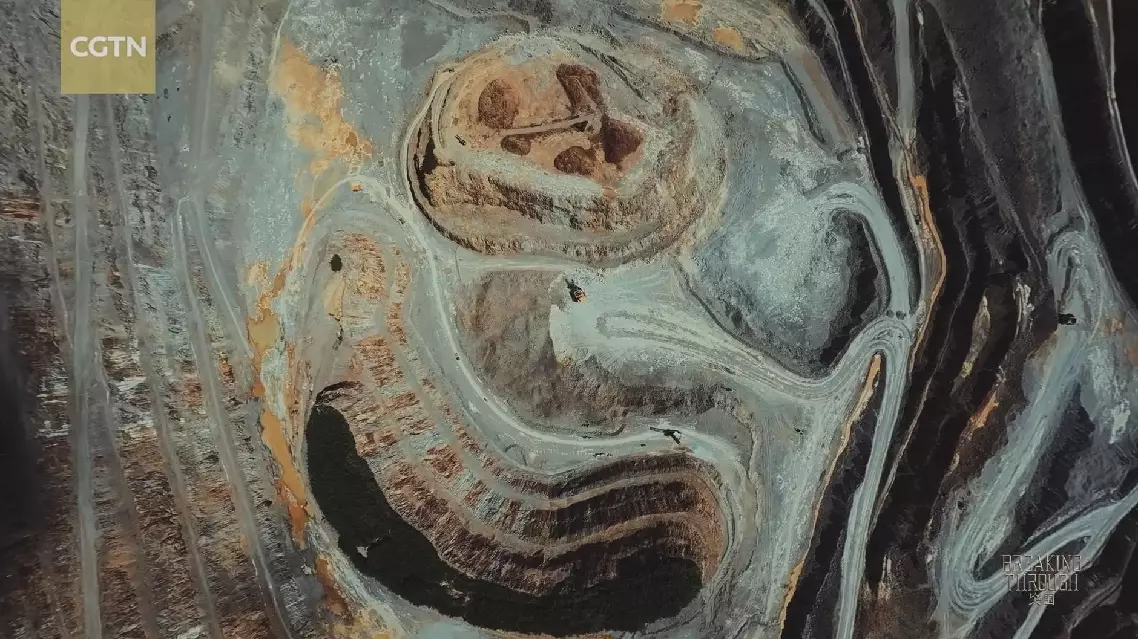
Long March spirit drives critical breakthroughs in China's EV, AI industries: documentary