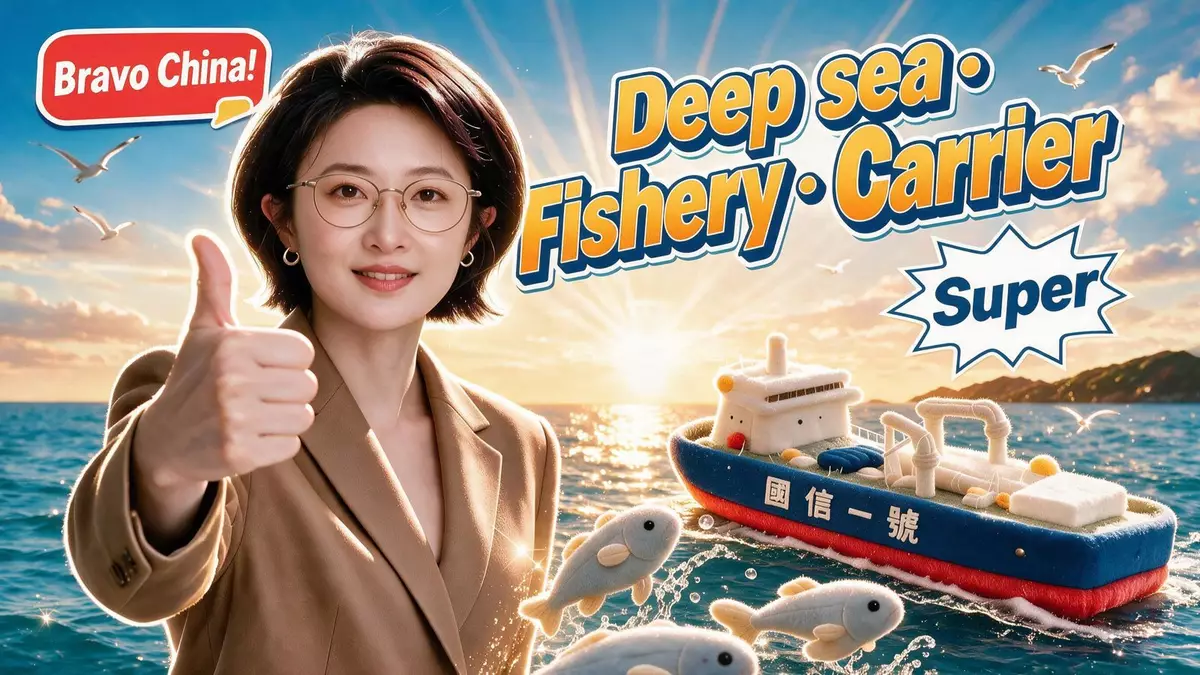
From land to sea – after seeing how salmon is raised in a place far away from the ocean, this episode takes you to the world's first 100,000- tonne mobile aquaculture vessel, which cruises the ocean to raise yellow croaker in constantly refreshed seawater. With annual output rivaling 5,000 acres of land- based ponds, its catch is swiftly delivered at home and abroad.
Hong Kong-born astronaut Lai Ka-ying has just conducted a science class with students from China's Tiangong space station--a moment that has been hard‑won.
For decades, the U.S. has dominated space leadership and refused to share core technology with China. So China decided to independently develop the Tiangong space station, turning technological breakthroughs into new engines for future industries.
Since 2021, 11 crews totaling 33 astronauts have lived aboard Tiangong, setting a world record for the longest single spacewalk duration, and cultivating two consecutive generations of rice for the first time.
But Tiangong is more than a lab; it's home. While the International Space Station mainly supplies pre-packaged food, our astronauts have a space oven and can enjoy freshly baked barbecue anytime. They can also enjoy homestyle cuisines - all made possible by China's space technology.
When the ISS retires around 2030, China’s Tiangong will be the only station in orbit. Yet its doors are open to international partners: 17 countries have had their science experiments selected, and Pakistani astronauts are now training and learning Chinese to board Tiangong soon.
Today, Tiangong guards our space safety, powers tech innovation, and also opens a shared platform for all of humanity to explore the cosmos.