CFS urges public not to consume batch of powdered infant formula found with lead possibly exceeding limit
The Centre for Food Safety (CFS) of the Food and Environmental Hygiene Department today (July 25) urged the public not to consume a batch of powdered infant formula, as the product was found by the Macao authority with lead possibly exceeding its permissible levels. The trade should stop using or selling the affected batch of the product immediately if they possess it.
Product details are as follows:
Product name: Frisolac Prestige Stage 1 Infant Formula (800g)
Brand: FRISO PRESTIGE
Place of origin: Netherlands
Net weight: 800 grams
Best-before date: September 30, 2027
Batch number: 1W07KPJ
Importer: FrieslandCampina (Hong Kong) Ltd
A spokesman for the CFS said, "The CFS noted a press release issued by the Macao authority this afternoon that the above-mentioned powdered infant formula was detected with lead content exceeding its permissible levels, while no abnormalities have been found in other batches of the relevant powdered infant formula so far. The CFS immediately followed up on the incident and contacted the importer concerned. Preliminary investigation by the CFS confirmed that the above-mentioned importer had imported the affected batch of the product into Hong Kong. The importer concerned has also arranged testing on two samples of the same batch, and the results showed that they complied with the standards of Hong Kong and Macao. For the sake of prudence, the importer concerned has already stopped sales and removed the affected product from shelves, and the CFS has instructed the importer to initiate a recall of the affected batch of product. Members of the public may call the distributor's hotline at 2280 4731 during office hours for enquiries about the recall."
The spokesman added that the CFS is stepping up the surveillance of powdered infant and young children formula in the market and will continue to closely monitor the recall of the related product to fully safeguard food safety.
The CFS has been collecting powdered infant and young children formula samples from local retail outlets for testing under its routine Food Surveillance Programme to safeguard the health and food safety of infants and young children. From 2023 to June 2026, the CFS has collected over 2 000 powdered infant and young children formula samples from the market for chemical and microbiological testing, including lead content tests. No unsatisfactory samples for lead content were found. The spokesman added that long term excessive exposure to lead in children can lead to neurological impairment and affect brain development.
The CFS urged members of the public not to let infants and young children consume the affected batch of the product, and to seek medical treatment for infants or young children who felt unwell after taking the product concerned. The trade should also stop using or selling the affected batch of the product immediately. The CFS has alerted the trade and relevant departments to the incident, and will continue to follow up on the incident and take appropriate action.
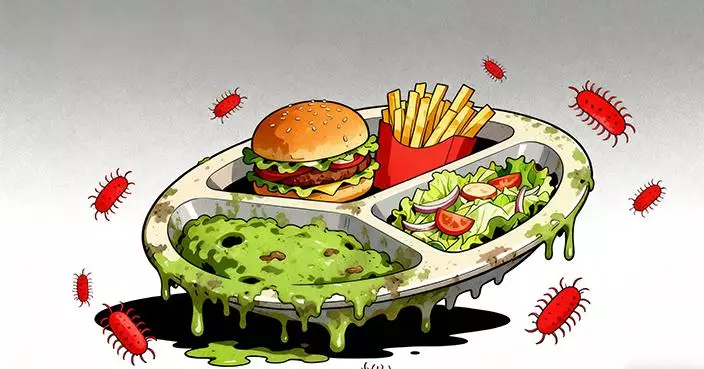
Source: AI-found images
DH investigates case of severe paediatric influenza A infection
The Centre for Health Protection (CHP) of the Department of Health is today (July 26) investigating a severe paediatric influenza A infection case. The CHP urged the public to maintain good personal and environmental hygiene at all times to prevent influenza and other respiratory illnesses.
The case involves a 6-year-old girl with good past health who presented with a cough since July 20. She developed a fever, runny nose, sore throat and tiredness on July 23 and was brought to seek medical attention at a private clinic. As her symptoms persisted, she was taken to the Accident and Emergency Department of Prince of Wales Hospital on July 24, and was admitted to the paediatric intensive care unit for treatment. Her respiratory specimen collected by the hospital on July 24 tested positive for influenza A (H1) virus. Her clinical diagnosis was influenza A infection complicated with shock. The patient remains hospitalised in stable condition and is transferred to a general ward.
The CHP's preliminary investigation revealed that the girl had received the 2025/26 seasonal influenza vaccination. As the patient travelled to Japan during the incubation period (July 16 to 19), the CHP classified the case as an imported case. The CHP will continue to investigate the case. One of the girl's household contacts developed mild upper respiratory symptoms and tested negative for influenza virus. The CHP will continue to investigate the case.
Since Hong Kong entered the influenza season in late June, the influenza activity has continued to increase. Based on historical surveillance data, the CHP expects the influenza activity to rise steadily for some time after the start of the influenza season before reaching its peak and is expected to remain high in the coming weeks.
The CHP reminded members of the public, especially children, the elderly and those with underlying illnesses, to seek medical advice promptly for early treatment if they present with fever and respiratory symptoms. As the health condition of children with influenza can deteriorate rapidly, parents must pay close attention to their condition, and visit an accident and emergency department immediately if the child's condition deteriorates with symptoms such as shortness of breath, wheezing, blue lips, chest pain, confusion, a persistent fever or convulsions.
In addition, the public should maintain good personal and environmental hygiene at all times to prevent contracting influenza and other respiratory illnesses. Given that Hong Kong is currently in the influenza season and the COVID-19 activity has significantly increased, high-risk individuals should wear surgical masks when staying in crowded places; the general public is also advised to wear a surgical mask when taking public transport or staying in crowded places. People with respiratory symptoms, even if mild, should wear a surgical mask and seek medical advice promptly. They should also consider whether to attend work or school. If symptomatic individuals live with high-risk or immunocompromised persons, they should also wear a surgical mask at home to minimise the risk of cross-infection. They should also ensure proper ventilation indoors and enhance the cleaning and disinfection of the household environment.
Members of the public may refer to the CHP'sCOVID-19 & Flu Express,Seasonal Influenza Webpage,COVID-19 Vaccination Programme Webpage, andVaccination Schemes Webpage, for the latest information.
Source: AI-found images