TEGUCIGALPA, Honduras (AP) — Four years after being extradited to the United States for his drug trafficking trial, former Honduran President Juan Orlando Hernández arrived in his country Sunday to face corruption charges that lawyers fear will be a sham process.
Hernández, once considered an ally by the U.S. in the drug war, led Honduras from 2014 to 2022, during which he boasted that he would "shove the drugs right up the noses of the gringos,” according to U.S. prosecutors.
His extradition shortly after leaving office marked a rare chance at justice for Hondurans, who feared his hold on the country's justice system would never allow a conviction on Honduran soil.
But the former leader, sentenced to 45 years in prison in the United States, was released in December, to the shock of many in the U.S. and Honduras, after receiving a presidential pardon from U.S. President Donald Trump. He said Hernández did not receive a fair trial and that it was a setup orchestrated by the Biden administration.
Hernández now returns to Honduras to face corruption charges amid concerns that a weak justice system and his party’s return to the presidency will ensure his impunity.
“There is a social majority that is outraged but doesn’t speak out because of fear,” said Joaquín Mejía, lawyer and researcher for the human rights organization Reflection, Research and Communication Team. "We’re talking about the boss of all drug bosses.”
Some in the country welcomed his return. Hernández was greeted at Palmerola International Airport by his mother, wife, kids and granddaughter as well as dozens of supporters of his National Party.
“The moment has arrived. After four years, I can finally tell you that we will see each other again,” Hernández said in a video posted on social media before his arrival.
Hernández, 57, faces charges related to a case known as Pandora I, which alleges that a network of former high-ranking officials from 2010 to 2013 participated in the expansion and approval of public funds disbursements totaling more than 288 million lempiras ($10.8 million) to various foundations, according to an investigation by the country's Specialized Prosecutor’s Unit Against Corruption Networks, or UFERCO.
According to UFERCO, Hernández benefited from these disbursements, receiving at least 62 million lempiras ($2.3 million) for his political campaign through various schemes, including the creation of shell companies, the use of straw men and fictitious contracts.
Hernández has said he is innocent and that the case “lacks any legal basis.”
In June, a judge suspended his arrest warrant and the international red notice issued to Interpol at the request of Hernández’s lawyer, although the case is still pending. The former president has agreed to appear before the judge on Aug. 3 for his arraignment.
Other high-level officials implicated in Pandora I whose cases have been dismissed indicate the likely outcome for Hernández, according to legal experts.
“Everything points to the suspension being the first step,” Mejía said. “He’ll come, they’ll likely issue him alternative measures to imprisonment to keep up appearances, and then he’ll end up without any problem, without any sanction.”
For Luis Javier Santos, the former head of UFERCO who investigated the case against Hernández, the former leader’s return represents a failure to prosecute him for his crimes rather than a chance for justice.
Santos was removed from his role in UFERCO in February in what he believes demonstrated attempts to stifle anti-corruption investigations by the new government of Nasry Asfura, of Hernández's National Party, which took office in January after gaining Trump's backing during elections.
“We have gone backward to an even worse point than when all the work to fight corruption began,” Santos said.
Brigida reported from Mexico City.

FILE - Honduras' President Juan Orlando Hernandez speaks during the opening ceremony of the UN Climate Change Conference COP26 in Glasgow, Scotland, Monday Nov. 1, 2021. (Andy Buchanan/Pool via AP, File)
Meta is going all in on a consumer-friendly AI agent and pushing forward with AI-powered wearable devices during a moment in the industry when its CEO Mark Zuckerberg acknowledged it is a “wild time to be building.”
At the company's annual Connect conference on Wednesday, Zuckerberg opened his keynote address by saying “it’s no secret that people in the industry have a wide range of views about how the future is going to go.” But at Meta, he said, “we are optimists because we believe in people.”
Zuckerberg has distanced himself and Meta from recent calls by rival companies for a coordinated slowdown in the development of advanced artificial intelligence, arguing that individual labs can and should ensure their technology is safe.
“We believe that the best way to create a positive future for everyone is to put power in people’s hands," he said at the conference. "We believe that empowering people is the source of prosperity in the world, that the highest purpose of superintelligence is creation and invention — not automation — and that the path to a safe future is to distribute this technology widely and create the right checks and balances, rather than concentrating it in the hands of just a few.”
Zuckerberg has long said he believes wearable AI will eventually replace smartphones as the primary way people interact with technology. At the conference, the company unveiled a slew of updates to its smart glasses and virtual reality goggles, which let people control their interface using their voice, eyes and hand and finger movements.
Zuckerberg said that Meta's recently launched agent Muse is the “centerpiece" of Meta's hopeful outlook for the future of AI.
Having an AI agent, which goes beyond chatbots in that it can act and perform tasks on a person’s behalf, has been a “sign of someone who is completely AI-pilled,” Meta's chief AI officer Alexandr Wang said at the conference. With Muse, Wang said, Meta is making agents more accessible and bringing “personal superintelligence” to everyone.
With the help of a mascot for the agent that looks like a plush toy, Wang and senior leadership at Meta demonstrated different uses for the Muse in everyday life. Users will be able to have real-time voice conversations and video chats with their version of the agent, which can also be customized to look and sound unique. The agent can help users plan travel, book reservations, order groceries and complete other helpful tasks. Meta has partnered with companies like OpenTable, Spotify, Ticketmaster and more to help its agents complete these tasks.
The company is working to bring Muse to its AI glasses lineup for hands-free access.
Zuckerberg also said Meta is planning to release a keychain-like device that has the “whole Muse experience” packed into it, called Muse Charm, in time for the holidays in December. The palm-sized device will allow users to engage with a personal AI agent without using a phone, computer or smart glasses.
Meta is launching an audio version of its more widely known smart glasses. The new product will let users listen to music, make calls and talk with an AI assistant — there’s just no screen, and no video recording, which has raised privacy concerns with some users recording people without permission. Called Ray-Ban Meta Audio, it will be available in October and the cost starts at $349.
Meta is also building upon a previous feature that allowed glasses wearers to better hear a conversation in a noisy environment. Now, Zuckerberg said, a feature called hearing enhancement turns your glasses into an “FDA-cleared, over-the-counter hearing aid” that can “compensate for perceived mild to moderate hearing loss.” The feature will launch in the U.S. later this year and will be available to add to supported AI glasses for $150, or with a Meta One subscription.
The Meta Ray-Ban Display glasses have been upgraded with new features, including improved cycling and transit navigation and a personalized hologram for video calls.
The company is also offering more styles to appeal to a broader range of people and says it will have more than 100 different options across its Ray-Ban, Oakley, and Meta Glasses by the end of the year. The glasses will also be available in more countries, including Turkey, Hong Kong and the Philippines.
The newest generation of the classic Ray-Ban Meta glasses is also now available, with what the company touts as a slimmer, sleeker design and increased battery life, among other upgrades. The Generation 3 models are available now with prices starting at $449.
The most drastic update announced at the conference is to the company's VR device, now called Meta VR Glasses. That is because the previous bulky headset has been replaced by a set of glasses, which weigh about 100 grams (3.5 ounces), or roughly as much as a deck of cards. In comparison, the Meta Quest 3, which launched in 2023, weighs about five times that much. The difference feels similar to that between scuba diving and swimming goggles.
While they are significantly lighter and more sleek than VR predecessors, the glasses require a wired connection to an external puck for battery, storage and compute.
Instead of controllers or a neural wristband that past headsets or glasses required, the VR glasses use an eye-tracking camera and sensor that essentially lets your eyes be the computer cursor and your fingers the mouse clicker. If you want to open an app, for instance, you look at it and use hand and finger gestures, or use voice commands to talk to the Meta AI agent.
In a demo at its Menlo Park, California, headquarters on Tuesday, Meta showed off entertainment and work offerings on the glasses, including sports events and concerts that replicate the experience of having courtside or front-row seats. A new feature called “VR Enhanced Cinema,” meanwhile, seeks to immerse viewers in the movie by transforming their surroundings beyond the screen into a virtual world inspired by the movie, with dynamic effects, 3D visuals and spatial audio.
Once the glasses launch, users will have access to more than 100 immersive live sports events from that courtside-like view, because of partnerships with ESPN, MLB, NBC Sports, TNT Sports and UFC. The glasses can also function as a gaming console, Meta said, and there will be more than 75 games at launch that users can play solely with hand gestures.
The glasses can also be used for work. Users can conjure a virtual keyboard on any flat surface and use the display as their computer screen (or several screens) only they can see. For even more of a robust setup, users will be able to connect their Mac or Windows PC to seamlessly transition onto these screens, and bring their own keyboard and mouse. The VR glasses, unlike headsets of the past, will let wearers see their desk setup and surroundings while they work.
One of Zuckerberg's live demos of the night also showed off the glasses' ability to use hologram technology to project a photorealistic digital version of a person, including their real-time expressions and reactions, for hands-free video calling.
The VR glasses will launch in the spring of 2027 and cost $1,300.
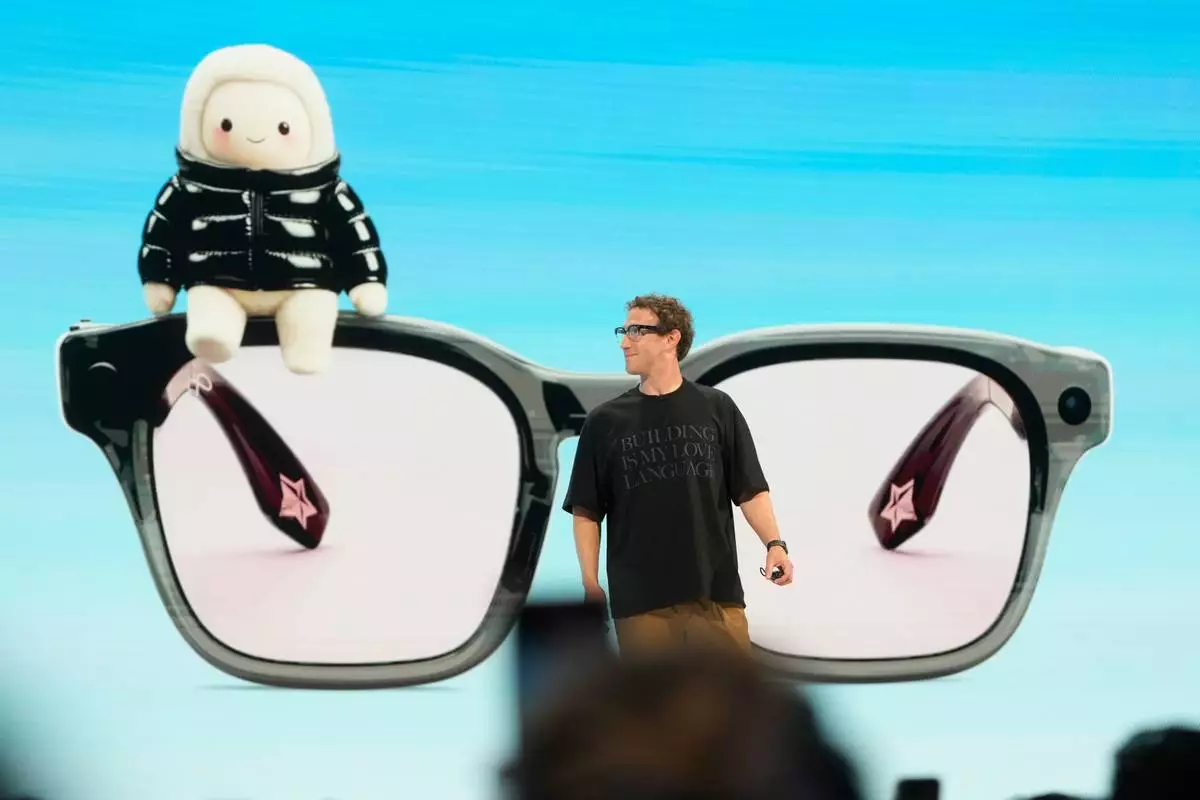
Meta CEO Mark Zuckerberg speaks during the Meta Connect conference, Wednesday, Sept. 23, 2026, in Menlo Park, Calif. (AP Photo/Jeff Chiu)
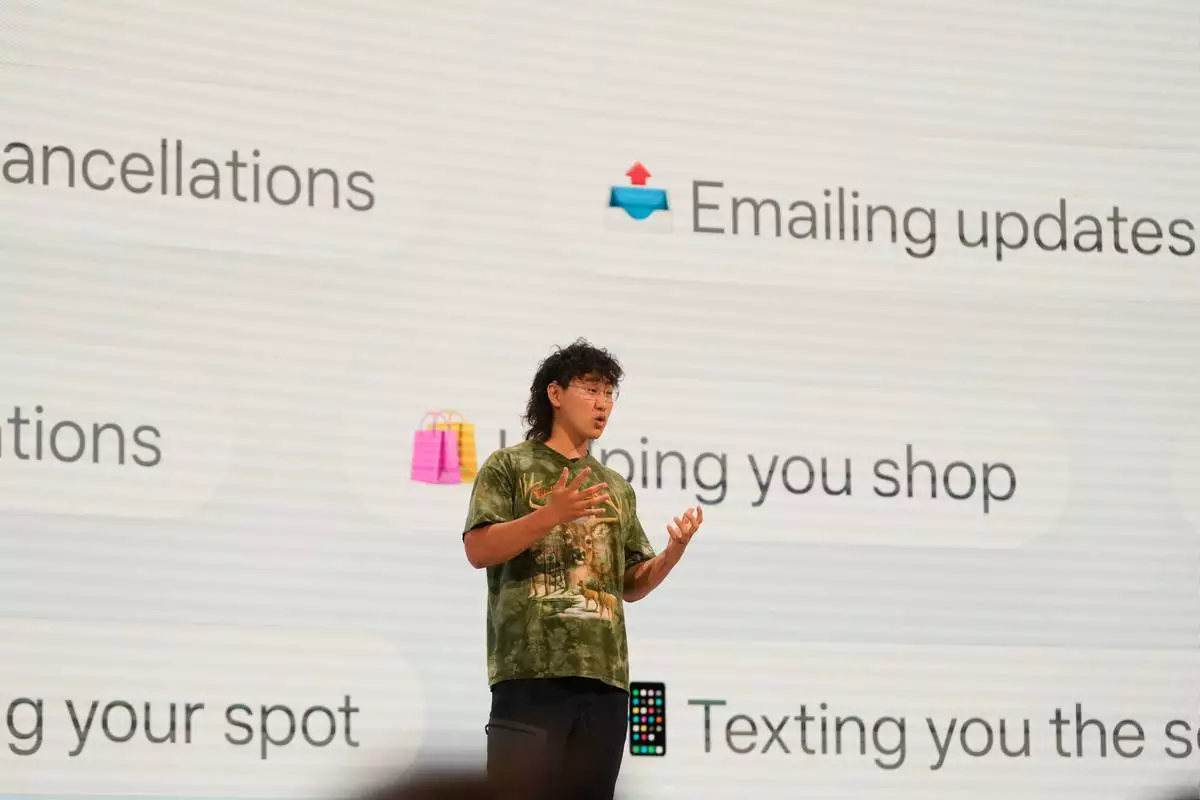
Alexandr Wang, Meta Chief AI Officer, speaks during the Meta Connect conference, Wednesday, Sept. 23, 2026, in Menlo Park, Calif. (AP Photo/Jeff Chiu)
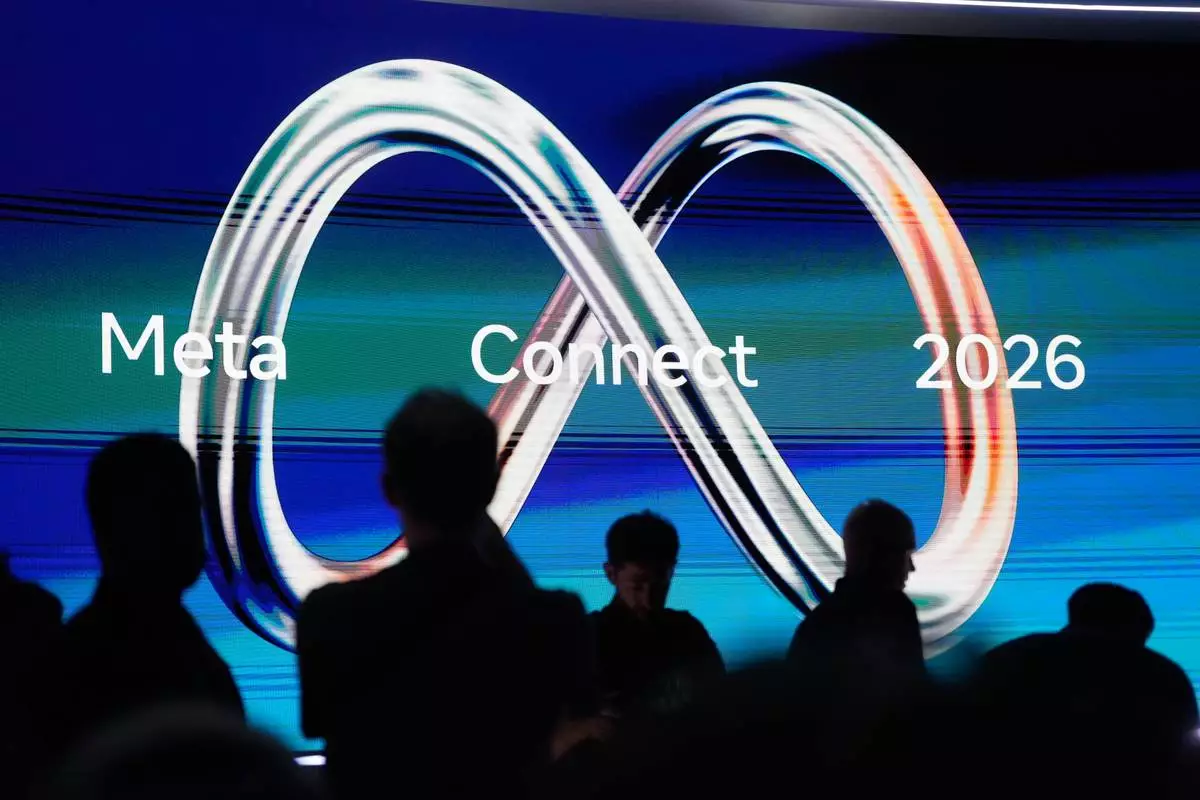
Attendees wait for Meta CEO Mark Zuckerberg's keynote address during the Meta Connect conference, Wednesday, Sept. 23, 2026, in Menlo Park, Calif. (AP Photo/Jeff Chiu)
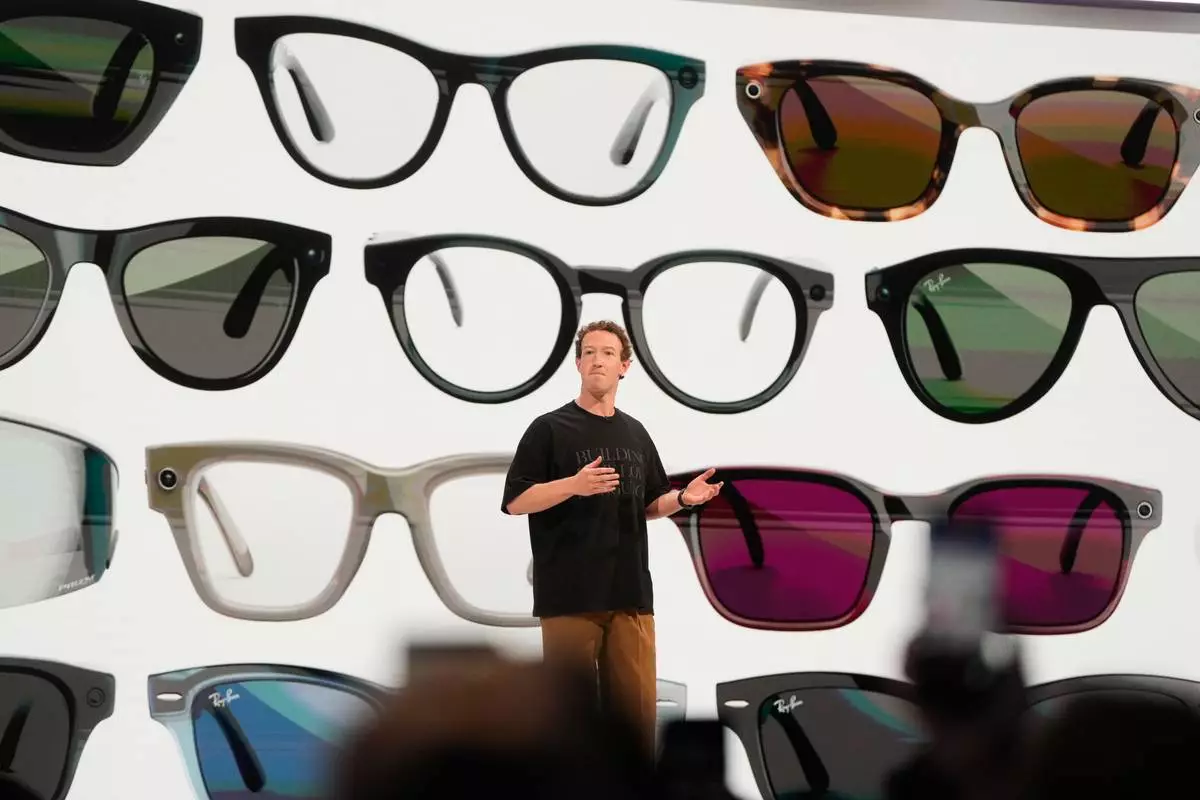
Meta CEO Mark Zuckerberg speaks during the Meta Connect conference, Wednesday, Sept. 23, 2026, in Menlo Park, Calif. (AP Photo/Jeff Chiu)
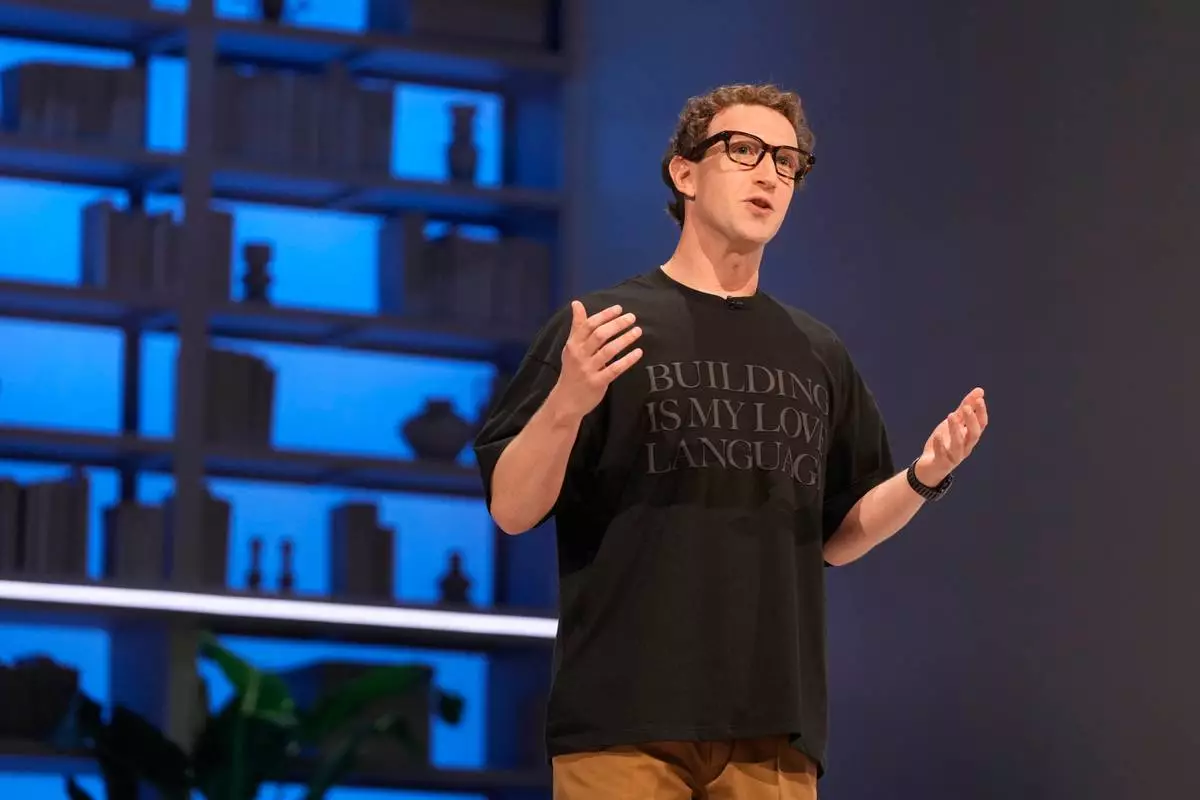
Meta CEO Mark Zuckerberg speaks during the Meta Connect conference, Wednesday, Sept. 23, 2026, in Menlo Park, Calif. (AP Photo/Jeff Chiu)