SAN JUAN, Puerto Rico (AP) — More than a dozen words long used in Bermuda and across the Caribbean got an official nod on Wednesday from the Oxford English Dictionary.
First in line is “bimpert,” a Bermudian word of unknown origin that is used to describe a stupid or foolish person. People on the tiny island in the north Atlantic often use it in this traditional phrase: “A bimpert is justah wuffless bye,” which roughly translates to: an idiot is just a worthless boy.
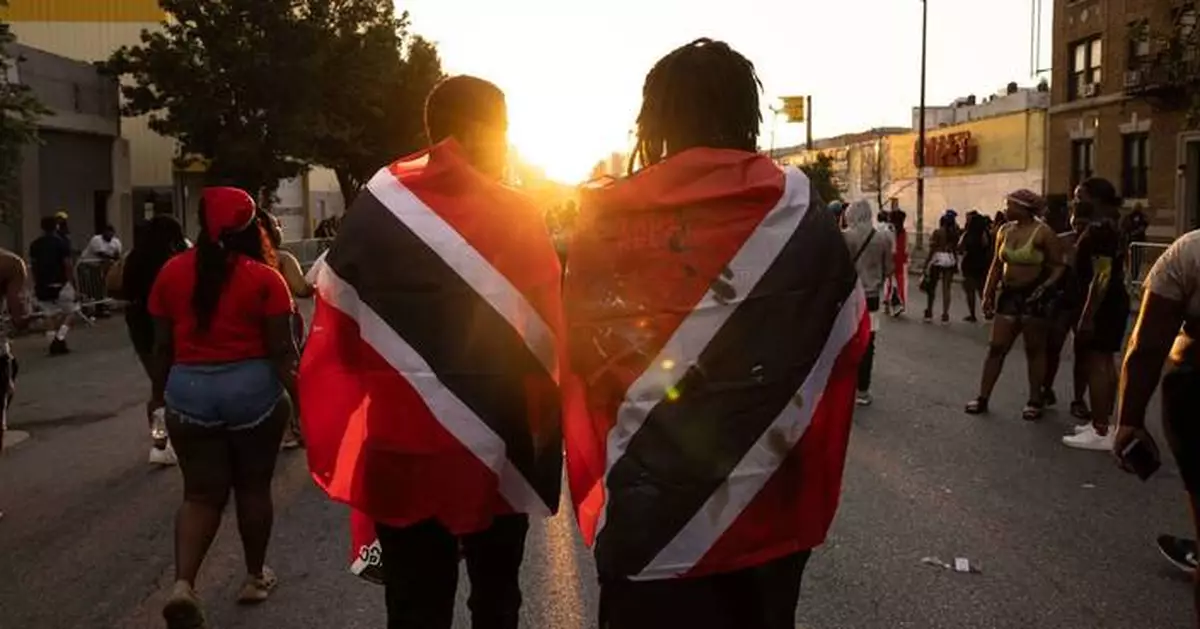
Another colorful addition is “hornerman,” a word used in the eastern Caribbean island of Trinidad and Tobago since 1975 to describe an unfaithful man or a man having a relationship with someone else's partner.
If someone in the Caribbean were to find out about such infidelities, they might be known “to get on,” which means to have an emotional outburst or make a scene, or “to cut someone’s tail,” meaning to beat someone.
Depending on the fallout from such infidelities, a woman might need “vex money,” which refers to “money carried or kept in a safe place by a woman, for use in an emergency or in any unexpected eventuality.”
Among other dark words that made the list is “jablesse,” defined as "a malevolent shape-shifting female spirit with one cloven hoof, which at night is said to assume the form of a beautiful woman to lure men to their deaths.” It is derived from “diablesse,” the French word for female demon.
Another supernatural entry is “douen." It is “typically depicted as short in stature, with backward-pointing feet, and wearing a large hat, said to be the spirit of a child who died before it could be baptized, and believed to lure children into the forest by calling their names,” according to the dictionary. It is a variation of the Spanish word “duende,” which means elf.
Several food-related words were included this year: “shadeesh,” the Bermudian word for chorizo; “sugar cake,” made of grated coconut boiled with sugar, water and spices; and “peanut punch,” a wildly popular rich and frothy beverage made with peanuts or peanut butter, milk, sugar and several spices.
In the Caribbean, one might sit down to have a peanut punch with one’s “nana” or “nani,” which are used to address one’s maternal grandparents. In Bermuda, one would sit down to partake with a “hamma,” or friend.
The final Caribbean English words added this year are “Trinbagonian,” which refers to people from both the islands of Trinidad and Tobago, and “canboulay,” which refers to Carnival festivities in Trinidad in the 1800s that celebrated the emancipation of slaves. They stem from a 1700s harvest festival that the British tried to quash, leading to riots reenacted to this day to mark the start of Carnival. Canboulay is derived from “burning cane,” which the dictionary noted was associated with “acts of defiance and rebellion.”
There are some 500,000 words and phrases in the Oxford English Dictionary, which details the history of words, some of which go back to the 11th century.
Follow AP’s coverage of Latin America and the Caribbean at https://apnews.com/hub/latin-america
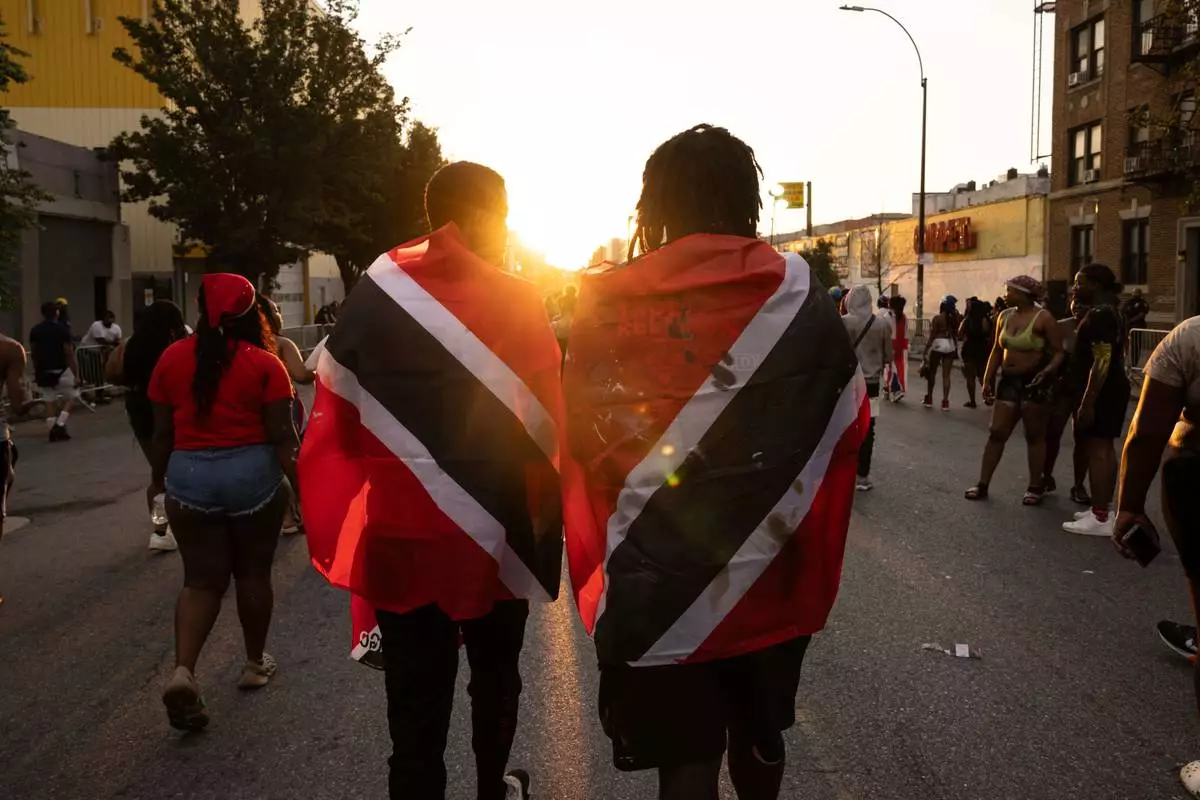
FILE - People with Trinidad and Tobago flag are seen during J'ouvert celebration, Sept. 4, 2023, in the Brooklyn borough of New York. (AP Photo/Yuki Iwamura, File)
YANGON, Myanmar (AP) — An Australian businessperson who served as executive director of the American Chamber of Commerce in Myanmar was released from jail after more than 100 days of detention on financial misappropriation allegations, a Myanmar legal official said Wednesday.
Ye Khaung Kyaw, also known as Danny, was freed following a ruling by a court in Yangon, Myanmar’s largest city, according to a legal official familiar with the case, who spoke on condition of anonymity because he was not authorized to release information. Ye Khaung Kyaw and the two other men charged in connection with the case have said the allegations against them are groundless.
Acting Police Brig. Gen. Soe Lin Aung, a spokesperson for Myanmar’s Home Affairs Ministry, confirmed that the court concluded proceedings in Ye Khaung Kyaw’s case on Tuesday but declined to provide further details. It remains unclear whether he was convicted, had the charges dismissed or withdrawn, or was ordered to be deported.
Ye Khaung Kyaw was detained in June around the same time as former chamber president Adam Castillo, a U.S. businessperson who was released last week and deported without explanation.
The chamber’s current board accused Ye Khaung Kyaw, Castillo and former board member Munimul Islam of breach of trust and misappropriation of association assets in connection with a $300,000 contract with the Washington-based lobbying firm Mercury Public Affairs. Islam lives outside Myanmar and has not been detained. The chamber is usually known as AmCham.
Myanmar’s military-backed government released no official statement. Officials at the court and the police station in Yangon’s Pabedan township, where Ye Khaung Kyaw faced trial, did not respond to requests for comment. Authorities in Myanmar, which is currently in the midst of a civil war, rarely speak to the international media.
Supporters of the three men said the allegations were baseless and contradicted by documentary evidence.
The police complaint did not specify Ye Khaung Kyaw’s exact role in the alleged misconduct during his tenure as executive director. AmCham's complaint centered on Castillo’s creation of the U.S.-Burma Economic Forum as a lobbying organization during his presidency from 2023 to 2025 and a contract signed with Mercury in 2024.
In its annual report issued in May, AmCham accused Castillo of improperly collecting funds using the association’s name. It said the board had not approved the agreement, received any money or services, or disclosed the matter to auditors.
However, AmCham documents obtained by The Associated Press appear to contradict the annual report.
A signed board resolution showed the board approved the lobbying initiative, authorized hiring Mercury, and agreed that Islam’s company, Misfit Technologies, would provide sponsorship.
Current AmCham Executive Director Myat Phyu The called the resolution a fabrication, although other records on the chamber’s website indicated that the board was aware of the arrangement.
A Misfit employee, who spoke anonymously for fear of professional retribution, said fees were paid through Misfit’s U.S. office because American sanctions made payments from Myanmar nearly impossible. Mercury disclosed the payments to U.S. authorities under the Lobbying Disclosure Act.
Australia’s Foreign Ministry confirmed that it had provided consular assistance to an Australian in Myanmar but declined to comment further, citing privacy obligations.
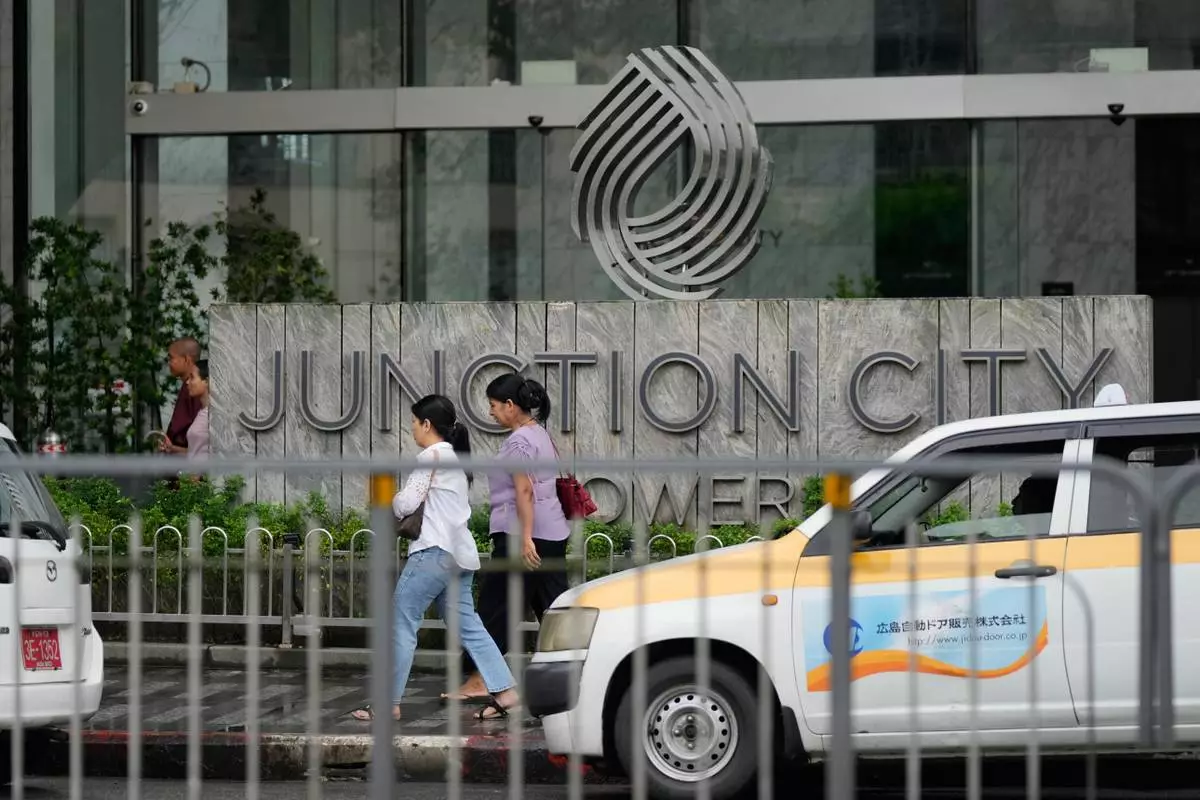
FILE - Pedestrians walk past entrance of Junction City Tower, where the American Chamber of Commerce in Myanmar has its office, on Tuesday, Sept. 15, 2026, in Yangon, Myanmar. (AP Photo, File)