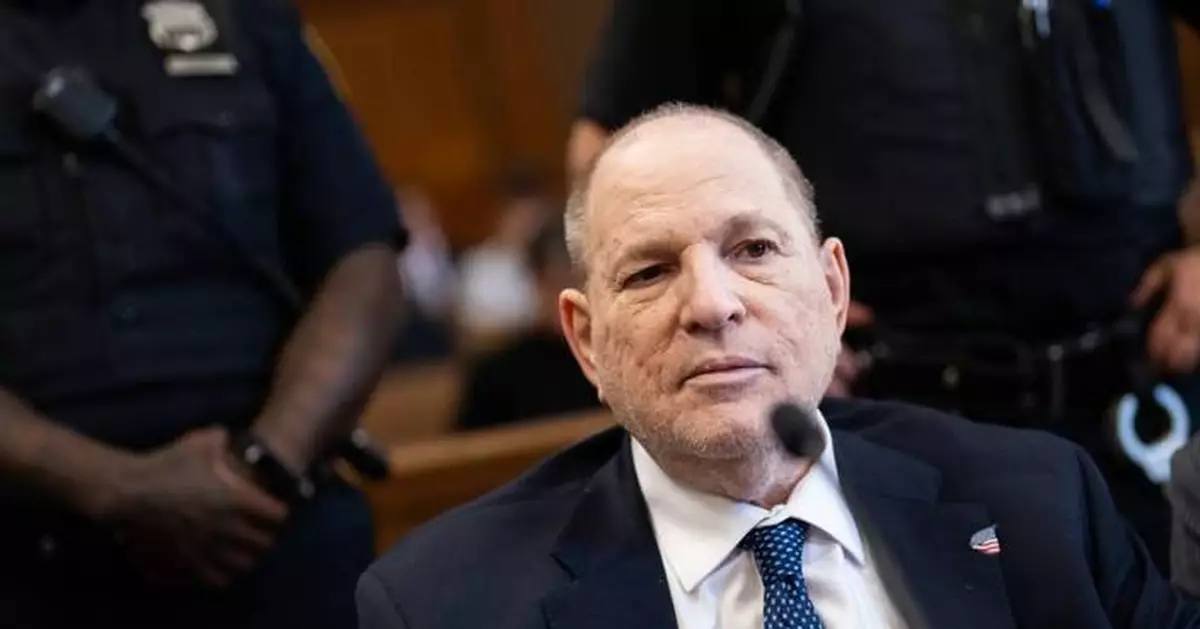
NEW YORK (AP) — The first time Harvey Weinstein was sentenced to prison, reporters, advocates and the curious public crammed the courtroom to witness the disgraced Hollywood honcho’s #MeToo reckoning.
Hours later, the world began shutting down as the COVID-19 pandemic raged. Now, after an overturned conviction and two retrials, Weinstein is set to be sentenced again on Wednesday for one of the same crimes — more than six years after his first sentencing in March 2020.
Weinstein, 74, faces up to 25 years in prison for sexually assaulting a one-time TV production assistant, Miriam Haley, at his Manhattan apartment in 2006. He has already served more than six years as his case has cycled again and again through the criminal justice system. Haley gave her account of the assault at two trials.
“The unthinkable was happening,” Haley testified last year, dabbing her eyes.
Haley, who has also gone by the name Mimi Haleyi, is planning to speak at Weinstein’s sentencing, her lawyer, Gloria Allred, said. Weinstein will also address the court, his spokesperson, Juda Engelmayer, said.
The Oscar-winning “Pulp Fiction” and “Shakespeare in Love” producer was originally sentenced to 23 years in prison after a jury convicted him of assaulting Haley and raping an aspiring actress, Jessica Mann, in 2013.
But New York’s highest court erased those guilty verdicts in 2024, ruling that Weinstein was prejudiced by testimony from other women whose allegations weren’t part of the case.
Tried for a second time last year, Weinstein was again convicted of first-degree criminal sex act for assaulting Haley. In a messy split verdict, the jury acquitted him of forcibly performing oral sex on another woman, Kaja Sokola, and could not reach a verdict on a rape charge involving Mann.
After another retrial ended in a hung jury in May, Manhattan prosecutors dropped the rape charge rather than pursue a fourth trial after Mann said she could not bear to testify again.
That decision cleared the way for Weinstein’s sentencing.
Manhattan prosecutors have said they will ask for 20 years in prison — which would keep him behind bars until at least his late 80s.
Weinstein’s lawyers haven’t said what sentence they’ll seek. He denies raping or sexually assaulting anyone. Once he’s sentenced, he can appeal.
“I will be proven innocent. That I promise you,” Weinstein told The Hollywood Reporter in a jailhouse interview in March.
Weinstein is also awaiting resentencing in a separate rape case in Los Angeles. A California appeals court upheld the 2022 conviction but threw out his original 16-year sentence because the judge had considered his New York convictions that were later thrown out as an aggravating factor.
After shuffling between state prison, where he tested positive for COVID-19 early in the pandemic, and New York City’s notorious Rikers Island complex, the ailing Weinstein is now housed at a medical unit for jail inmates at Bellevue Hospital in Manhattan.
His health issues in recent years have included chronic myeloid leukemia, diabetes and walking difficulties that necessitate a wheelchair to get in and out of court, his lawyers said. Two years ago, he underwent emergency surgery to remove fluid on his heart and lungs.
Haley, 49, is a former entertainment producer now working in advertising.
Born in Finland and raised in Sweden, she said she met Weinstein through a mutual connection and worked briefly as a production assistant on a reality competition show that he produced, “Project Runway.”
Haley said she accepted an invitation to visit Weinstein’s Manhattan apartment because it would have been odd to decline since she was scheduled to fly to Los Angeles the next day on his company’s dime to attend a film premiere.
After she and Weinstein briefly chatted on his living room sofa, he lunged to kiss her, she testified. She said she leaped up and rebuffed him, but he grabbed her, forcibly backed her into a bedroom and sexually assaulted her, ignoring her pleas to stop.
She recalled Weinstein asking, “Don’t you think we’re much closer now?” after either the alleged assault or a subsequent occasion when she says she had unwanted, but not forced, sex with him.
She also recalled telling him after the second encounter, “You know you can’t keep doing this.”
The Associated Press does not typically identify people who say they are victims of sexual assault unless they grant permission, which Haley, Sokola and Mann have done.
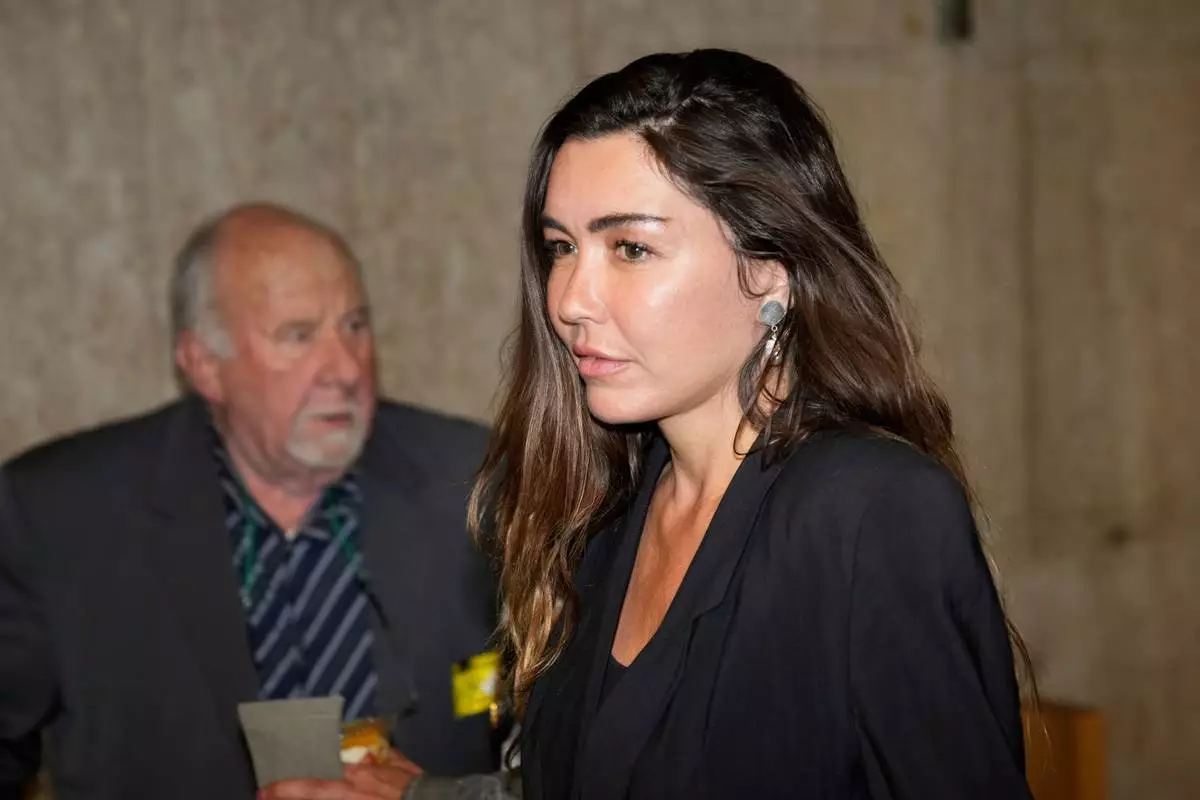
FILE - Miriam Haley, an accuser testifying at Harvey Weinstein's rape trial, returns to the courtroom after a break in New York, Wednesday, April 30, 2025. (AP Photo/Seth Wenig,File)
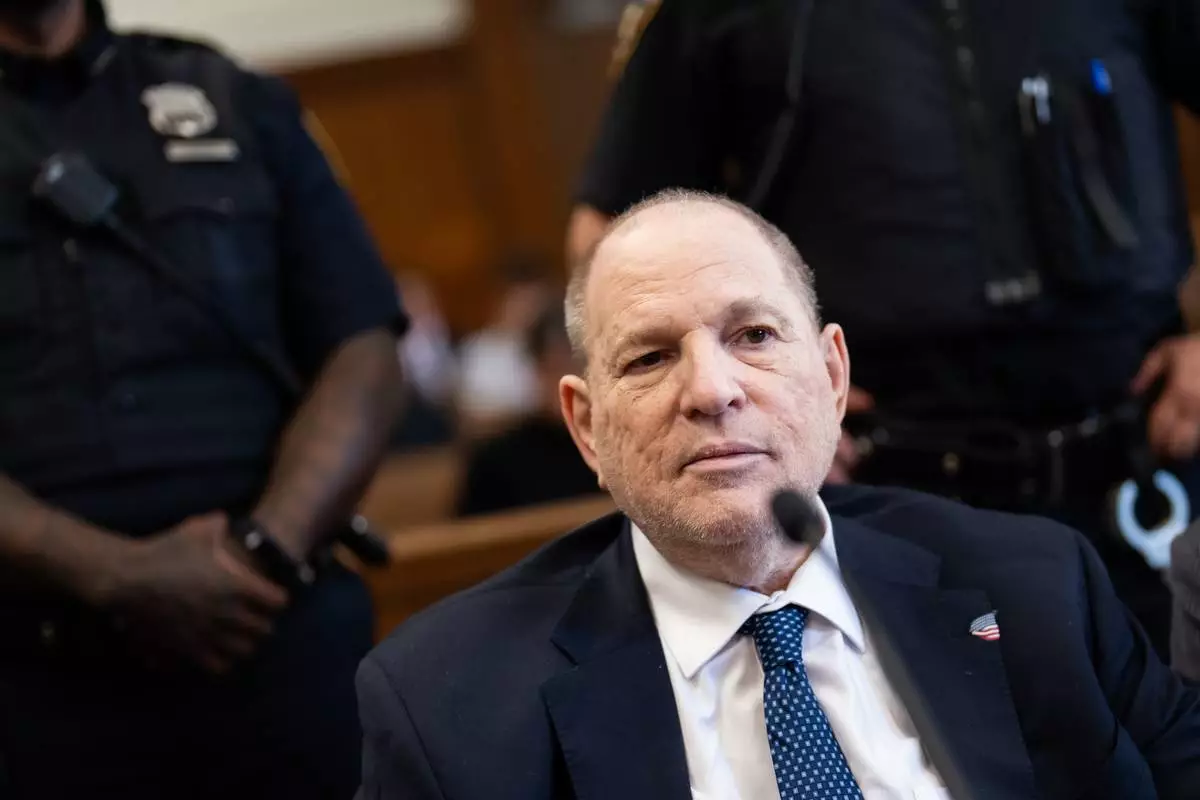
FILE - Harvey Weinstein appears in Manhattan Supreme Court Thursday, June 25, 2026 in New York. (Adam Gray/Pool Photo via AP,File)
COLOMBO, Sri Lanka (AP) — A Sri Lankan court convicted 15 men on Tuesday for helping to organize the 2019 Easter bombings on churches and hotels that killed 267 people, sentencing them each to at least 200 years in prison after a trial that lasted more than five years.
Another nine men were freed after being acquitted of similar charges in the same trial.
The April 21 attacks, which were inspired by the Islamic State group, were among the deadliest attacks in Sri Lanka’s history. They targeted three churches and three hotels across the island nation during Easter services and celebrations.
The dead included 42 foreigners, and the attacks also wounded 574 people and devastated communities across the country.
The verdict was delivered amid tight security, with hundreds of police officers deployed around the courthouse. The three-judge High Court panel also ordered the property of the defendants confiscated under the country’s tough anti-terror law.
None of those believed to have directly participated in the attacks are alive, but authorities filed 23,270 charges in 2021 against 25 suspects accused of planning or inspiring the attacks. The charges included murder, conspiracy to commit terrorism, and firearms and explosives offenses under the Prevention of Terrorism Act. All 25 were members of Sri Lanka's Muslim minority.
One of the men charged died before the trial concluded.
Prosecutors said the defendants were part of a well-planned attack carried out with the intention of killing Christian worshippers and tourists. They said the court has seen a video recorded the day before the bombings in which attackers with covered faces pledged allegiance to then-Islamic State leader Abu Bakhr al-Baghdadi and vowed to fight to make Sri Lanka an Islamic nation.
They said one of the defendants had traveled to Syria and fought for the IS group.
In the courtroom, the accused appeared relaxed, chatting and laughing with each other during breaks. They asked for and were granted a prayer break during the lengthy reading of the judgment.
Seven of the defendants who did not have attorneys spoke for themselves during the sentencing hearing.
Mohamed Ibrahim Mohamed Naufer, who is an Islamic cleric who prosecutors said inspired the attacks with radical preaching, refused to ask for leniency.
“According to Islam, no religious leader should plead with (secular) authorities over any matter. Therefore, I do not wish to state anything,” said Naufer.
He was sentenced to 220 years in prison with hard labor.
“What I did or didn’t do only God and I know,” said Mohamed Ibrahim Saadiq Abdulla. “In the end all people will be resurrected and God will judge everyone,” he said.
He was given 240 years in prison with hard labor.
Nine defendants were freed after the court found that the charges against them were not proven.
Those freed tearfully hugged the rest as they were separated from the convicts.
Of the remaining defendants, five were sentenced to 200 years, four to 220 years, three to 240 years each and one to 260 years, based on their involvement in conspiring and aiding the attacks.
The convicts have the right to appeal to the Supreme Court.
The bombings shook the island nation and revived memories of the 26-year conflict with the Liberation Tigers of Tamil Eelam, widely known as the Tamil Tigers, a separatist group that fought to establish an independent state for Sri Lanka’s ethnic Tamil minority and was known for bombing public places.
After the bombings, allegations emerged that the attackers had links to Sri Lanka’s state intelligence services.
The country’s Defense Ministry denied any involvement, but a parliamentary committee found that police and intelligence officials failed to act on repeated intelligence warnings of the attacks.
In February, police arrested Suresh Salley, a former intelligence chief and retired army major general, on accusations that he had prior knowledge of the attacks and conspired to carry them out.
In July, a former police chief and a former senior defense ministry official were sentenced to death for failing to act promptly on foreign intelligence warnings of possible attacks. Sri Lanka has not carried out executions since 1976, meaning death sentences typically result in life imprisonment.
Sri Lanka’s Catholic Church has claimed, without providing evidence, that those identified so far as perpetrators are not the masterminds behind the bombings, and that there was a bigger conspiracy behind the attacks.
Two of the three churches attacked belonged to the Catholic Church, and a majority of those who died were Catholic believers. The third was a Protestant church.
Rev. Jude Chrishantha Fernando, a spokesperson for the Archdiocese of Colombo, told reporters outside the court that the church was satisfied with the sentence and that it would deter future attacks.
“We are happy — at least with this judgement, we know that in the future this type of crime will not take place in our country,” Fernando said.
But he added that “these suicide bombers are not isolated people. They were used for another purpose: to take power.”
Another priest, the Rev. Dilan Perera, said that the verdict was a blow against fundamentalism.
"There cannot be a ‘we’; we are living in a multi-cultural, multi-national, and multi-religious country. There cannot be one religion coming like this and leading up to killing and destroying other people,” he said.
Jayampathy Palipane of the Associated Press contributed to this report.
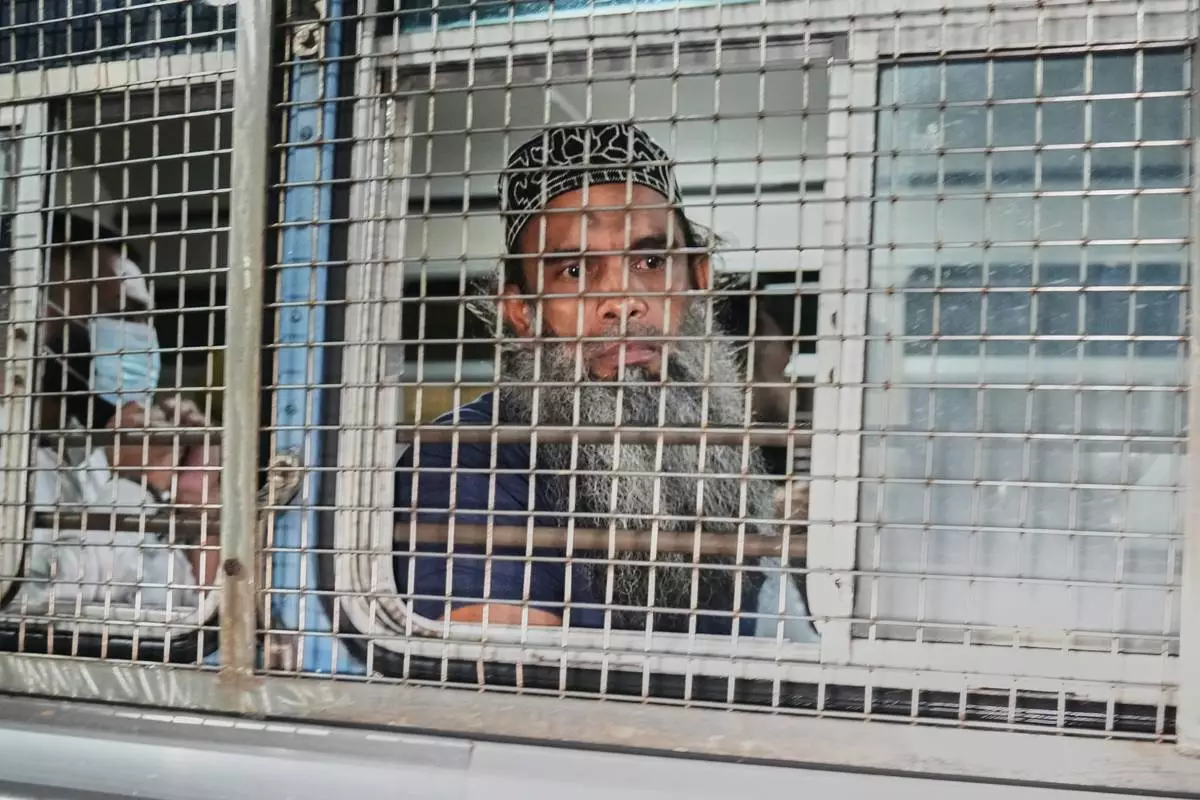
Unidentified men convicted for their involvement in the 2019 Easter bombings are escorted to a prison in Colombo, Wednesday, Sept. 23, 2026. (AP Photo/Eranga Jayawardena)
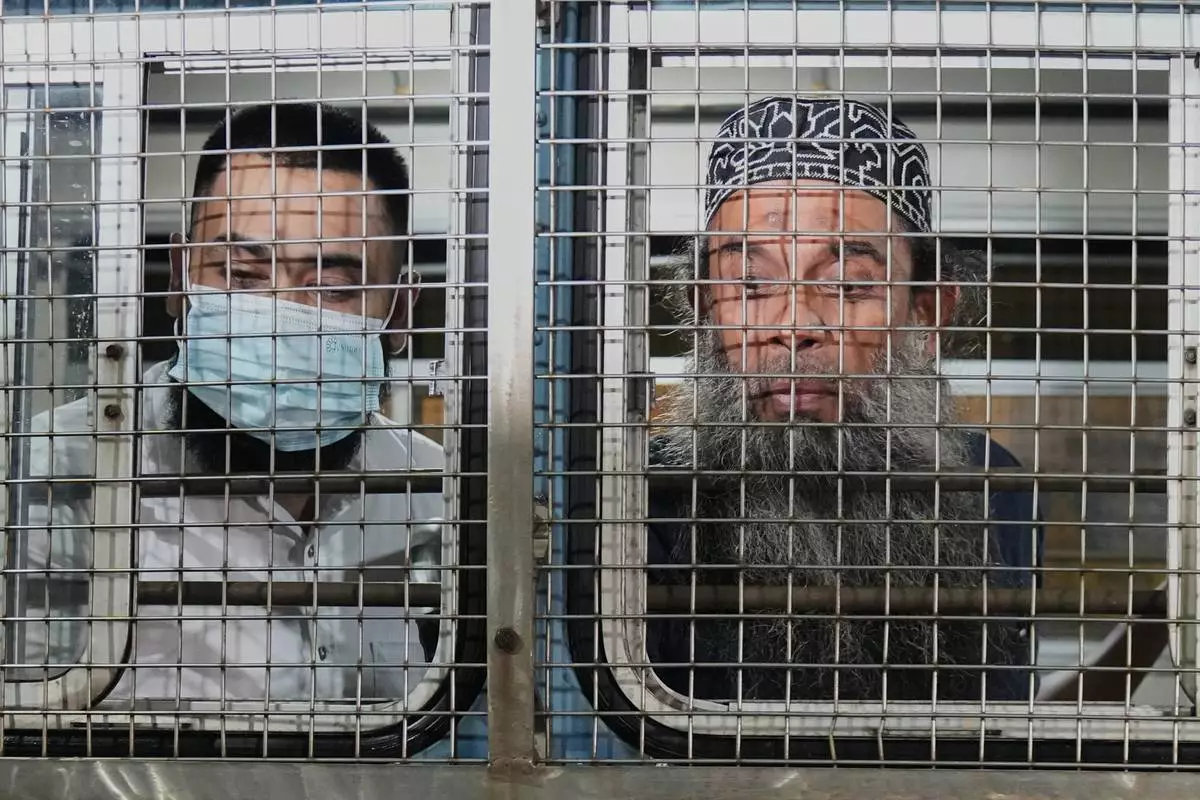
Unidentified men convicted for their involvement in the 2019 Easter bombings are escorted to a prison in Colombo, Wednesday, Sept. 23, 2026. (AP Photo/Eranga Jayawardena)
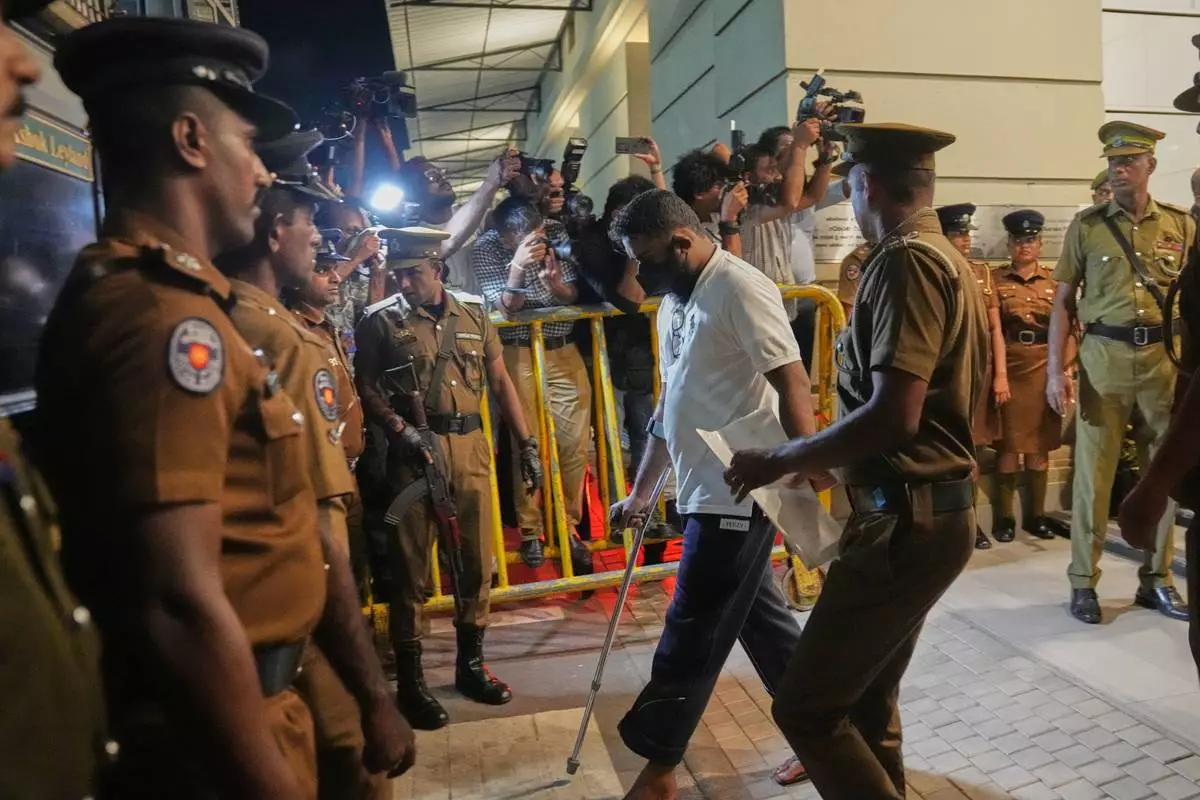
An unidentified man convicted for his involvement in the 2019 Easter bombings are escorted to a prison in Colombo, Wednesday, Sept. 23, 2026. (AP Photo/Eranga Jayawardena)
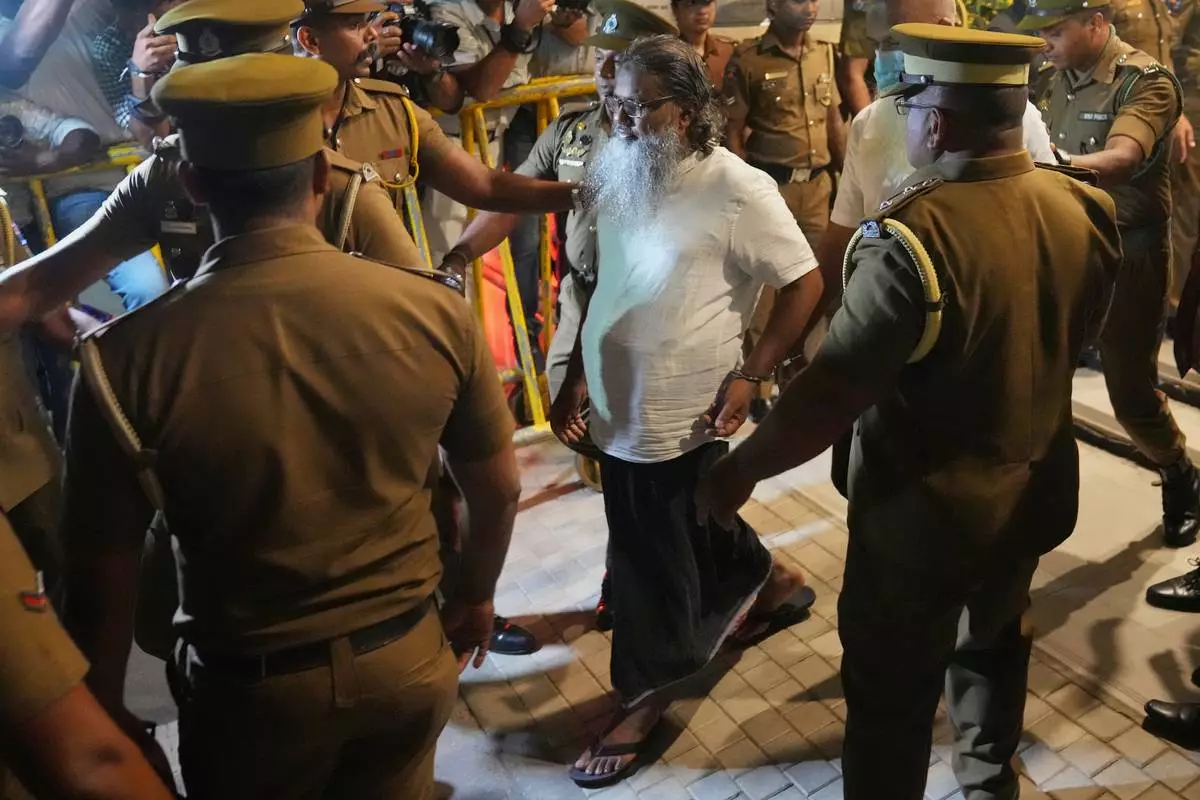
Unidentified men convicted for their involvement in the 2019 Easter bombings are escorted to a prison in Colombo, Wednesday, Sept. 23, 2026. (AP Photo/Eranga Jayawardena)
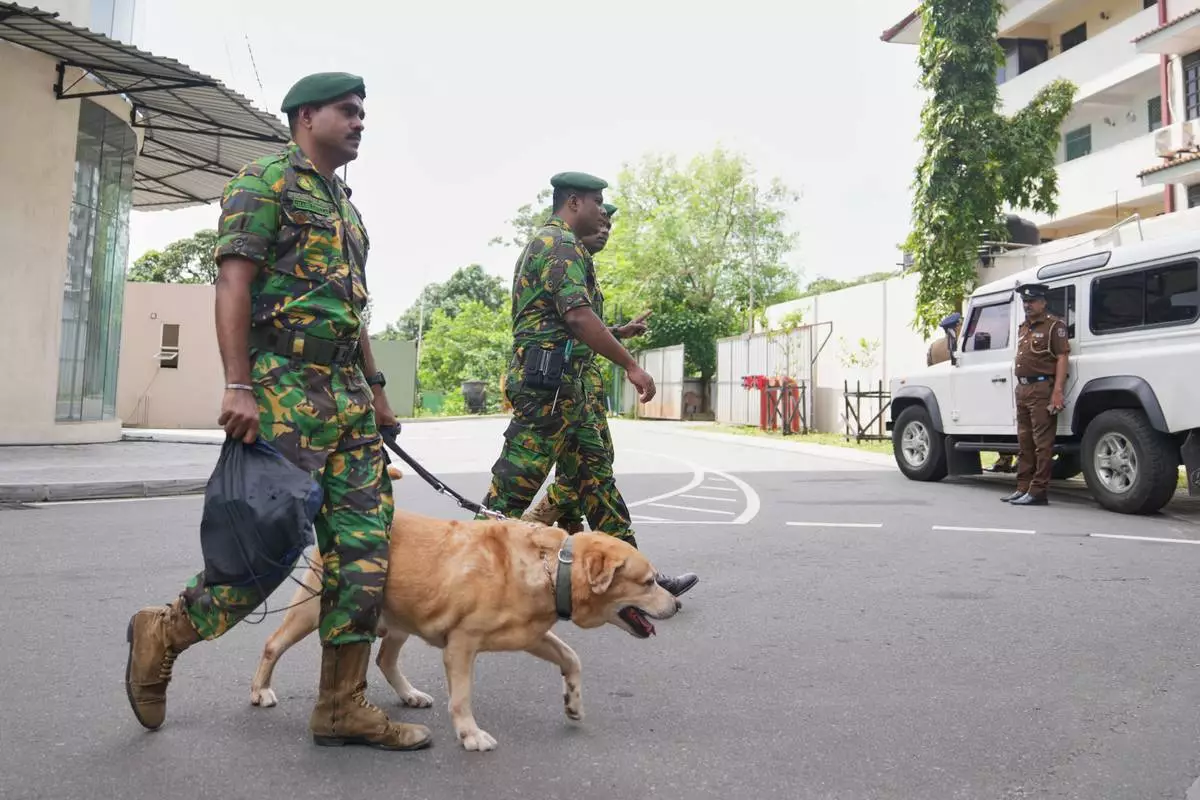
Police commandos patrol with a sniffer dog at the High Court complex ahead of a verdict related to the 2019 Easter bombings in Colombo, Sri Lanka, Tuesday, Sept. 22, 2026.(Eranga Jayawardane)
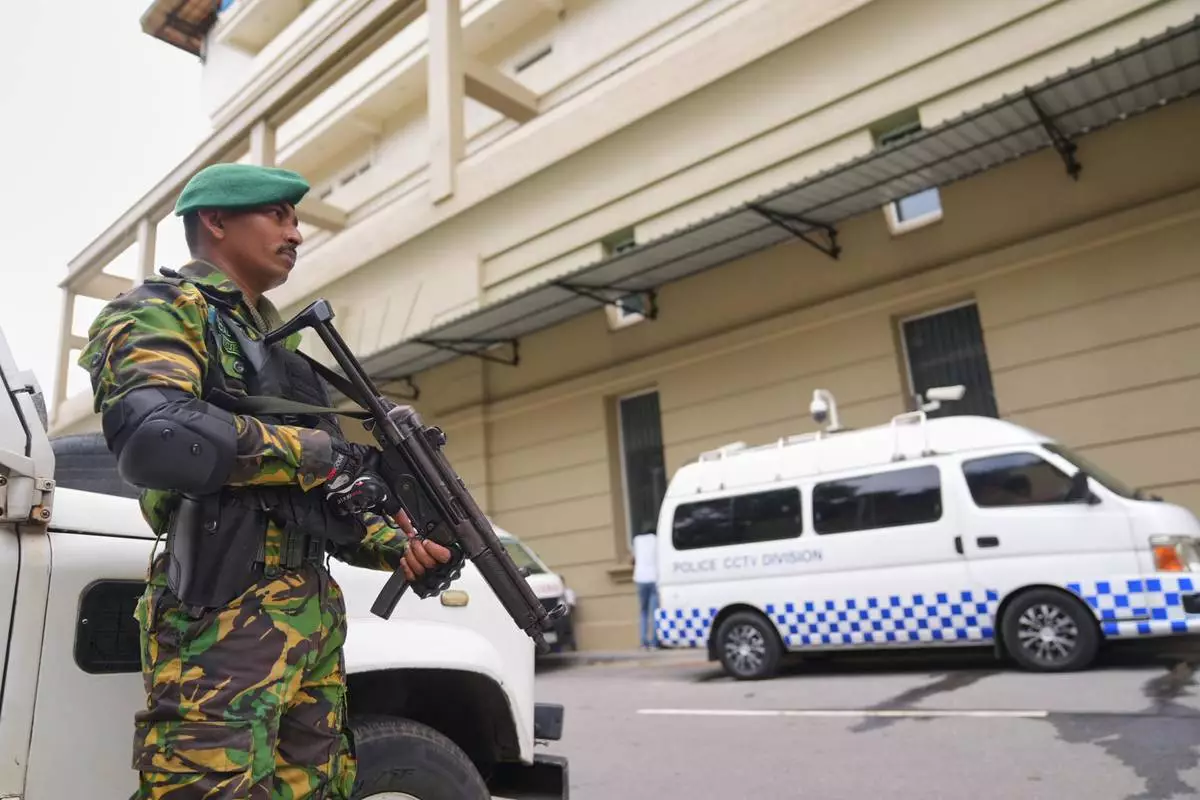
A police commando stands guard at the High Court complex ahead of a verdict related to the 2019 Easter bombings in Colombo, Sri Lanka, Tuesday, Sept. 22, 2026.(Eranga Jayawardane)
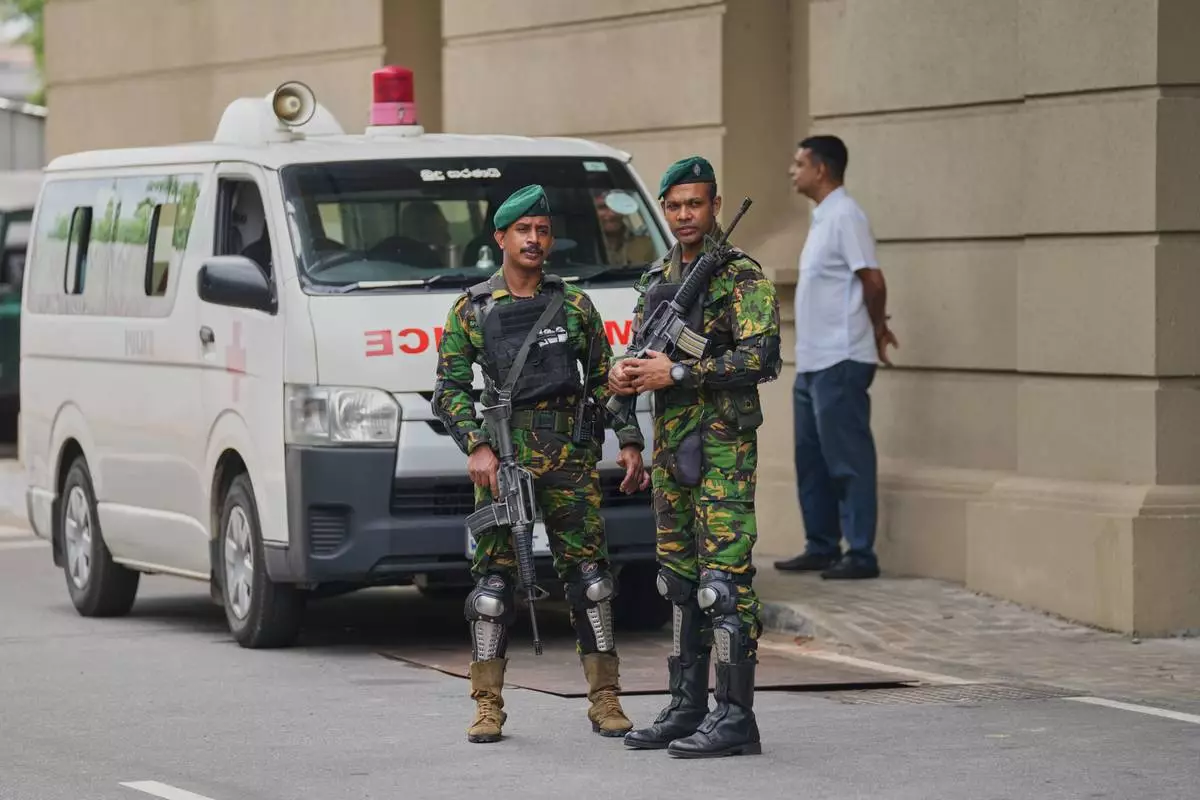
Police commandos stand guard at the High Court complex ahead of a verdict related to the 2019 Easter bombings in Colombo, Sri Lanka, Tuesday, Sept. 22, 2026.(Eranga Jayawardane)