UNITED NATIONS (AP) — For years, Canada was a trouper in the drama of international affairs. An adept and experienced contributor, it didn't often draw the spotlight when world leaders gathered at the U.N. each September.
This year, the nation of 41 million has a new posture on the planet's biggest diplomatic stage.
Click to Gallery
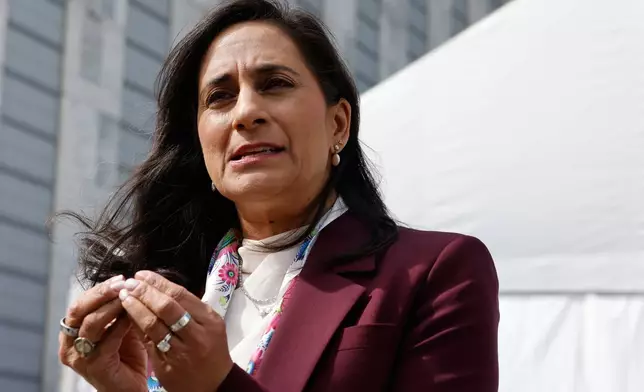
Canadian Foreign Minister Anita Anand speaks outside United Nations headquarters during the 81st session of the United Nations General Assembly, Tuesday, Sept. 22, 2026. (AP Photo/Stefan Jeremiah)
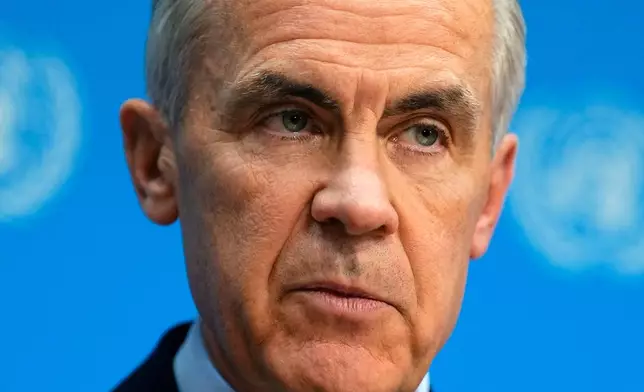
Canada Prime Minister Mark Carney speaks during a media availability at the United Nations General Assembly (UNGA) at the UN headquarters, Tuesday, Sept. 22, 2026. (Justin Tang/The Canadian Press via AP)
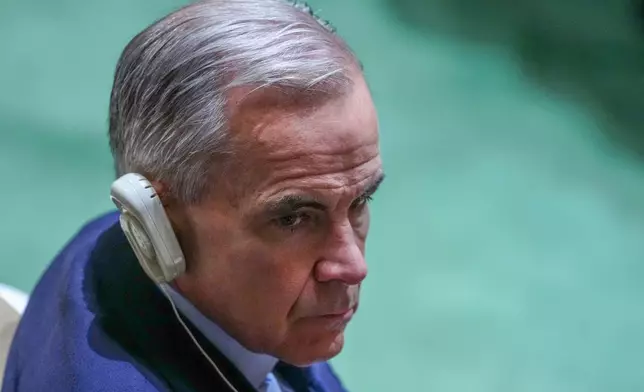
Canada's Prime Minister Mark Carney waits to listen to President Donald Trump speak to the United Nations General Assembly, Tuesday, Sept. 22, 2026, at the UN headquarters. (AP Photo/Julia Demaree Nikhinson)
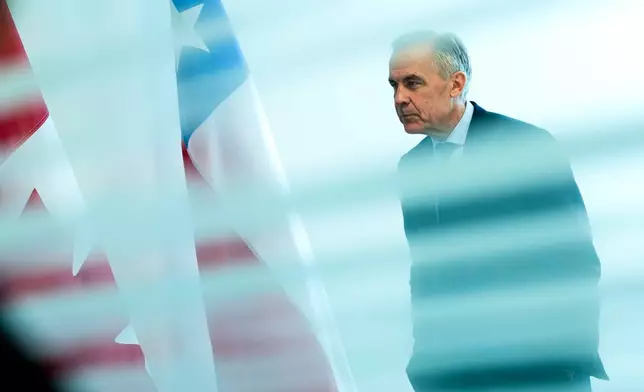
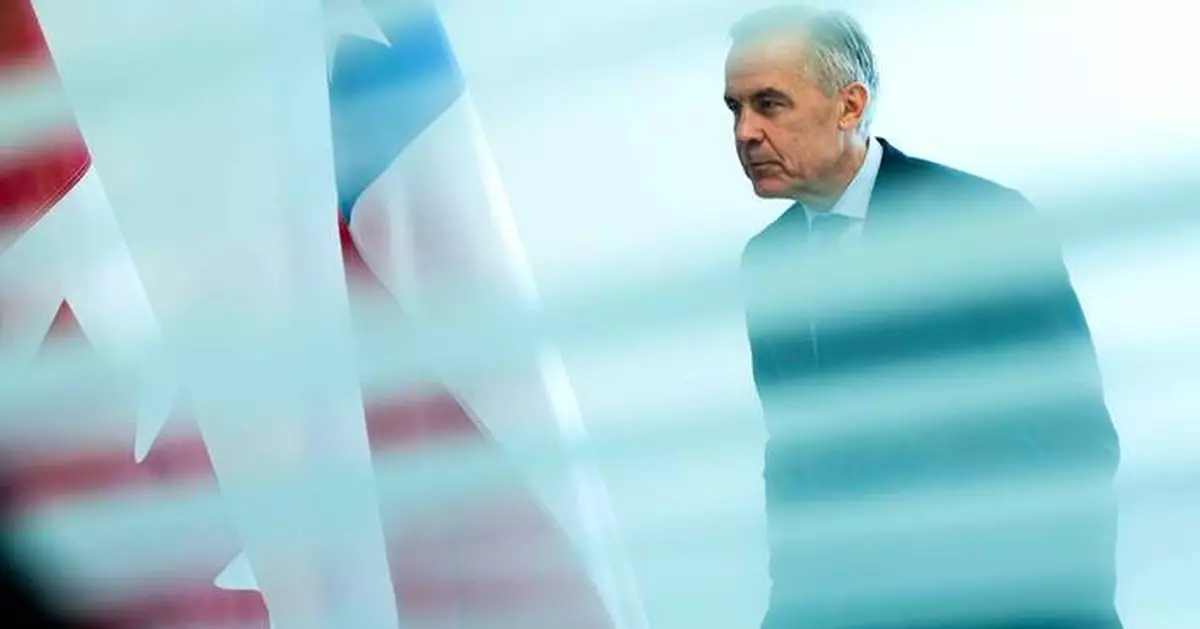
Canada Prime Minister Mark Carney is seen from behind a glass pane as he waits to meet with President of Chile José Antonio Kast, not shown, on the sidelines of the United Nations General Assembly (UNGA) at the UN headquarters on Tuesday, Sept. 22, 2026. (Justin Tang/The Canadian Press via AP)
Since a watershed speech to the World Economic Forum in January, Prime Minister Mark Carney has become a leading voice of what he and some others call “middle powers.” He has urged them to band together to update and preserve the international order, and protect their own interests, in an era of flexes by the United States and other global giants.
And he has shown himself willing to walk the walk when faced with U.S. President Donald Trump’s tariff's.insults and cavalier talk of annexation. Carney rejected what he said were unacceptable U.S. trade demands and walked away from talks last month. Bluntly hedging his country's decades-long bet on U.S. trade and partnership, he has been courting other prospects — Canada might even become the European Union's first associate member.
“Partners are working with Canada because Canada’s predictable, reliable and principled in a world that’s anything but,” Carney told Canadian media at a news conference at the U.N. Tuesday as the General Assembly's big meeting got into full swing.
It's the international community's premier gathering of the year. And to Carney, it's an opportunity to demonstrate Canada's vision of “values-based realism” that's “both principled and pragmatic” — part commitment to such values as freedom, human rights and sustainability, part clear-eyed, “calibrated alliances” with partners that won't sign onto the whole list.
That's frankly practical talk for a forum that's prone to either diplomatic caution or soaring rhetoric, be it doomsaying, idealistic or, often, both. And Carney is finding an ear.
Canada and a half-dozen other countries launched a new group Monday meant to stand up for economic cooperation and U.N.-style international collaboration. An air traffic control mess at New York airports kept Carney from making it to the “partners for multilateralism” kickoff event at the U.N. Monday night, but his schedule Tuesday included personal meetings with Jordan's king, the presidents of Chile and Angola, and an Emirati cabinet minister.
He also co-hosted a meeting on the long-elusive two-state solution to the Israeli-Palestinian conflict and pledged 100 million Canadian dollars ($71 million) in humanitarian and security funding for Palestinians. Canada last year joined more than 150 countries that have recognized a Palestinian state, over the objections of Israel and its key ally, the U.S.
Asked whether he interacted Tuesday with Trump or members of his administration, Carney replied that he saw the huge meeting of world leaders as a chance to “meet those whom you don’t normally see.” He did attend Trump's speech at the assembly, where the president made no mention of Canada — the country on the other side of the world’s longest international border, and now on the other end of a deepening trade war.
After speaking Wednesday at a U.N. meeting about oceans, Carney heads back to Canada for other commitments. Foreign Minister Anita Anand is set to deliver the country's U.N. speech Saturday.
She said in an interview Tuesday that the address “will be very much about implementing the middle power strategy” that Carney has articulated — memorably when he told the World Economic Forum that as great power rivalries increasingly shake the international system, “middle powers must act together, because if we’re not at the table, we’re on the menu.” (There’s no official list of “middle powers,” but the term is often understood to mean countries that aren’t superpowers or their proxies but have some sway in global politics due to diplomatic or other strengths.)
Carney's “message resonates with many audiences, particularly those in the global North,” says University of Ottawa international affairs professor Srdjan Vucetic.
He noted that the prime minister's leadership is resonating at home, too. Carney, who took office in March 2025, enjoys high approval ratings from Canadians. Many are galled by Trump's remarks about making their country the U.S.'s “51st state,” his insistence on referring to Lake Ontario as “Lake America” and his trade policies. In Toronto, Canada’s most populous city, some neighborhoods are dotted with lawn signs encouraging eligible U.S. expatriates to vote absentee, and at least one coffee shop has crossed the Americano drink off its menu, substituting “Canadiano” instead.
Carney, 61, a former central bank chief with a doctorate in economics, aims to double Canada's non-U.S. trade within a decade. He convened hundreds of international investment firm executives for a Canadian investment summit last week and is hoping for a trade deal with India, among others, by year’s end.
His government has touted security, defense and economic agreements with a roster of countries over the past year, and he has envisioned Canada as potentially forging an economic bridge of sorts between the EU and Pacific Rim countries.
His international efforts have drawn some questions, as when he became the first Canadian prime minister in over a quarter-century to visit Saudi Arabia. Predecessor Justin Trudeau's government had assailed Saudi Arabia’s human rights record, spurring a five-year diplomatic split. The two countries restored full diplomatic relations in 2023.
Carney said at the time of the July visit that he cares deeply about human rights, that there's no point in “lecturing countries from afar,” and that engaging with them doesn't convey approval of their every move.
At his U.N. news conference Tuesday, he said his approach “means actively, actively taking on the world as it is, not passively waiting for a world we wish to be.”
“We have a strategy that, I believe, has already made our country stronger,” he added, “but we’ve only just begun.”
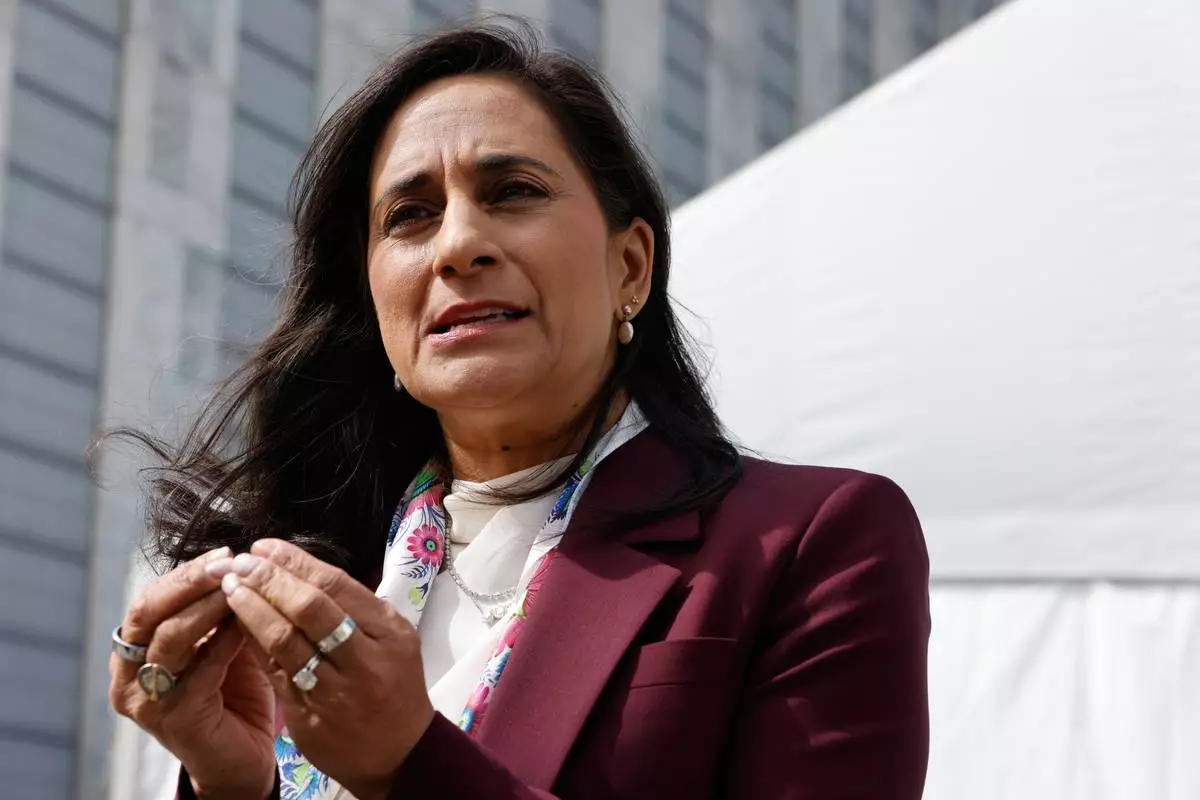
Canadian Foreign Minister Anita Anand speaks outside United Nations headquarters during the 81st session of the United Nations General Assembly, Tuesday, Sept. 22, 2026. (AP Photo/Stefan Jeremiah)
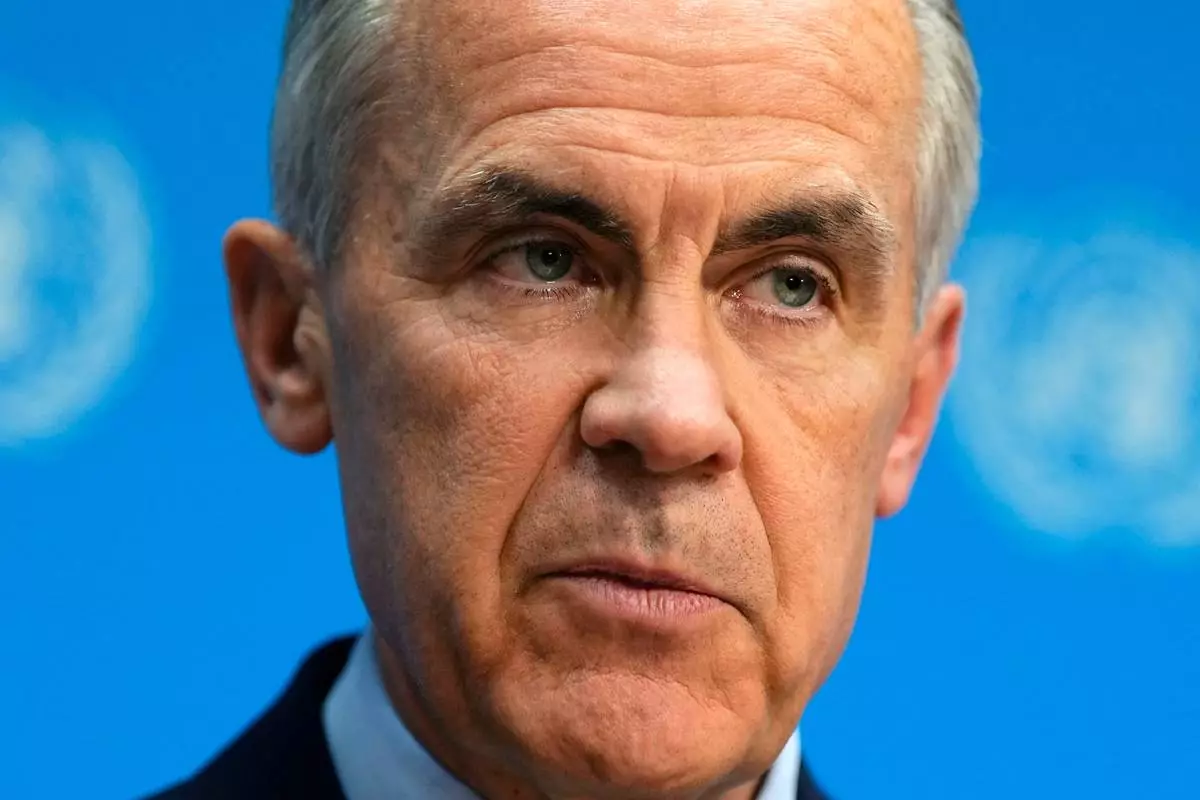
Canada Prime Minister Mark Carney speaks during a media availability at the United Nations General Assembly (UNGA) at the UN headquarters, Tuesday, Sept. 22, 2026. (Justin Tang/The Canadian Press via AP)
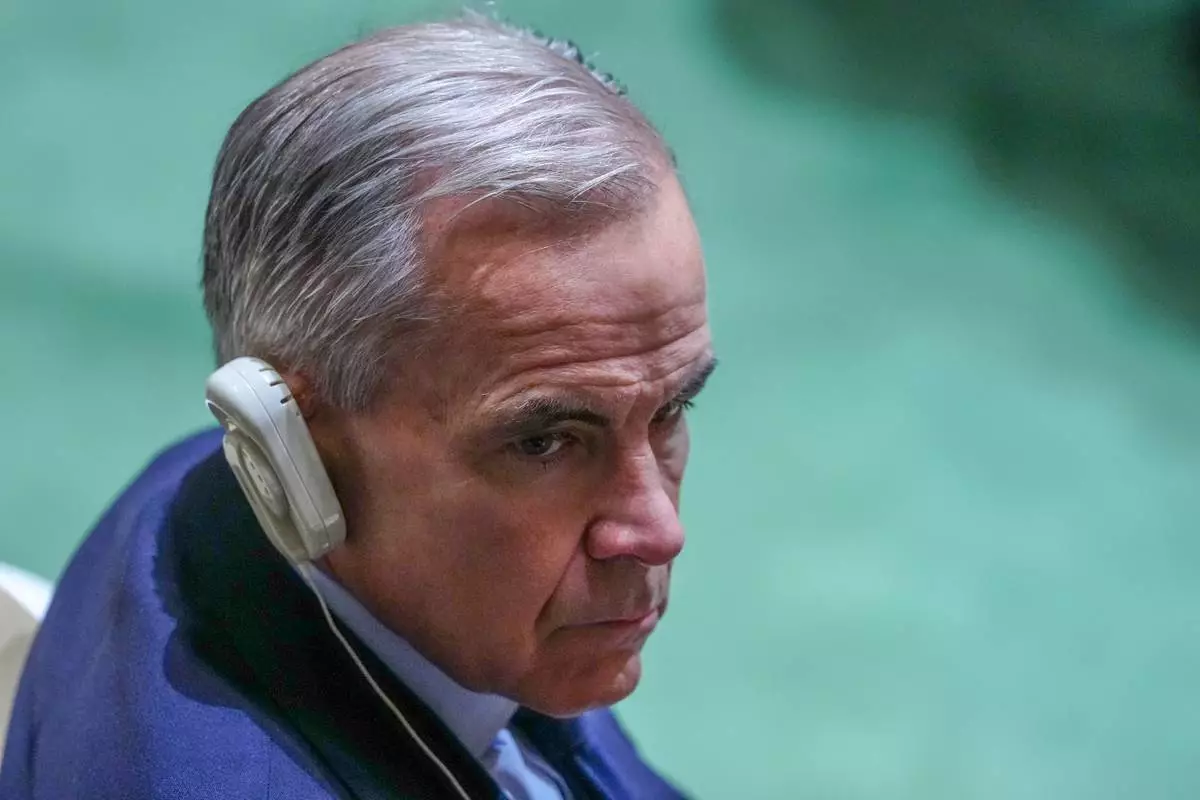
Canada's Prime Minister Mark Carney waits to listen to President Donald Trump speak to the United Nations General Assembly, Tuesday, Sept. 22, 2026, at the UN headquarters. (AP Photo/Julia Demaree Nikhinson)
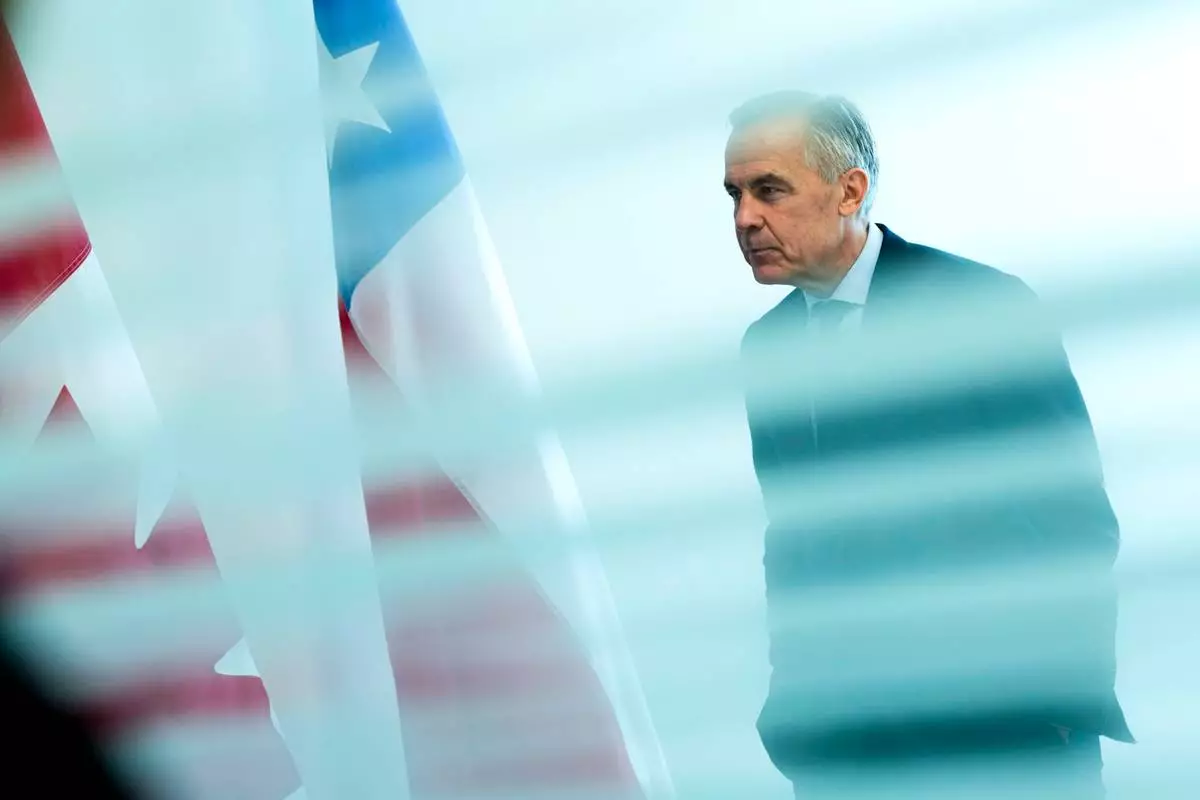
Canada Prime Minister Mark Carney is seen from behind a glass pane as he waits to meet with President of Chile José Antonio Kast, not shown, on the sidelines of the United Nations General Assembly (UNGA) at the UN headquarters on Tuesday, Sept. 22, 2026. (Justin Tang/The Canadian Press via AP)