TALLINN, Estonia (AP) — Russian President Vladimir Putin is becoming “increasingly cavalier, dangerous and risk accepting,” as his war in Ukraine drags on and as he seeks to divide Western allies, NATO's deputy commander in Europe said Tuesday.
Air Chief Marshal Sir John Stringer spoke to The Associated Press at a security conference in Estonia amid warnings from some European leaders that Moscow is planning to test NATO's collective defense pact with bolder attacks that have already included sabotage and espionage.
Stringer warned that NATO members need to be aware of the “febrile environment” and careful in their response because Putin would like to provoke the alliance into an “overreaction.”
Polish Prime Minister Donald Tusk said last week that Russia might target NATO nations with deliberate drone or missile strikes while claiming they were accidental. French President Emmanuel Macron agreed and has asked his government to prepare a plan to protect critical infrastructure against potential drone attacks and cyberattacks.
Other European officials say the threat from Russia is serious but have called for calm.
A British defense official, speaking on condition of anonymity to discuss sensitive security matters, said the UK assessment is that Putin is not seeking direct confrontation with NATO. Officials in Estonia, Latvia and Lithuania, which border Russia, have also been more cautious about the prospect of a serious escalation after years of calling on Western nations to adopt a more hawkish approach to Moscow.
European countries have already faced multiple incursions of Russian drones — and several missiles — as well as a campaign of covert Russian disruption which began after Putin’s invasion of Ukraine.
An AP interactive map tracking that campaign shows the escalation, from 59 incidents in March 2025 to more than 210 incidents ranging from vandalism, propaganda and influence operations to arson, sabotage and cyberattacks.
In August, German officials accused Moscow of being behind a plot at Leipzig airport where a drone with explosives was found next to a Ukrainian plane laden with jet fuel. Last month, British officials said they disrupted a Russian plot to sabotage a drone factory outside London. In August, an Estonian defense company was set on fire and a weapons storage facility in Bulgaria exploded, though neither has been publicly attributed to Russia.
Many saboteurs have been recruited online by Russia's intelligence services and some have no idea they are working for Moscow. That makes uncovering a plot challenging and attribution often difficult. When asked by the AP in May if Russia was waging a covert campaign against the West, Putin responded: “Name one proven fact.”
The line between “accidental and deliberate is quite a fine one,” Stringer said, referring to incursions of drones sent off course into NATO airspace by Russian GPS jamming or other electronic countermeasures to defend against Ukrainian drone strikes.
It would be possible for Russia to escalate that activity but it does not mean Moscow has decided to do so, said Stringer, NATO's deputy supreme allied commander for Europe.
While there are “a lot of different opinions as to how acute the threat is ... Russia’s attitude towards negligence” and deliberately targeting NATO neighbors "is almost the same,” Estonian Prime Minister Kristen Michal told AP at the security conference.
Both Stringer and Michal suggested the increase in covert attacks by Moscow was not because of a failure by NATO nations to stop them but as a direct consequence of Western support for Ukraine.
Putin, Stringer said, is “looking at a whole number of things” to try to create division between NATO allies because his campaign in Ukraine is going badly.
Michal likened the Russian leader to a “rat in the corner," who is escalating activity in Europe in an attempt to break Western support for Kyiv at a time when Moscow is under pressure.
Russia’s gains on the front lines in Ukraine have been slow and at a steep cost of more than half a million dead, even as Kyiv's deep-strike campaign targeting the country’s energy industry has caused fuel shortages in 80 of 83 Russian regions, Air Chief Marshall Sir Richard Knighton, chief of the U.K’s defense staff, said earlier this month. Still, there's no suggestion the Russian leader is backing away from his goals in Ukraine.
Putin is trying to undermine NATO’s collective defense pact by testing nations with covert attacks that are hard to attribute, Michal said.
But the Estonian leader said it's currently “improbable,” that Putin will launch a conventional military attack on Europe because of the threat of a NATO response and because his forces are tied down in Ukraine.
The high level of malign activity from Russia is “here to stay” until Putin changes his military goals, Michal said, adding that the best way to deter it is to “back Ukraine.”
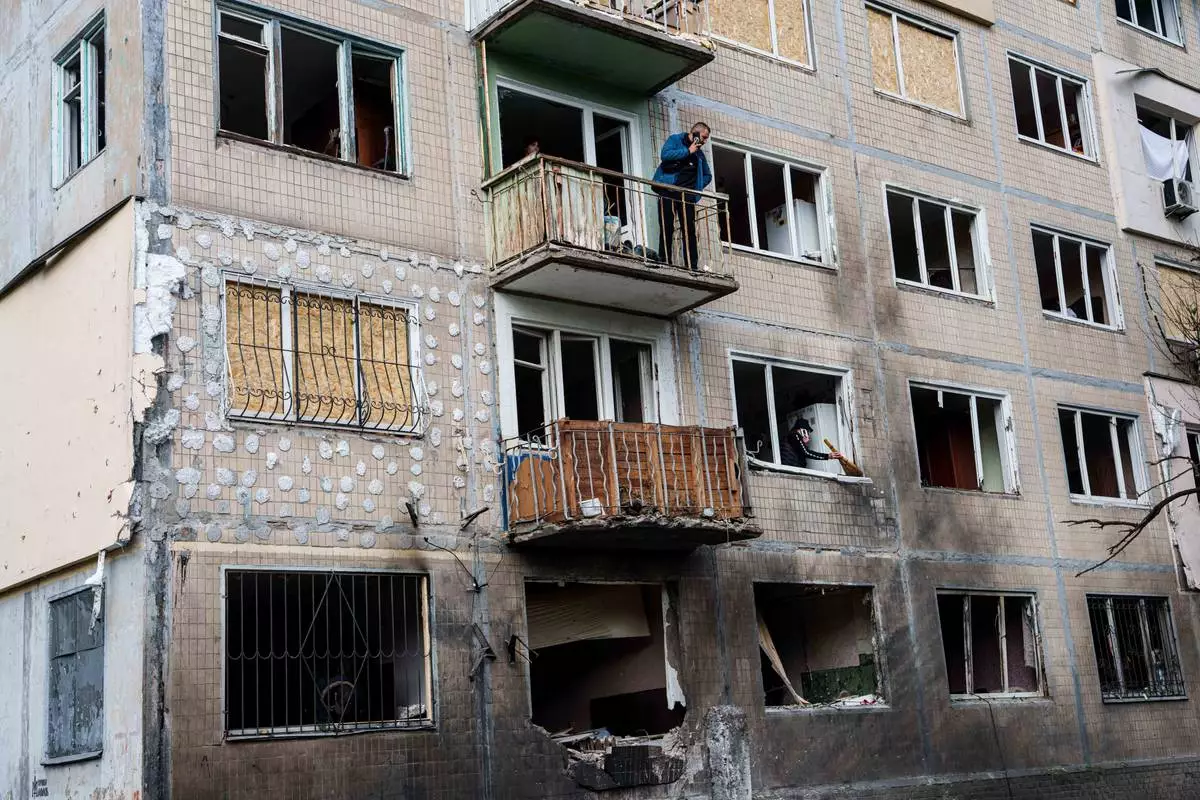
A man stands at a balcony of an apartment building damaged after a Russian drone strike in Kyiv, Ukraine, on Tuesday, Sept. 22, 2026. (AP Photo/Evgeniy Maloletka)
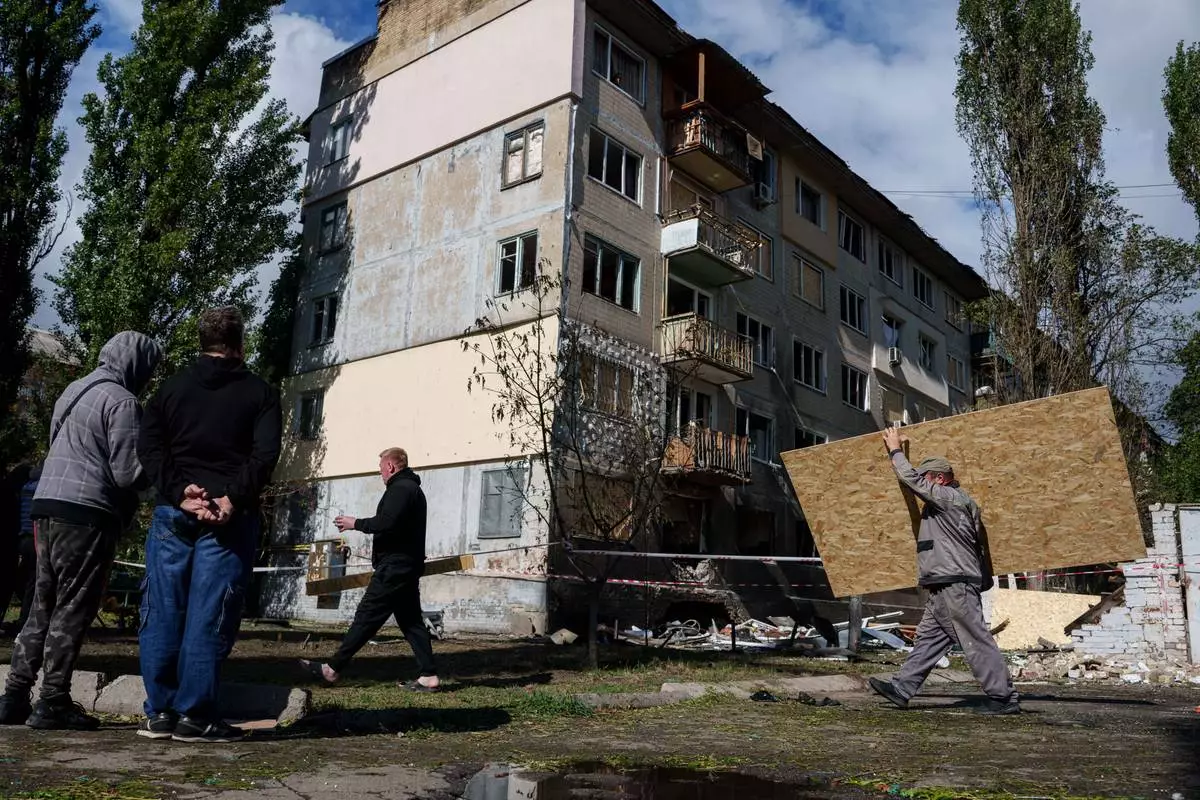
A municipal worker carries plywood to board up windows of an apartment building damaged by a Russian drone strike in Kyiv, Ukraine, Tuesday, Sept. 22, 2026. (AP Photo/Evgeniy Maloletka)
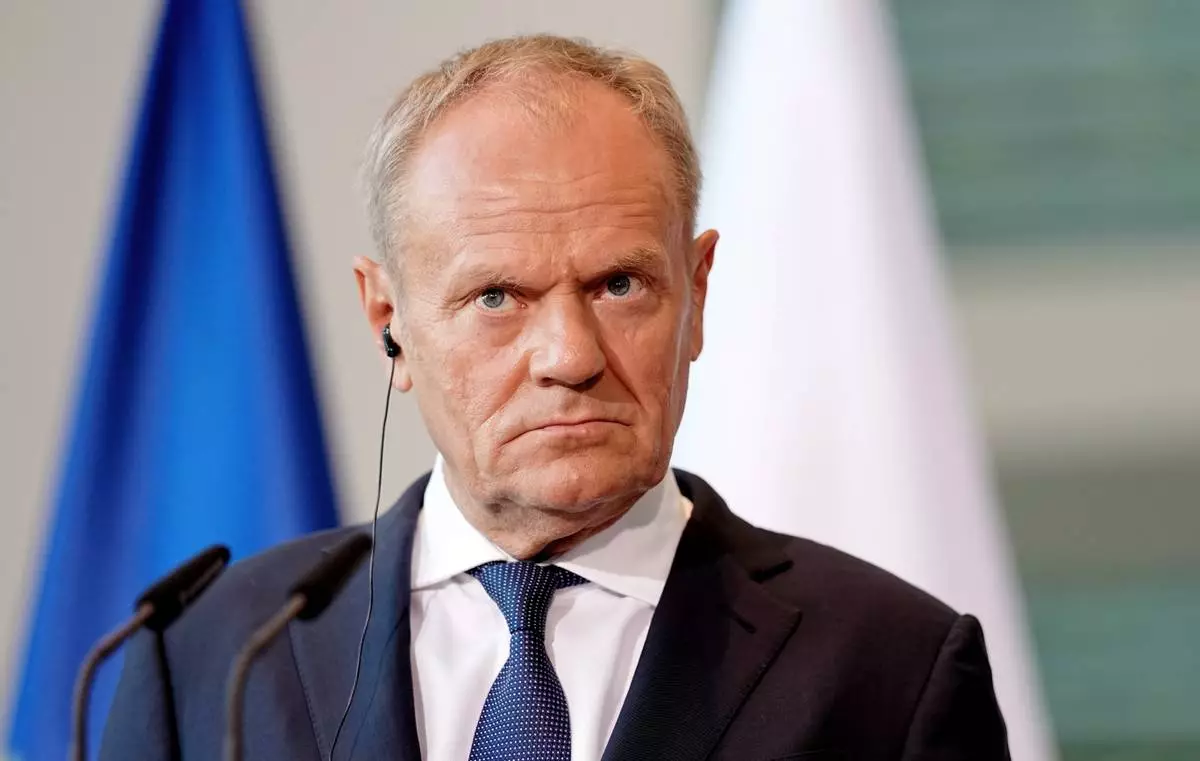
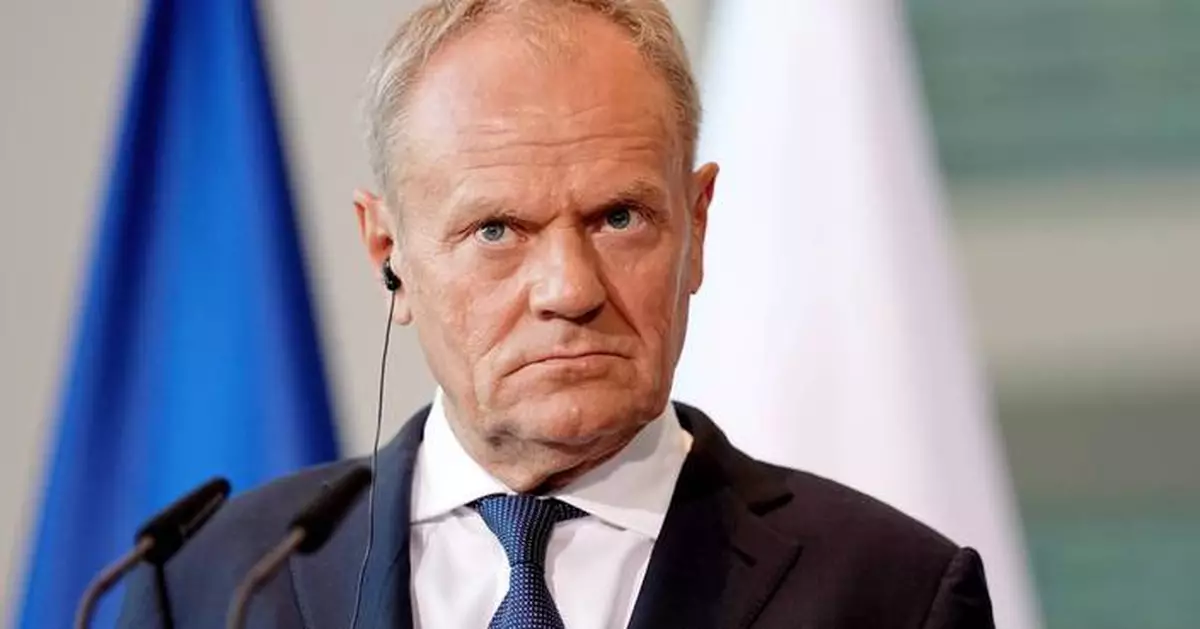
FILE - Polish Prime Minister Donald Tusk looks on during a press conference during the E5 summit of leading European nations ahead of the upcoming NATO summit, in Berlin, Wednesday June 24, 2026. (Kay Nietfeld/dpa via AP,File)