NEW YORK (AP) — The Trump administration has imposed double-digit tariffs on more than 60 countries, using a legal justification that permits the president to levy import taxes and other sanctions against countries found to engage in “unjustifiable,” “unreasonable” or “discriminatory” trade practices.
The new tariffs announced in recent days take effect just as temporary 10% worldwide tariffs expired, and critics say they are less about cracking down on forced labor than they are a way to replace those tariffs. The expired tariffs were themselves a temporary replacement for worldwide tariffs the Supreme Court struck down in February.
The tariffs were levied on countries that the U.S. says either don't have or don't effectively enforce a forced-labor import ban. The affected countries, which account for 99% of U.S. imports, were quick to protest, calling the Trump administration's claims unfounded and arbitrary, as nations with vastly different records on forced labor received the same tariff level. The U.S. spent four months investigating but gave few details on how it arrived at the tariff rates, which are either 10% or 12.5%.
The tariffs were levied under Section 301 of the Trade Act of 1974 on countries that the U.S. determined had failed “to impose and effectively enforce a prohibition on the importation of goods produced with forced labor.”
During President Donald Trump 's first term, he cited Section 301 to impose sweeping tariffs on Chinese imports amid a dispute over the sharp-elbowed tactics Beijing was using to challenge America’s technological dominance. The U.S. is also using 301 powers to counter what it calls unfair Chinese practices in the shipbuilding industry.
“The 301s allow a permanent tariff without going to Congress to settle the dispute,” said Barry Appleton, a law professor and co-director of New York Law School’s Center for International Law. “That’s what all of this is about. The president doesn’t want to knock on the front door of Congress, so he’s trying every side door and every unlatched window to get in.”
The office of the United States Trade Representative (USTR) said it consulted with all 60 economies under investigation and held two rounds of public hearings, elicited more than 2,100 public comments, and had “engagement” with its trading partners about what they were doing to combat forced labor bans.
It didn't detail its talks with the countries, saying those were confidential. Experts say it is fairly straightforward to investigate whether a country has a ban or not, but it is difficult to determine the government's exact rationale for each country's failure to enforce import bans.
“There’s not a lot of hard evidence there,” said Scott Lincicome, vice president for general economics and trade policy at the Cato Institute, a libertarian think tank. “It’s pretty laughable on its face to think that a country like the ones in Europe or in Norway or Switzerland aren’t doing enough to police forced labor.”
And even if countries do enact and enforce the forced-labor import bans the U.S. wants, they would still need to prove that they’re enforcing them to Washington’s satisfaction before the tariffs would be removed, said lawyer Patrick Childress, a partner at Holland & Knight and a former U.S. trade official.
“This suggests that no short-term path for countrywide relief from the new Section 301 tariffs will be available,” he said.
Many countries have pushed back against the Trump administration's findings.
Brazil, which faces a 12.5% forced-labor tariff, called the U.S. move “arbitrary and unjustified.” The U.S. “chose to manipulate an issue of great importance to human rights and the struggles of workers worldwide in order to accuse 59 countries and the European Union of unfair practices,” it said in a statement.
Australia also questioned the justification for its 12.5% tariff.
“We believe that amongst all of the countries in the world, Australia does take the issue of slavery, modern slavery, seriously, and will continue to do that,” Trade Minister Don Farrell told reporters in Adelaide.
Carve-outs have riled some industries. The National Council of Textile Organizations (NCTO), which describes itself as the voice of the American textile industry, protested a mechanism that exempts the Section 301 tariffs for textile and apparel imports from Bangladesh, Cambodia, Indonesia, and Malaysia based on those countries’ imports of U.S. cotton and textiles.
“No other industry has been more disadvantaged by forced labor than the U.S. textile industry, which employs 453,000 workers and has lost 41 plants over the past two plus years,” NCTO chief executive Kim Glas said in a statement. “We remain strongly concerned that USTR’s textile mechanism will harm the very domestic manufacturers the administration seeks to help.”
The U.S. has two major pieces of legislation related to forced-labor import bans. The Tariff Act of 1930 gave Customs and Border Protection the authority to seize shipments where forced labor was suspected and to block further imports. But it had a big carve-out: If there was “consumptive demand,” meaning there wasn't sufficient supply to meet domestic demand, imports were allowed regardless of how they were produced. The Trade Facilitation and Trade Enforcement Act that took effect in 2016 eliminated that loophole.
In 2021, the Uyghur Forced Labor Prevention Act was passed. It blocks imports from China’s Xinjiang region unless businesses can prove the items were made without forced labor.
But goods made with forced labor can still make it into the U.S. In 2015, an Associated Press investigation found that slave labor was used in the fishing industry in Southeast Asia. The seafood they caught made its way to supermarkets and pet food providers across the U.S.
An investigation by The Associated Press in 2020 into the $65 billion palm oil industry found labor abuses among an invisible workforce consisting of millions of men, women and children in Asia. The fruit they harvested made its way into the supply chains of major companies, including Unilever, L’Oreal, Nestle and Procter & Gamble.
During hearings on the tariffs this month, National Retail Federation vice president Jonathan Gold, who was representing the business coalition the Joint Association Forced Labor Working Group at the hearing, said that in order for the import bans to work, they would have to be much more extensive.
He said there need to be “clear, measurable benchmarks” tied to tariffs for countries to hit, and that the U.S. should help countries build enforcement programs.
Kenya Davis, a partner at the Boies Schiller Flexner law firm, said an effective ban needs a “comprehensive approach” that provides transparency about what the investigations consisted of, along with programs that provide countries aid in enforcing bans.
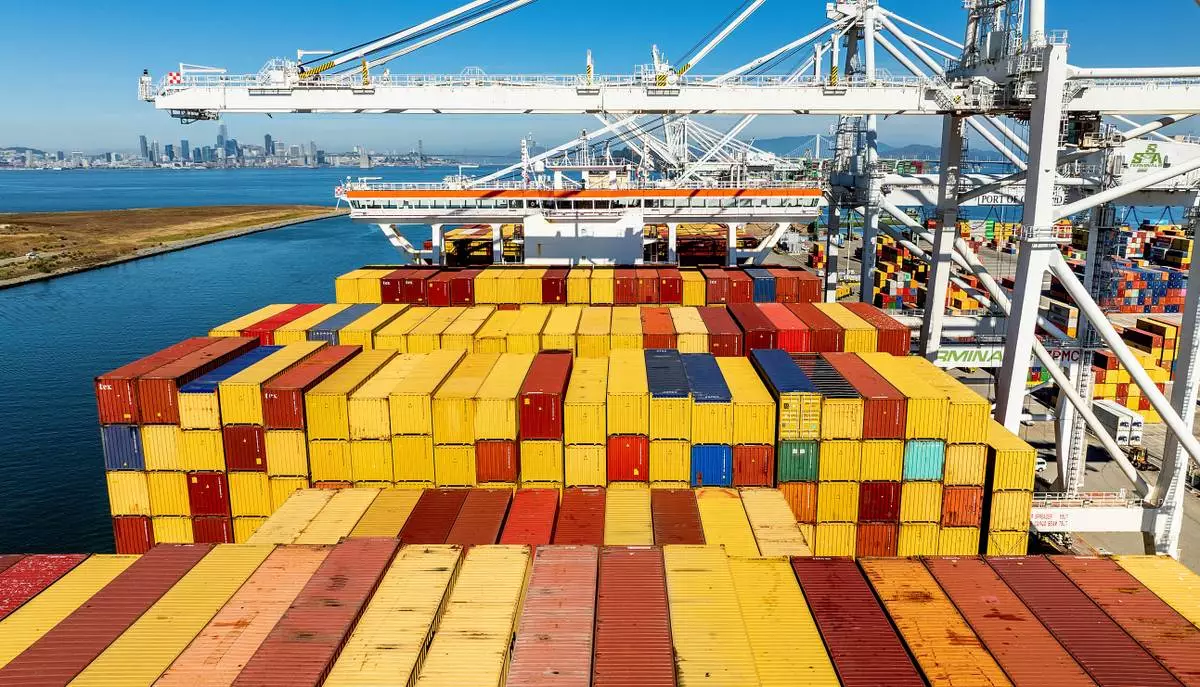
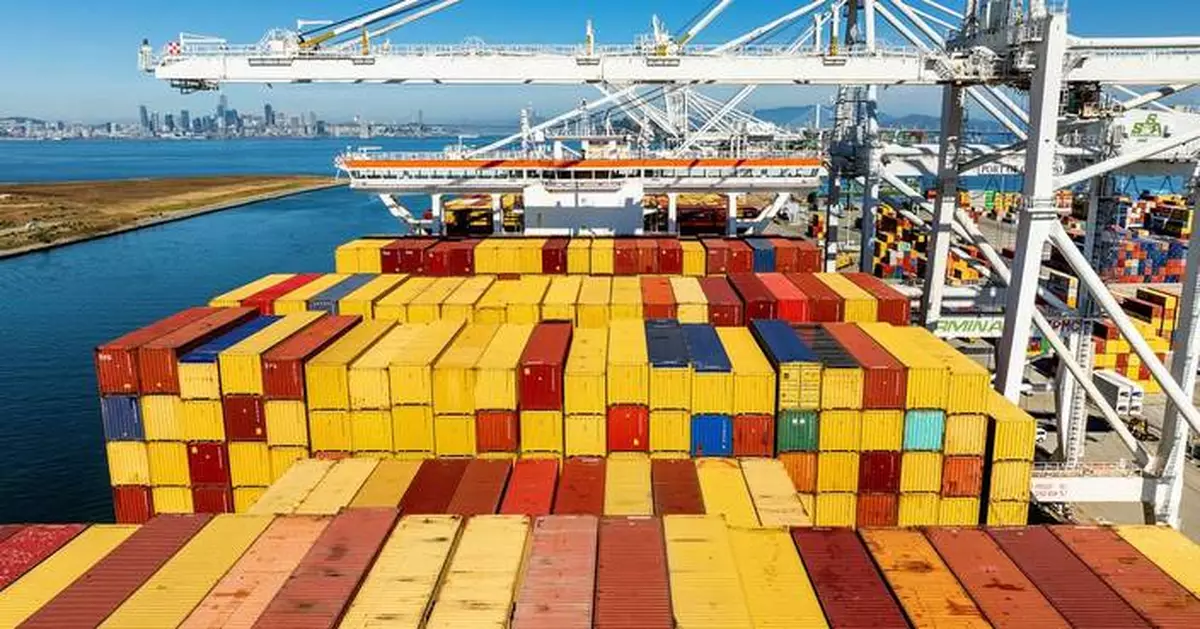
FILE - Cargo containers line a ship at the Port of Oakland on Wednesday, Aug. 6, 2025, in Oakland, Calif. (AP Photo/Noah Berger, File)
The Nuclear Regulatory Commission is proposing to eliminate a foundational safety principle that has for 50 years minimized the radiation people in the United States are exposed to and that has been adopted around the world.
Currently, facilities such as nuclear plants, hospitals or academic institutions that use radioactive materials must ensure radiation exposures are kept “as low as reasonably achievable” — the ALARA principle. The NRC proposal would abandon that philosophy while keeping a separate standard on maximum radiation exposure.
The two standards have worked together in radiation safety. Dose limits set the maximum amount of radiation the public and radiation workers can be exposed to, while ALARA kept radiation exposure as low as practical under those limits. Research shows radiation exposure increases a person’s chance of getting cancer, a risk that increases as the dose increases.
The dose limits are not changing. But the NRC, which regulates civilian nuclear energy technologies and radioactive materials, now wants to replace ALARA with a “graded approach” that includes several actions facilities must take depending on the potential dose of radiation to workers. More rigorous radiation protection measures would be required when approaching dose limits to ensure they aren't exceeded.
This comes as President Donald Trump attempts to quadruple domestic nuclear energy production because of surging electricity demand amid a data center and artificial intelligence boom. Reforming the NRC is one way Trump is trying to speed up nuclear reactor development. He instructed the federal agency in an executive order last year to “ adopt science-based radiation limits.”
The Energy Department, which oversees national energy policies, has already stopped using ALARA. The NRC expects to finalize its radiation protection regulations in the coming months.
NRC Chairman Ho Nieh said the commission is not lowering the bar on safety.
“We’re just removing the ambiguity,” he said in a call with reporters. “But the standard for exposure to workers and the public, those are not changing. We’re just putting in place greater clarification.”
Nieh doesn't expect major changes within the nation's existing fleet of large, traditional reactors. But companies designing and building new, smaller reactors could move faster with a clearer picture of the radiation protection requirements, he said.
The NRC said radiation exposure limits are set well below levels associated with health effects, and it expects remaining standards and industry practices to keep radiation doses far below the limits. There's incentive to do so — it's more expensive and time-consuming to work in areas with higher radiation because access must be restricted and more surveys are required.
The nuclear industry's trade association agrees with the NRC.
“We will always continue to look at what can we do to reduce the dose to workers, and maintain our doses to the off-site public as low as possible,” said Doug True, chief nuclear officer at the Nuclear Energy Institute. “It’s not like we’re just going to throw open the doors and let everything run up to the limits.”
ALARA created a “moving target” for regulation, said Justin Friedman, a nuclear energy consultant who previously spent three decades at the U.S. Department of State. Getting rid of the rule would allow NRC scientists to make more rational decisions about appropriate levels of manageable risk, he added.
Edwin Lyman, director of nuclear power safety at the Union of Concerned Scientists, cautions that some parts of the NRC proposal could raise permissible radiation doses in certain cases, while still staying below the cap. Lyman highlighted a proposed revision to radionuclide emissions standards, in particular.
Radiation exposure to the general public is limited to 100 millirem per year. A typical dose of radiation from a chest X-ray is 10 millirem.
The NRC wants to increase its radionuclide emissions standards from a conservative 10 millirem per year dose to 25 millirem per year, based on a hypothetical person living in a house at the property line for a nuclear plant.
The NRC says actual doses to the public would remain far lower because, in reality, people live farther from nuclear sites and benefit from dispersion in air and water.
The NRC should improve, rather than eliminate, ALARA, Lyman said, to protect the public and workers. ALARA has become a political target because some people mistakenly believe radiation exposures have to be as low as possible no matter the cost, Lyman said. In reality, it allows tradeoffs.
Katy Huff, a former U.S. assistant secretary for nuclear energy, said in some cases, the requirement may be challenging to regulate. Additional clarity would improve the regulatory environment without harming the public, added Huff, a professor and department chair at the University of Wisconsin-Madison.
However, Huff said, she thought the NRC was going to clarify what reasonable means in ALARA without scrapping it. She said she’s open to being convinced the graded approach will be just as effective.
The National Council on Radiation Protection and Measurements, chartered by Congress to provide independent scientific guidance, has not formally weighed in yet. Council president Kathryn Higley said she personally likes some things in the 180-page document and thinks others are problematic.
The NRC should look at the whole picture for managing risk, she said. For instance, if a worker at a nuclear power plant were to enter an area where airborne radioactive materials are present, in keeping with ALARA, they might wear full personal protective equipment with respirators, said Higley, professor emeritus at Oregon State University. That makes them move slower, potentially subjecting them to heat stress that could hurt them more than a low dose of radioactivity, she said.
A concern with the proposal, Higley said, is that it maintains the current occupational dose limit for adult radiation workers at 5 rem, or 5,000 millirem, per year. With ALARA in place, the average dose to workers has been well below that cap.
The International Commission on Radiological Protection recommends an occupational dose of 2 rem per year on average. The NRC previously found it wasn't justified to match that, because workers were exposed to less than that and changing regulations is costly.
Higley said the U.S. may need to align with the international community if ALARA is going away.
The Associated Press’ climate and environmental coverage receives financial support from multiple private foundations. AP is solely responsible for all content. Find AP’s standards for working with philanthropies, a list of supporters and funded coverage areas at AP.org.

FILE - The four nuclear reactors and cooling towers operate at the Alvin W. Vogtle Electric Generating Plant, May 31, 2024, in Waynesboro, Ga. (AP Photo/Mike Stewart, File)
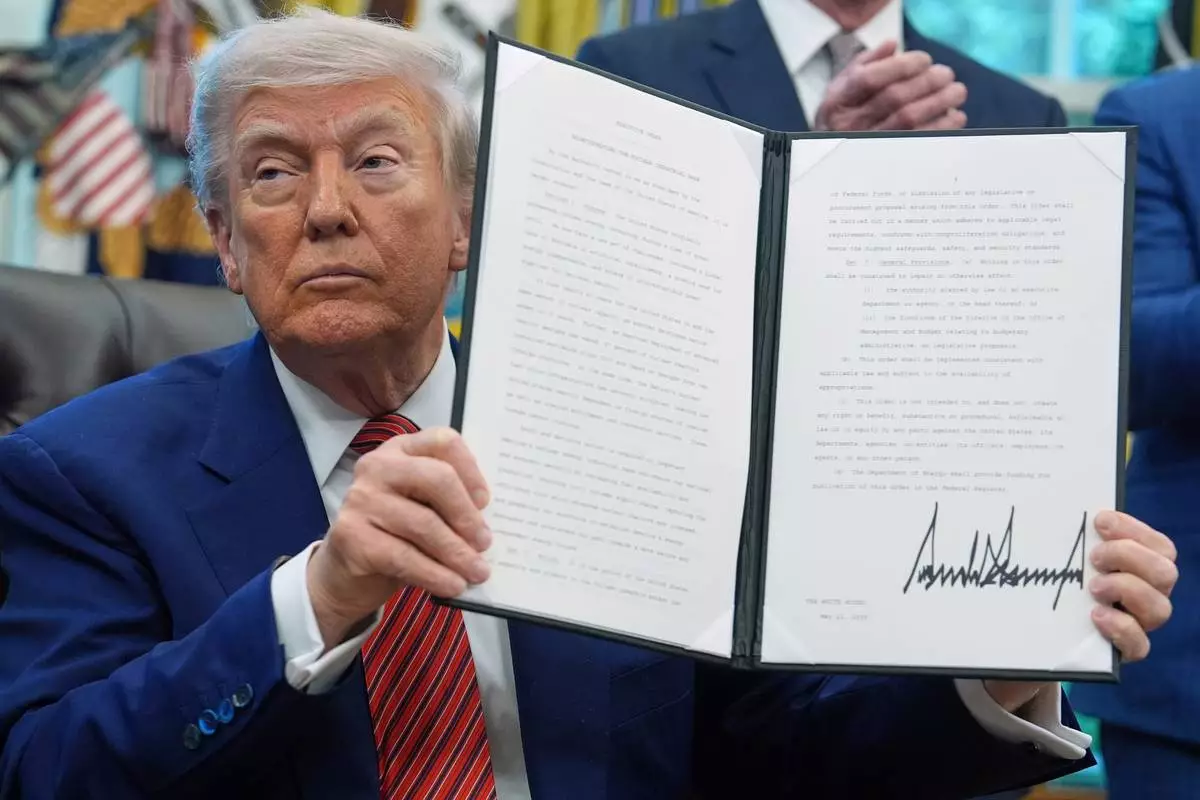
FILE - President Donald Trump holds an executive order regarding reinvigorating the nuclear industrial base in the Oval Office of the White House, May 23, 2025, in Washington. (AP Photo/Evan Vucci, File)
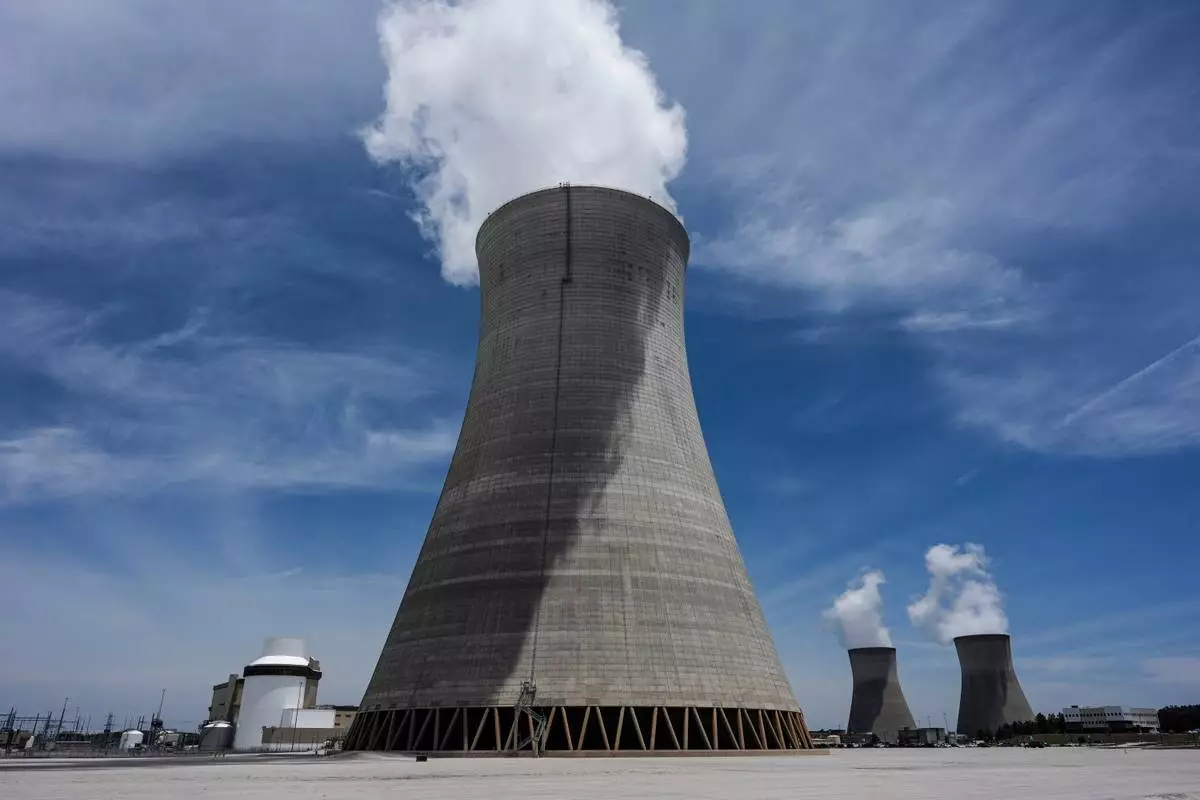
FILE - Cooling tower three with one and two in the background operate at the nuclear reactor facility at the Alvin W. Vogtle Electric Generating Plant, May 31, 2024, in Waynesboro, Ga. (AP Photo/Mike Stewart, File)