Eight years ago, during a campaign for Texas attorney general, Justin Nelson ran television advertisements with security camera footage of Ken Paxton pocketing an expensive pen that didn't belong to him.
Four years ago, George P. Bush went after Paxton by putting up billboards that said “he's a crook” next to his mugshot from when he was charged with securities fraud.
And earlier this year, U.S. Sen John Cornyn said “judgment day is coming” as he tried to fend off a Republican primary challenge from Paxton.
All of them lost. Now the question is whether James Talarico, who topped Rep. Jasmine Crockett in an expensive and fiercely contested Democratic primary, will have any more luck as he faces off against Paxton in one of the country's most closely watched U.S. Senate races.
“The guy’s ability to take shots and just keep moving on and stay in elected office is unlike anything I’ve ever seen in my career, in 25 years of running campaigns,” said Ash Wright, who worked as a senior adviser to Bush.
Paxton has never been convicted, and he's survived by championing conservative legal battles over immigration, abortion and transgender issues in a Republican-dominated state. Much like President Donald Trump, he's long portrayed himself as the victim of political persecution.
Former Paxton challengers and a half dozen campaign strategists who worked against him warned that Texans may tune out any attempt to revive scandals that they've heard about for years, especially when rigid partisanship has convinced voters to be extraordinarily forgiving of candidates’ trespasses.
However, Talarico's team has studied the previous races and is attempting its own version of the playbook by trying to paint Paxton as part of a broader culture of corruption that has failed to improve people's lives.
Paxton’s campaign suggested Talarico's claims were aimed at distracting voters from a record of “out-of-touch views.”
“Every time a fighter, like President Donald Trump and now Ken Paxton, stands up to the permanent political class, even after they are completely acquitted of wrongdoing, people like James Talarico continue pushing the same accusations and claiming corruption,” Paxton campaign spokesperson Madison Cercy said.
Paxton was first elected as Texas attorney general in 2014, and Nelson ran against him in 2018. A Democratic lawyer from Austin, Nelson made Paxton's indictment on charges of securities fraud central to his campaign, and he poked fun at him for picking up another lawyer's $1,000 pen after finding it at a courthouse security checkpoint.
“Vote Justin Nelson for Texas attorney general,” the narrator said. “He will fight on behalf of all Texans. And he won’t steal your pen.”
Nelson argued that his approach was effective, reflected in Paxton's narrow margin of 3.6 percentage points in a year when Republican Greg Abbott was reelected as Texas governor by more than 13 percentage points. Nelson's campaign spent roughly $6.5 million, about half of what Paxton's campaign spent.
“My message was working," Nelson said. “I just needed to go louder and longer.”
In 2022, Paxton faced a Republican primary challenge from George P. Bush, the Texas land commissioner and the grandson and nephew of two former presidents from the state.
The securities fraud case was ongoing, and Paxton was also under federal investigation over accusations that he abused his position to benefit an Austin real estate developer, took bribes and retaliated against whistleblower employees.
Paxton responded by portraying himself as a Trump-era Republican and Bush as the heir to a privileged political legacy.
Pro-Paxton organizations spent more than $20 million, about twice as much as Bush and his allies. The race went to a runoff, in which Paxton defeated Bush by 34 percentage points.
Paxton ran against Rochelle Garza, a Democratic civil rights lawyer from Brownsville, in the general election. She said her campaign had a 300-page opposition research file on Paxton but it was difficult to figure out how to approach his past because voters had heard about it for years.
“The amount of potential hits on Paxton can make message discipline challenging,” Garza said.
Paxton ran as the leading legal opponent of President Joe Biden, promoting a string of lawsuits against Biden's Democratic administration on immigration, abortion and gender policy.
Overwhelmingly outspent, Garza lost by roughly 10 percentage points.
There was more trouble ahead for Paxton.
He split with his wife, who later filed for divorce “on biblical grounds.” He was also impeached by the Texas House, although the Senate acquitted him in 2023 and allowed him to remain in office. The securities fraud case ended in 2024, and Paxton was directed to pay nearly $300,000 in restitution.
Throughout the years, he's maintained strong support from Republican voters like David and Nancy Lapp, a retired couple from the small town of Wolfforth. They described him as a conservative warrior who has been a victim of persecution.
“He’s had his share of scandals, and almost all of them have, so it’s not necessarily disqualifying anymore,” said David Lapp, 76. “He’s a flawed person, no doubt about it, but he fights for traditional American ideals.”
He added that "nowadays, as long as you’re not in jail, they’ll elect you.”
Biden's Justice Department in 2024 decided not to prosecute Paxton after the yearslong federal investigation, and Paxton went on to challenge Cornyn for his Senate seat.
Cornyn and his allies vastly outspent Paxton, blanketing the state with more than $90 million in advertising. After the race went to a runoff, Trump endorsed Paxton, and he won decisively.
Talarico promised at a rally in Houston the day after the Republican runoff to “prosecute the case” against Paxton, whom he called “the most corrupt politician in America."
Since then, he has sought to introduce a newer question about Paxton, one that involves his office's handling of a child sexual abuse case this year.
The attorney general's office was assigned the felony case involving Waco lawyer Adam Hoffman after the county district attorney recused himself over a potential conflict of interest. After a hung jury trial last year, Hoffman agreed to state lawyers' offer in April to plead guilty to a misdemeanor charge. Prosecutors said the victim did not want to testify a second time. Hoffman served 60 days in jail and was not required to register as a sex offender.
Talarico said the plea agreement shows Paxton is willing to allow preferential treatment at Texans' expense.
“He is everything that’s wrong with this broken, corrupt political system,” Talarico said of Paxton at a rally in Del Rio last week. “This is the rot at the core of this broken political system. It’s why we can’t get ahead, no matter how hard we work, no matter how much we save, because the system is rigged against us."
Talarico reported having $21.5 million available last week, while Paxton reported having $7.5 million.
The Democrat's fundraising advantage could help him broadcast his message further than Paxton's previous opponents have been able to do, Nelson said.
“Even a little bit more money would have helped me,” he said. “I think James has a legitimate shot.”
Associated Press reporters Jesse Bedayn in Del Rio, Texas, and Marc Levy in Wolfforth, Texas, contributed to this report.
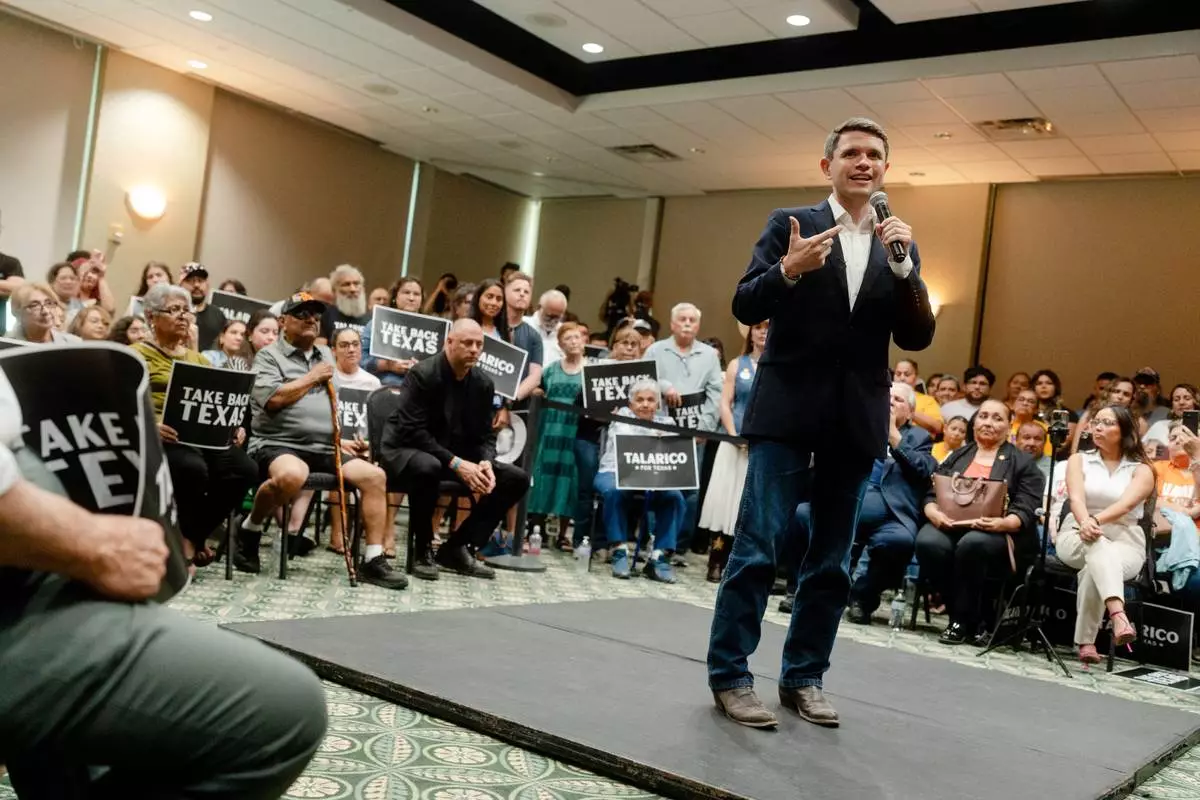
Democratic Senate candidate James Talarico speaks at a rally on Monday, July 13, 2026, in Eagle Pass, Texas. (AP Photo/Brenda Bazán)
HANOI, Vietnam (AP) — Across seven countries, seven people woke up to days that no longer looked the way they once did.
The war in Iran began months ago and thousands of miles away. But its effects quickly ricocheted across the world — oil markets first, sending fuel prices higher. Then the shock moved outward — into farms, factories and family budgets. Into the fabric of life.
The global economy remains tethered to fossil fuels that also drive climate change. A severe shock to that system could push 45 million more people into poverty, the United Nations Development Program warned.
For those far from the battlefield, the war arrived not as missiles or air raids, but through the disruptions of everyday life: businesses that no longer worked, goodbyes filled with fear, and livelihoods pushed closer to the edge.
Here are a few of their stories.
WHO/WHERE: Edgar Funelas, Manila
DAY OF DISRUPTION: April 10
Funelas bathes beside his vehicle, moving quickly before the city wakes. He pours water over his head from a green pipe. Behind him, his jeepney stands still and worn. His 10-year-old daughter is asleep inside.
He uses laundry soap — harsher, but cheaper — to wash his body and his clothes in the same motion, stretching what little money he has. Even before the war in Iran, he was living on the margins. A fire took their home and their belongings, forcing them to move into the brightly colored minibus he drove.
He'd hoped to be able to rent a room by now. Then diesel prices surged and he could no longer afford the fuel to run his jeepney.
He hasn’t earned a single peso in days. There will be no breakfast. Hunger gnaws, but it’s the small rituals of privacy that he misses most: to be able to wash out of sight, to sleep behind walls, to keep his desperation from being laid bare.
That morning, after rinsing himself, he hopes to find work as a dispatcher at a nearby jeepney terminal — organizing the line of vehicles, calling drivers forward in turn, and packing passengers into each jeep.
For weeks, he and his daughter have been eating only what others can spare. She has already left school. At night, he drinks water and leaves the food for her, so she can go to bed with a full stomach.
Before the war, he made about $8 a day driving, sometimes twice that on good days. Now, for each vehicle he fills, he will earn about 16 cents — barely enough to buy a piece of bread.
“This is what we do. Coping and hoping prices will get lower. Hoping that the war will end. And to try to find ways to earn, so we can at least eat.”
WHO/WHERE: Marlyn Garcia, New York
DAY OF DISRUPTION: June 30
On a Tuesday morning, Garcia, 25, steps out of a food pantry with two bags filled with rice, pasta, fresh produce and other staples. The groceries will help feed her family through another week.
The food is free — a small reprieve for a household budget strained by higher gasoline prices after the war in Iran. But Garcia also has to calculate her days: doctor’s appointments, her 3-year-old son’s occupational therapy session, picking up her daughter, making dinner.
And before any of that, there is parking. Finding a street spot can take up to an hour. Each slow lap around the block burns fuel as the meter keeps ticking.
She came to New York from the Dominican Republic as a child and spent part of her teens in the city’s shelter system with her mother. Today she works part time as a breastfeeding peer counselor in the Bronx. Her partner, Steven Espaillat, lost his job as a legal assistant in March and now picks up Uber shifts while searching for permanent work.
Their Toyota Camry has become indispensable. Three adults share it. Garcia and Espaillat use it the first half of the week; her mother-in-law uses it the second. That Monday, she bought gas at $3.97 a gallon ($1.05 per liter). With fuel prices in flux, every mile now has to be planned.
The family lives in a rent-stabilized apartment that costs $800 a month. Government food assistance helps fill the refrigerator. Higher gas prices are eroding their savings and she has begun taking every extra shift she can, especially those she can work from home.
Garcia still hopes to start graduate school, inspired by her son’s developmental needs to help families like hers. She reminds herself that others have it worse. But the arithmetic of survival keeps getting harder.
Still, she keeps making the numbers work because of the two small children waiting at home. “It’s summer so they always want an ice cream and I want to make sure I have that extra cash there for them," she says. “They shouldn’t be able to suffer because of whatever is going on around the world.”
WHO/WHERE: Oluwatosin Awodunmila, Lagos
DAY OF DISRUPTION: June 5
Awodunmila and her husband, co-owners of a printing business in Somolu, a mixed-income residential suburb in central Lagos, arrive early as usual, after dropping their two children at school.
The street is silent, partly because the day is just beginning and partly because there was no electricity. The machines in the shops are off.
Awodunmila scans the shop and the leftover projects to make — lip gloss, key holders, paper bags. But she has to wait for electricity, which hardly comes nowadays. The other option is to fire up the medium-sized generator outside the shop. But since the war began, the price of fuel per liter has nearly doubled from 800 naira to 1,400 naira (60 cents to $1).
This jump in price has brought business to almost a halt. In Nigeria, the retail price of fuel determines the price of everything else. If they use the generator, the profit margin thins to almost nothing. They had decided not to increase the price of their service to keep their customers.
So they wait for electricity and sit, like on this morning, while customers lodge complaints about slow delivery. On Monday, four days earlier, there was no electricity until 7 p.m., and the fuel consumption for that day alone was 30,000 naira ($21.85), more than half of what they had hoped to earn on the day’s jobs.
Recently, they changed their delivery policy from one business day to three to five working days.
“My biggest wish right now is a 24-hour supply of electricity and the war in Iran to end — and, of course, the cost of fuel should come down.”
WHO/WHERE: 54-year-old mother, Kathmandu
DAY OF DISRUPTION: May 19
The house is quiet again. She checks her phone, hoping her son has landed. It is still too early to expect a reply. Somewhere between Nepal and Abu Dhabi, he is returning to the hotel where he works after a visit home.
She asked not to be identified, fearing her son could face repercussions at work.
The war in Iran has made this goodbye harder. Images of missiles and airstrikes, and reports of migrant workers killed in the conflict, have left her agonized. She reaches for her phone again.
That morning, the house was full. Friends and relatives gathered to see her son off. She moved between the kitchen and the prayer room, serving tea and praying for his safe journey. Incense, conversation and the ringing of a prayer bell filled the house. The dog barked, unaware a farewell was underway.
They drove to Kathmandu’s international airport, where departures are measured as much in embraces as boarding passes. She hugged her son tightly before he joined a queue of young men bound for the Gulf, whose remittances account for about 10% of Nepal’s GDP.
She stood there until he disappeared from view, tears streaming down her face.
The 54-year-old is a cleaner at a bank, but her son’s income is essential. Her husband, who owned a small soap factory, died of COVID in 2021, leaving much of the family’s financial burden to their children. Her daughter works for a finance company in Kathmandu but, like her brother, hopes to build a future overseas.
As the United States and Iran negotiate a permanent end to the war, there is little the mother can do but wait. She keeps her phone close, hoping it will ring and confirm her son is safe.
“I am wondering how he is going to live. We can’t just say, don’t go. But at the same time, it is necessary that he goes.”
WHO/WHERE: Felipe Molina, Santiago
DAY OF DISRUPTION: July 10
Molina clicks his seat belt into place, shifts his yellow-roof taxi into gear and eases into Santiago’s evening traffic.
In the rearview mirror, the 50-year-old wears the look of someone trying to solve an impossible equation. He can keep driving, burning diesel in search of passengers, or pull over and hope they find him. Either way, he loses.
The Peruvian has lived in Chile for more than 25 years and spent 17 behind the wheel of one of the city’s traditional taxis. Over that time, he has weathered traffic jams, recessions and the pandemic. But soaring fuel prices since the war in Iran have turned every shift into an effort to lose less.
He drives passengers. He delivers packages. On the radio, a commentator’s voice rises as Spain takes on Belgium in the World Cup. At a red light, a street performer in clown makeup waves burning flares between rows of idling cars. Molina inches forward, piecing together enough fares to keep his taxi on the road.
In March, Chile’s government announced one of the country’s largest fuel price increases in recent years as global oil prices climbed. Molina now spends about 70% more to fill his tank.
The higher fuel costs have compounded existing pressures. Ride-hailing services such as Uber and the Chinese company Didi are luring away passengers with lower fares. Meanwhile, licensed taxi drivers cannot raise prices because fares are regulated by the government.
Chile responded with monthly subsidies for taxi drivers and other public transport drivers, froze public transport fares and expanded programs to help drivers replace older vehicles.
But for Molina, the support hasn’t changed the equation.
“In the end, we spend hours on the road without picking anyone up, and the fuel keeps running out," he says. "That means I have to fill up again, and the cost is simply too high.”
WHO/WHERE: Ali Osman Aykul, Istanbul
DAY OF DISRUPTION: June 24
Most days, Ali Osman Aykul has only his cat for company.
The grey cat, Prince, sleeps on a stack of hand-woven carpets while Aykul, 48, smokes cigarettes, sips tea and watches football. Richly colored Turkish carpets line the walls. Their intricate patterns radiate warmth. Occasionally, footsteps drift in from the bazaar outside, but most pass by.
It wasn’t always like this.
Before the war in Iran, the shop was where wealthy collectors from around the world and especially the Gulf gathered. Then the fighting began. Within 10 days, business fell by 90%. Airports closed; international customers vanished. Now, a handful might wander in each day — but mostly to buy cheap souvenirs, not the handmade carpets.
The bills have not stopped. Electricity, rent and his daughter’s school expenses — she is studying healthcare — still need to be paid. To cope, Aykul doesn’t buy new clothes, cooks his meals in the shop and listens to music there rather than going out.
He holds out his newly issued passport with hope, tempered by doubts about whether, even if the war ends, trade will return to what it was. Before the pandemic, he traveled regularly to international fairs, where collectors sought him out. Now he waits for his visa, hoping that if customers can no longer come to his carpets, he can go to them.
“After a while, it starts to weigh on you every day,” he says. “The music you listen to begins to feel like torture, and even the tea you drink stops giving you any pleasure.”
WHO/WHERE: Enzo Garbaglia, Fiumicino (Rome)
DAY OF DISRUPTION: June 12
His blue tractor still needs fuel. What has changed is how Enzo Garbaglia buys it.
For years, the farmer outside Rome bought gasoline in bulk, bringing home 1,500 to 2,000 liters (400–530 gallons) at a time and storing it for the season ahead. Now he buys only enough to keep the tractor moving.
Fuel is only the beginning. Irrigation costs more. Fertilizer costs more.
Garbaglia tries to shield customers, but many are struggling too. They buy less, produce goes unsold and prices fall. By the time he brings his harvest to market, a day’s work yields little profit, if any.
Across the 105-year-old family farm, there are other signs of sacrifice and strain. The machines Garbaglia uses to harvest potatoes are the same ones he has relied on for years. There is no money to replace them. At home, the family avoids unnecessary expenses. Even a few weeks off in the summer to recover from long days in the fields is a luxury.
His children do not plan to take over the farm. For a time, his daughters seemed poised to continue the family tradition. Their farm-to-table shop drew customers from Rome and the surrounding coast. But after years of struggle, they concluded farming no longer offered a future and walked away. The decision hurt but he was also relieved they had chosen a different path.
Now, Garbaglia is left tending the land his family has worked for over a century, driven by passion for farming, loyalty to customers and pride in offering quality.
But he knows what comes next. The family business will likely end with him.
“One hundred and five years of history can’t be sold," he says. “When it ends, it ends. That’s it.”
The Associated Press’ climate and environmental coverage receives financial support from multiple private foundations. The AP is solely responsible for all content. Find AP’s standards for working with philanthropies, a list of supporters and funded coverage areas at AP.org.
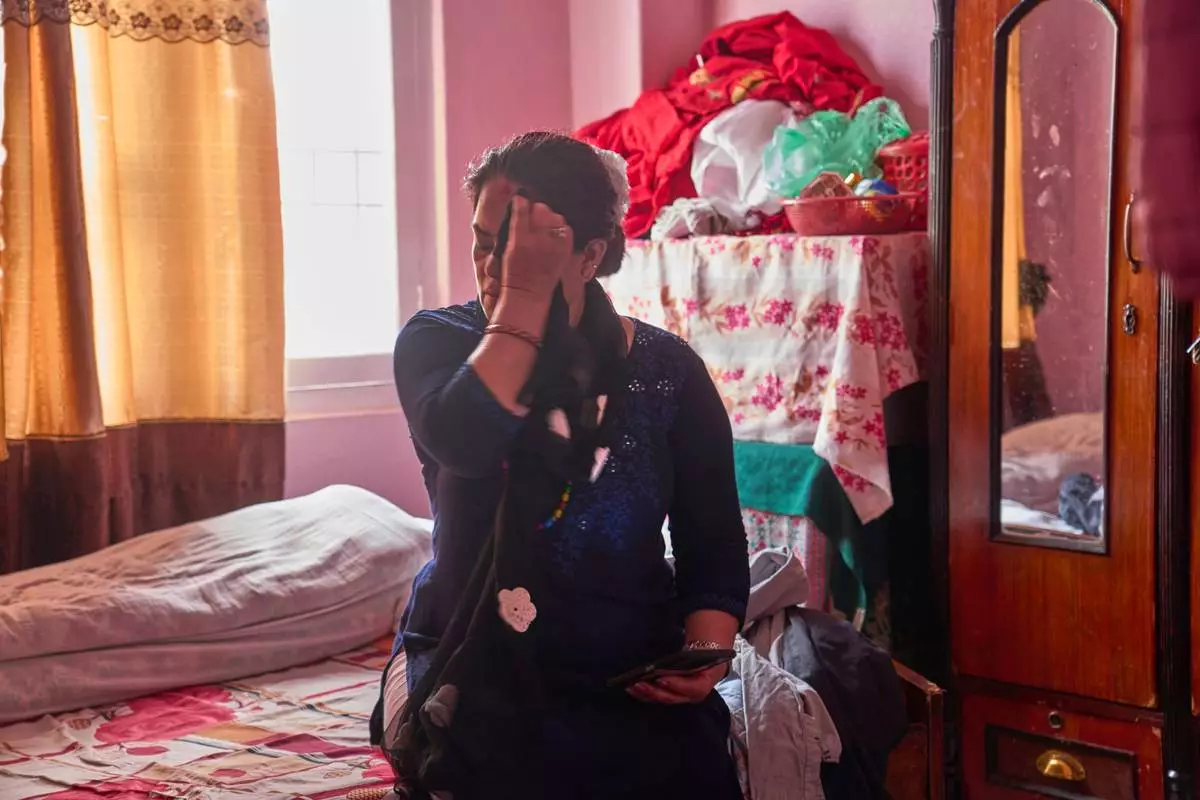
A 54-year-old mother of a Nepali migrant checks her phone at home in Kathmandu, Nepal, on Tuesday, May 19, 2026, before calling her son to find out whether he has arrived safely in Abu Dhabi, as she sits on his bed. (AP Photo/Niranjan Shrestha) CORRECTION removes name of mother and changes to 54-year-old mother of Nepali migrant
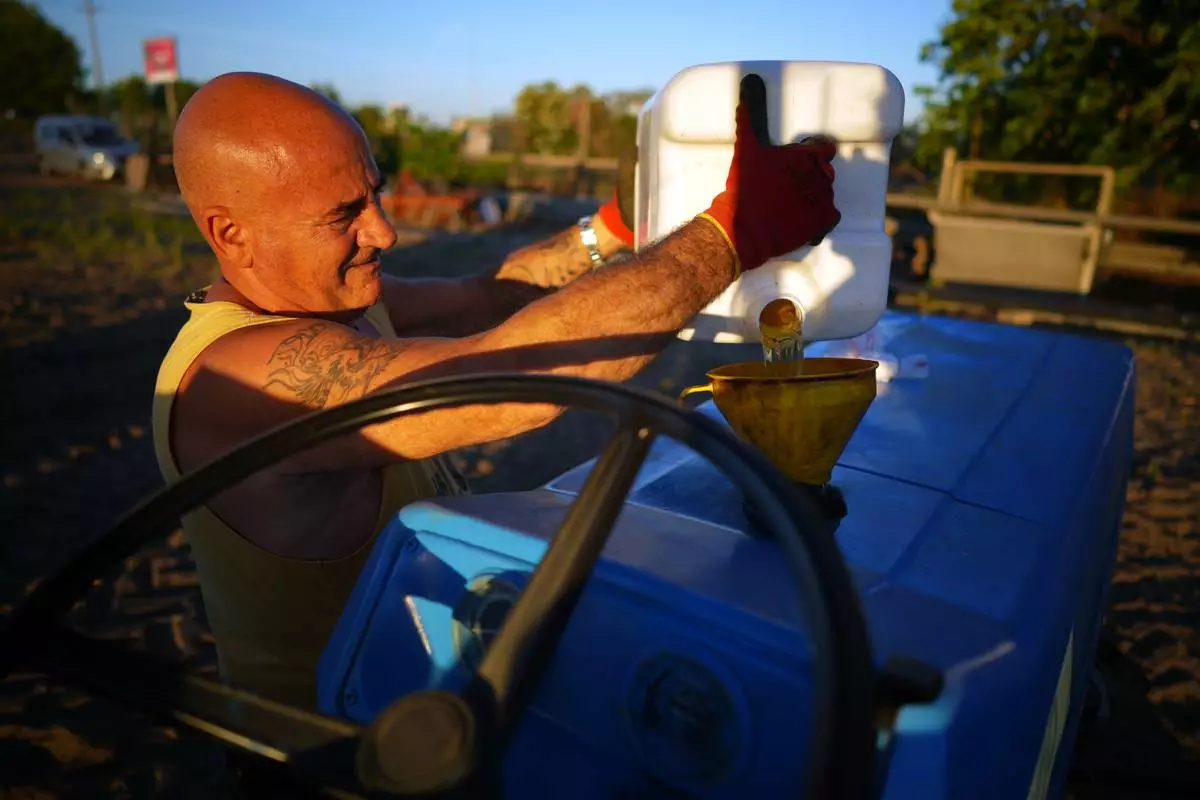
Enzo Garbaglia refuels his tractor while harvesting potatoes on his farm in Fiumicino, Italy, on Friday, June 12, 2026. (AP Photo/Andrew Medichini)
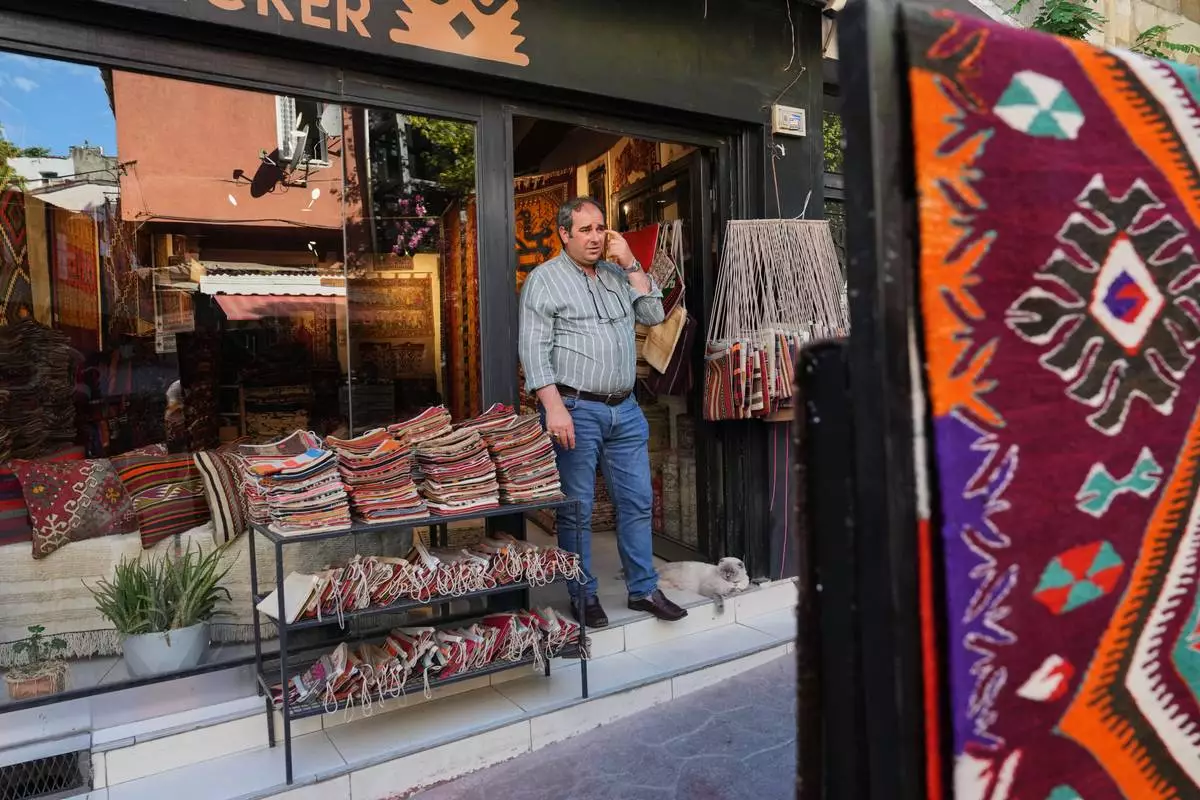
Turkish carpet merchant Ali Osman Aykul stands at the entrance of his shop as he waits for clients in Istanbul, Turkey, on Wednesday, June 17, 2026. (AP Photo/Francisco Seco)
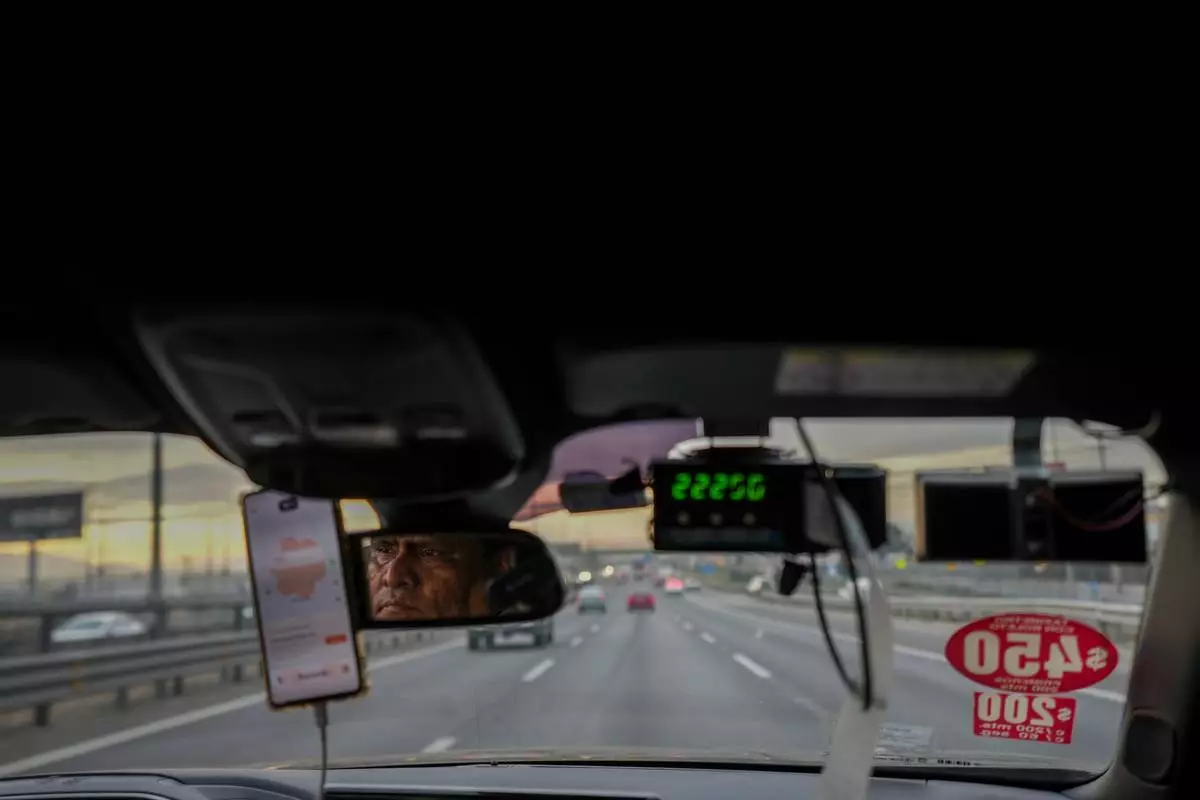
Taxi driver Felipe Molina drives along a street in Santiago, Chile, on Friday, July 10, 2026. (AP Photo/Esteban Felix)
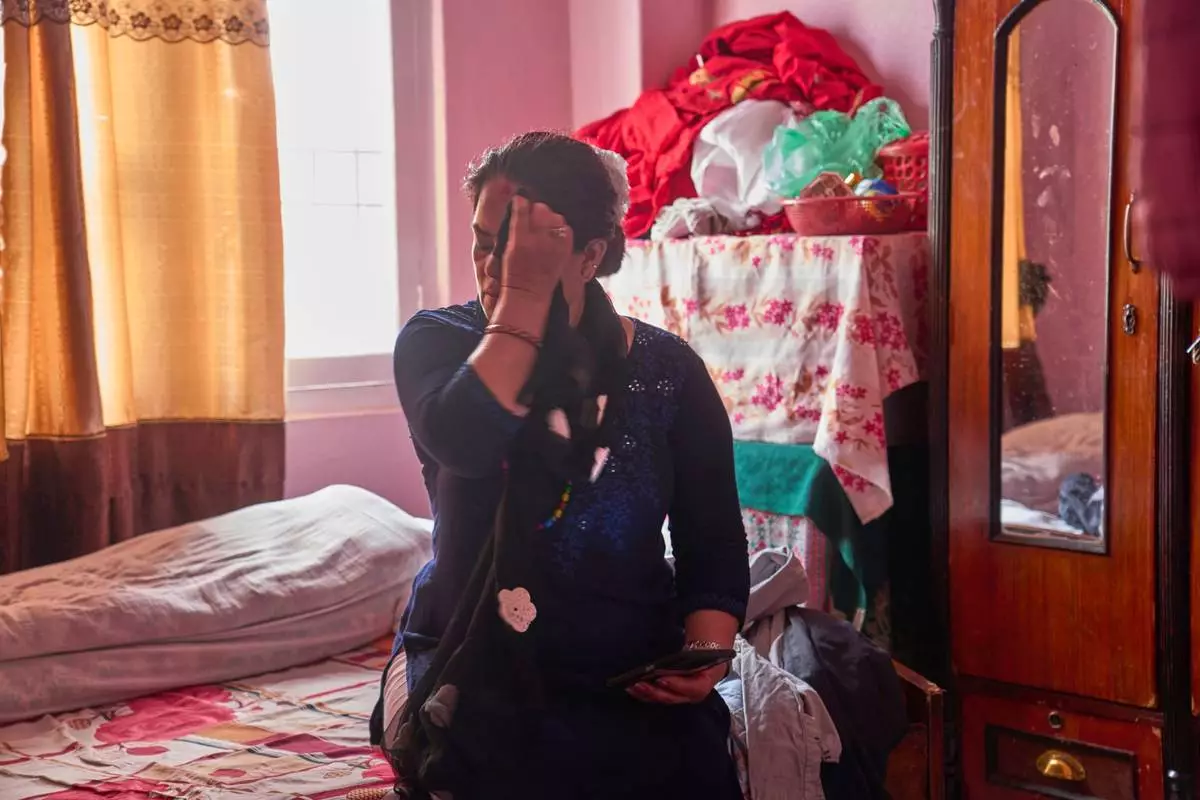
Ganga checks her phone at home in Kathmandu, Nepal, on Tuesday, May 19, 2026, before calling her son to find out whether he has arrived safely in Abu Dhabi, as she sits on his bed. (AP Photo/Niranjan Shrestha)
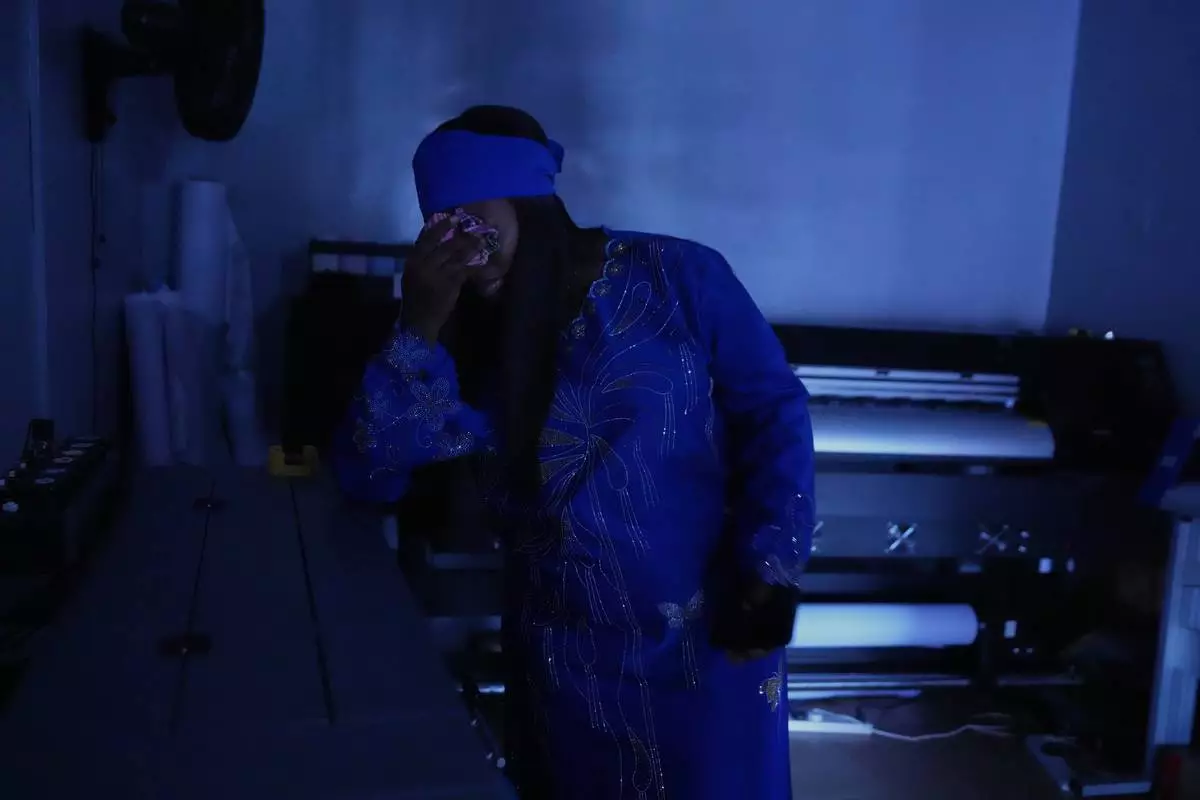
Oluwatosin Awodunmila, co-owner of a printing business, stands in her dark shop during a brownout in Lagos, Nigeria, on Friday, June 5, 2026. (AP Photo/Sunday Alamba)
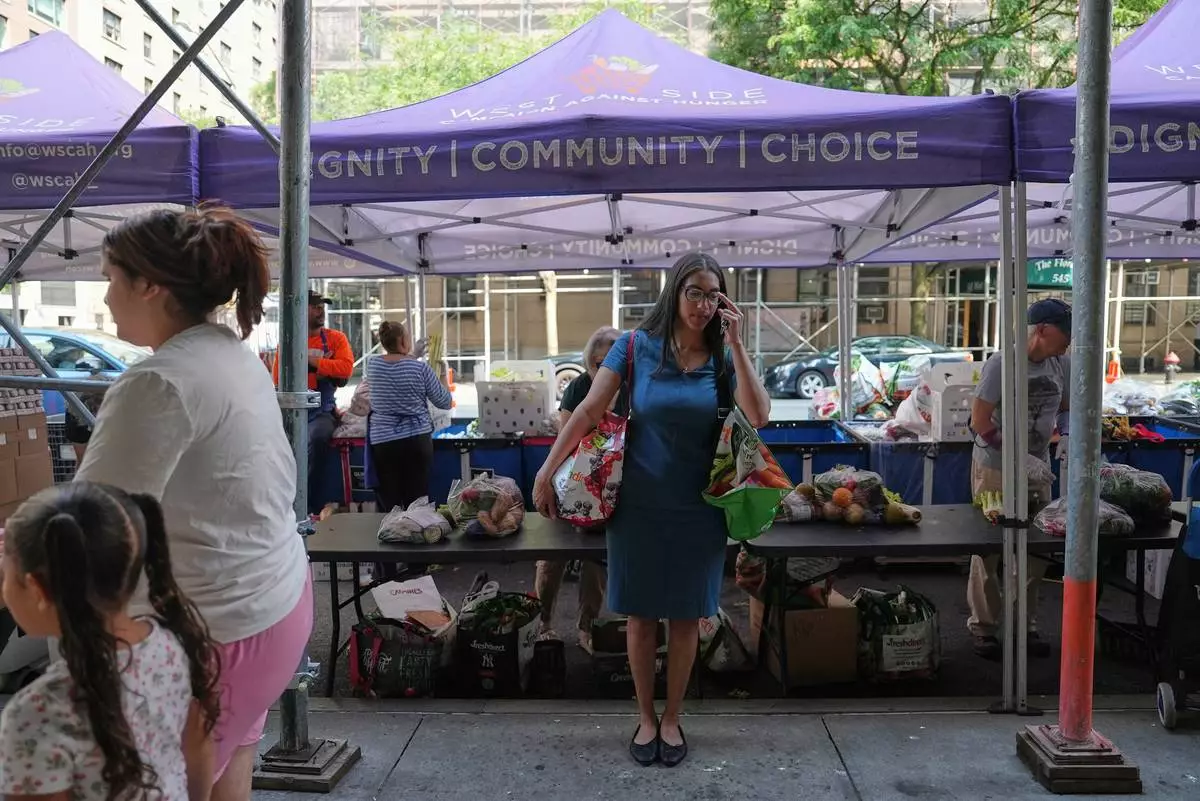
Marlyn Garcia collects food from the West Side Campaign Against Hunger's food distribution center in New York on Tuesday, June 30. (AP Photo/Mary Conlon)
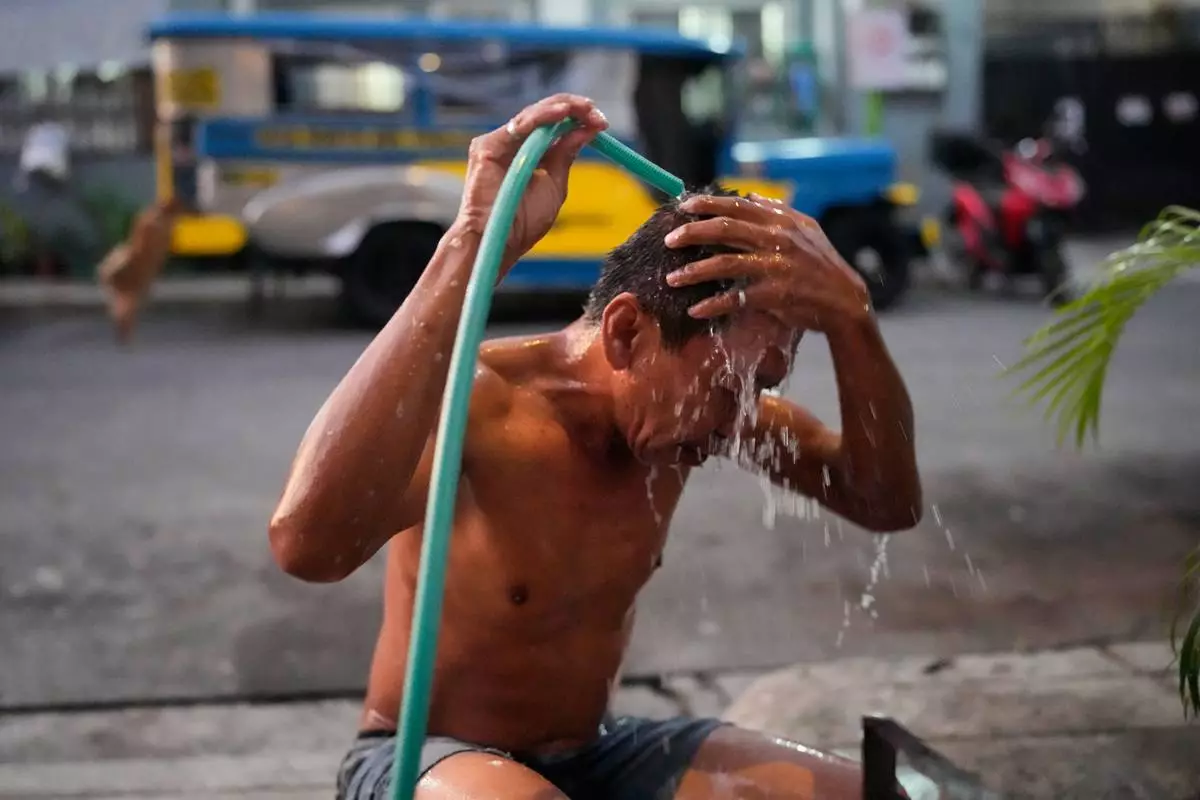
Jeepney driver Edgar Funelas bathes outside along a street near the jeepney where he and his 10-year-old daughter live in Quezon City, Philippines, on Friday April 10, 2026. (AP Photo/Aaron Favila)