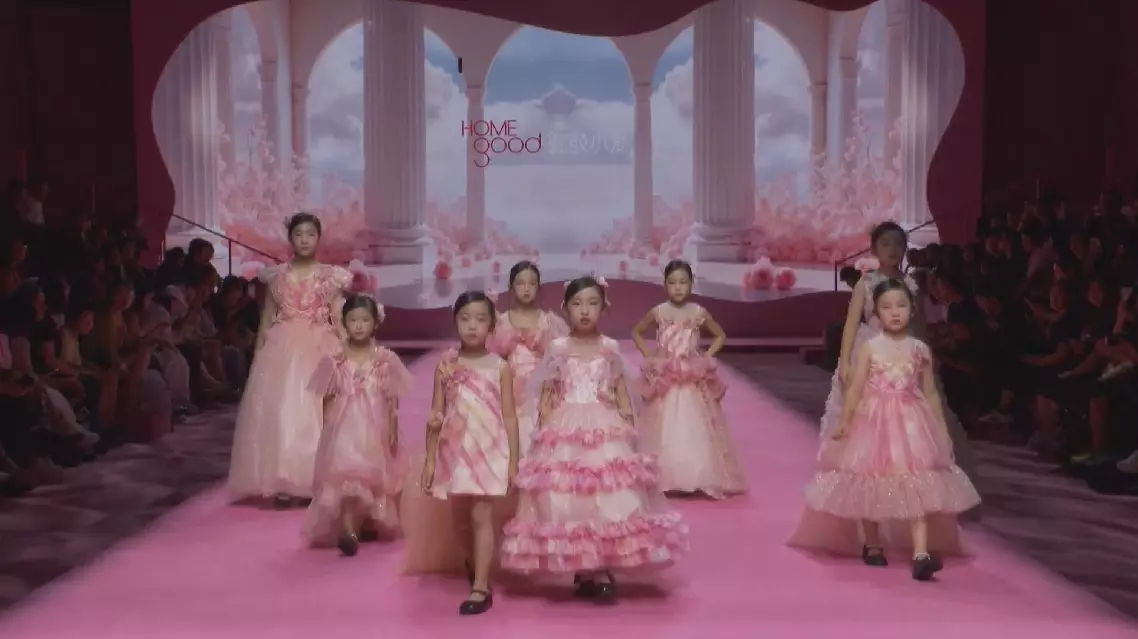
Traditional Chinese culture took center stage at the 2026 China International Fashion Week children's wear season in Beijing, as designers reinterpreted intangible cultural heritage through modern children's fashion.
Inspired by traditional Chinese works such as the Classic of Mountains and Seas, designers used natural imagery to shape the collection. Handcrafted flowers, beads and crystals brought classical poetry into children's wear, blending tradition with modernity. "We want children to feel the beauty of traditional Chinese culture from a young age. Wearing these clothes gives them a real sense of how traditional craftsmanship is expressed, and it also helps foster their cultural confidence," said designer Lu Fanghua.
"My outfit today has peonies and plum blossoms embroidered on it -- those are classic Chinese patterns that symbolize good fortune. The pants are in a beautiful classic purple. The designer mixed traditional and modern styles, and I really love that," said Zhang Shi, a kid model.
The children's wear show featured more than 10 intangible heritage crafts, including Miao and Yi embroidery. Designers took traditional symbols like totems and floral patterns and gave them a fresh twist -- blending tradition into modern children's wear.
Traditional Chinese crafts take center stage at children's fashion event in Beijing
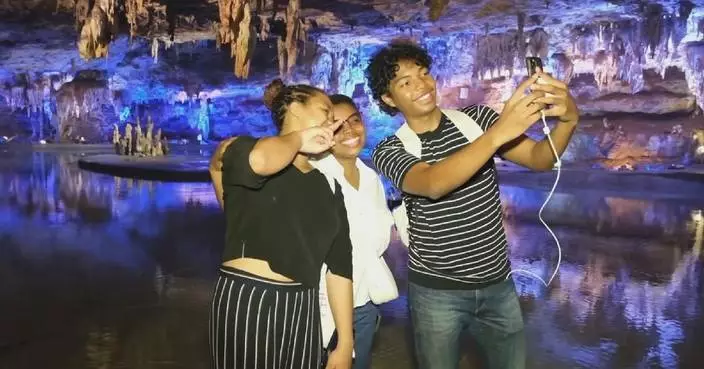
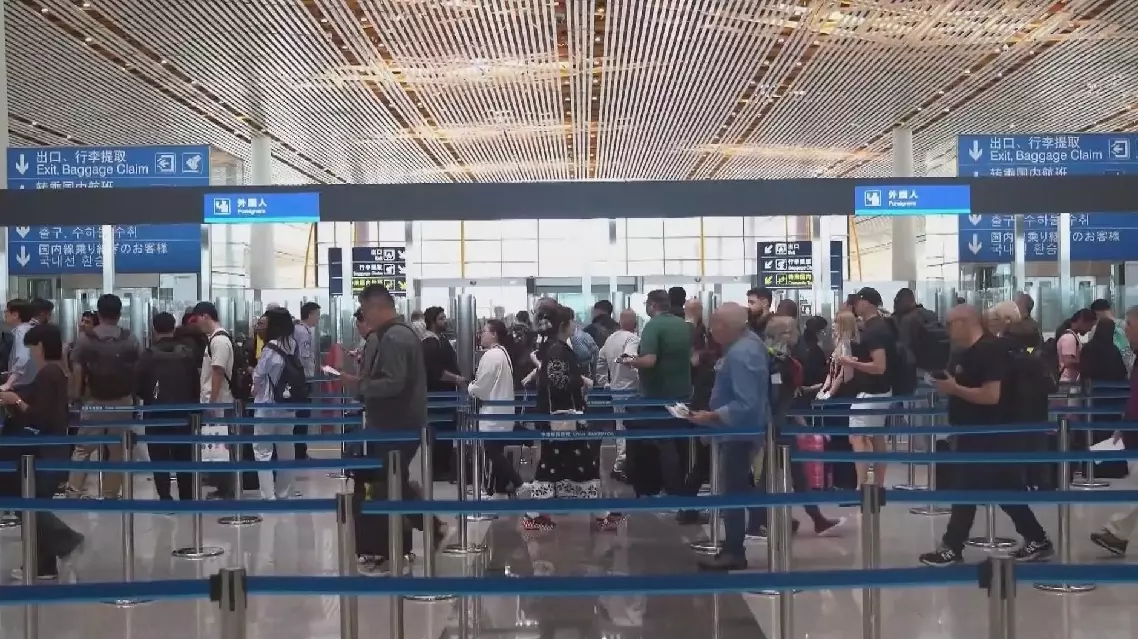
China’s summer tourism boom is drawing overseas visitors in record numbers, with travelers flocking to provinces from Xizang’s glacier landscapes to Shaanxi’s Terracotta Warriors and Dunhuang’s desert heritage.
In the first half of 2026, more than 22 million foreign nationals entered China, up 20.4 percent year on year, with about three-quarters of them benefiting from visa-free policies.
European nations have emerged as a major source of travelers, accounting for 30 percent of the top 20 international source countries. Travel bookings from Europe surged 275 percent compared with the same period last year. Western European countries, including Britain, France and Germany, make up nearly 42 percent of European arrivals, with bookings from these markets rising by almost 150 percent year on year.
During a recent field visit, ambassadors to China highlighted the country’s summer tourism boom, sharing firsthand impressions of diverse provinces and the hospitality that is drawing more overseas visitors.
"I would encourage visitors to visit as many provinces as they can to get to know different aspects of China. But if I may say so, one thing that all the provinces that I have visited have in common is the hospitality," said Koula Sophianou, Ambassador of the Republic of Cyprus to China.
"Every province is totally different from another one. I believe that all tourists can find places that they are interested in. From the beautiful landscapes, for example, in Xizang, that region that is very famous for its glaciers, to the seaside. For the tourists that are more interested in Chinese history and culture, Shaanxi Province and Xi'an [are home to the] Terracotta Warriors. And there is also beautiful Dunhuang in the northern part of China," said Maja Stefanovic, Ambassador of the Republic of Serbia to China.
Beyond scenic attractions, Shenzhen’s Huaqiang Electronics World — one of the world’s largest electronics trading hubs — is drawing a rising number of overseas tourists seeking anti‑heat products. Merchants are rolling out customized items to meet the needs of buyers from different countries.
"These fans can spray mist and deliver extra cooling. This one comes with an ice-making function. Foreign buyers usually pick up 10 to 20 pieces. Some are for personal use, and the rest as gifts for friends," said merchant Chen Shuiping.
China’s summer tourism boom draws record overseas visitors