China is exploring new application scenarios of advanced technologies such as brain-computer interface systems which can provide better support to people with disabilities based on their actual needs, an official said on Monday.
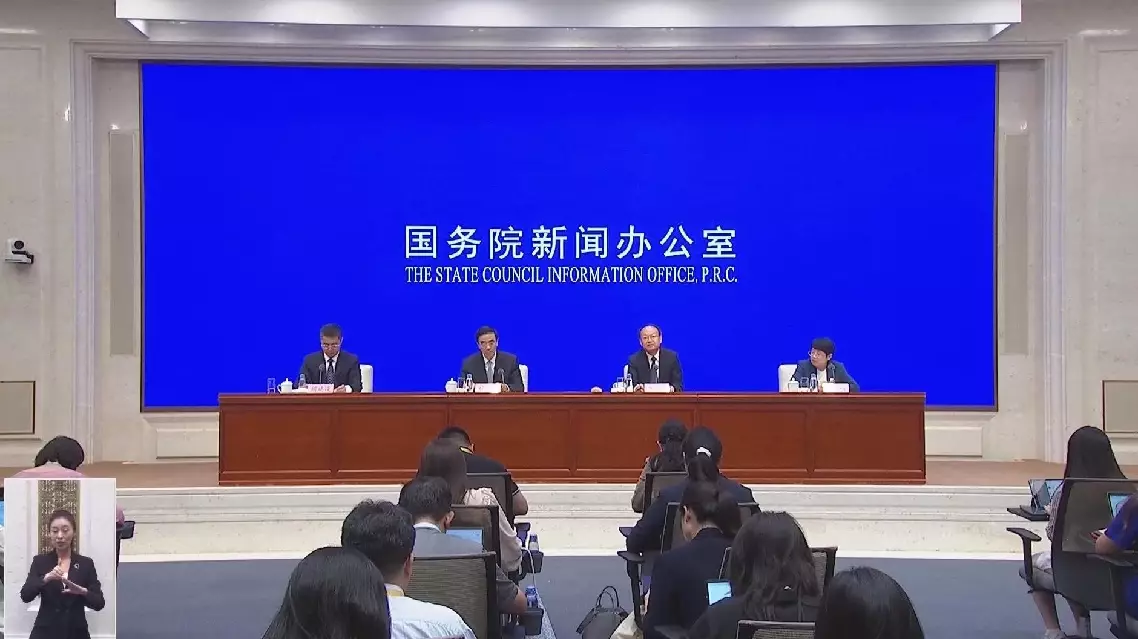
Zhou Changkui, chairman of the Board of Executive Directors of the China Disabled Persons' Federation, said at a press conference in Beijing that the federation and some other governmental departments have jointly issued a guiding document to promote the use of technology to offer greater disability assistance.
"The China Disabled Persons' Federation will focus on the actual needs of people with disabilities in the areas of medical care, rehabilitation, employment, and barrier-free access to ensure that research and development resources are allocated in a targeted manner. People with disabilities should be involved throughout this process to make sure future products are practical and suitable," he said.
Zhou also pointed to the important breakthrough made at the Zhongguancun Forum -- a major sci-tech gathering held in the Chinese capital in late March -- where attendees emphasized how cutting-edge technologies can help create a more inclusive society and address the needs of vulnerable people, including those living with disabilities.
"This year, at the Zhongguancun Forum, the Federation listed application scenarios of science and technology for assisting persons with disabilities for the first time, including barrier-free ride-hailing services for people with disabilities, intelligent rehabilitation devices integrating non-invasive brain-computer interfaces, and smart guide products for the visually impaired, which have garnered significant public attention," he said.
In addition, Zhou said the Federation will step up publicity efforts to help people with disabilities gain more knowledge about the development of assistive products. It will also establish institutions and promote the inclusion of these products in relevant subsidy programs to lower the barriers to their use, he added.
China to promote high-tech innovations for greater disability support
Latest tariff measures rolled out by the U.S. government last Thursday have drawn sharp criticism from economists and political analysts worldwide, who warn the unilateral protectionist move will disrupt global supply chains, undermine free trade and weigh heavily on the global economy.
The Office of the U.S. Trade Representative announced last Thursday that the U.S. would levy tariffs ranging from 10 to 12.5 percent on goods imported from 60 economies starting last Friday, citing Section 301 of the Trade Act of 1974. The ripple effects of the policy have already spread across global trade circles, sparking widespread pushback from the international community.
Veljko Mijuskovic, a professor at the Faculty of Economics, University of Belgrade in Serbia, pointed out that the core motive behind the U.S. tariff policy is to clamp down on its key competitors. He emphasized that the new tariffs will not only batter global supply chains and impede free trade, but also exert a negative impact on the global economy, ultimately hurting the interests of all stakeholders including the United States in the long term.
"Every imposer of different obstacles to global trade is not good. That is a lose-lose strategy. Imposing tariffs is only a temporary way how you can boost some of your own economic sectors and protect them. But on the whole run, once you limit the free flow of goods and capital, that is something that shall come back to you as a boomerang. So definitely, even though they might have short term benefits, in the long run, this is a negative economic decision," he said.
Echoing those concerns, Patrick Bond, a political economist at the University of Johannesburg in South Africa, noted that the disregard of the United States for international trade rules in levying new tariffs, coupled with ongoing geopolitical tensions in the Middle East, was exposing the global economy to greater volatility and uncertainty.
"He put the tariffs on to bring companies back into the U.S. that had gone abroad with jobs, but that hasn't really worked. We can just understand them as a con man, as a trickster, but also as a bully. And I think that's the only way to think about a man who's making such a mess of the world economy with the war in Iran, with oil prices, fertilizer shortages, food prices and all of the chaos in trade," he said.

New US tariffs deepen global supply chain chaos, economic uncertainty: int'l experts