Skip to Content Facebook Feature Image

French wildfire created a monster cloud, unleashing lightning that ignited more fires

News

French wildfire created a monster cloud, unleashing lightning that ignited more fires
News

News

French wildfire created a monster cloud, unleashing lightning that ignited more fires

2026-07-27 22:05 Last Updated At:22:21

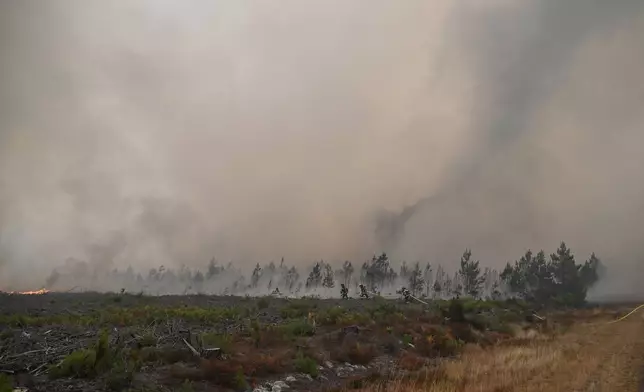
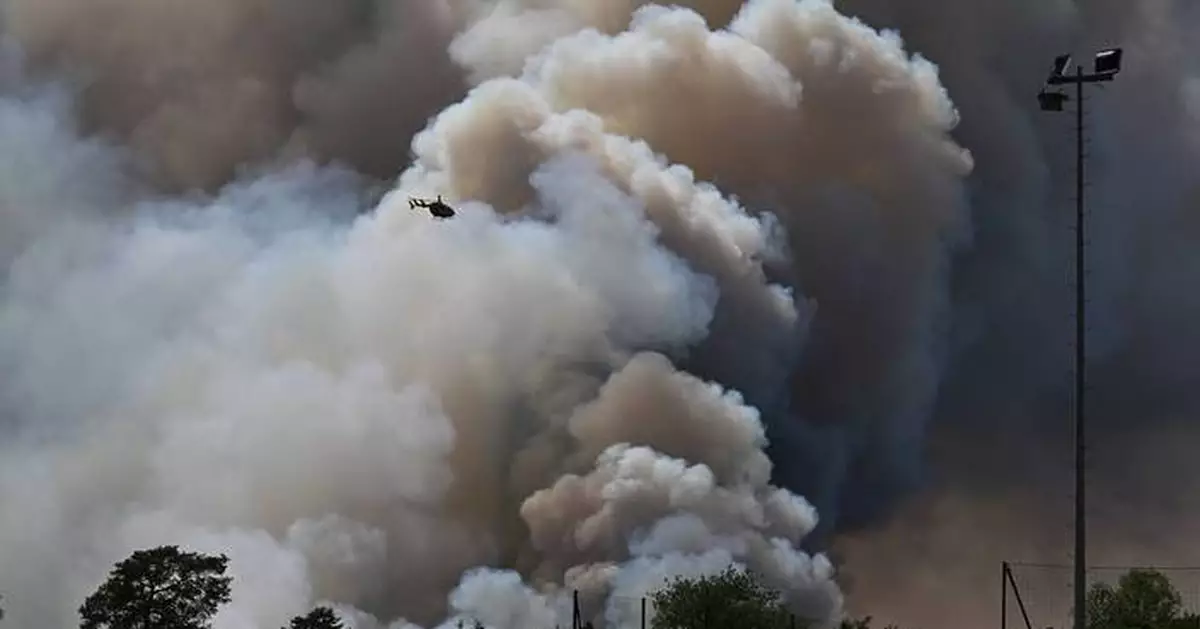
PARIS (AP) — A wildfire in southwest France grew so powerful that its smoke column became a thunderstorm, generating lightning that struck the ground and ignited new fires beyond the original blaze, French officials said.

Put another way, that means the inferno was no longer simply being propelled by the weather. It was making its own. The thundercloud also produced violent, erratic winds capable of driving the flames in new directions.

More Images
A pyrocumulonimbus, a giant cloud created by a large wildfire is seen near Lacanau, southwestern France, Saturday, July 25, 2026. (AP Photo/Emma Da Silva, File)
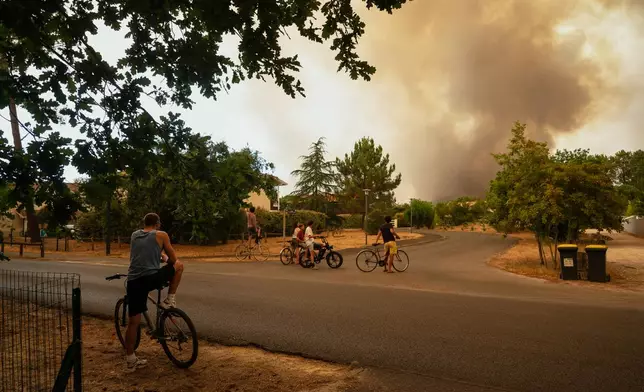
A pyrocumulonimbus, a giant cloud created by a large wildfire is seen near Lacanau, southwestern France, Saturday, July 25, 2026. (AP Photo/Emma Da Silva, File)

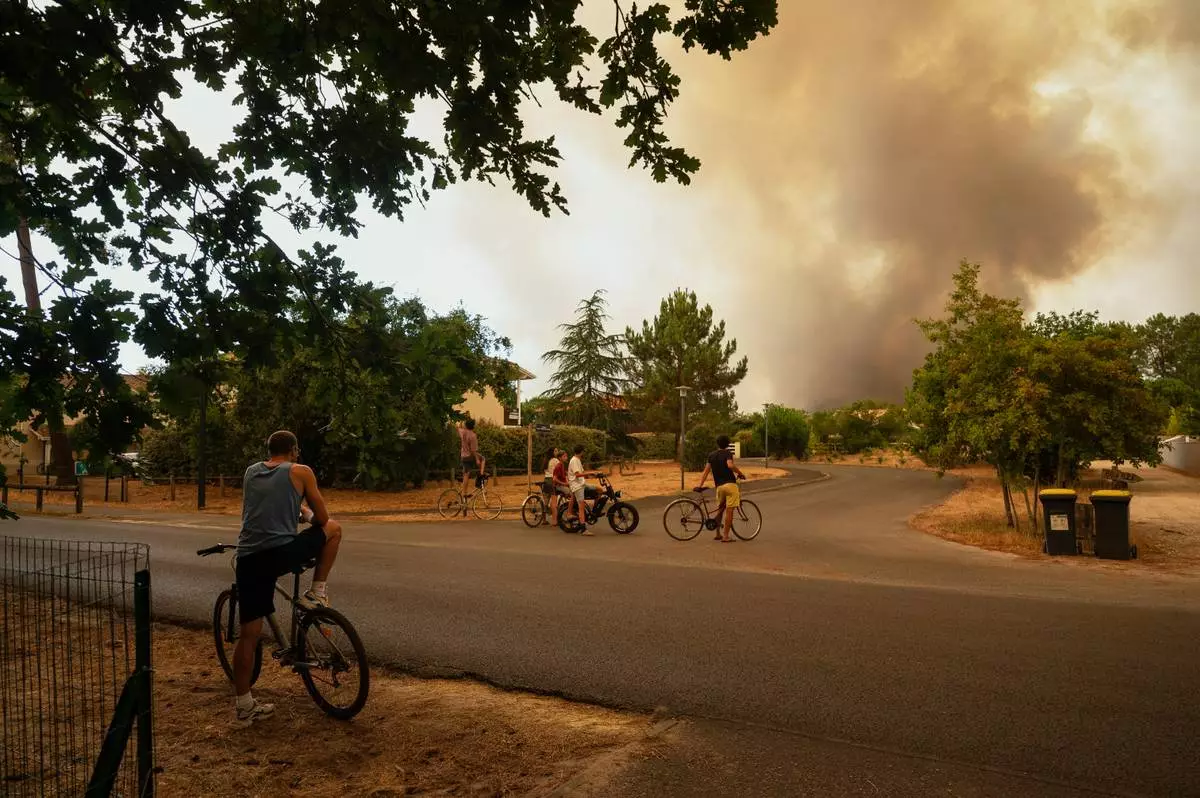
FILE - People watch a pyrocumulonimbus, a giant cloud created by a large wildfires in Le Porge, western France, Thursday, July 23, 2026. (AP Photo/Caroline Blumberg, File)
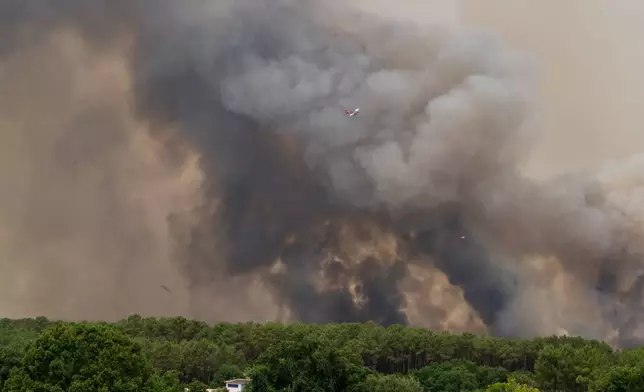
FILE - People watch a pyrocumulonimbus, a giant cloud created by a large wildfires in Le Porge, western France, Thursday, July 23, 2026. (AP Photo/Caroline Blumberg, File)

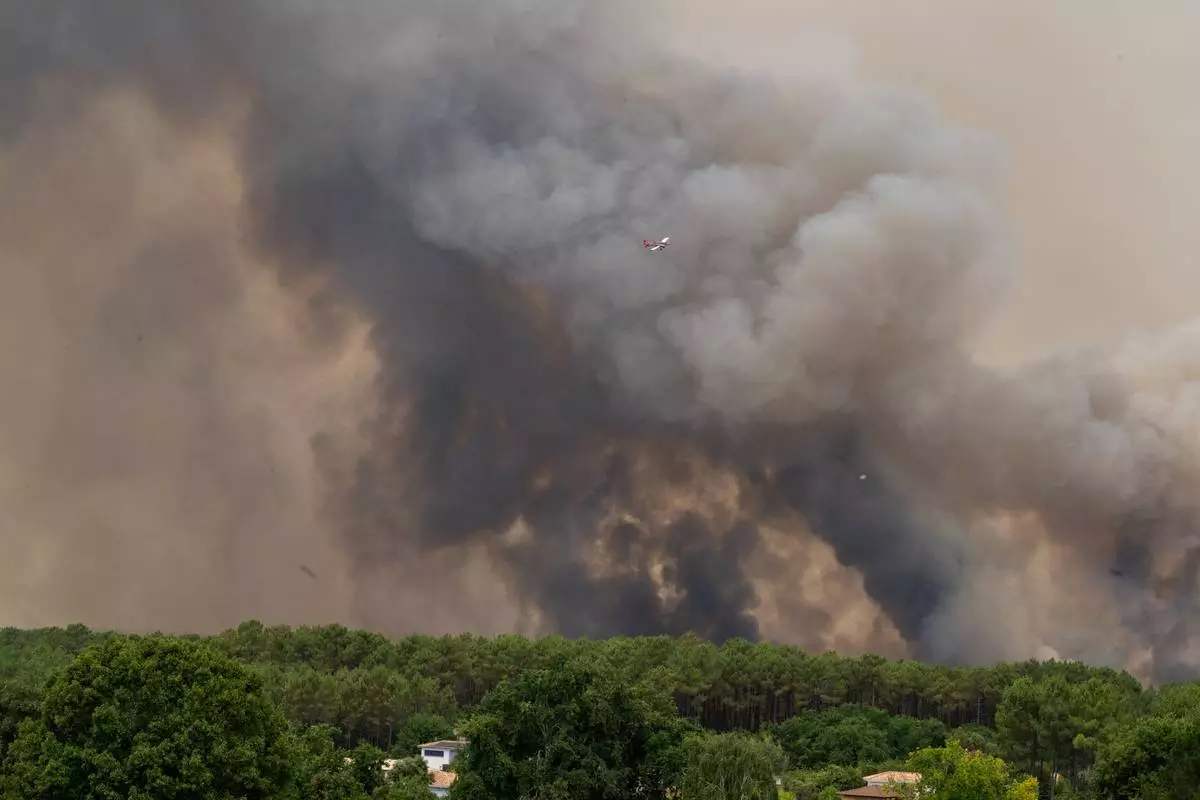
FiILE - A pyrocumulonimbus, a giant cloud created by a large wildfires in the Lège-Cap-Ferret region, western France, Thursday, July 23, 2026. (AP Photo/Caroline Blumber, File)
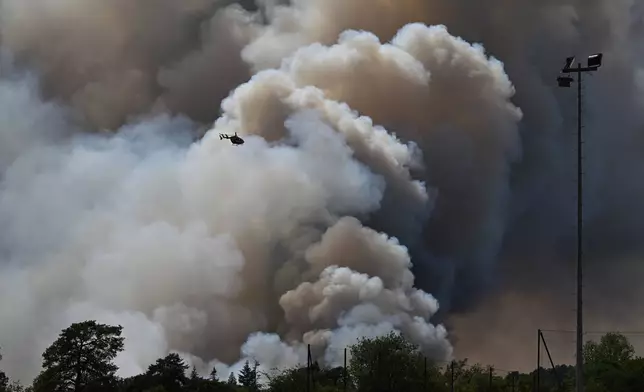
FiILE - A pyrocumulonimbus, a giant cloud created by a large wildfires in the Lège-Cap-Ferret region, western France, Thursday, July 23, 2026. (AP Photo/Caroline Blumber, File)

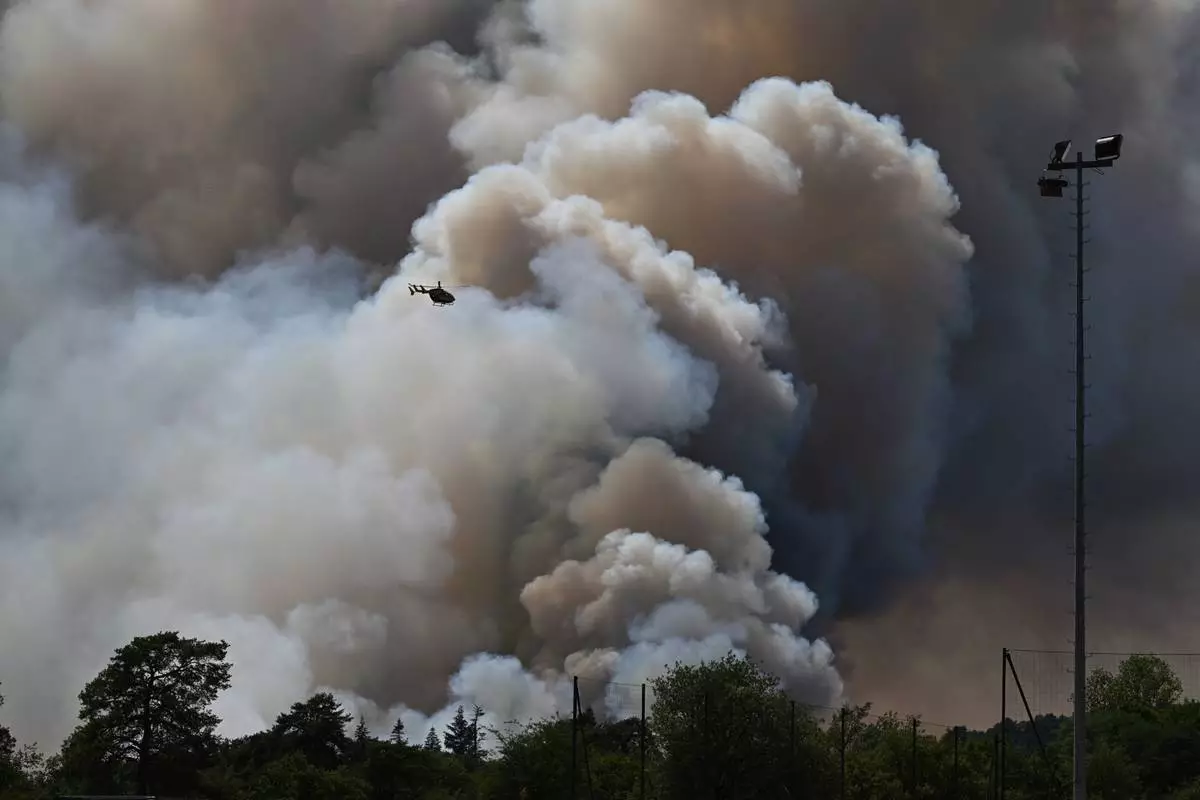
FILE - A pyrocumulonimbus, a giant cloud created by a large wildfire is seen in the Fontainebleau forest region, about 60 kilometers (37 miles) south of Paris, France, Monday, July 13, 2026. (AP Photo/Emma Da Silva, File)

FILE - A pyrocumulonimbus, a giant cloud created by a large wildfire is seen in the Fontainebleau forest region, about 60 kilometers (37 miles) south of Paris, France, Monday, July 13, 2026. (AP Photo/Emma Da Silva, File)

The phenomenon, called a pyrocumulonimbus, or pyroCb, is rare in Europe and more commonly documented in North America and Australia, where it occurs only over some of the most extreme fires. France’s national firefighters federation said it had never before recorded one in the country.

The blaze erupted near Saumos on July 22 and has since burned more than 420 square kilometers (162 square miles) of forests and scrubland, damaged or destroyed more than 240 homes and forced 220,000 people to evacuate in Gironde.

At about 6:20 p.m. Friday, two days after the fire began, the departmental fire and rescue service said it had generated a pyrocumulonimbus. The cloud weakened overnight as humidity rose, then formed again several times.

Repeatedly, heat and smoke have surged upward into a vast black thundercloud, electrified and lit from within.

“Imagine a campfire so large and hot that the smoke rising off it turns into a storm-like cloud,” said Theodore M. Giannaros, a fire meteorologist at the National Observatory of Athens.

“That is a pyroCb — a storm cloud born from the intense heat that a wildfire produces.”

It takes more than a big fire.

There is no set temperature at which one forms, Giannaros said; what is needed is the kind of atmosphere that breeds dry thunderstorms — very hot, very dry air near the ground, with cooler and moister air above it.

Hot air loaded with smoke and moisture then rises rapidly from the flames. As it climbs and cools, water vapor condenses around particles of ash.

Above the freezing level, droplets become ice crystals whose collisions separate electrical charges, as in an ordinary thunderstorm.

Beneath this storm lies a landscape already primed to burn. The cloud then amplifies the disaster that created it.

Rising air pulls powerful winds toward the fire, while downdrafts punch gusts back to the surface.

Those shifts can turn the flames, divide them into several fronts or send them racing in a new direction.

“It’s a feedback loop, not a one-way effect,” Giannaros said. “Once it forms, the cloud becomes its own weather system, sitting on top of the fire and making it harder to predict.”

The systems can also spin up whirling columns of flame — usually a fire whirl, which Giannaros describes as a dust devil made of fire and heat instead of dust.

True tornadoes are rarer, though one struck Redding, California, during the 2018 Carr Fire with winds equivalent to an EF-3, killing a fire inspector.

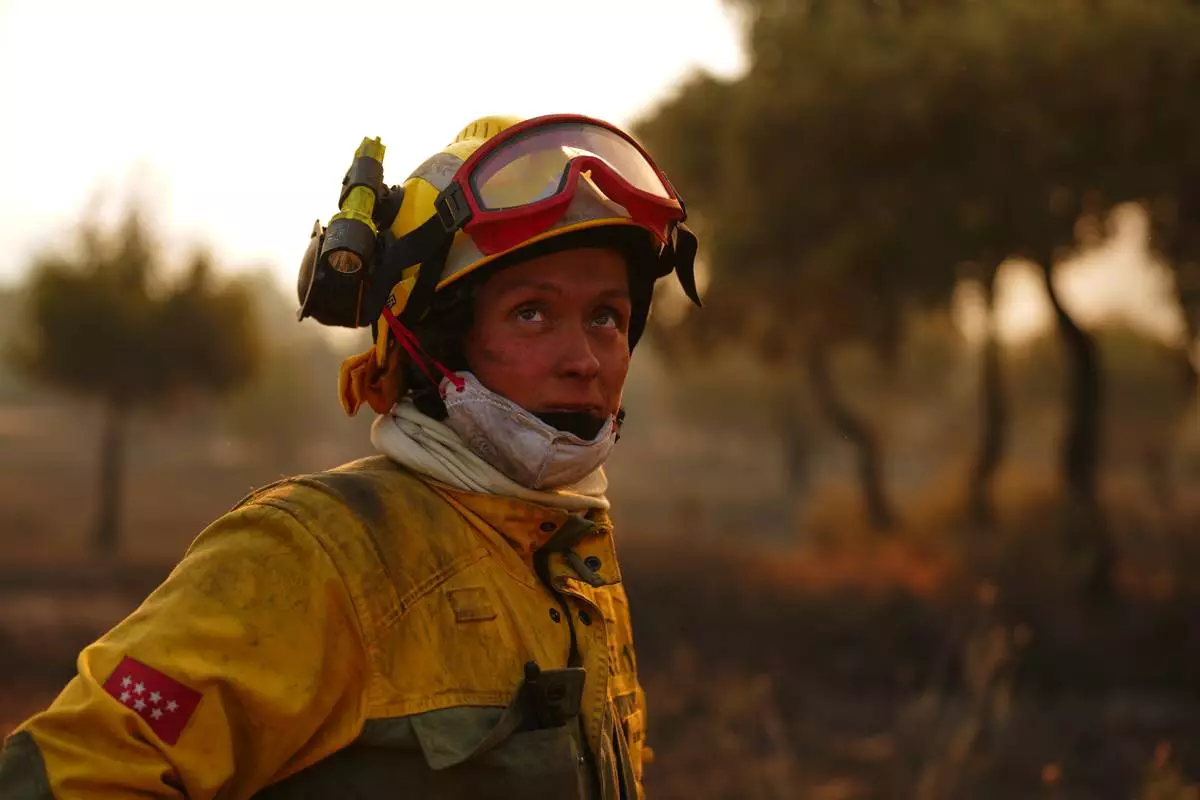
For firefighters, escape routes can close without warning as fresh outbreaks appear beyond their crews and equipment.

Direct attack may become impossible, forcing crews to retreat and defend communities.

The danger, Giannaros said, is fire moving faster than evacuations can be organized.

Until now, pyroCbs have been essentially an Australian and North American phenomenon. Canada alone produced a record 142 of them in 2023.

Portugal recorded one during its deadly 2017 fire season. France has now joined the list.

The continent is heating faster than any other on Earth — at roughly twice the global average since the 1980s, according to the EU’s Copernicus Climate Change Service and the World Meteorological Organization — with heat waves growing more frequent and severe and drought spreading across the south, curing forests into fuel.

Hotter and drier conditions give extreme fires more opportunity to form them, Giannaros said, but scientists still lack enough long-term data to establish a trend.

The European research project ROSETTA aims to close that gap.

The most common misunderstanding, he said, is that the cloud is merely a side effect. As long as it hangs above the flames, it is helping decide where the fire goes next.

The Associated Press’ climate and environmental coverage receives financial support from multiple private foundations. AP is solely responsible for all content. Find AP’s standards for working with philanthropies, a list of supporters and funded coverage areas at AP.org.
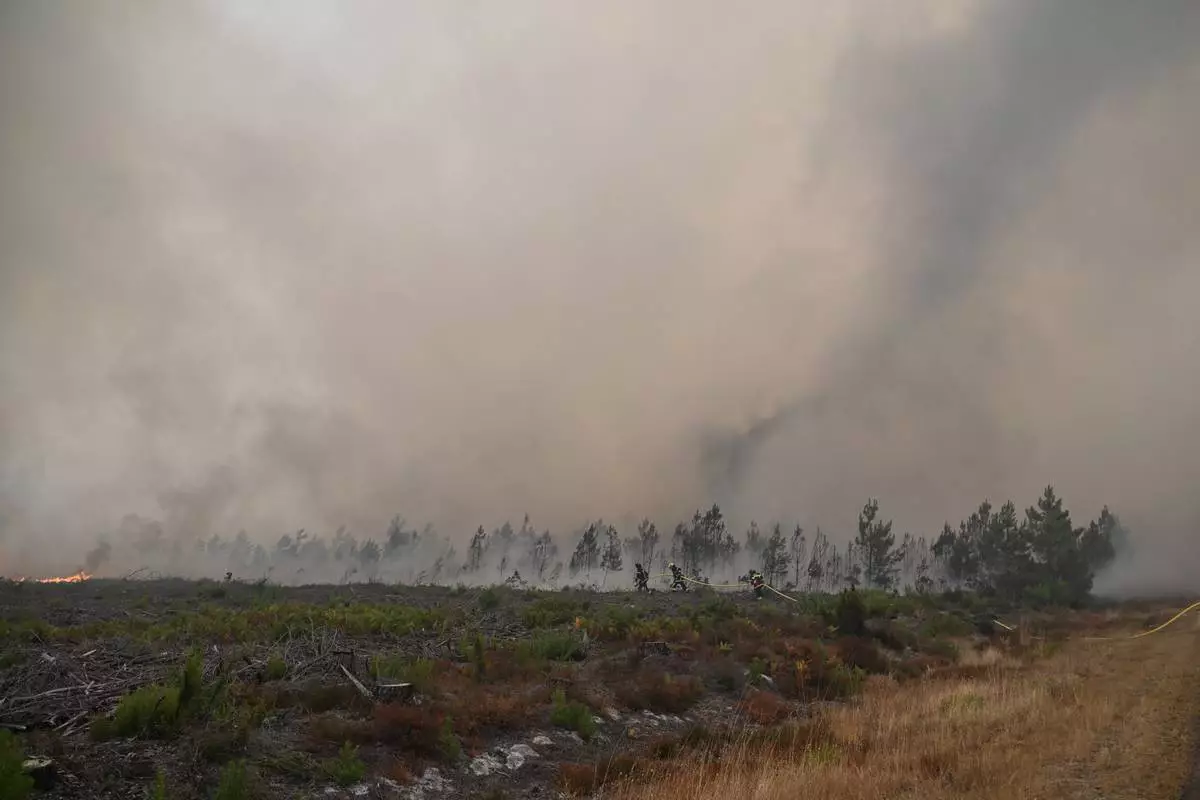
A pyrocumulonimbus, a giant cloud created by a large wildfire is seen near Lacanau, southwestern France, Saturday, July 25, 2026. (AP Photo/Emma Da Silva, File)
A pyrocumulonimbus, a giant cloud created by a large wildfire is seen near Lacanau, southwestern France, Saturday, July 25, 2026. (AP Photo/Emma Da Silva, File)

FILE - People watch a pyrocumulonimbus, a giant cloud created by a large wildfires in Le Porge, western France, Thursday, July 23, 2026. (AP Photo/Caroline Blumberg, File)
FILE - People watch a pyrocumulonimbus, a giant cloud created by a large wildfires in Le Porge, western France, Thursday, July 23, 2026. (AP Photo/Caroline Blumberg, File)

FiILE - A pyrocumulonimbus, a giant cloud created by a large wildfires in the Lège-Cap-Ferret region, western France, Thursday, July 23, 2026. (AP Photo/Caroline Blumber, File)
FiILE - A pyrocumulonimbus, a giant cloud created by a large wildfires in the Lège-Cap-Ferret region, western France, Thursday, July 23, 2026. (AP Photo/Caroline Blumber, File)

FILE - A pyrocumulonimbus, a giant cloud created by a large wildfire is seen in the Fontainebleau forest region, about 60 kilometers (37 miles) south of Paris, France, Monday, July 13, 2026. (AP Photo/Emma Da Silva, File)

FILE - A pyrocumulonimbus, a giant cloud created by a large wildfire is seen in the Fontainebleau forest region, about 60 kilometers (37 miles) south of Paris, France, Monday, July 13, 2026. (AP Photo/Emma Da Silva, File)
PARIS (AP) — Heat waves and scant rainfall in Europe have contributed to historic wildfires in France and Spain that have forced hundreds of thousands of people to flee their homes in one of the continent's biggest evacuation efforts since World War II.

Rising temperatures later this week could complicate efforts to battle the blazes that have scorched an area four times the size of Paris in southwestern France and are raging near Spain's capital, Madrid.

Climate data shows Europe is heating faster than anywhere else on earth. The continent has already faced extreme heat events multiple times this year.

Firefighters in Spain have called the blazes so violent that they could not be tackled head on. But the first glimmer of hope emerged Monday in France that the spread of a giant fire in the southwestern Gironde region may have slowed.

Here's what to know.

Europe's above-average temperatures, with a prolonged heatwave in June, have contributed to drought conditions. Record-breaking temperatures in Western Europe compounded low rainfall levels as the extreme heat drew moisture from vegetation, creating abundant fuel that allows flames to spread faster and burn more intensely.

A study released in June by World Weather Attribution found that the record-breaking heat in recent weeks would not have been possible without climate change.

France's national meteorological service Météo-France said June was the hottest on record there, averaging 3.8 degrees Celsius (6.8 degrees Fahrenheit) above normal, while rainfall was nearly 50% below average.

Spain is used to forest fires in warmer months, but climate change has made its summers hotter and drier. That, combined with the decline in farming and industries that once used forest materials, has turned large swaths of wilderness into a tinderbox.

While estimates vary, national and European Union authorities are reporting fires of record scope this year. The EU’s European Forest Fire Information System estimates that over 300,000 hectares (3,000 square kilometers or 1,160 square miles) have burned in France and Spain.

France’s Interior Ministry says 13,566 fires have swept across over 116,000 hectares (1,160 square kilometers or 448 square miles) since January, the highest annual figure in the country’s modern records.

Spain’s Minister for the Ecological Transition, Sara Aagesen, said the 153,000 hectares (1,530 square kilometers or 591 square miles) burned this year is six times the amount that burned through the first half of 2025.

Contributing to this year's total was Spain's largest and third-largest fires ever, with a blaze in the rural terrain of Ávila west of Madrid burning over 50,000 hectares (500 square kilometers or 193 square miles), some five times the area of Barcelona. Earlier this month, 13 people died in a blaze in southeastern Almeria, Spain's deadliest fire in recent memory.

Over 300,000 people have been displaced from their homes in France and Spain in what the EU on Monday called “one of the biggest evacuation operations in Europe.”

More than 250,000 people have been evacuated in France, with 220,000 of them in the southwestern region of Gironde. With France about to enter its peak August tourist season, Gironde authorities took steps to keep vacationers away, banning holiday camps for children and for people with disabilities.

In Spain, 79,000 people have been evacuated from their homes in villages west of Madrid and in Castellón, a province on the eastern coast, while 30,000 others have been confined to their homes, the government said.

European Commissioner for crisis management Hadja Lahbib said Monday that the EU had sent seven planes and four helicopters from Czechia, Croatia, Germany, Portugal, Slovakia, Sweden and Turkey to France, and another six planes from Greece, Italy and Turkey to Spain.

“No country should ever have to face a disaster of this scale alone,” Lahbib said. “To the people of France and Spain: Europe will stand with you until the fires are out.”

The 27-nation bloc’s Copernicus satellite program is providing emergency authorities with up-to-date maps of fire risk.

Spike reported from Budapest, Hungary. Associated Press writers Joseph Wilson in Barcelona, Spain, and Sam McNeil in Brussels contributed.

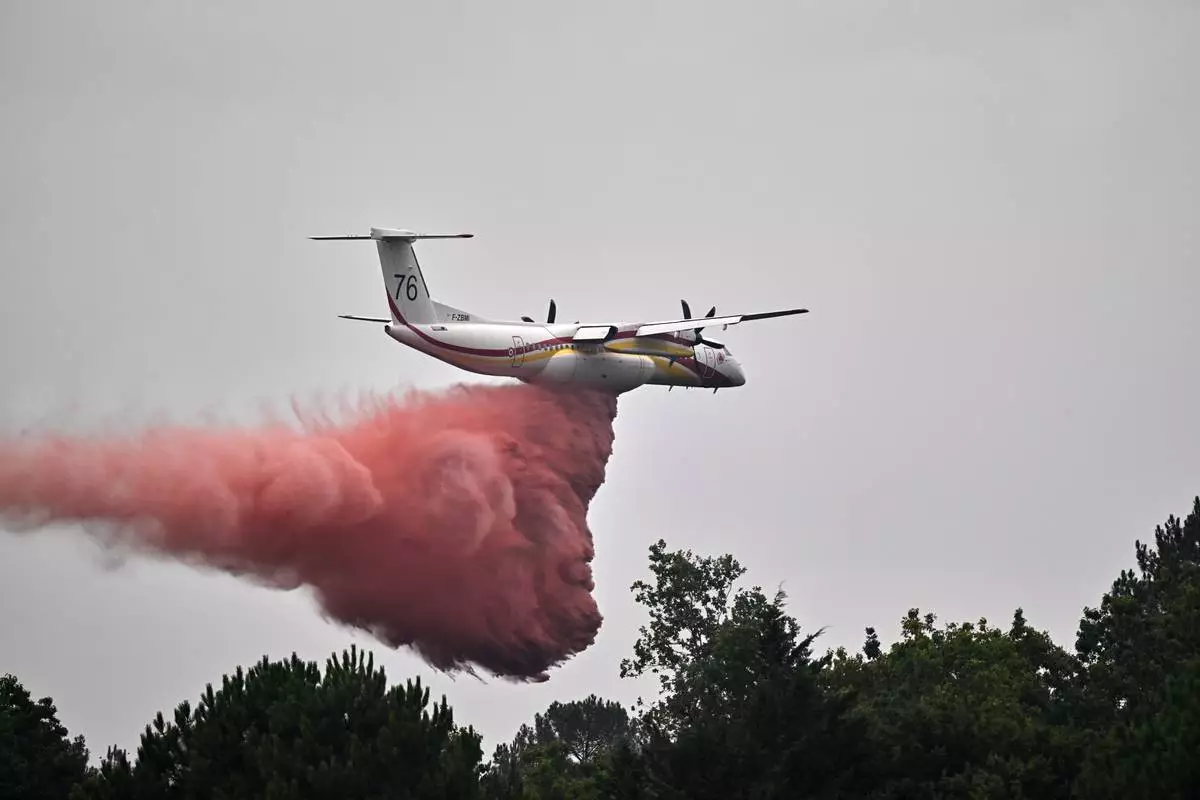
A De Havilland Canada DHC-8-400 Dash 8 operated by the French civil defense agency drops fire retardant as wildfires rage near Marcheprime, outside Bordeaux, France, Monday, July 27, 2026. (AP Photo/Emma Da Silva)

A De Havilland Canada DHC-8-400 Dash 8 operated by the French civil defense agency drops fire retardant as wildfires rage near Marcheprime, outside Bordeaux, France, Monday, July 27, 2026. (AP Photo/Emma Da Silva)

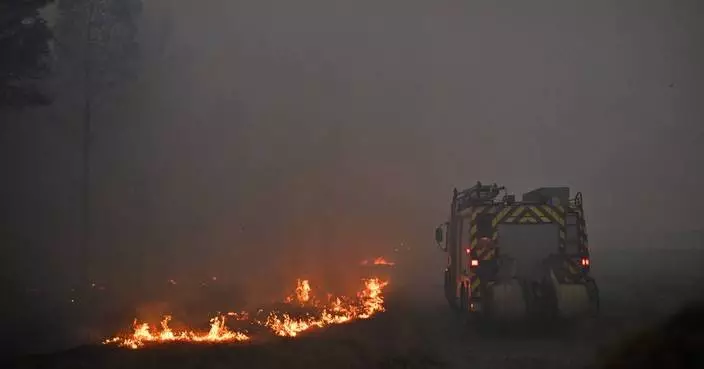
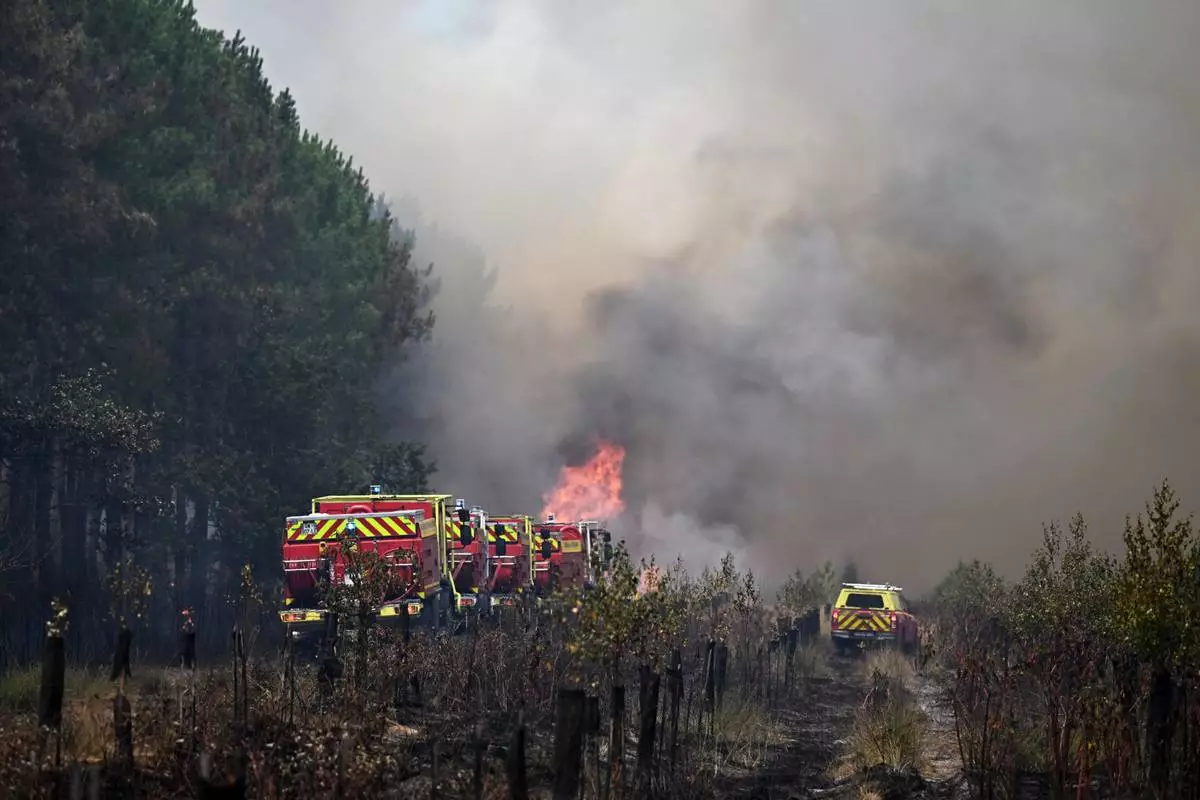
Firefighters tackle a blaze as wildfires rage near Le Las, outside Bordeaux, France, Monday, July 27, 2026. (AP Photo/Emma Da Silva)

Firefighters tackle a blaze as wildfires rage near Le Las, outside Bordeaux, France, Monday, July 27, 2026. (AP Photo/Emma Da Silva)

Firefighters battle a wildfire in San Martin de Valdeiglesias, west of Madrid, Spain, Sunday, July 26, 2026. (AP Photo/Manu Fernandez)

Firefighters battle a wildfire in San Martin de Valdeiglesias, west of Madrid, Spain, Sunday, July 26, 2026. (AP Photo/Manu Fernandez)

Recommended Articles