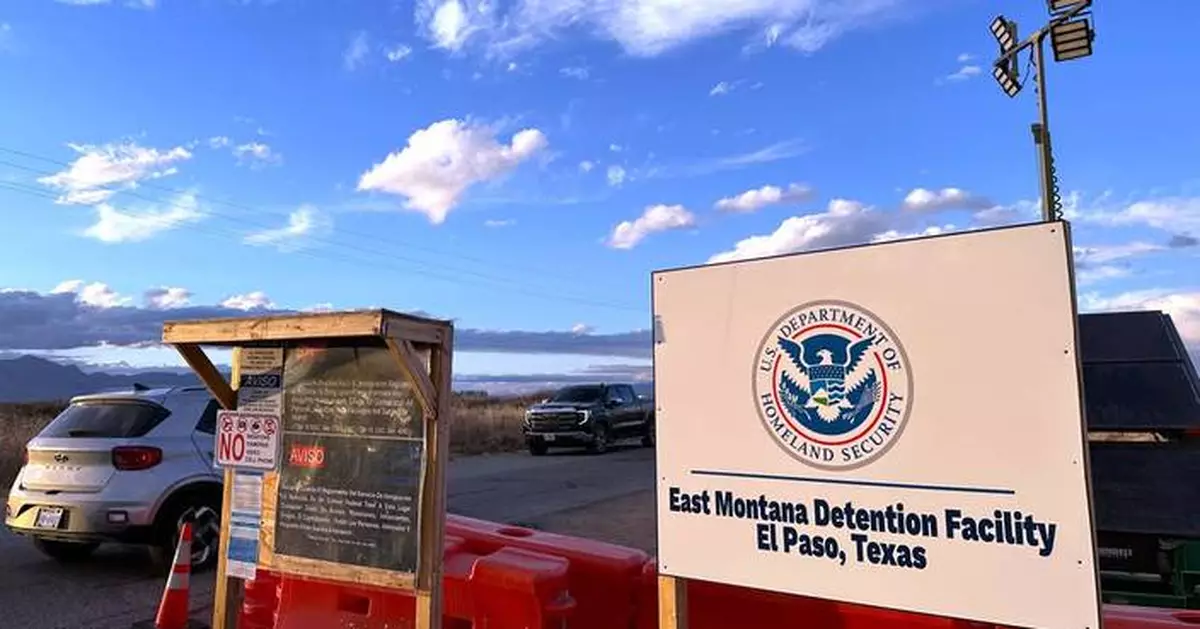
U.S. Immigration and Customs Enforcement plans to keep one of its largest and most expensive detention facilities open for at least another year despite calls to close it over reported human rights abuses, according to a notice published last week.
ICE plans to extend the no-bid contract of the firm that runs Camp East Montana in El Paso, Texas, through Sept. 30, 2027, at a potential additional cost to taxpayers of $776 million, the notice says. This is on top of a $452 million initial contract that the firm, Amentum Services Inc., was awarded in March when it was hastily installed to take over the camp’s operation from a contractor removed for poor performance.
For months, Democratic members of Congress and several advocacy organizations have called for Camp East Montana to be closed, citing reports that detainees have been routinely mistreated since its opening in August 2025.
A report released earlier this month by Human Rights Watch and the American Civil Liberties Union alleged that staff routinely beat detainees, denied them medical care, made them live in filthy conditions and fed them inedible meals. Reports by federal agencies have also found unsafe detention conditions and that the Army and ICE have wasted millions of dollars paying for unnecessary services. At least three Camp East Montana detainees have died.
The facility at Fort Bliss, an Army base near the U.S.-Mexico border, has housed an average of more than 2,000 male and female detainees a day since Oct. 1, though its population has declined significantly in recent months, according to ICE data.
“Extending Amentum’s contract while ignoring well-documented abuses is reckless and demonstrates the Trump administration’s full-scale assault on human rights,” said Angélica César, a fellow at Human Rights Watch and the ACLU who was a lead researcher for the report. “Instead of holding private contractors accountable, DHS is choosing to perpetuate a system of harm and abuse.”
Chanel Mann, a spokesperson for Amentum, referred questions to ICE and its parent agency, the Department of Homeland Security, which didn’t immediately return messages seeking comment.
ICE's notice was a justification for extending Amentum Services’ contract for a year without a competitive bidding process.
The agency argued that relocating detainees to other facilities would be “impracticable” due to a lack of available bed space elsewhere. Transitioning to a different contractor would require replacing Amentum’s “proprietary infrastructure” and finding new workers, which would lead to duplicative costs, it said.
“Any lapse in contract coverage would directly threaten the life, safety, and well-being of detainees, severely disrupt law enforcement operations, and expose the government to substantial operational, legal, and humanitarian risks,” the notice says.
ICE's notice said the Army's initial contract, awarded to Acquisition Logistics LLC, “did not accurately reflect ICE's operational needs or the actual usage of the facility.” Acquisition Logistics had no prior experience operating detention facilities.
In all, Virginia-based Amentum stands to be paid more than $1.2 billion if it operates the camp from March 2026 through September 2027, the notice says.
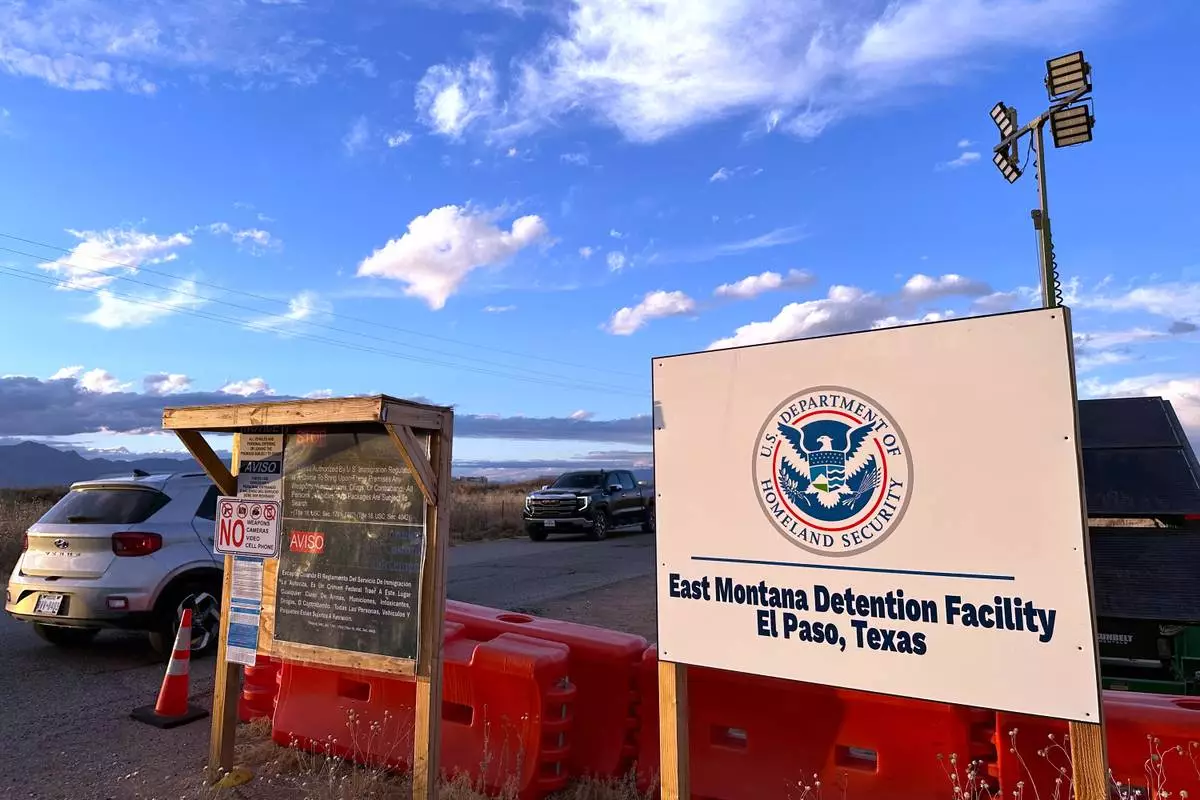
FILE - A sign marks the entrance to a series of hardened tents at the Camp East Montana immigrant detention center in the desert at a U.S. Army base on the outskirts of El Paso, Texas, Feb. 13, 2026. (AP Photo/Morgan Lee, File)
Stocks are drifting on Wall Street Monday and oil prices fell after the U.S. and Iran paused their attacks while work resumed on restarting negotiations to end the war.
The S&P 500 fell 0.2%. The index is coming off two weekly losses in a row. The Dow Jones Industrial Average rose 155 points, or 0.3%, as of 2:25 p.m. Eastern time. The Nasdaq composite fell 0.4%.
Oil prices reversed course from a week ago, when a sharp escalation in fighting between the U.S. and Iran worsened worries about global oil supplies. The price of Brent crude, the international standard, dropped 6.6% to $85.63 a barrel for October delivery. Prices surged to over $100 a barrel last week before easing.
The war between the U.S. and Iran has sharply curtailed, and at a times halted, traffic through the vital Strait of Hormuz. That has had a ripple effect throughout the world’s economy. Gasoline prices have surged and shipping costs for most goods are rising, with businesses typically passing those costs along to households.
Markets rose in Europe after closing higher in Asia.
Bond yields fell. The yield on the 10-year Treasury fell to 4.65% from 4.69% late Friday.
Technology companies were behind much of the shifts in the market, with gains and declines for a mix of big companies resulting in uncertain trading.
Nvidia fell 5.1% and Micron Technology slumped 4%. At the same time, Microsoft rose 3% and Apple rose 0.8%. They are all among the most valuable companies in the world and those market values give them more influence over the direction of the broader market.
The mix of gains and losses from a variety of those companies had more impact in pushing and pulling the market, even as the majority of companies in the S&P 500 gained ground.
In Asia, Chinese memory chipmaker CXMT soared in its debut in Shanghai. The company jumped to become China’s most valuable listed company with an estimated market capitalization of 3.3 trillion yuan (nearly $490 billion).
Wall Street has a busy week ahead with several potentially mark-moving updates on the economy and company earnings. Reports are due out on consumer confidence Tuesday and inflation on Thursday.
“This is a week with more than its fair share of potential surprises, good and bad," said Chris Larkin, managing director, trading and investing, at E-Trade from Morgan Stanley.
The big focus will be on the Federal Reserve, which will give an update Wednesday on its interest rate policy. The central bank has been grappling with the impact from rising inflation because of the ongoing U.S. war with Iran. It also has to contend with a fresh round of U.S.-imposed tariffs globally, which could further worsen inflation.
Wall Street anticipates a nearly 36% chance that the Fed will raise interest rates at its meeting this week. Higher rates can help cool inflation by making borrowing more expensive and slowing economic growth.
The central bank has been holding rates steady throughout the year as it monitors inflation’s direction and impact, but Wall Street expects at least one rate hike by the end of the year.
Stubbornly high inflation has been squeezing households and fuel costs have hit budgets and spending particularly hard. Gasoline costs are taking a bigger chunk out of household budgets, and that could mean tighter spending on other things like clothing and travel.
Investors are monitoring the latest round of corporate earnings for signs of consumer stress along with whether the yearlong jump in stock values throughout Wall Street is justified by profits and forecasts for profit growth.
Investors also have a heavy round of corporate earnings to review this week. Many of those reports could provide more clues into the health of different areas of the economy. Paint and coatings maker Sherwin-Williams, aircraft maker Boeing and payments processor Visa will report their latest results on Tuesday.
Starbucks and Chipotle will report results on Wednesday.
Technology companies are being especially watched because their sharp gains throughout the year have been behind the Wall Street's record run. Microsoft will report results Wednesday. Amazon, with its growing cloud services business and AI-focus, will report results on Thursday, along with Apple.
AP Business Writer Elaine Kurtenbach contributed to this report.
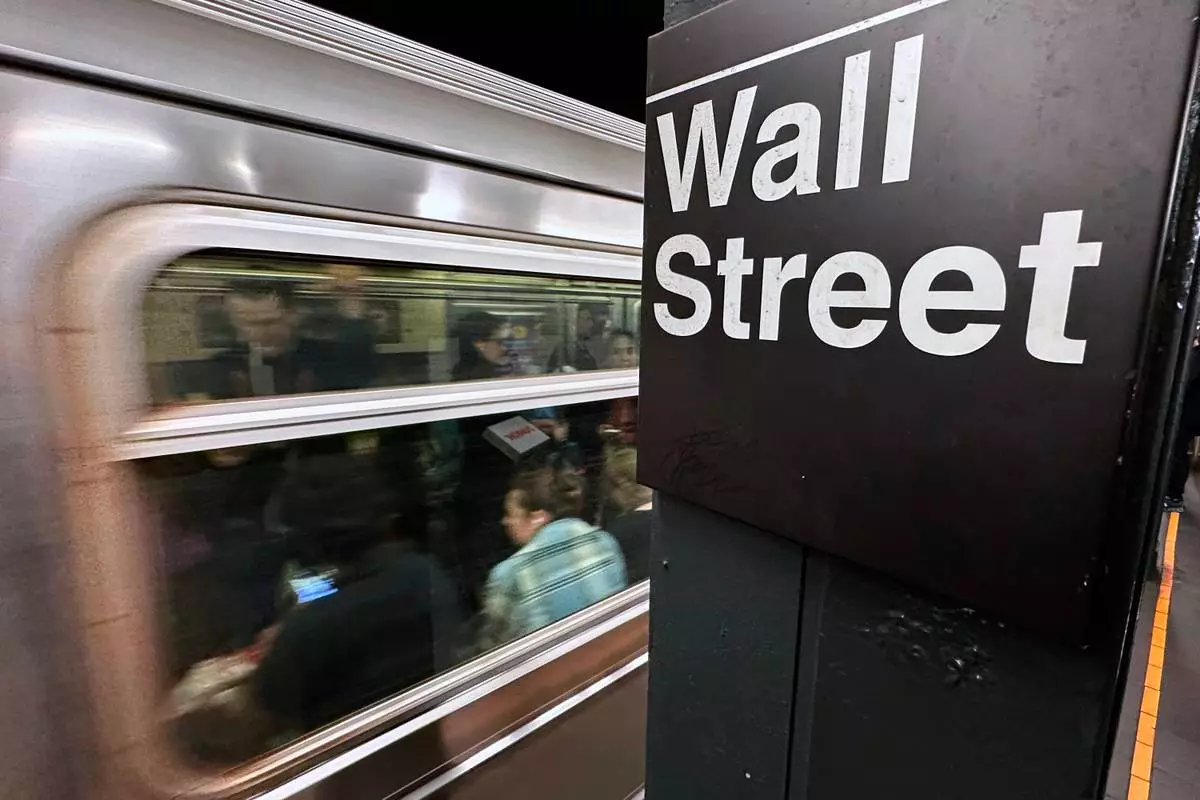
FILE - A train arrives at a Wall Street subway station in New York's Financial District on Nov. 5, 2024. (AP Photo/Peter Morgan, File)
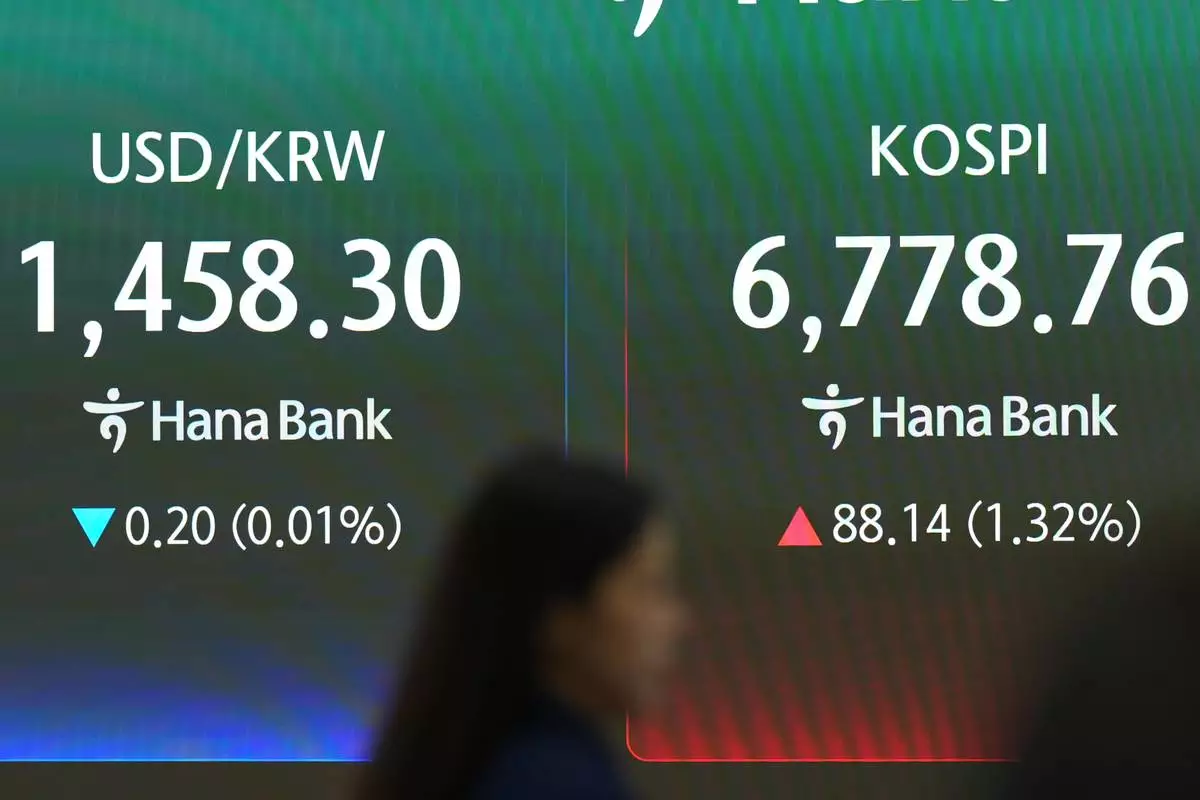
A dealer walks past near the screens showing the Korea Composite Stock Price Index (KOSPI) and the foreign exchange rate between U.S. dollar and South Korean won at a dealing room of Hana Bank in Seoul, South Korea, Monday, July 27, 2026. (AP Photo/Lee Jin-man)
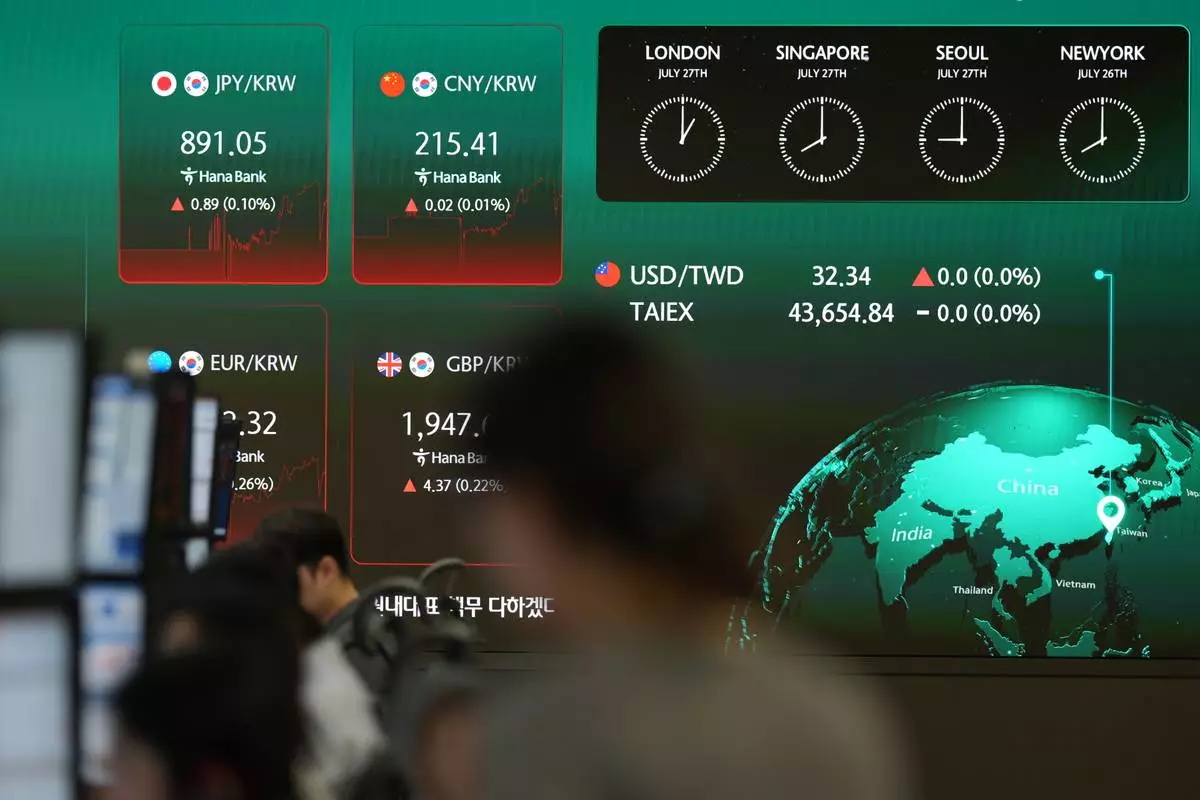
A dealer walks past near the screens showing the foreign exchange rates at a dealing room of Hana Bank in Seoul, South Korea, Monday, July 27, 2026. (AP Photo/Lee Jin-man)
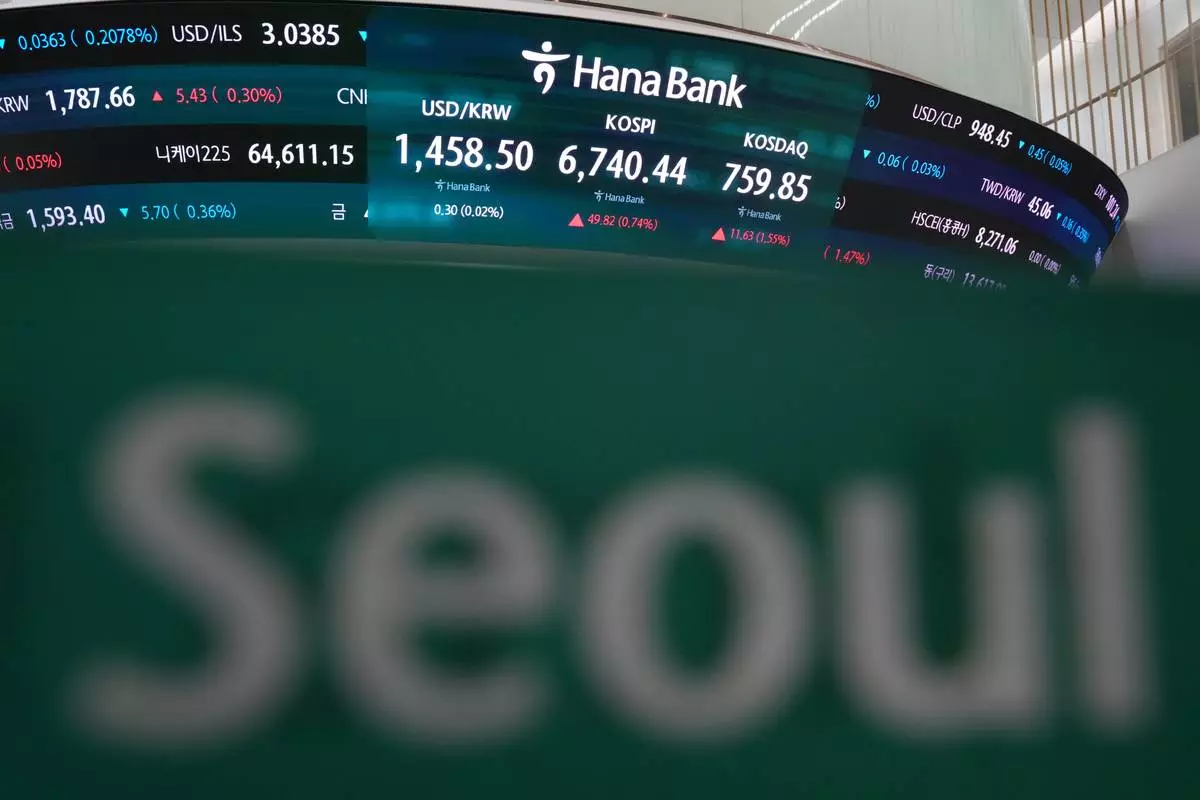
The screens show the Korea Composite Stock Price Index (KOSPI), the foreign exchange rate between U.S. dollar and South Korean won and the Korean Securities Dealers Automated Quotations (KOSDAQ) at a dealing room of Hana Bank in Seoul, South Korea, Monday, July 27, 2026. (AP Photo/Lee Jin-man)
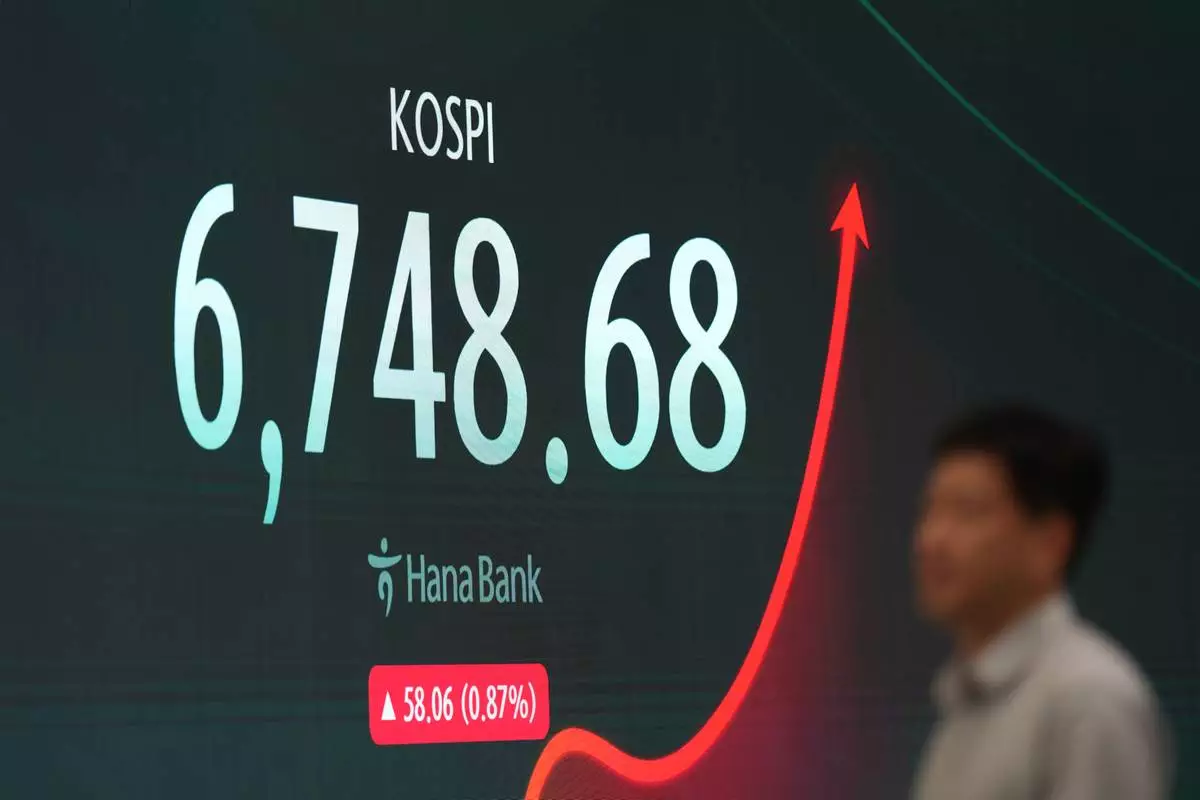
A dealer walks past near the screen showing the Korea Composite Stock Price Index (KOSPI) at a dealing room of Hana Bank in Seoul, South Korea, Monday, July 27, 2026. (AP Photo/Lee Jin-man)
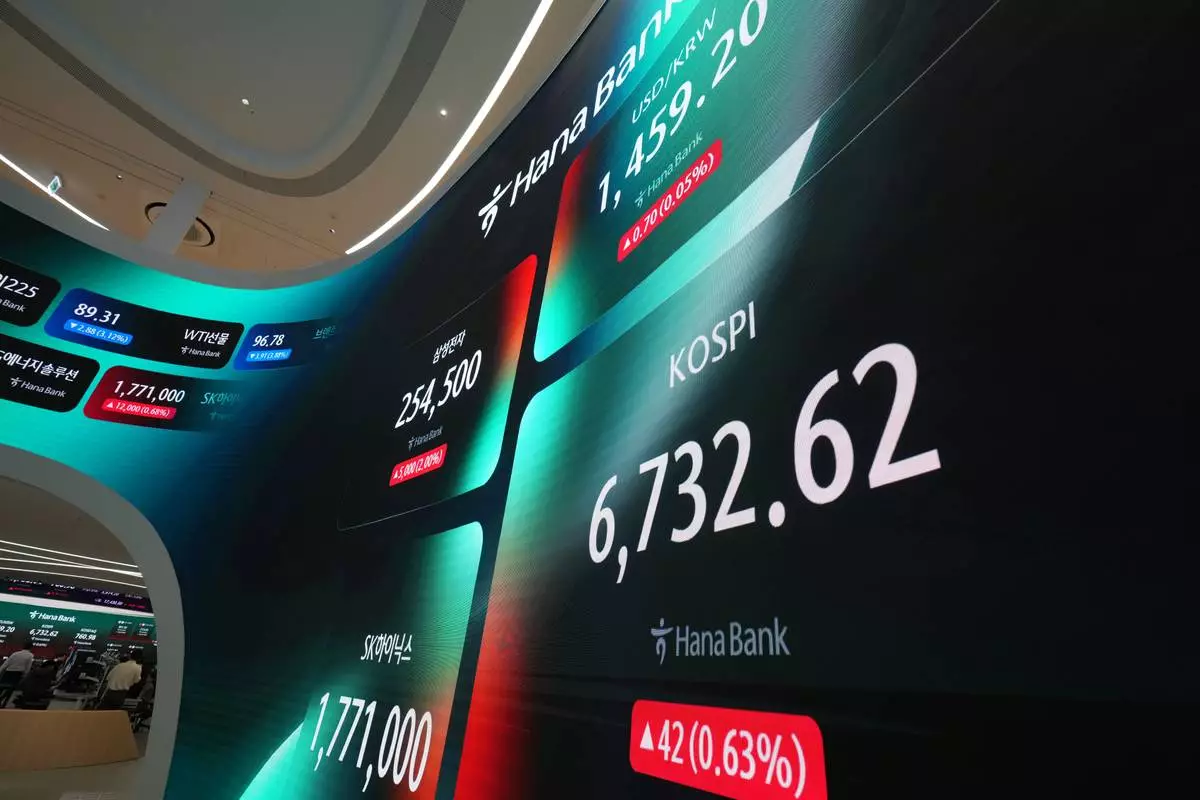
The screens show the Korea Composite Stock Price Index (KOSPI) and the foreign exchange rate between U.S. dollar and South Korean won at a dealing room of Hana Bank in Seoul, South Korea, Monday, July 27, 2026. (AP Photo/Lee Jin-man)