SAN RAMON, Calif.--(BUSINESS WIRE)--Jul 28, 2026--
MedLink Global, Inc. today announced that its MedLink Psychiatric tool has been qualified as a solution on Mayo Clinic Platform, making the company's AI-assisted, measurement-based mental healthcare solution available through Mayo Clinic Platform's ecosystem of healthcare technologies.
This press release features multimedia. View the full release here: https://www.businesswire.com/news/home/20260728577133/en/
The MedLink Psychiatric tool combines two complementary offerings - the AI-assisted Psychiatric Intake Module and the MaiNDS™ Assessment Module - designed to help clinicians collect structured patient data, assess psychiatric symptom severity and complexity across diagnostic domains, and support longitudinal measurement-based care.
Mental healthcare continues to face growing challenges, including increasing demand for services, workforce shortages, and a lack of structured, longitudinal patient data. Traditional psychiatric evaluations often rely on fragmented and episodic information that can be difficult to standardize, quantify, and track over time. MedLink Global was founded to address these challenges by shifting structured data collection upstream to the pre-visit setting and creating a foundation for scalable, measurement-based care.
Founded at UC Berkeley, MedLink Global was created by a multidisciplinary team across psychiatry, psychology, neuroscience, and healthcare innovation, including CEO and co-founder Ran Yang-Chawla, co-founder and renowned psychiatrist/clinical researcher in psychopharmacology Dr. Christoph U. Correll, and psychometric expert Dr. Mark Blais. The clinical tool is powered by the MaiNDS™ assessment, which is based on Dr. Blais’ research and provides a comprehensive framework for measuring psychiatric symptom severity and complexity across diverse patient populations.
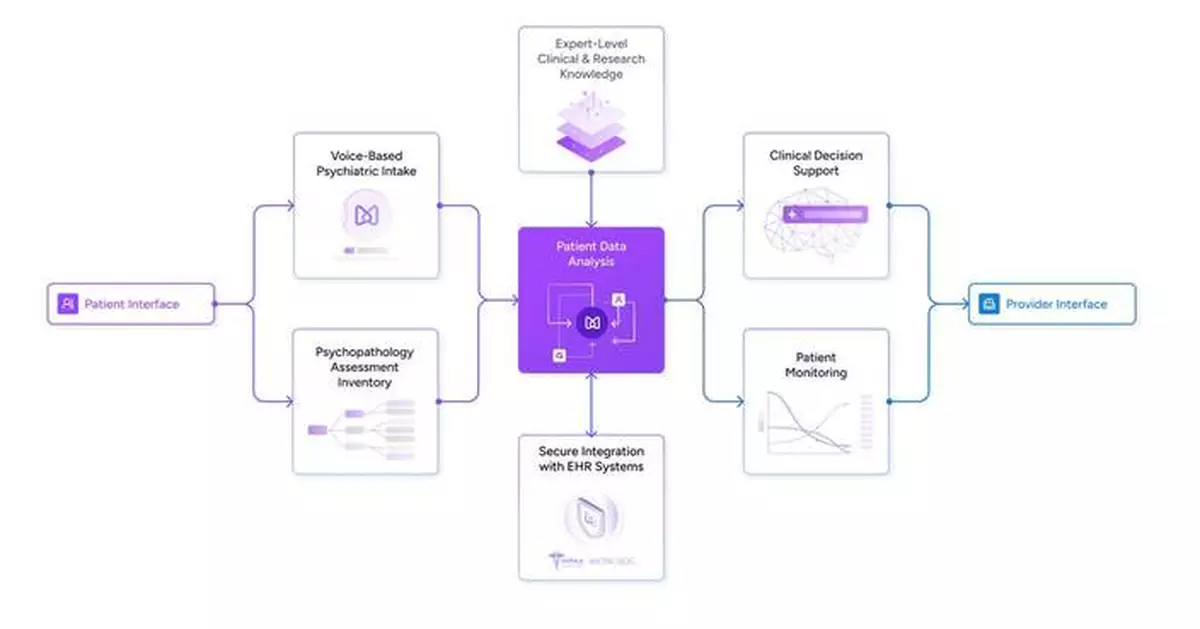
The MedLink Psychiatric tool combines AI-assisted psychiatric intake with MaiNDS™, a low-burden, broadband psychometric assessment designed to measure the severity and complexity of psychiatric symptoms across multiple diagnostic domains. Together, the modules enable clinicians to gather comprehensive patient information before a visit, screen for a broad range of symptoms within a single session, and monitor symptom progression over time. The MedLink Psychiatric Platform integrates into existing clinical workflows and electronic health record systems and is designed for use across psychiatry, primary care, neurology, sleep medicine, pain management, geriatrics, transplant medicine, and other specialties where neuropsychiatric symptoms commonly present.
“Despite tremendous advances in medicine, psychiatry has long been constrained by fragmented information and a lack of structured longitudinal data,” says Ran Yang-Chawla, Chief Executive Officer and Co-Founder, MedLink Global. “By integrating our Psychiatric Intake and MaiNDS™ modules with Mayo Clinic Platform, we are helping healthcare organizations build the data foundation needed for more consistent, evidence-based mental healthcare. Our vision is to transform psychiatry into a measurable, evidence-based discipline where clinicians have the information they need.”
Through Mayo Clinic Platform Solutions Studio, MedLink Global completed a rigorous qualification process evaluating the solution's intended use, clinical utility, psychometric validation, and performance across heterogeneous patient populations.
"Mayo Clinic Platform Solutions Studio program supports digital health solutions developers with the infrastructure and ecosystem needed to bring digital solutions into real-world clinical and administrative workflows," says Steve Bethke, vice president of Solution Developer Market at Mayo Clinic Platform. "The program evaluates each solution for intended use, proposed value, and clinical and algorithmic performance, providing transparency and credibility, and enabling the adoption of transformative health technologies."
MedLink Global also participated in the Mayo Clinic Platform_Accelerate program to develop an AI-powered mental health clinical decision-support solution with millions of de-identified clinical data points.
The MedLink Psychiatric Platform is designed to support, not replace, clinical judgment. The solution generates structured clinical summaries, symptom severity profiles, and longitudinal tracking tools that help clinicians prepare for visits with more consistent, reproducible information while reducing documentation burden and improving workflow efficiency. Beyond psychiatry, the solution also helps clinicians across medical specialties identify and evaluate psychiatric symptoms that may impact a patient's overall health and treatment outcomes.
About MedLink Global
MedLink Global is bringing structure and measurement to mental health care. The company's platform combines AI-assisted psychiatric intake, structured psychological assessments, and longitudinal symptom tracking to support measurement-based care and integrates with major Electronic Health Record (EHR) systems to fit within existing provider workflows. The company embeds its clinical intelligence seamlessly within existing provider workflows to support scalable, standardized decision-making and to improve long-term outcomes. Our vision is to transform mental health care into a measurable, data-driven discipline where every clinical decision is informed by structured, longitudinal patient data. For more information, visit www.medlink.global.
About the MedLink Psychiatric Platform
The MedLink Psychiatric Platform is a measurement-based care solution that combines an AI-assisted psychiatric intake with the MaiNDS™ assessment to help clinicians collect structured patient information, assess symptom severity and complexity, and track outcomes over time. The platform generates standardized clinical summaries and longitudinal symptom profiles, integrates with electronic health record systems, and supports measurement-based care across psychiatry, primary care, neurology, and related specialties. It is designed to support, not replace, clinical judgment.
Mayo Clinic does not endorse or warrant the third-party products or services made available through Mayo Clinic Platform, including their functionality, quality, or performance. Mayo Clinic expressly disclaims any express or implied warranties on such third-party products or services, including any implied warranties of merchantability, quality, accuracy, fitness for a particular purpose, or noninfringement. All use of these third-party products or services, including applicable rights or remedies, are governed by separate terms with the applicable third-party developers or providers.

Christoph Correll, MD, Co-Founder and Chief Medical Officer, MedLink Global

Ran Yang-Chawla, Co-Founder and CEO, MedLink Global
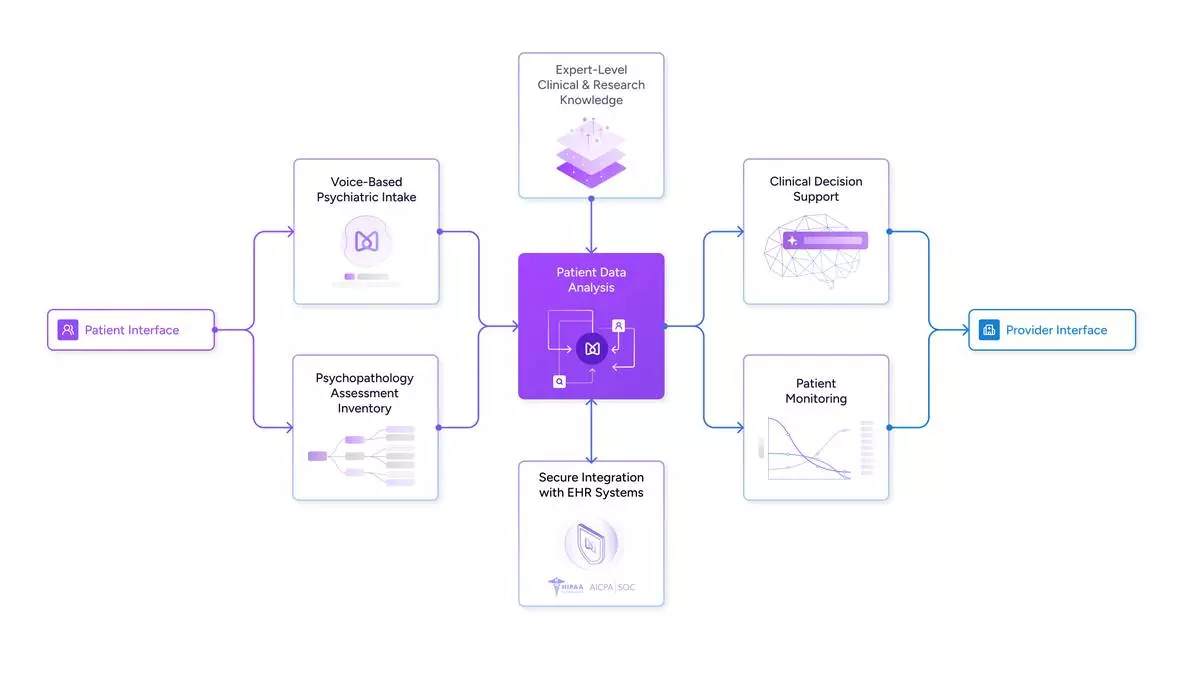
MedLink Platform Overview