KAMPALA, Uganda (AP) — Authorities in Uganda declared the East Africa nation free of Ebola on Tuesday following the discharge of the country's last patient in mid-June, a delicate milestone as the virus continues to plague neighboring Congo.
Uganda has maintained since the outset that its cases were linked to the larger outbreak in eastern Congo’s remote province of Ituri, which borders Uganda. The first cases in Uganda were Congolese who crossed the border to seek treatment for an unknown illness before it was known they had Ebola, health authorities have said.
After what health officials believe was weeks of transmission, Congo announced its outbreak on May 15, the same day that Uganda confirmed two Ebola cases — including a man who had already died.
While a total of 20 cases were reported in Uganda, health authorities say there is currently no indication of further spread within the country.
The last patient was released June 16, and Ugandan authorities have waited the World Health Organization-recommended 42 days – or two incubation cycles for Ebola – to declare the country free of the disease.
"Uganda’s 2026 Ebola outbreak arose from a fully documented importation event,” unlike previous outbreaks in the country, the Ugandan Health Ministry said in a statement Tuesday.
It was now possible to declare Uganda free of Ebola after “all identified contacts were institutionally quarantined and completed the mandatory 21-day follow-up without evidence of further transmission," the statement said. “Enhanced surveillance has detected no unexplained community transmission."
The Bundibugyo type of Ebola virus responsible for the outbreak has no approved vaccine or treatment. The region’s outbreak has been declared a global health emergency.
Ugandan health authorities have experience in acting quickly to address Ebola outbreaks. After the confirmation of Ebola cases in Uganda in May, the president urged Ugandans to “ stop shaking hands,” and ordered the postponement of an annual religious event that attracts thousands of pilgrims — from Congo and elsewhere — who converge around a Catholic shrine just outside the Ugandan capital, Kampala, in June.
Other measures included the suspension of all public transportation and flights between Uganda and Congo, where the outbreak remains worrisome.
Confirmed cases in Congo have reached 3,262, its Health Ministry said in an overnight update. Data by Congolese health authorities showed that 1,437 patients have died, in what officials have said is the fastest Ebola outbreak on record.
The Ebola case number in Congo is likely to top the previous highest toll in the country in the next few days. That outbreak lasted two years, while this one is only 10 weeks in.
Only the 2014-2016 outbreak in West Africa, considered the worst in history, has a higher toll, with 28,000 cases and more than 11,000 deaths.
The speed of transmission in the current outbreak comes amid concerns from residents that many communities in the affected provinces are either unreachable or have been abandoned by responders in recent days over safety concerns amid attacks from angry residents and rebels.
Tracing and isolating Ebola contacts is seen as key to stopping the spread of the disease, which usually manifests as hemorrhagic fever.
A family of fruit bats is believed to be the natural hosts of the viruses that cause Ebola, according to the World Health Organization. Ebola is spread by contact with the bodily fluids of
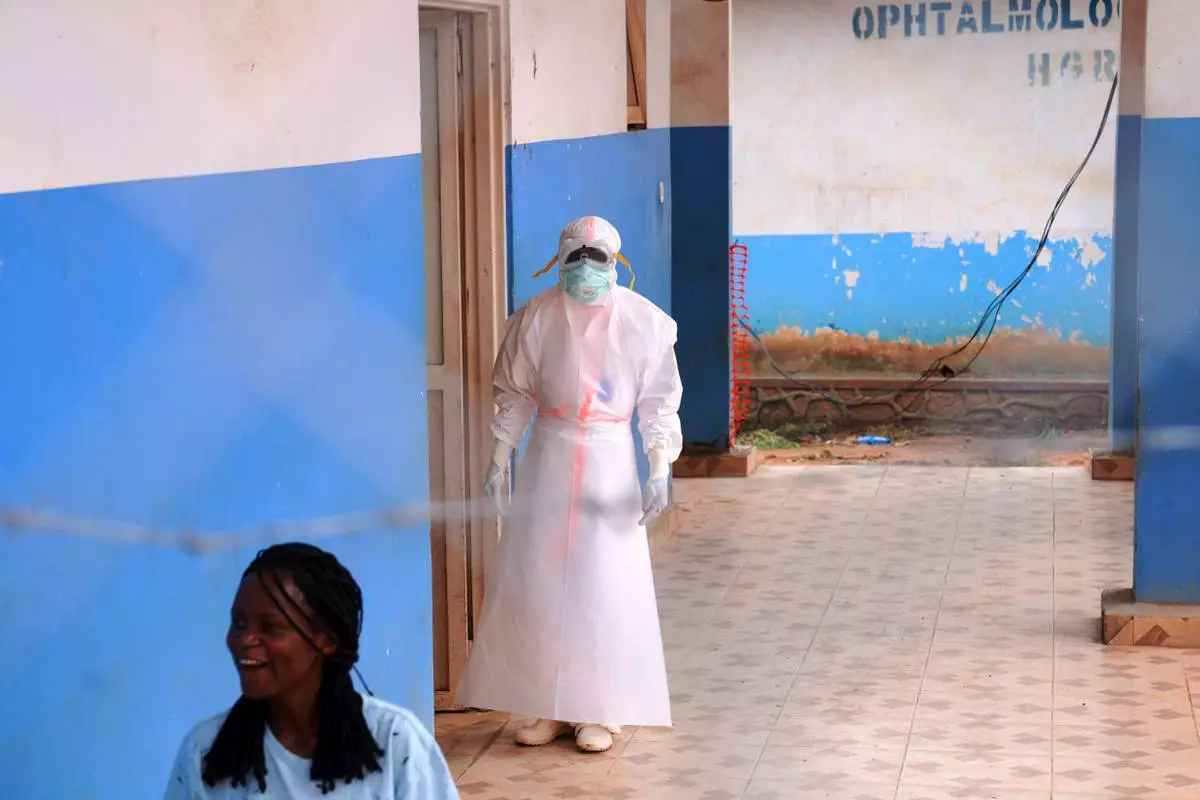
A health worker, wearing protective gear, stands outside the Ebola Treatment Center at the Bunia General Hospital in Ituri, Congo, Wednesday, July 22, 2026. (AP Photo/Dirole Lotsima Dieudonne)
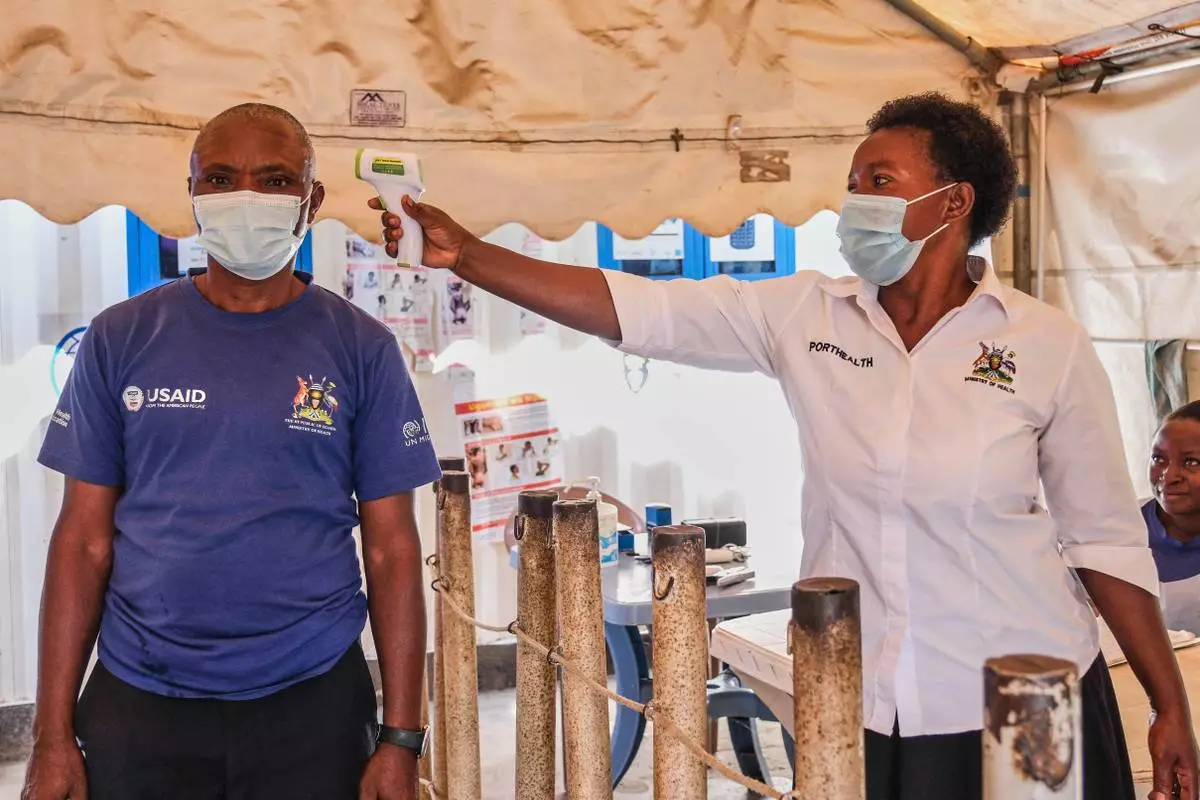
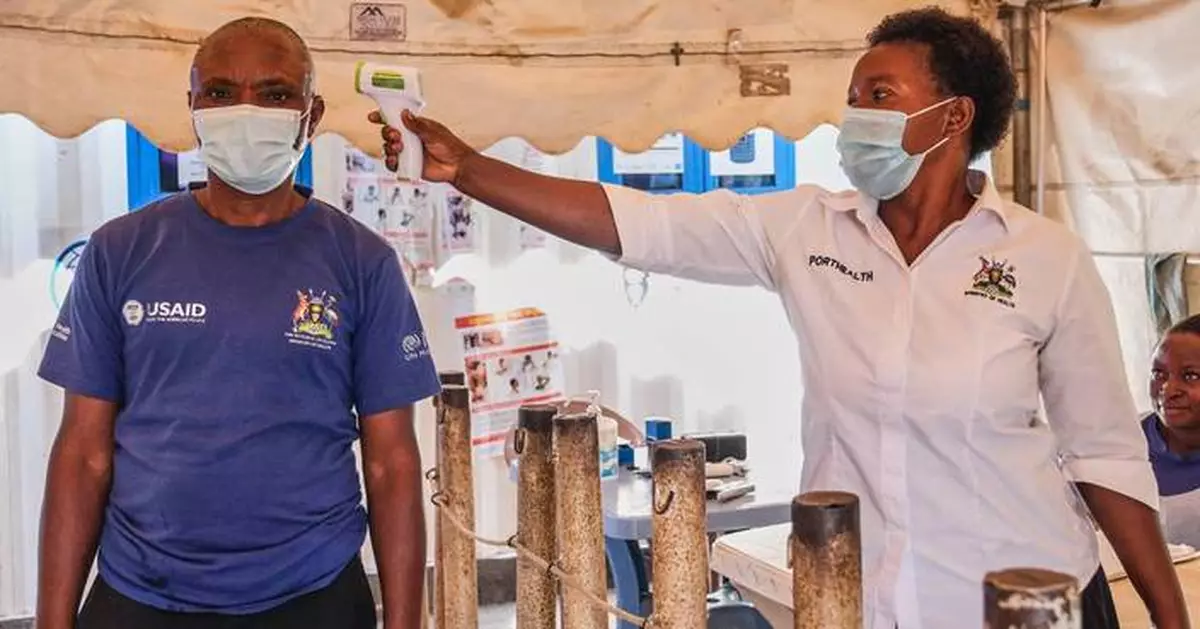
FILE - A health worker checks an individual's temperature at a temporary health clinic at the Mpondwe border crossing linking Uganda and the Democratic Republic of the Congo, Thursday, June 4, 2026. (AP Photo/Hajarah Nalwadda, File)
First responders searched homes and buildings on Tuesday for possible victims of a powerful tornado that ravaged several northeastern Wisconsin communities.
The Fox Cities region, which is home to more than 100,000 people in the communities of Appleton, Menasha and Neenah, was left in shambles by Monday's twister, with homes leveled, cars flipped, and power lines and trees toppled.
“The depth of the tornado and its impact is incredible, devastating. We’re really still at the assessment stage,” Winnebago County Executive Gordon Hintz said at a news conference Tuesday.
Authorities said the timing — the storm arrived in the early afternoon, when most people were awake and after warnings had been issued — could be why there have been no reported deaths.
“Everybody was at work. It was the middle of the day," Menasha Police Chief Matt Albrecht said. "Most people were not at home and at their place of employment.”
Dozens of people were injured, and officers were still going door-to-door a day later in search of possible victims.
The tornado touched down around 1 p.m. and remained on the ground for more than 20 minutes, cutting a roughly 12-mile (19.3-kilometer) path of destruction, the National Weather Service reported. The area is about 100 miles (160 kilometers) northwest of Milwaukee.
It was classified as an EF3 tornado — the strongest to strike Outagamie and Winnebago counties since an EF4 touched down in April 1984, the weather service said.
Gov. Tony Evers declared a state of emergency for the affected areas. Shelters were opened for displaced residents.
As chain saws roared in the background, Appleton Mayor Jake Woodford said a number of neighborhoods were “truly devastated.” Like elsewhere in the region, electricity lines were tangled around broken trees, making power restoration a slow, risky process.
More than 10,000 customers in Winnebago and Outagamie counties were still without power Tuesday afternoon, according to utilities that serve them. It could be several days before power is restored.
The twister was spun off by a large storm system that moved through the Great Lakes and was fueled by a buildup of heat and humidity, the weather service said.
“What we are seeing this summer is significant heat leading to significant severe weather,” said Chad Merrill, senior meteorologist at AccuWeather. “We had an EF3 tornado in Wisconsin. People need to take these warnings seriously. It can happen just about anywhere.”
ThedaCare Regional Medical Centers in Appleton and Neenah said it treated 40 people, mostly for minor storm-related injuries. Ascension St. Elizabeth Hospital in Appleton said it saw about 30 patients, all with minor injuries.
Rachel Bernhardt, 56, said she grabbed her dog and dashed to her basement in the village of Fox Crossing after she saw a steel swing spinning in the yard. After the storm passed, her second-floor bedroom was covered in glass and a tree branch was resting on her bed.
“We can’t be in there anymore,” said Bernhardt, who is sleeping on the first floor and using a generator to keep the refrigerator going. “In fact, I’m going to caution-tape that off.”
At Manderfield’s Home Bakery, a decades-old landmark in Menasha, the brick frame around the door still stood, but not much more.
“This can be replaced,” owner Jerry Manderfield told WISN-TV. “We had people in the building that could possibly have died in there.”
Volunteers stepped up to try to ease the shock. Luigi’s Pizza in Menasha set up a food trailer to distribute hygiene packs and free slices after donors kicked in enough money to make at least 125 pizzas.
“Sometimes a hot pizza, a taco, and a reminder that your community cares can mean more than words,” said Duncan’s Window & Door, which chipped in for 50 pizzas.
Associated Press reporters Christopher Keller and Scott Bauer contributed to this story.
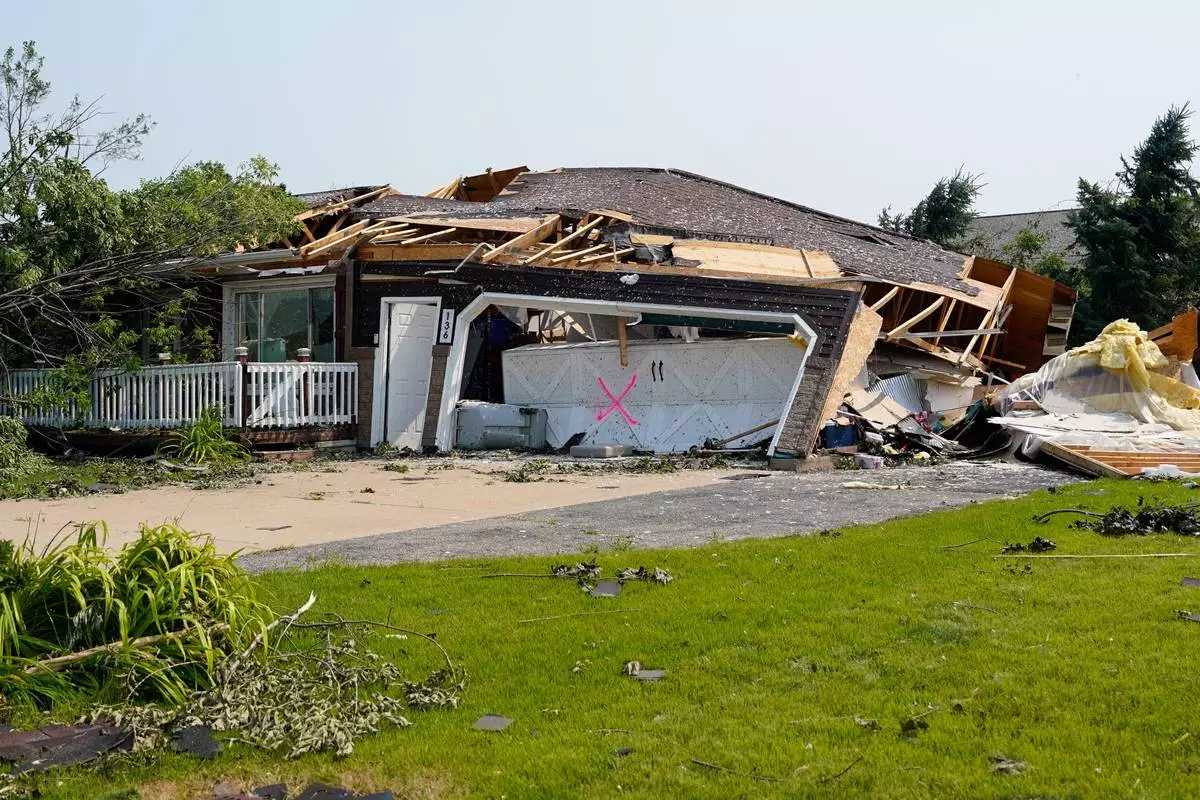
A view of a home damaged by a tornado that tore through a day before in Appleton, Wis., Tuesday, July 28, 2026. (AP Photo/Kayla Wolf)
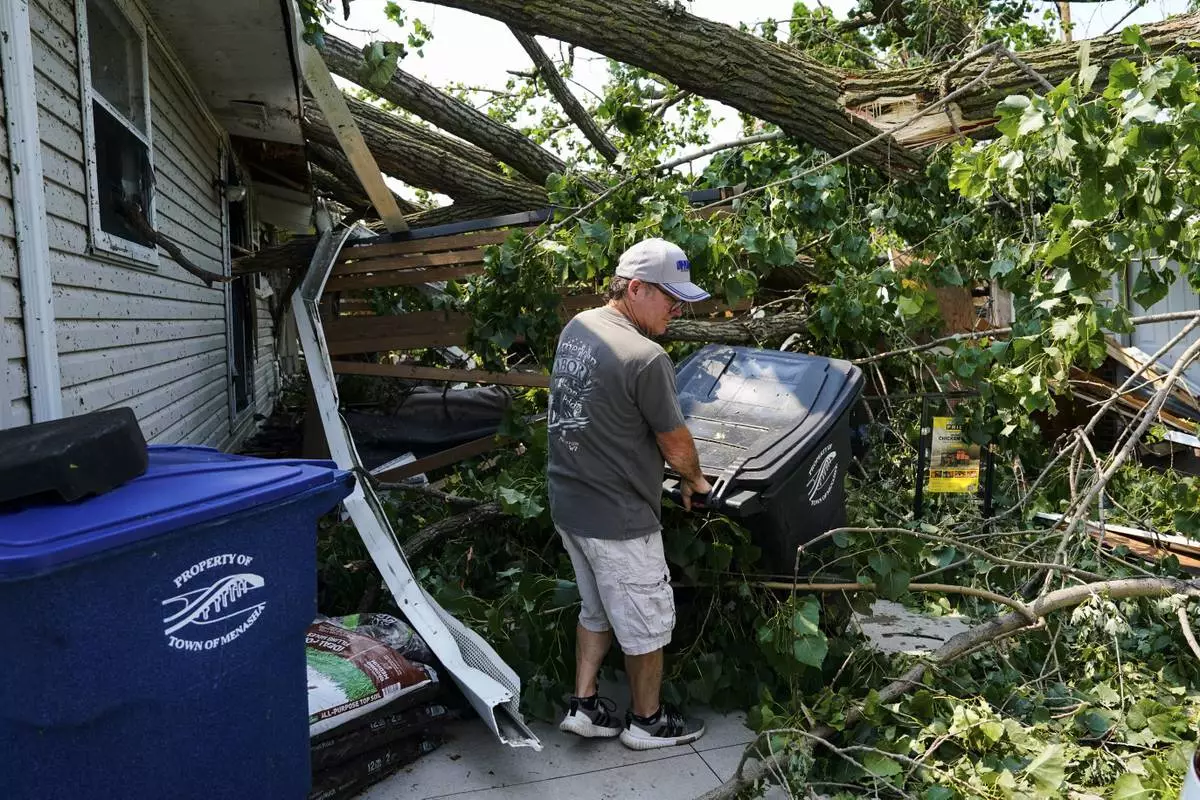
A man helps clear debris from the backyard of a damaged house after a tornado hit the day before, Tuesday, July 28, 2026, in Appleton, Wis. (AP Photo/Kayla Wolf)
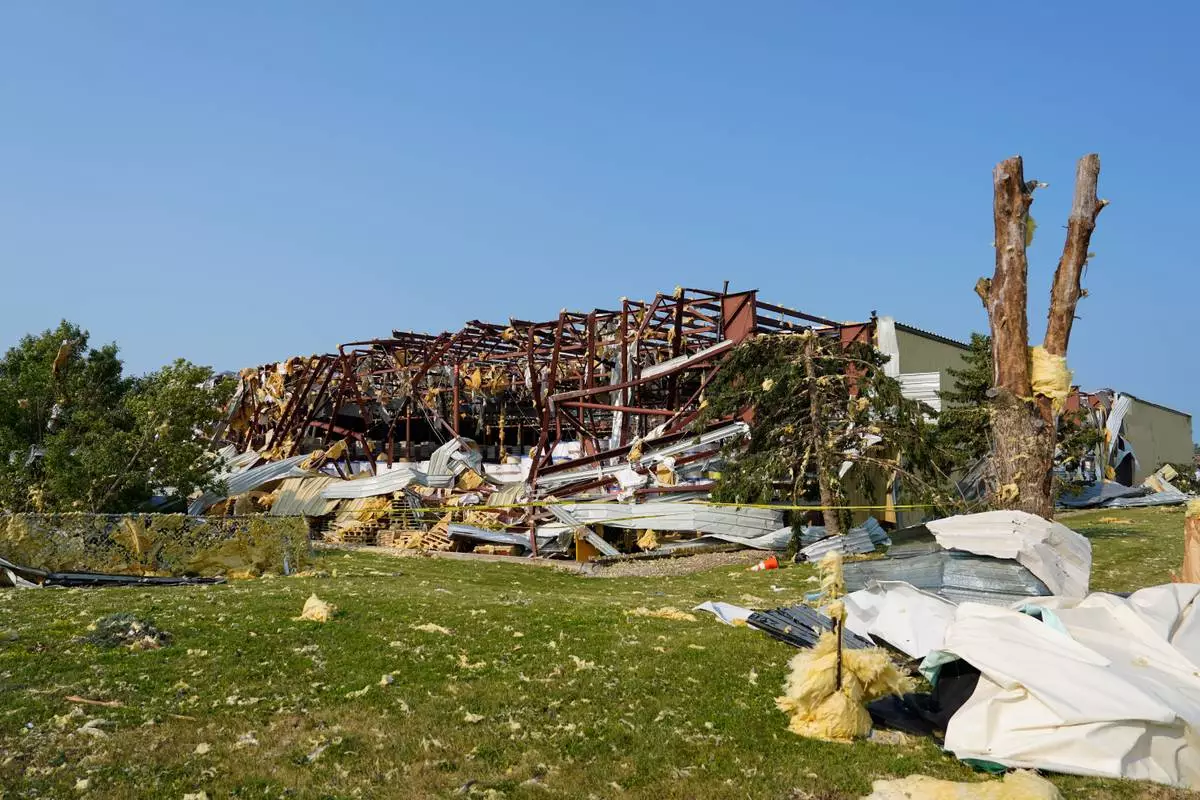
Debris surrounded a damaged warehouse in the aftermath of a tornado that tore through Appleton, Wis., Tuesday, July 28, 2026. (AP Photo/Kayla Wolf)
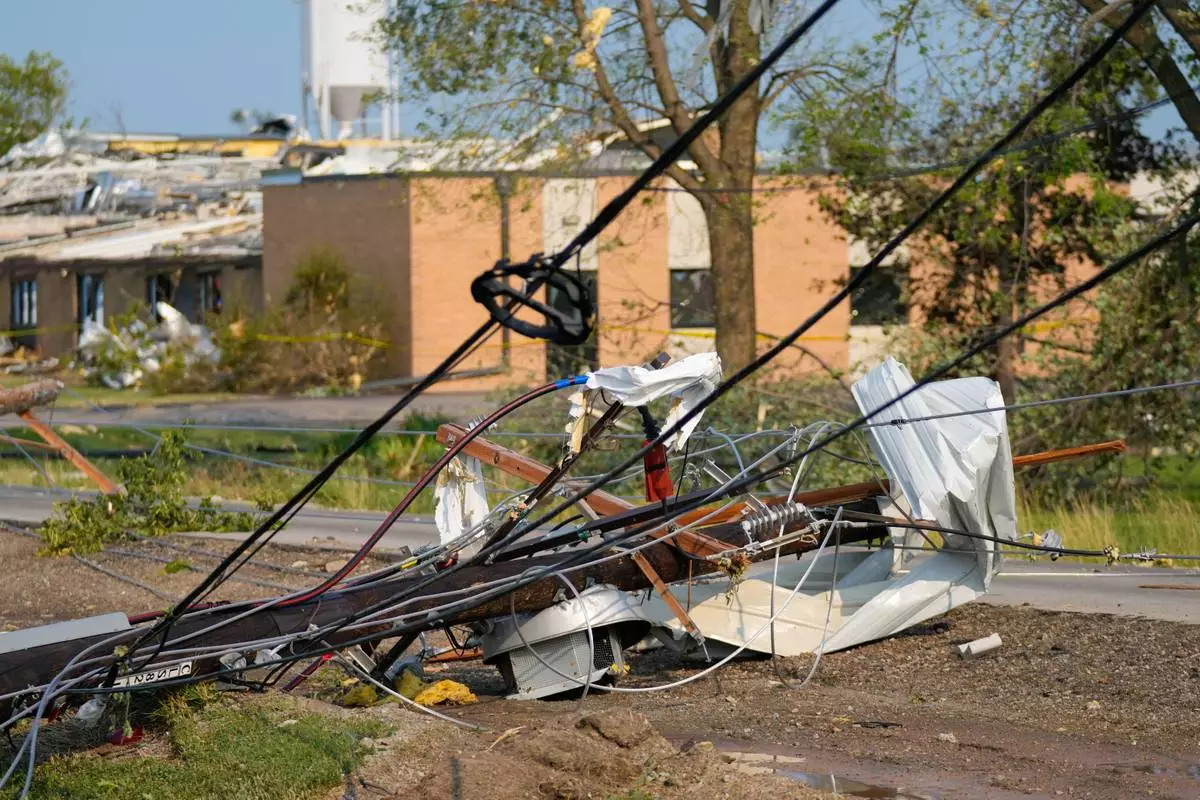
Power lines tangled with debris lie on the ground after a tornado tore through a day before in Appleton., Wis., Tuesday, July 28, 2026. (AP Photo/Kayla Wolf)
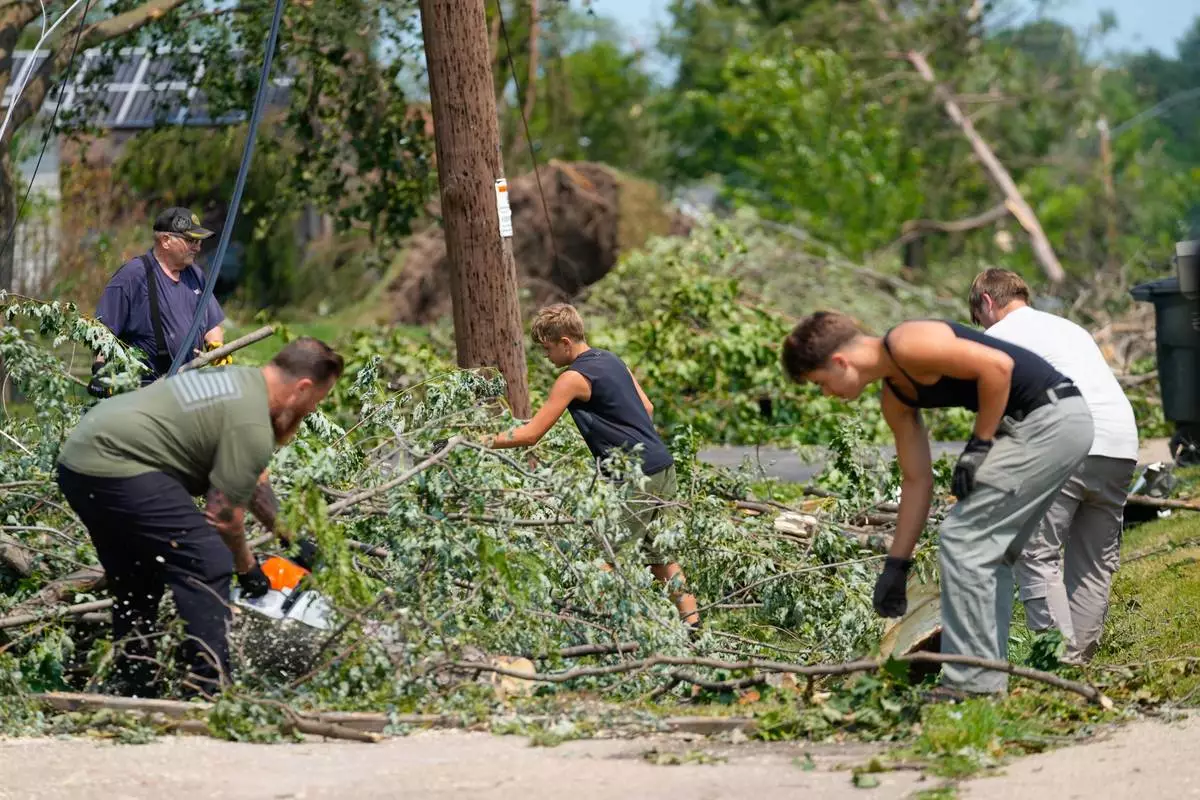
Volunteers help clear tree limbs near a damaged house after a tornado hit the day before in Appleton, Wis., Tuesday, July 28, 2026. (AP Photo/Kayla Wolf)
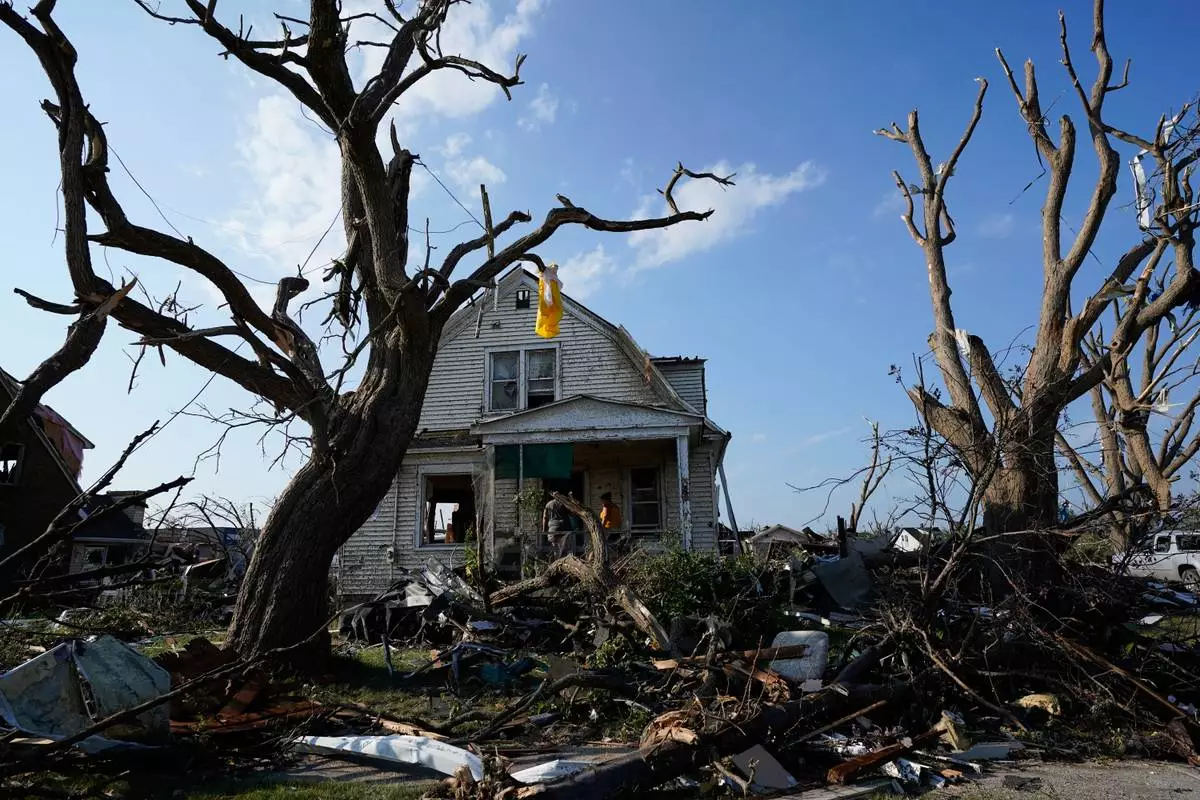
Debris is seen in front of a damaged house after a tornado struck Monday, July 27, 2026, in Menasha, Wis. (AP Photo/Kayla Wolf)
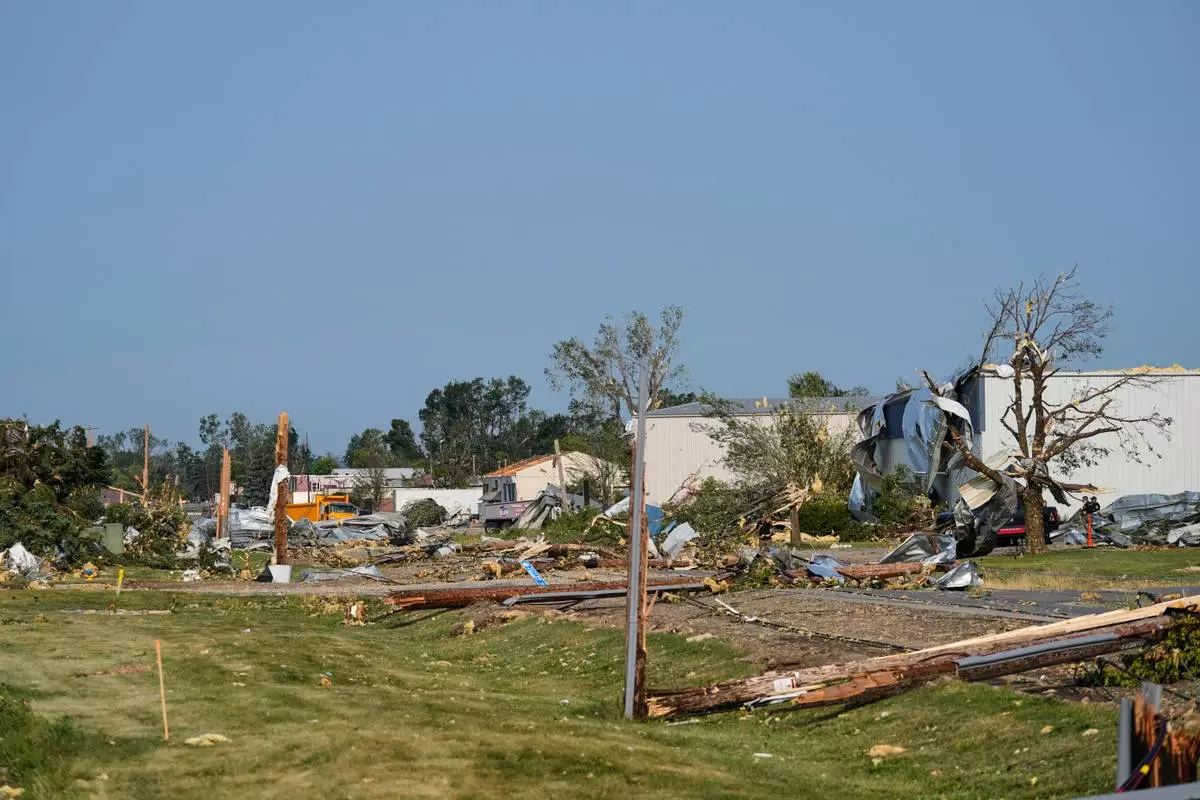
Debris and fallen trees cover the ground after a tornado struck the day before, Tuesday, July 28, 2026, in Appleton, Wis. (AP Photo/Kayla Wolf)
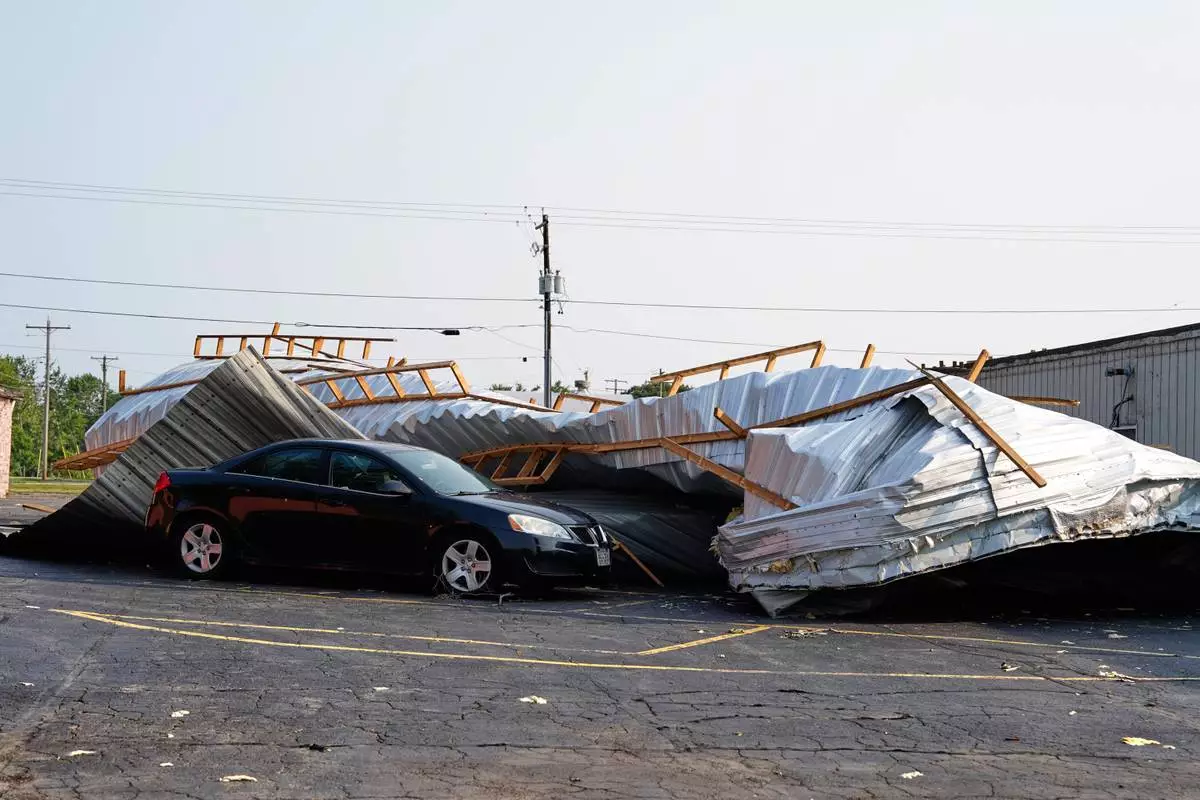
A car sits in a parking lot under a collapsed roof after a tornado struck the day before, Tuesday, July 28, 2026, in Appleton, Wis. (AP Photo/Kayla Wolf)
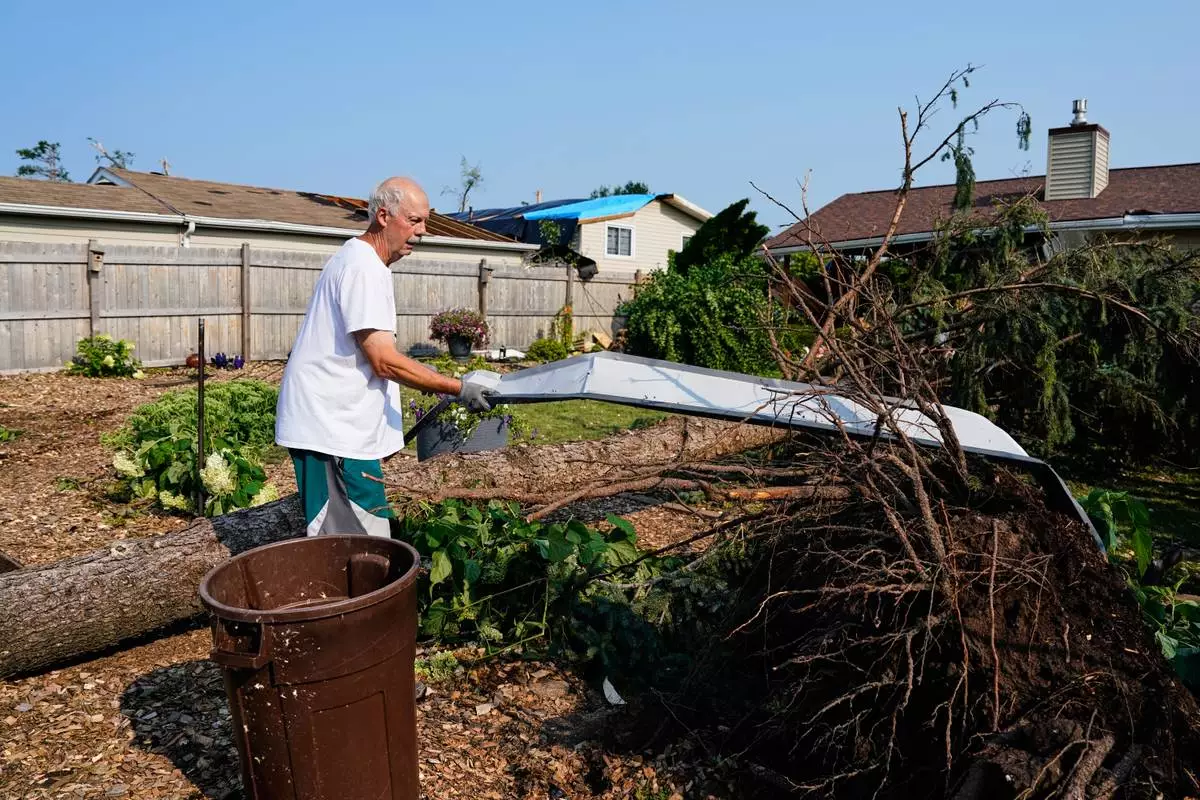
Williams Burrows cleans up debris in his backyard after a tornado struck the day before, Tuesday, July 28, 2026, in Appleton, Wis. (AP Photo/Kayla Wolf)
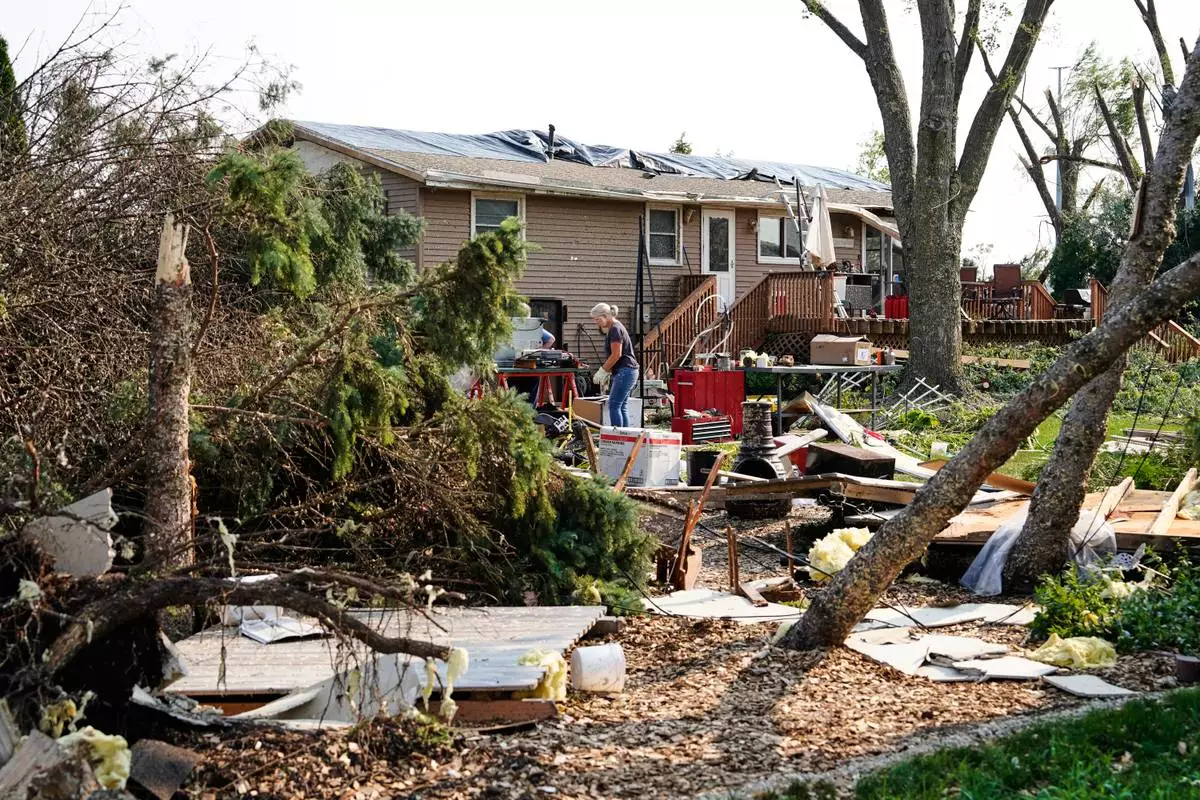
People clean up debris in front of a damaged home after a tornado struck the day before, Tuesday, July 28, 2026, in Appleton, Wis. (AP Photo/Kayla Wolf)