LAS VEGAS (AP) — A Nevada judge ruled on Tuesday that the recording of an interview the man accused of killing Tupac Shakur gave to police in 2008 could be used at his upcoming trial.
Judge Carli Kierny found that the interview is admissible in Duane “Keffe D” Davis' trial, which is scheduled to start Aug. 10.
Davis, 63, is charged with murder in Shakur's 1996 killing and faces life in prison without parole if convicted.
Shakur’s death is considered one of the most notorious unsolved murders in the United States. The case went cold until Davis began making public statements about it, including in a book he co-wrote in which he said he was in the Cadillac and provided the weapon used to shoot Shakur.
Defense attorney Michael Sanft argued that a 2008 interview Davis gave law enforcement was supposed to be confidential, and that detectives explicitly told him the interview was not supposed to be used against him.
Prosecutors argued there was no basis to exclude the interview from the trial, which is expected to take about four weeks.
The interview was used in former Los Angeles Police Department Detective Greg Kading’s book “Murder Rap: The Untold Story of the Biggie Smalls & Tupac Shakur Murder Investigations.” Portions of the recording were also played in documentaries, including the recent documentary “Sean Combs: The Reckoning.”
Shakur was killed Sept. 7, 1996, in Las Vegas. He and Death Row Records founder Marion “Suge” Knight were sitting at a red light when a white Cadillac pulled up beside them near the Las Vegas Strip, and gunfire erupted. Shakur was shot multiple times and died six days later. Knight survived with minor injuries.
Three others were with Davis in the Cadillac, including his nephew, Orlando “Baby Lane” Anderson, but Davis is the only person still alive. None of the others faced charges in Shakur's killing before they died.
In his memoir, Davis said he obtained a handgun from an associate and tossed it into the back seat of the Cadillac but did not say who fired the fatal shots.
In the 2008 interview, Davis describes how he and his crew saw Shakur that night and pulled up beside them, and said that Anderson “popped them.” Anderson denied involvement in Shakur’s killing at the time. He died two years later in an unrelated gang shooting in Compton, California.
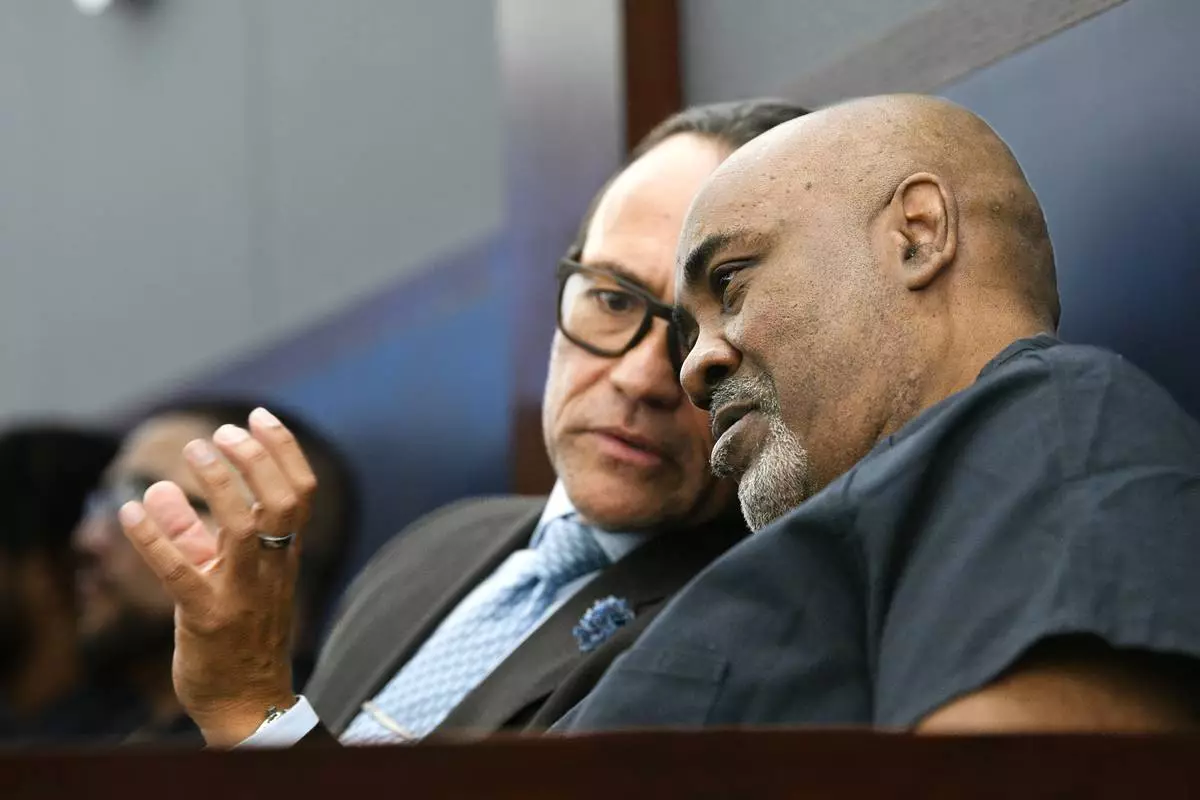
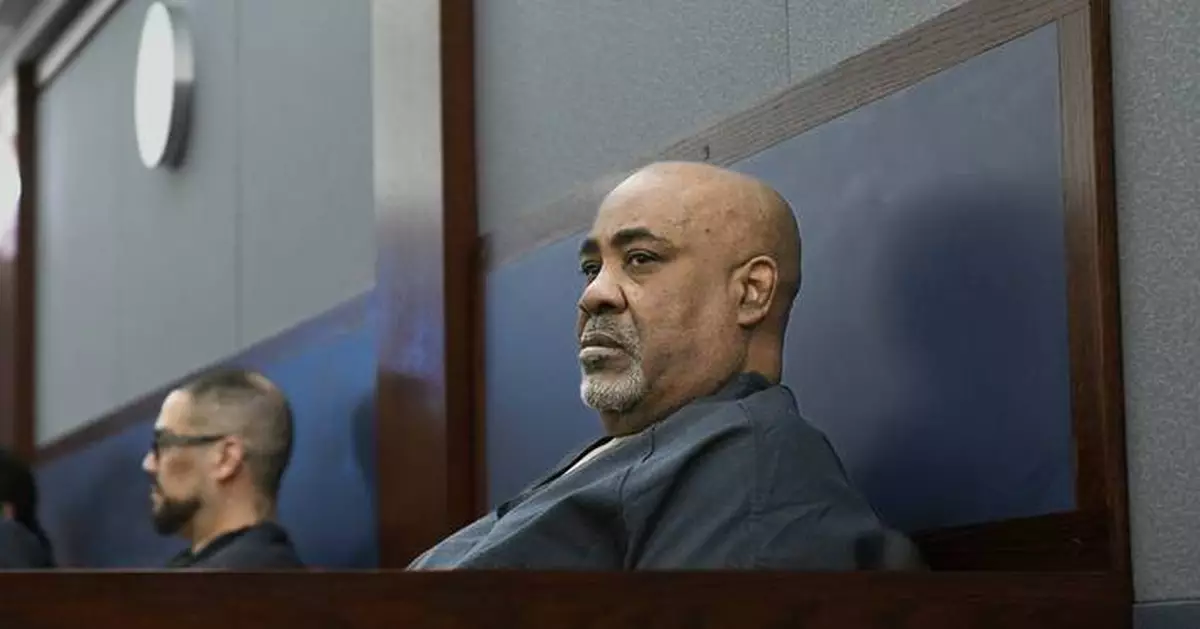
Duane Davis, right, talks with attorney Michael Sanft as he appears in district court for a pretrial hearing Tuesday, July 28, 2026, in Las Vegas. (Sam Morris/Las Vegas Review-Journal via AP, Pool)
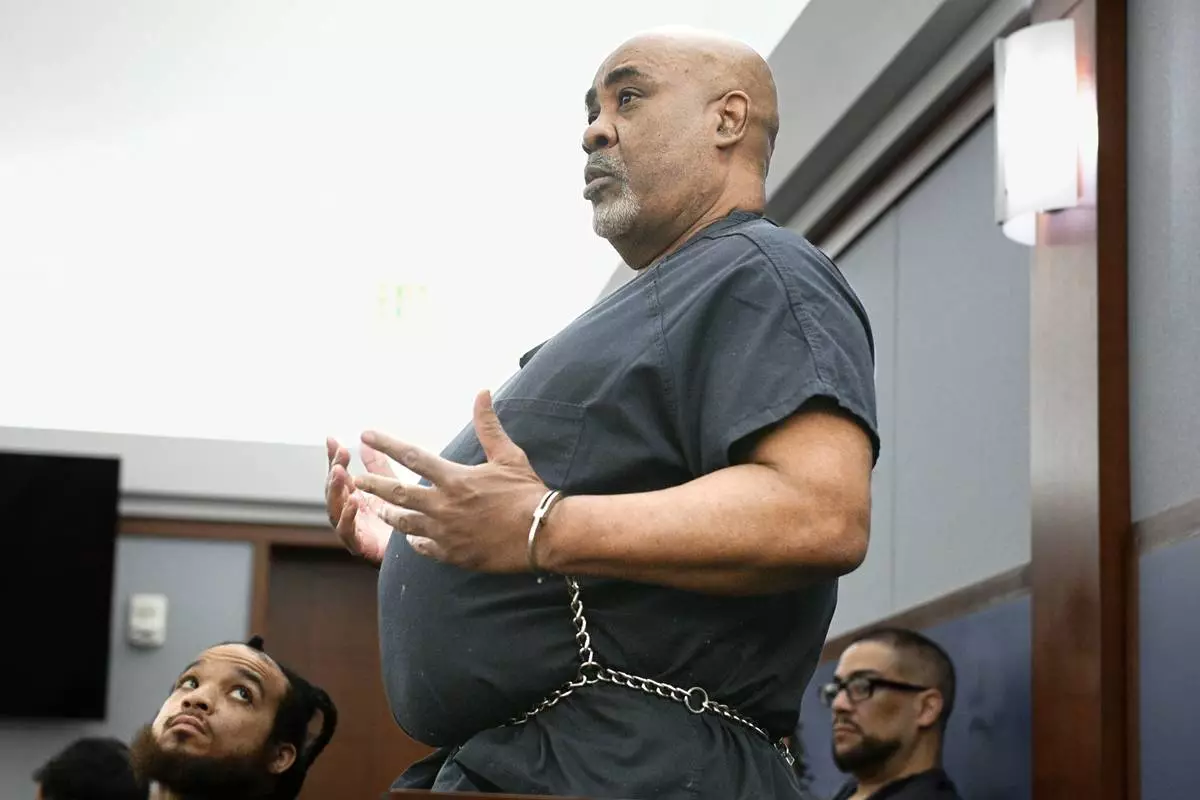
Duane Davis appears in district court for a pretrial hearing Tuesday, July 28, 2026, in Las Vegas. (Sam Morris/Las Vegas Review-Journal via AP, Pool)
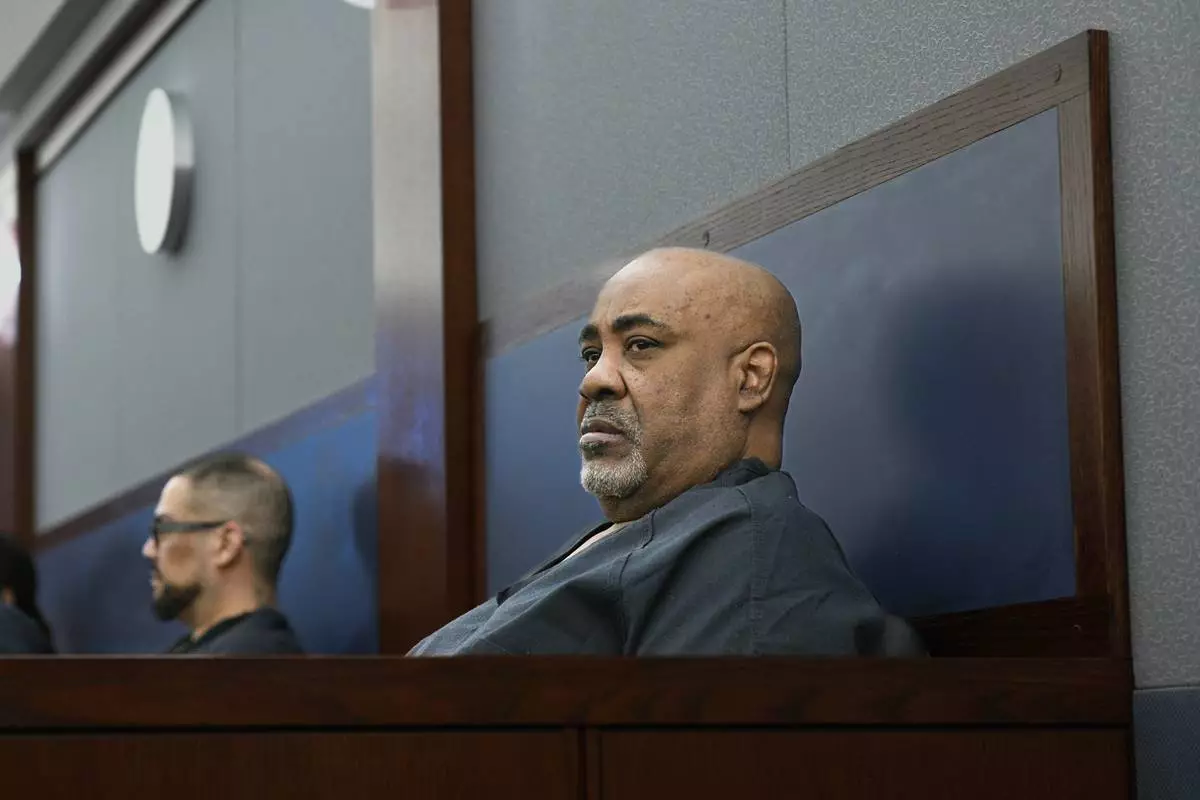
Duane Davis appears in district court for a pretrial hearing Tuesday, July 28, 2026, in Las Vegas. (Sam Morris/Las Vegas Review-Journal via AP, Pool)
STARKE, Fla. (AP) — Florida on Tuesday became the first state in nearly a decade to carry out two executions in a single day, putting to death an 80-year-old man who was the second-oldest inmate known to receive a lethal injection in modern U.S. history.
Hours earlier, the state executed a former police officer convicted of the killing of a young girl.
Republican Gov. Ron DeSantis has made Florida's death chamber the nation’s busiest at the end of his final term, saying too many families have waited too long to see justice. The lethal injections just hours apart were the first nearly back-to-back executions since Arkansas put two men to death three hours apart in 2017.
DeSantis, who has the authority under Florida law to set execution dates, decided earlier this month to carry out both executions on the same day.
Nationwide, the use of the death penalty had been declining for two decades, but that number has ticked up behind the increased pace in Florida. Since 2025 began, Florida has carried out nearly half the state executions across the country.
Dominick Anthony Occhicone, the octogenarian, was pronounced dead at 6:13 p.m. at Florida State Prison near Starke following a three-drug injection. His execution came nearly five hours after the ex-police officer, James Aren Duckett, 68, received a lethal dose in the same death chamber.
The curtain to the chamber went up for the last time Tuesday at Occhicone's 6 p.m. scheduled execution hour. The inmate was strapped to a gurney with an IV in his arm and a spiritual adviser near his feet.
Asked if he wished to make a statement, Occhicone said he thanked all of his Christian brothers for visiting him over the years. He also apologized to the family of the victims and to his own family for what he had put them through.
“I know it don’t mean much, but I’m sorry,” Occhicone said. “I never meant to do what I did."
The injection began at 6:02 p.m. followed by several minutes of deep breathing. When Occhicone's breathing slowed, a warden shook him and yelled his name but there was no response.
Occhicone, who was convicted of killing his ex-girlfriend’s parents in 1986, is the oldest prisoner executed in Florida’s history since modern record-keeping began a century ago. Nationwide, an older inmate, 83-year-old Walter Moody Jr., received a lethal injection in Alabama in 2018 for a wave of mail bombs in 1989 that killed a federal judge and wounded a Black civil rights attorney.
Earlier Tuesday afternoon, Duckett became the 11th inmate executed by the state this year. He was convicted of raping and drowning 11-year-old Teresa McAbee while he was working as a police officer in central Florida in 1987.
Duckett declined to make a final statement, responding “no sir” when asked and showing no response several minutes into the execution when the prison warden shook him and shouted his name. He was pronounced dead at 1:19 p.m.
Afterward, the girl's family members said they had suffered for decades.
“I waited nearly 40 years to have him dead,” Dorthy Tula, the victim's mother, said before breaking down.
“This man took advantage of his badge,” said Tracy Mcfall-Buskirk, the girl's cousin.
Nationwide, a total of 19 executions have been carried out so far this year, including Tuesday's. Florida has now conducted 12 executions to date in 2026 — more than all other states combined.
DeSantis, who leaves office in January, oversaw a record 19 executions last year, more in a single year than any other Florida governor since the reinstatement of the death penalty in the U.S. in 1976.
Another execution in Florida is set for August.
Floridians for Alternatives to the Death Penalty had recently urged DeSantis to halt both executions, calling two in one day an “unprecedented escalation” of Florida’s use of the death penalty.
“Florida continues to expand the use of capital punishment, despite mounting evidence that it is not what Floridians want," said the group's executive director, Grace Hanna.
DeSantis hasn’t said why he scheduled two executions hours apart. And he has rarely commented on the pace of executions, previously noting some on death row had committed crimes as far back as the 1980s.
“Justice delayed is justice denied. I felt I owed it to them to make sure this ran very smoothly," the governor said last year.
Florida Department of Corrections records show multiple executions on a single day were more common in the past, the last being in 1964.
The U.S. Supreme Court denied last appeals from both men Tuesday and the Florida Supreme Court last week.
All Florida executions are by injection of a sedative, a paralytic and a drug that stops the heart, according to the Department of Corrections.
Associated Press reporter John Seewer in Toledo, Ohio, contributed.
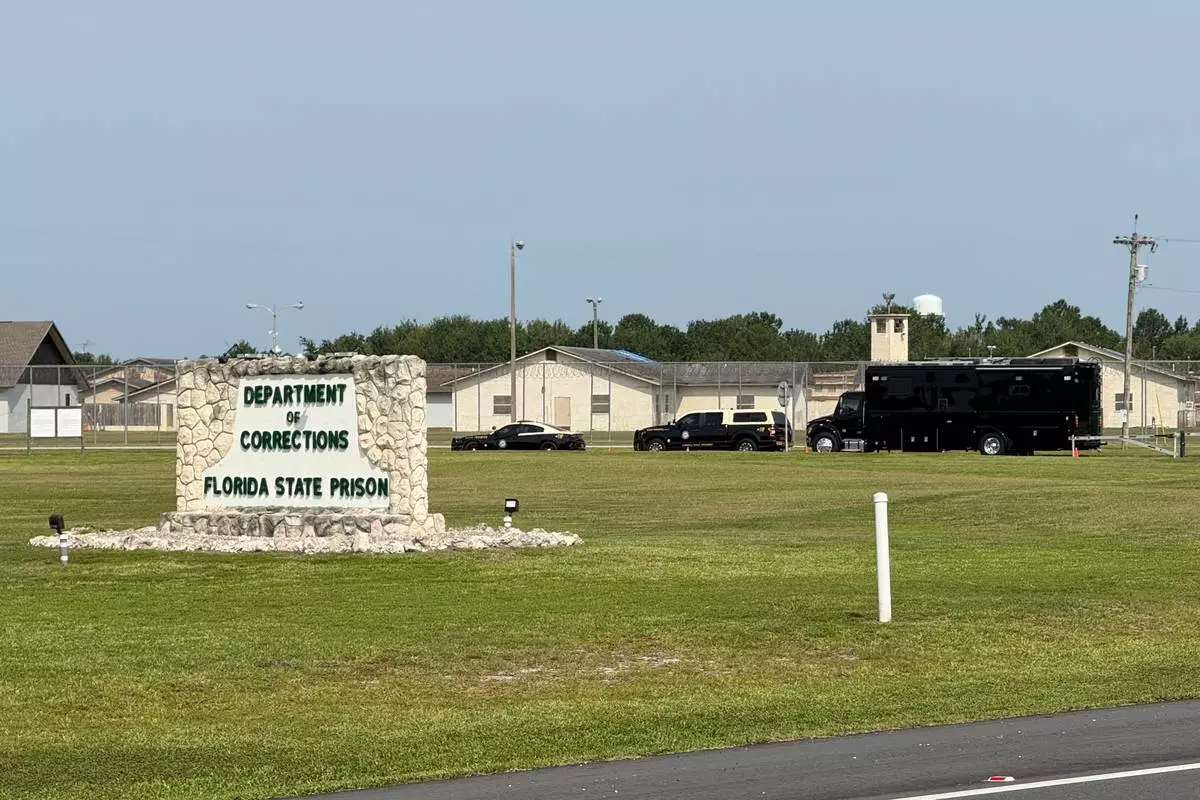
Law enforcement vehicles sit parked outside the Florida state prison in Starke, Fla., on Tuesday, July 28, 2026. (AP Photo/David Fischer)
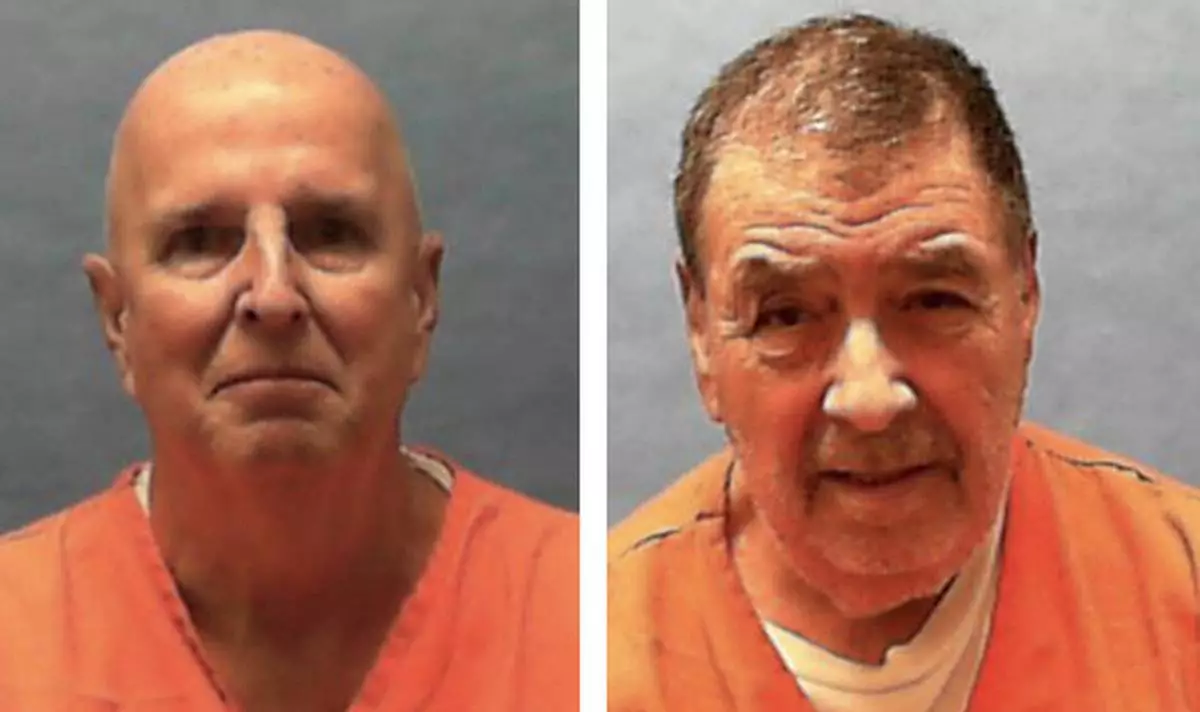
This combo from photos provided by Florida Department of Corrections shows from left, James Aren Duckett and Dominick Anthony Occhicone. (Florida Department of Corrections via AP)
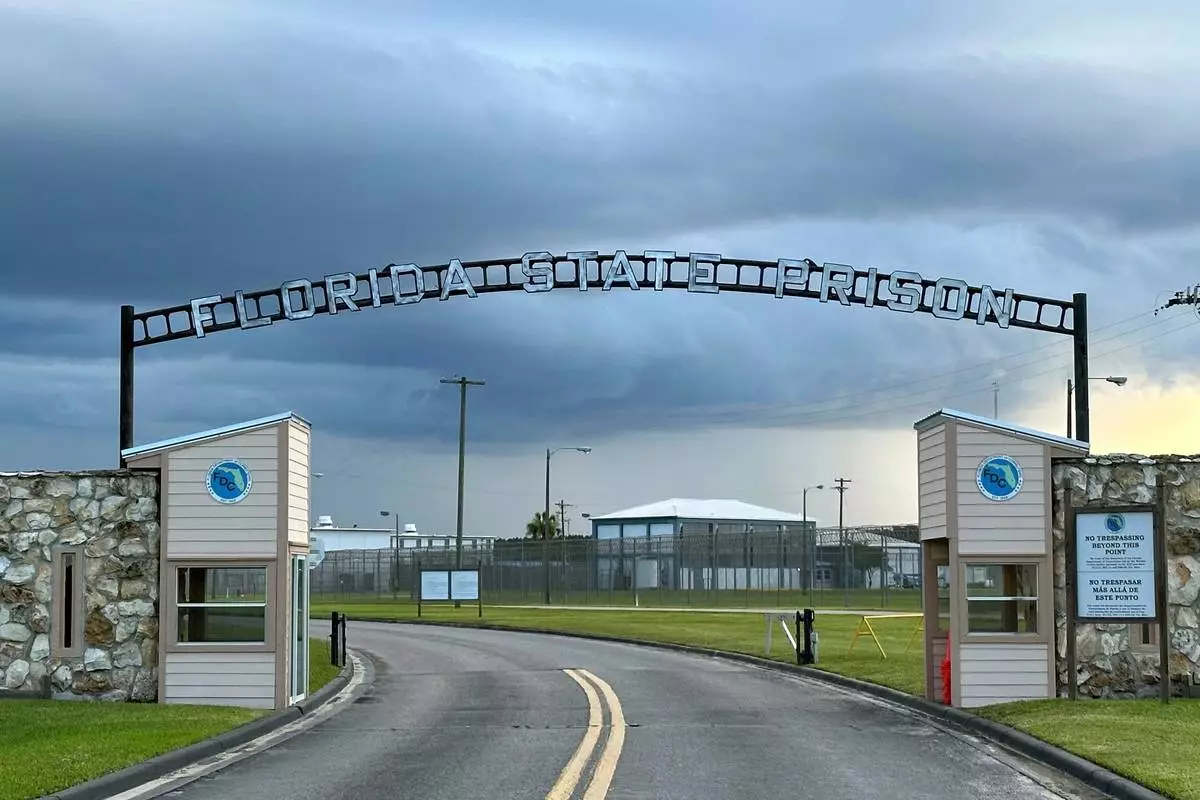
FILE - Clouds hover over the entrance of the Florida State Prison in Starke, Fla., Aug. 3, 2023. (AP Photo/Curt Anderson, file)