Israeli Prime Minister Benjamin Netanyahu's latest visit to the United States is unlikely to mend strained bilateral ties as significant differences over the Middle East remain, according to a scholar of regional affairs.
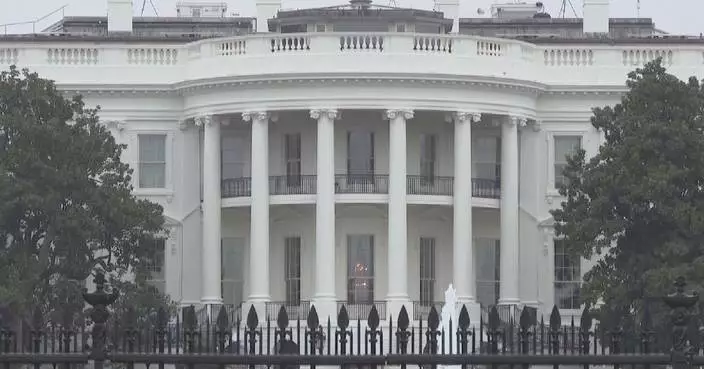
U.S. President Donald Trump met with Netanyahu at the White House on Tuesday in their first in-person talks since the United States and Israel launched joint military operations against Iran on Feb 28.
The closed-door meeting lasted nearly 90 minutes and focused primarily on Iran and its nuclear program, according to statements released by the two governments after the talks.
Wang Jin, a professor of the Institute of Middle East Studies at China's Northwest University, stressed in an interview with China Central Television (CCTV) that Netanyahu has faced sharp pushback from its closest ally on Middle East policies while also dealing with a precarious political standing at home.
"Netanyahu hopes to repair his relationship with the U.S. leader and demonstrate the goodwill between the U.S. and Israel. On the domestic front, he is facing great political challenges. Based on the current political agenda, Israel is likely to hold new elections as early as September, and no later than late October. Current polling shows Netanyahu's support is at a low level, and public criticism is mounting. In this situation, Netanyahu urgently needs to boost his electoral prospects and public support. So this visit gives him a very important chance to display a strong posture and his core security doctrines," Wang said.
Despite statements by the two sides describing the meeting as "positive and productive," Wang said the underlying disputes between the two countries are unlikely to be resolved.
"Although Netanyahu looks to repair Israel's relationship with the U.S., I think their disputes are still hard to mask. On one hand, the main conflict between the two countries is that they have significant differences on Iran. Both sides are taking an aggressive stance and issuing threats against Iran, but their objectives are different. Israel wants to weaken Iran to the greatest extent. Particularly, it's closely following developments of the Iran nuclear issue and firmly opposes Iran's development of nuclear capabilities, whereas the U.S. sees military pressure as a tool to achieve political goals, and its military attacks aim to compel Tehran back to negotiations for an agreement and concessions acceptable to both the U.S. and Iran. Therefore, the two sides have very different positions," Wang said.
Relations are further complicated by Israel's continued military actions in Gaza and Lebanon.
"On the issues of Palestine and Lebanon, the U.S. hopes Israel will exercise restraint for its overall Middle East policy, while Israel cannot make concessions due to domestic political dynamics. Therefore, although the U.S. and Israel will hold a series of talks, the deep rifts are unlikely to be smoothed over or concealed," said the professor.

US visit unlikely to achieve Netanyahu's goal of healing rifts in relationship: expert