SINGAPORE & BOSTON--(BUSINESS WIRE)--Jul 29, 2026--
Horizon Quantum Computing Pte. Ltd., the wholly-owned subsidiary of Horizon Quantum Holdings Ltd. (Nasdaq: HQ) (“Horizon Quantum”), a pioneer of software infrastructure for quantum applications and Q.M Technologies Ltd. ("Quantum Machines" or QM"), a leading provider of advanced hybrid quantum-classical control solutions, today announced a strategic collaboration to support the development of more robust, efficient quantum systems.
This press release features multimedia. View the full release here: https://www.businesswire.com/news/home/20260729136549/en/
Through the collaboration, Horizon Quantum will leverage QM’s industry-leading orchestration platform for quantum control, alongside QM’s engineering expertise, to develop embedded calibration technologies for Horizon Quantum’s first in-house hardware testbed system Ember-1, a modular superconducting quantum computer. This collaboration aims to accelerate the delivery of more reliable, continuously operating quantum systems.
Accurate calibration determines the fidelity of a quantum system; however, a full calibration routine is a time-consuming process. As quantum computers continue to scale, maintaining accurate calibration without interrupting system operation has become an increasingly important challenge.
In collaboration with Quantum Machines, Horizon Quantum intends to develop an embedded calibration framework that enables lightweight calibration routines to be executed as part of normal system operation, reducing reliance on lengthy full-system calibration cycles. By updating the system parameters more frequently, this process will be designed to reduce downtime, improve operational stability, and maintain high-performance operation over extended runtimes.
To support this development, Horizon Quantum will leverage QM’s OPX1000 control system—the system currently used in Ember-1. By improving Ember-1’s uptime, this collaboration is expected to increase the amount of access time available for Triple Alpha users on the system. It also aims to demonstrate the capabilities of QM's control technology in a real-world quantum computing environment.
The collaboration reflects both companies' shared commitment to advancing practical quantum computing by combining best-in-class quantum software and control technologies that enable customers to build scalable, high-performance quantum systems.
"Improved calibration routines are crucial for enabling real-world applications of quantum computing," said Dr. Joe Fitzsimons, CEO of Horizon Quantum. "By bringing together Horizon Quantum’s expertise in quantum software and Quantum Machines’ expertise in quantum control, I believe we can develop lightweight calibration routines that increase uptime and improve the reliability of our testbed system. This strategic collaboration provides us with an opportunity to contribute to the development of more stable, performant quantum systems, and because our hardware testbed integrates Horizon Quantum's software infrastructure with a quantum computer containing a Quantum Machines OPX1000 control system, it provides an ideal environment for this endeavor."
"The future of quantum computing depends on our ability to operate increasingly complex systems reliably and at scale," said Dr. Itamar Sivan, CEO of Quantum Machines. "We are excited to collaborate with Horizon Quantum on technologies that bring calibration closer to real-time operation, helping unlock more productive quantum systems and accelerating the path toward practical quantum computing."
About Horizon Quantum
Horizon Quantum [NASDAQ: HQ] is on a mission to unlock broad quantum advantage by building the software infrastructure that empowers developers to use quantum computing to solve the world’s toughest computational problems.
Founded in 2018 by Dr. Joe Fitzsimons, a leading researcher and former professor with more than two decades of experience in quantum computing, the company is bridging the gap between today’s hardware and tomorrow’s applications through the creation of advanced quantum software development tools. Its integrated development environment, Triple Alpha, enables developers to write sophisticated, hardware-agnostic quantum programs at different levels of abstraction. Learn more at www.horizonquantum.com.
About Quantum Machines
Quantum Machines (QM) is the leading global provider of hybrid quantum-classical control solutions. The company’s flagship Orchestration Platform harmonizes quantum and classical operations to eliminate friction and optimize performance across the entire stack. By providing a unified hardware and software infrastructure that supports any qubit modality, QM empowers researchers and builders to iterate at speed, resolve setbacks, and scale systems previously thought impossible. Learn more at: https://www.quantum-machines.co/
Note to Investors Regarding Forward-Looking Statements
This press release includes forward-looking statements. The expectations, estimates, and projections of the businesses of Horizon Quantum may differ from its actual results and consequently, you should not rely on these forward-looking statements as predictions of future events. Words such as “expect,” “estimate,” “anticipate,” “intend,” “may,” “will,” “could,” “should,” “potential,” “plan,” “enable,” and similar expressions are intended to identify such forward-looking statements. Actual results may differ materially and adversely from those expressed or implied in any forward-looking statements and Horizon Quantum therefore cautions against placing undue reliance on any of these forward-looking statements. Many of these factors are outside of the control of Horizon Quantum and are difficult to predict. Factors that may cause such differences include, but are not limited to: (1) references with respect to the anticipated benefits and costs, if any, of the strategic collaborations with QM, including our ability to integrate their technologies, including calibration technologies, within our quantum computing testbed and Triple Alpha platform; (2) the outcome of any collaborations with QM, including the ability to make quantum systems more efficient; (3) changes in applicable laws and regulations or political and economic developments; (4) the possibility that Horizon Quantum may be adversely affected by other economic, business and/or competitive factors; (5) difficulties operating Horizon Quantum’s quantum processors and the possibility that the quantum processors do not provide the advantages that Horizon Quantum expects; and (6) other risks and uncertainties included in the “Risk Factors” section of the Annual Report on Form 20-F filed by Horizon Quantum on April 14, 2026 with the U.S. Securities and Exchange Commission ("SEC"), as well as other documents filed or to be filed with the SEC by Horizon Quantum. The foregoing list of factors is not exclusive. New risks emerge from time to time, and it is not possible for management to predict all risks, nor can management assess the impact of all factors on the business or the extent to which any factor, or combination of factors, may cause actual results to differ materially from those contained in any forward-looking statements. Except as required by law, Horizon Quantum undertakes no obligation to update any forward-looking statements. You should not place undue reliance upon any forward-looking statements, which speak only as of the date made. Horizon Quantum does not undertake or accept any obligation or undertaking to release publicly any updates or revisions to any forward-looking statements to reflect any change in their expectations or any change in events, conditions, or circumstances on which any such statement is based, except as required by law.
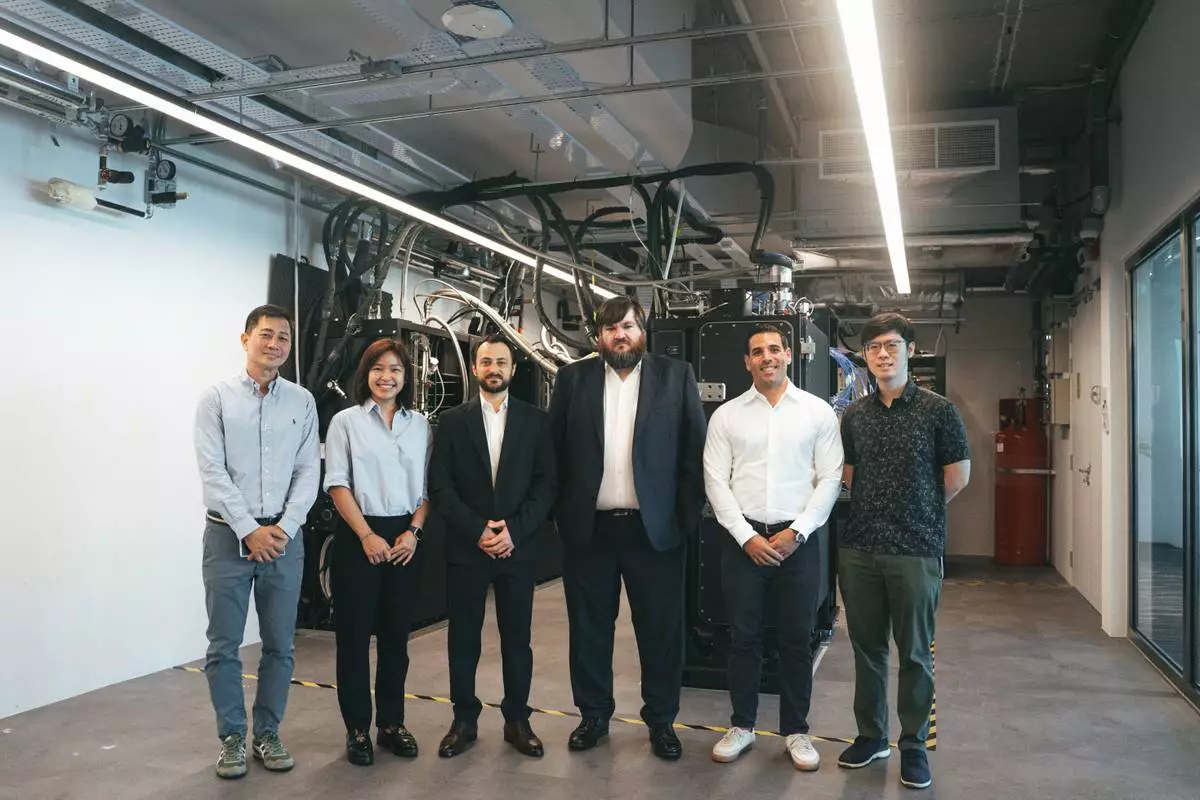
Horizon Quantum and Quantum Machines teams: Philip Tan, VP of Commercial Operations at Horizon Quantum; Vikki Cheah, Scientific BDM at QM; Dr. Itamar Sivan, CEO of QM; Dr. Joe Fitzsimons, CEO of Horizon Quantum; Selim Gmach, APAC Sales Director at QM; and Kyle Chu, Staff Scientist at Horizon Quantum

Horizon Quantum's CEO Dr. Joe Fitzsimons and Quantum Machines' CEO Dr. Itamar Sivan at Horizon Quantum's quantum hardware testbed