Skip to Content Facebook Feature Image

Houthis seize 2 strategic Red Sea islands, and other Mideast developments

News

Houthis seize 2 strategic Red Sea islands, and other Mideast developments
News

News

Houthis seize 2 strategic Red Sea islands, and other Mideast developments

2026-09-14 22:51 Last Updated At:23:00

Yemen’s Houthi rebels have seized the strategic islands of Greater and Lesser Hanish in the southern Red Sea, bolstering the Iran-backed rebels' ability to control a key maritime shipping route.

Meanwhile, repairs to a crucial Saudi Arabia oil pipeline that was struck in an attack last week could last three to five weeks, putting it mostly out of service, two regional officials said.

More Images
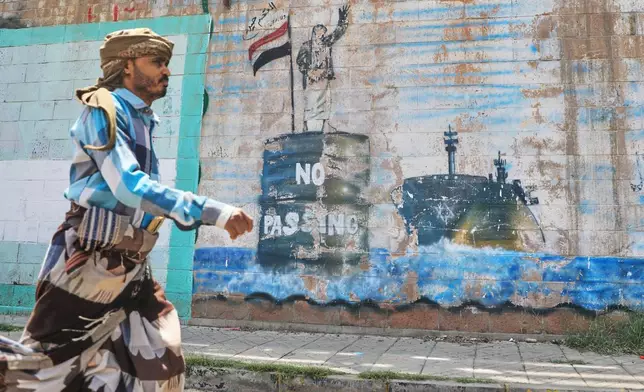
A man walks in front of a mural symbolising restrictions on shipping through the Bab el-Mandeb Strait, one of the world's key shipping lanes, in Sanaa, Yemen, Monday, Sept. 14, 2026. (AP Photo/Osamah Abdulrahman)
A man walks in front of a mural symbolising restrictions on shipping through the Bab el-Mandeb Strait, one of the world's key shipping lanes, in Sanaa, Yemen, Monday, Sept. 14, 2026. (AP Photo/Osamah Abdulrahman)

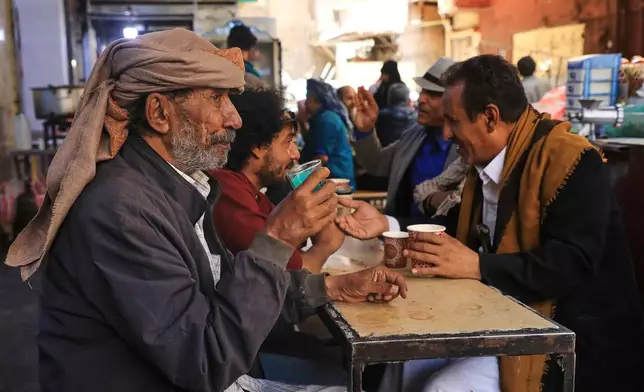
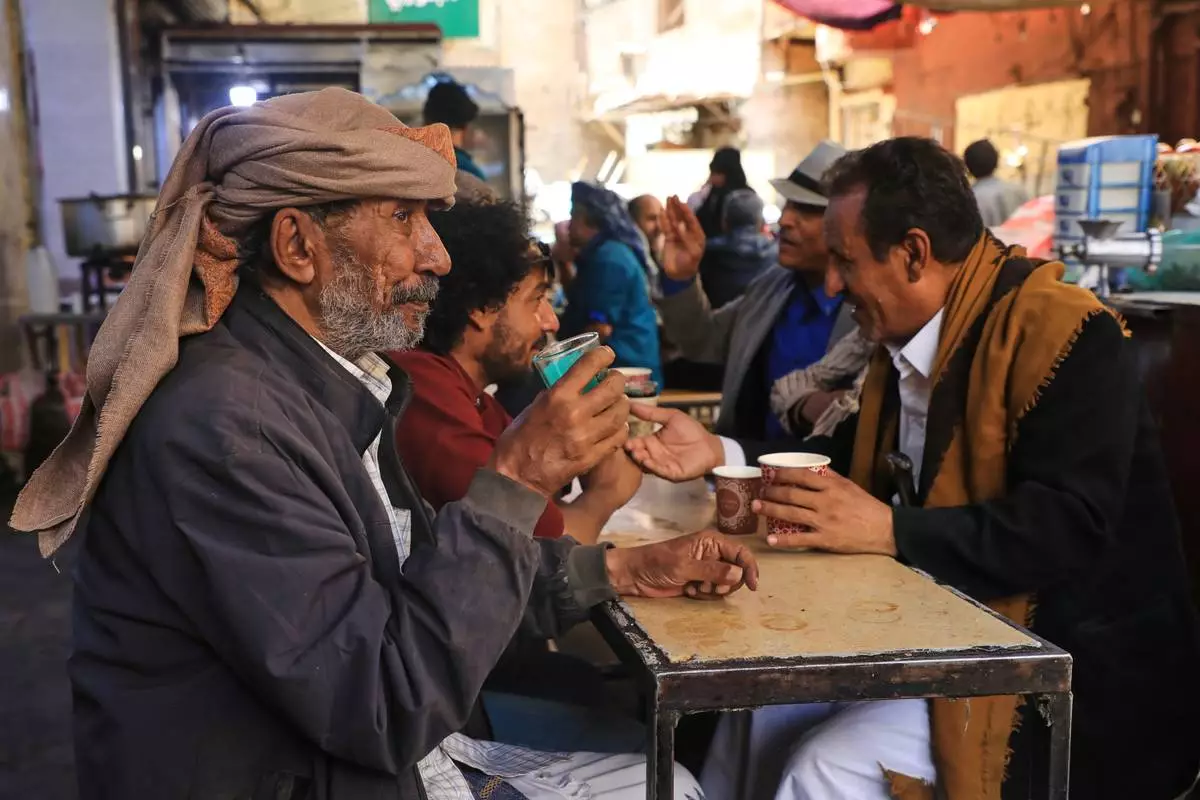
People chat at a coffee shop in Sanaa, Yemen, Monday, Sept. 14, 2026. (AP Photo/Osamah Abdulrahman)
People chat at a coffee shop in Sanaa, Yemen, Monday, Sept. 14, 2026. (AP Photo/Osamah Abdulrahman)

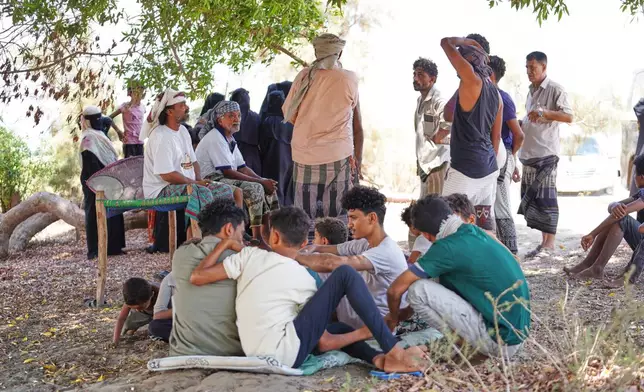
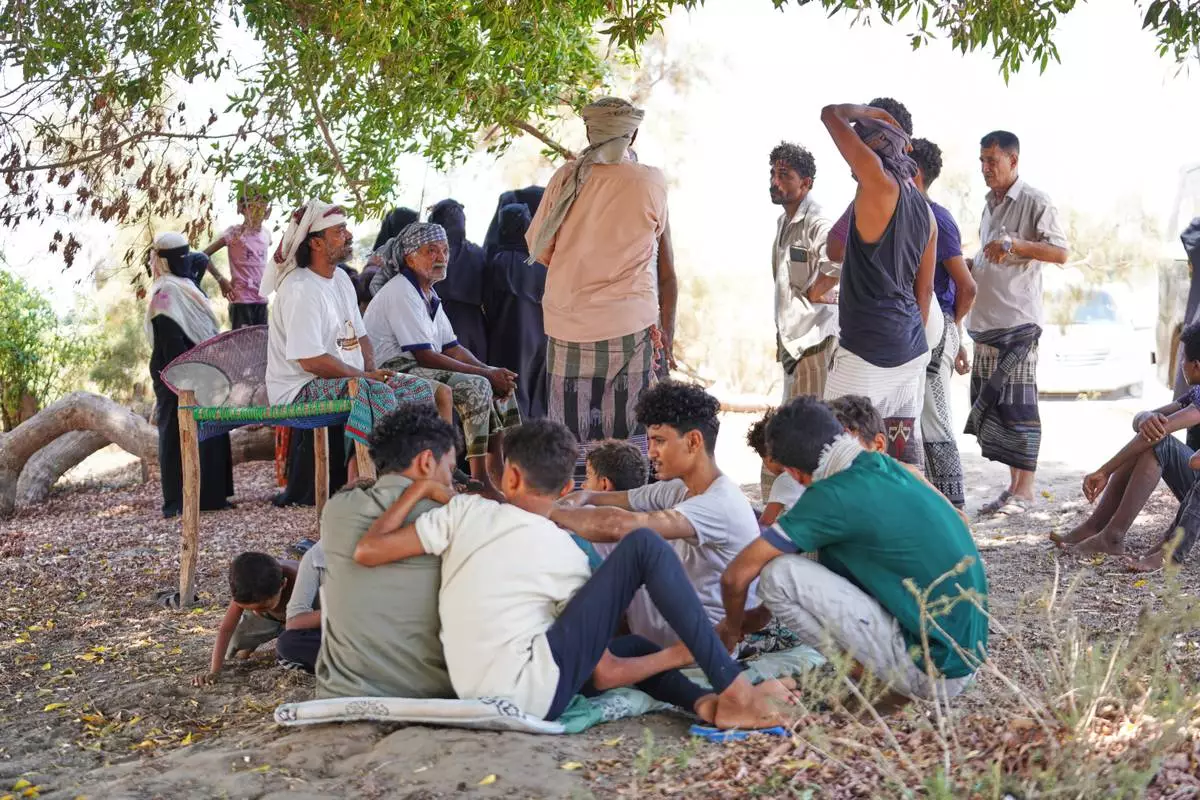
Displaced Yemenis, from Al Khawkhah city, 400 kilometers (249 miles) south west of Sanaa, wait to enter a temporary shelter in Aden, Yemen, Sunday, Sept. 13, 2026. (AP Photo/Abdulnasser Alseddik)
Displaced Yemenis, from Al Khawkhah city, 400 kilometers (249 miles) south west of Sanaa, wait to enter a temporary shelter in Aden, Yemen, Sunday, Sept. 13, 2026. (AP Photo/Abdulnasser Alseddik)

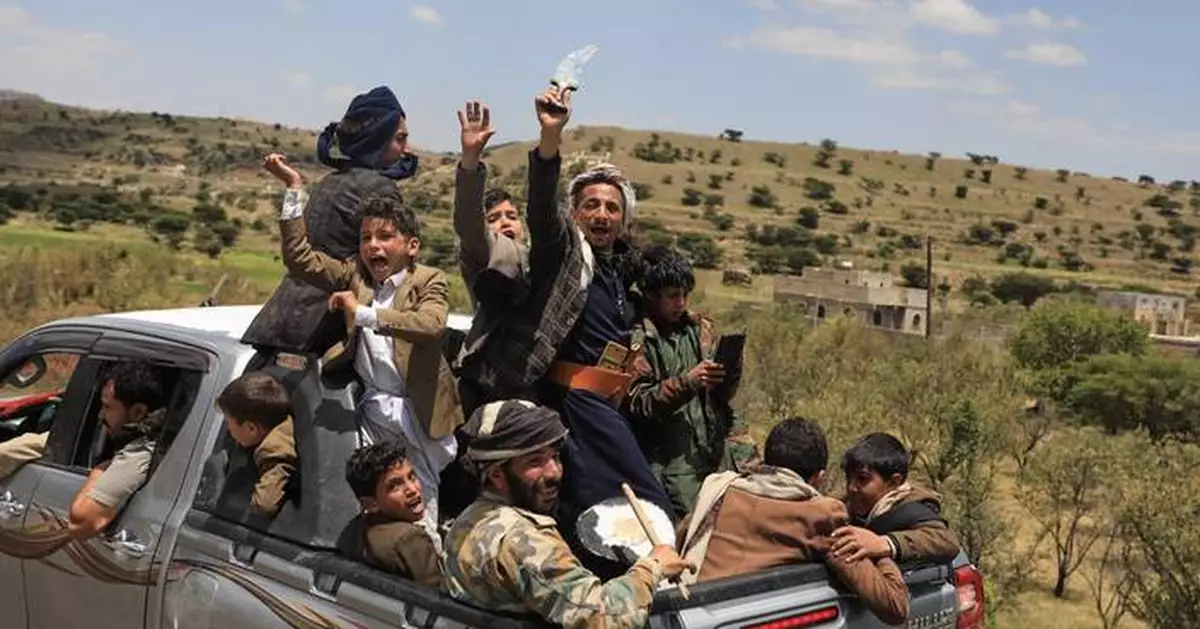
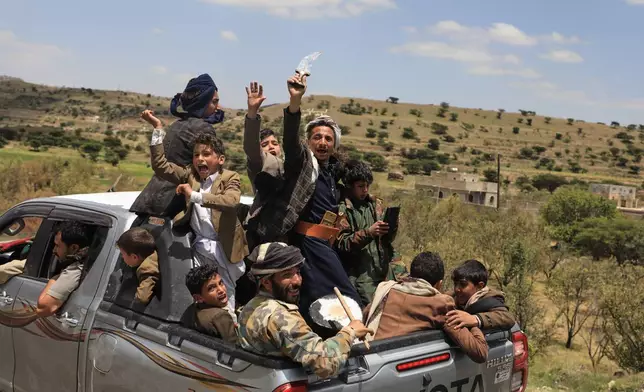
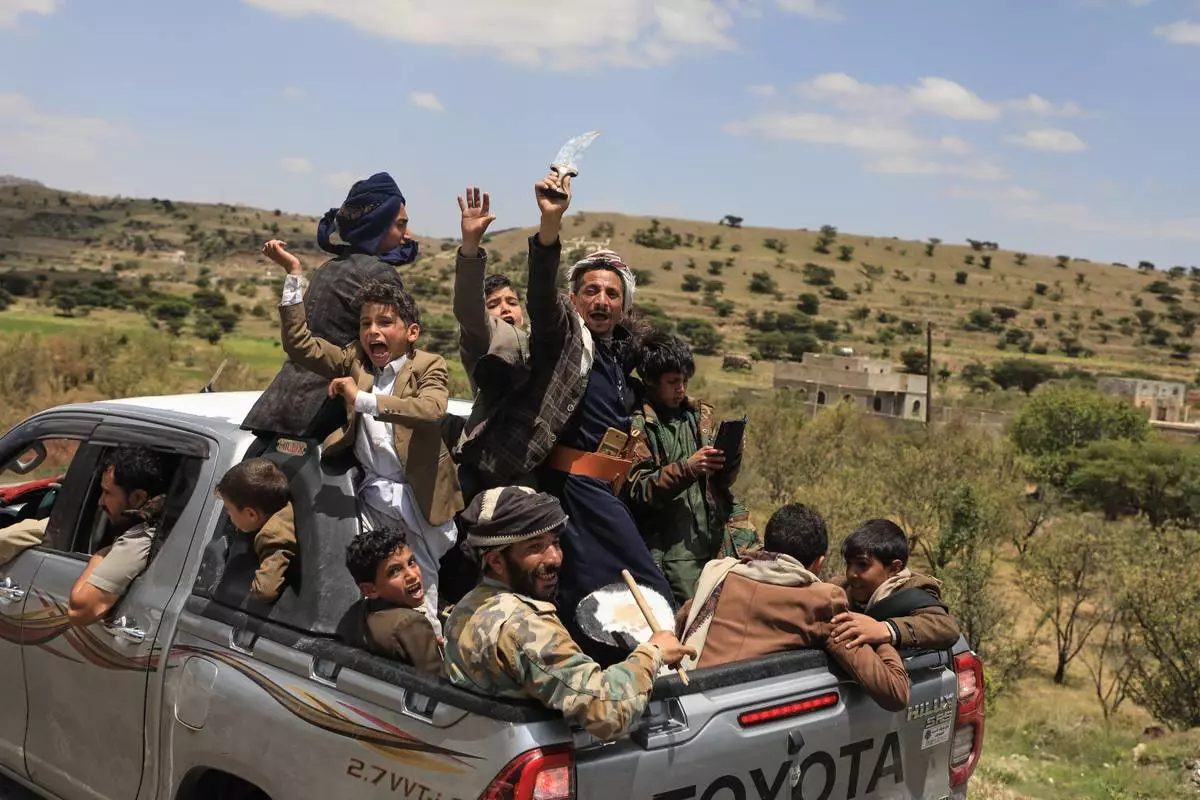
Yemeni civilians celebrate while riding in the back of a pickup truck in the Bani Matar district, Yemen, Saturday, Sept. 12, 2026, as they follow a convoy carrying Houthi prisoners freed in Mokha on its way to Sanaa following the Houthi takeover of the southern Red Sea port city. (AP Photo/STR)

Yemeni civilians celebrate while riding in the back of a pickup truck in the Bani Matar district, Yemen, Saturday, Sept. 12, 2026, as they follow a convoy carrying Houthi prisoners freed in Mokha on its way to Sanaa following the Houthi takeover of the southern Red Sea port city. (AP Photo/STR)

Here’s a look at the latest news in the Middle East. Full coverage can be found here.

Houthi officials said Monday that rebels had taken over the two islands just as Saudi-backed government forces tried to claw back territory from the rebels' swift advances around the Bab el-Mandeb Strait, a crucial shipping alternative to the Strait of Hormuz.

Iran effectively closed the Strait of Hormuz — through which a fifth of the world’s traded oil and gas transits in peacetime — in the opening days of the war. The Saudis have since used Bab el-Mandeb Strait, which leads out of the Red Sea, for crude oil exports.

The Houthis’ latest takeover, following the seizure of the Red Sea port of Mokha and a strategic island last week, puts more pressure on Saudi shipments and, in turn, global oil supplies and prices.

This could give Iran additional leverage in its war with the United States.

Saudi Arabia relies on the East-West Pipeline to move its crude production from Gulf ports to ports on its western, Red Sea coast. From there it can be put on tankers for export.

Two officials who have been briefed on the matter said repairing damage from an attack last Thursday could take weeks, including at a major pumping facility.

The officials spoke on condition of anonymity because they weren’t authorized to brief the media. One said the line may work partially while teams carry out the repairs.

— By Samy Magdy in Cairo

China, a major Middle East oil importer, on Monday called Houthi attacks on Saudi energy infrastructure “unacceptable” and said that it was “deeply concerned” about further escalations by the rebels against Saudi Arabia.

Foreign Ministry spokesperson Guo Jiakun said that “attacks on civilian infrastructure that is important to people’s livelihoods are unacceptable.”

He called on all sides to exercise restraint and resolve disputes through dialogue.

Iranian Foreign Ministry spokesman Esmail Baghaei said Monday that Saudi Arabia had “demanded" that a meeting bringing together Iran with other regional countries to discuss the Strait of Hormuz be scrapped “for the time being.”

Baghaei called the meeting, which was to be hosted by Oman, a “proper opportunity” to restore security in the region.

The spokesman said that an agreement between Iran and Oman on the Strait of Hormuz has been finalized and it will be announced later.

Saudi Arabia had submitted amendments to the agreement, citing concerns that it could have lasting implications for the Strait of Hormuz, negatively impacting other Gulf Cooperation Council countries, according to a Gulf official familiar with the matter who wasn't authorized to comment publicly and spoke on condition of anonymity.

Iran denounced on Monday the refusal by Austria to issue visas to the Iranian nuclear chief and other delegation members for the International Atomic Energy Agency’s general conference in Vienna, calling the decision “completely unjustified.”

Baghaei said that Tehran summoned the Austrian chargé d’affaires, saying Austria was obligated as the host country to issue the visas.

Baghaei accused Western countries of denying Iran an opportunity to defend itself and blamed the U.S. for pressuring Austria to deny the visas.

The refusal is part of U.N. sanctions on Iran, reinstated last year, that include a travel ban on Iranian officials.

U.S. Energy Secretary Chris Wright on Monday criticized Iran’s failure to cooperate with the U.N. nuclear watchdog.

Wright was particularly critical of Tehran’s denial to grant U.N. inspectors access to Iran’s nuclear sites affected by the war. He said that Iran had “ample time to address its egregious negligence" toward its obligations "but that time is up.”

Speaking at the IAEA general conference in Vienna, Wright said that giving Iran more time "only delays overdue accountability.”

Wright repeated the Trump administration’s mantra that Iran “must never develop or obtain a nuclear weapon.”

Wright said that additional safeguards contained in a U.S.-Saudi nuclear accord include “absolutely rigorous” terms against proliferation. He told the IAEA general conference that the U.N. nuclear agency "was part of it all along.”

The U.S.-Saudi accord, signed in July, could potentially provide the kingdom the capability to enrich uranium for its civilian nuclear program.

Wright was responding to a question from media about why the U.S. requested Iran to sign an Additional Protocol and not Saudi Arabia. The Additional Protocol is an agreement between the IAEA and a country that grants agency inspectors increased access to nuclear sites.

Gaza's Health Ministry said Monday that strikes hit Gaza City, Zawaida in central Gaza and Khan Younis in southern Gaza. One person was killed and several were wounded.

The Israeli military confirmed four strikes targeting militants. It said that more information would be provided later.

While the heaviest fighting between Israel and Hamas has subsided since a ceasefire took effect in October, Israeli fire has killed more than 1,360 Palestinians in Gaza, according to health officials in the territory.

The B’Tselem human rights group said Monday Israel is carrying out a systematic and accelerated project aimed at “dismantling the foundations of Palestinian existence” in the occupied West Bank.

The group said in a new report that Israeli actions against Palestinians in the West Bank by settlers and the military are designed to undermine Palestinian collective life “while entrenching a permanent system of Jewish supremacy” across the territory.

Settler violence has surged under the ultranationalist government of Israeli Prime Minister Benjamin Netanyahu. Rights groups say the military frequently turns a blind eye to the violence, and that when it intervenes it often focuses on protecting the settlers.

The B’Tselem report also says that Israeli actions rely heavily on open cooperation between state authorities and armed settlers who attack Palestinian communities using weapons and vehicles supplied by the state, while the military either fails to prevent the violence or, in some cases, participates in it.

Crown Prince Mohammed bin Salman of Saudi Arabia met Monday with Adm. Brad Cooper, the top U.S. military commander in the Middle East, in the coastal city of Jeddah, according to the Saudi state-run news agency.

Bin Salman, who is the kingdom’s de facto ruler, discussed with Cooper “bilateral relations and the latest regional developments,” SPA reported, without providing further details.

The meeting came as Saudi Arabia has been squeezed with attacks from the Iran-backed groups in Yemen and Iraq. The Iranian proxies have recently struck oil facilities in Saudi Arabia.

This report will be updated throughout the day as new developments emerge.
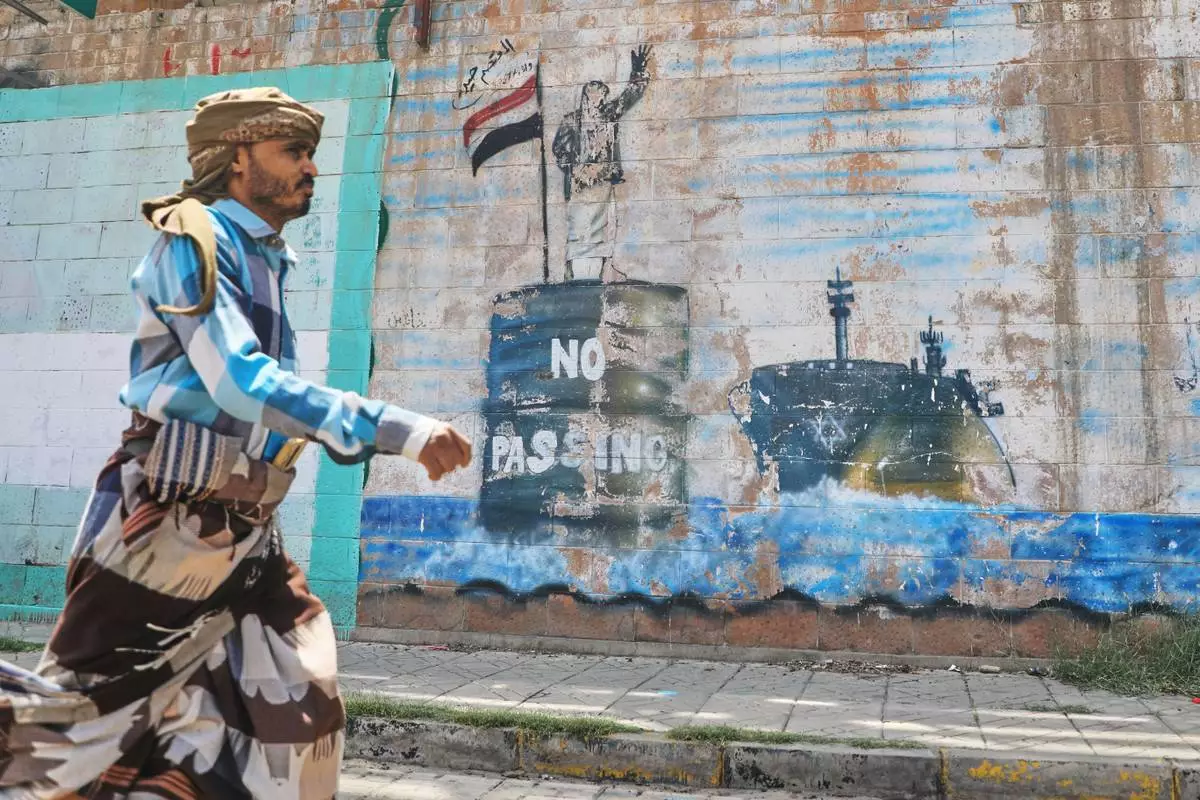
A man walks in front of a mural symbolising restrictions on shipping through the Bab el-Mandeb Strait, one of the world's key shipping lanes, in Sanaa, Yemen, Monday, Sept. 14, 2026. (AP Photo/Osamah Abdulrahman)
A man walks in front of a mural symbolising restrictions on shipping through the Bab el-Mandeb Strait, one of the world's key shipping lanes, in Sanaa, Yemen, Monday, Sept. 14, 2026. (AP Photo/Osamah Abdulrahman)

People chat at a coffee shop in Sanaa, Yemen, Monday, Sept. 14, 2026. (AP Photo/Osamah Abdulrahman)
People chat at a coffee shop in Sanaa, Yemen, Monday, Sept. 14, 2026. (AP Photo/Osamah Abdulrahman)

Displaced Yemenis, from Al Khawkhah city, 400 kilometers (249 miles) south west of Sanaa, wait to enter a temporary shelter in Aden, Yemen, Sunday, Sept. 13, 2026. (AP Photo/Abdulnasser Alseddik)
Displaced Yemenis, from Al Khawkhah city, 400 kilometers (249 miles) south west of Sanaa, wait to enter a temporary shelter in Aden, Yemen, Sunday, Sept. 13, 2026. (AP Photo/Abdulnasser Alseddik)

Yemeni civilians celebrate while riding in the back of a pickup truck in the Bani Matar district, Yemen, Saturday, Sept. 12, 2026, as they follow a convoy carrying Houthi prisoners freed in Mokha on its way to Sanaa following the Houthi takeover of the southern Red Sea port city. (AP Photo/STR)

Yemeni civilians celebrate while riding in the back of a pickup truck in the Bani Matar district, Yemen, Saturday, Sept. 12, 2026, as they follow a convoy carrying Houthi prisoners freed in Mokha on its way to Sanaa following the Houthi takeover of the southern Red Sea port city. (AP Photo/STR)

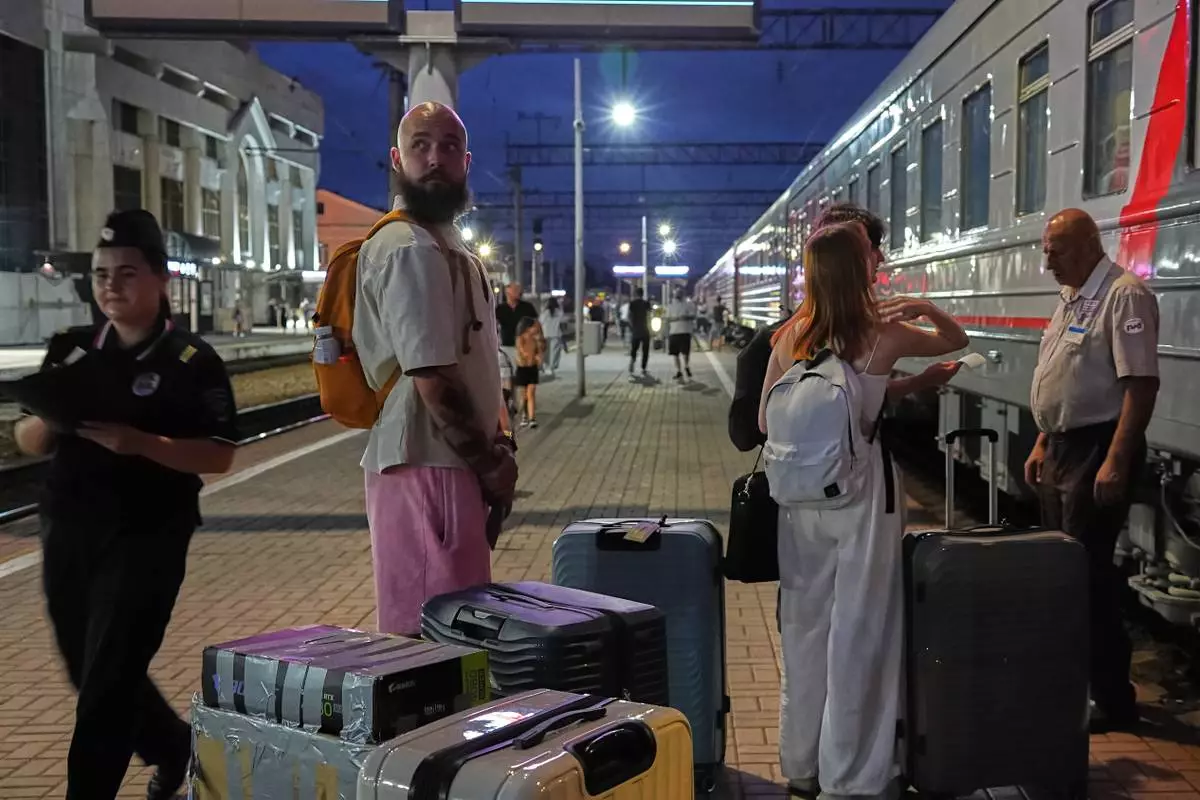
This summer, a 28-year-old digital content marketer packed up his suitcases and duct-taped boxes and fled Russia, leaving behind his family and friends and not knowing when he'll be able to return.

"It is very sad to leave Russia,” he said in the southern city of Krasnodar before heading for the border with Georgia.

He blamed “the political situation” in Russia and complications over authorities restricting internet access as his reasons for leaving. Otherwise, “I never would have left for more than several months,” he told The Associated Press, speaking on condition of anonymity because of security concerns.

He is one of a number of people who either left or are contemplating a move amid recent Ukrainian drone attacks inside Russia and persistent rumors of a coming mobilization of troops for the 4 1/2-year-old war.

The attacks this summer caused an unprecedented fuel crisis and dealt crippling blows to the booming e-commerce sector. Since last year, the government has cited the attacks to justify harsh restrictions on connecting to the internet.

The exodus is nowhere near as large as in 2022, when hundreds of thousands fled in the first year of the full-scale invasion. Still, a group that helps citizens who flee abroad said it received nearly eight times more queries last month than it had in May.

“It doesn’t mean that there is a huge number of people right now at the borders,” said Anastasia Burakova, the founder of Kovcheg, which means “ark” in Russian. “But we’re seeing that people are preparing to emigrate, we’re seeing that people are looking into what options are there.”

The current numbers are hard to gauge. Unlike 2022, when droves of men fled a partial call-up for the military, there are no lines at border crossings or shortages of plane tickets to visa-free destinations like Armenia, Georgia, Kazakhstan and Turkey at the moment.

At the same time, AP found numerous social media videos from all over Russia of people saying they had decided to leave, citing war-related reasons. Others were worried about the declining economy, an uncertain future and shrinking freedoms.

Ukrainian President Volodymyr Zelenskyy and other officials in Kyiv have said Russia is planning another mobilization after the State Duma election that concludes Sunday — claims the Kremlin has repeatedly and vehemently rejected.

Yan Slovizki, a human rights activist and emergency assistance coordinator for Kovcheg, described “a panicked wave” of emigration since mid-July linked to mobilization fears, the fuel crisis and internet restrictions.

A Moscow-based diplomat told AP about “a palpable rise in public anxiety this summer,” and pointed to “anecdotal evidence of higher than usual numbers of Russians appearing in neighboring Georgia and Armenia, possibly fearing another mobilization after the Duma elections.” The diplomat was not authorized to comment publicly and thus spoke on condition of anonymity.

Alen Simonyan, secretary of Armenia’s Security Council, told independent Russian TV channel Dozhd last month that his country “will not interfere in any way, and if necessary, will help” Russians who are moving there to avoid being drafted.

That drew a sharp rebuke from the Russian Foreign Ministry, which called Simonyan’s remark “provocative.”

Russian lawmaker Viktor Sobolev told the RTVI channel that the country doesn’t need people who “don’t love their Motherland so much that they leave because of rumors,” adding: "Let them leave.”

The digital content marketer, who describes himself as a pacifist, says this was his second attempt at emigrating.

He left Russia in 2022 to avoid the partial call-up of 300,000 new troops, an announcement by President Vladimir Putin that shocked the nation.

He said he isn’t technically eligible for military service in peacetime due to a hip ailment, but felt it was safer to leave because he didn’t know what to expect from authorities.

Some officials in 2022 said such men could legally be drafted in a mobilization, as did some rights groups helping conscripts. Others said martial law had to be declared for it to be legal. Russia has not formally declared war on Ukraine, and the Kremlin only imposed martial law in the four Ukrainian regions it illegally annexed in 2022 but doesn't fully control.

The digital content marketer returned to his hometown of Ulyanovsk in 2025 and worked remotely for clients in other countries. But Russia’s unrelenting clampdown on thousands of internet platforms, sites and services made it harder for him to do his job, he said, having to switch virtual private network servers to find one allowing him to get around the restrictions.

Another factor was the rumored new mobilization. “You never know what will happen tomorrow,” he said from an apartment in the Georgian capital of Tbilisi, where he settled.

A 23-year-old Muscovite who left Russia last month also cited the persistent mobilization rumors and fears that her husband might end up in the military.

The woman, who spoke to AP on condition of anonymity because of security concerns, said her father narrowly escaped being drafted in 2022 by fleeing the country. This year, her husband learned he would no longer have a deferment from military service after getting his master’s degree.

“A person can figure anything out, but we were really afraid that (my husband) could end up in the army, because at this point it is a one-way ticket,” she said.

Ivan Nazarov, a new university graduate who moved to the Armenian capital of Yerevan, echoed her sentiment.

He said he was aware of reports of conscripts in mandatory service who are not supposed to be deployed to Ukraine being forced to sign contracts that send them to the battlefield.

“For me, it is a question of survival,” Nazarov added, speaking at a gathering organized by Kovcheg in Yerevan for new immigrants.

Queer activist Daniil Neonov left Russia this summer after a series of detentions and a 10-day jail term on charges of displaying extremist symbols — a photo featuring a T-shirt with a rainbow-colored print on it he posted on social media.

Russian authorities have outlawed what they call “the international LGBT movement” as extremist, leading sometimes to misdemeanor charges for carrying items with a rainbow on them.

Neonov told AP in Yerevan that he feared a criminal case would be brought against him.

He said he knows other people who left Russia after being detained for gathering outside the Supreme Court last month to support the opposition Yabloko party when the court struck it from the parliamentary election ballot. Yabloko was the only party on the ballot that openly opposed the war.

“The police came to them and filed reports. I know several people who, after they were held in detention, also left. I mean, I’m not the only one,” Neonov said.

A 35-year-old Russian told AP he was preparing for leaving the country because he doesn't want to live in a land without free speech, where the economy is on a downward spiral and where schoolchildren have to listen to propaganda touting war, normalizing violence and promoting isolation from the rest of the world.

The man, who also spoke on condition of anonymity for safety reasons, said he had been thinking about leaving Russia for over a decade but still had hope that “everything would work out.”

Now, he said, Russians “live in a huge digital jail. You can’t say anything, you can’t do anything. You have absolutely no rights."

Sophiko Megrelidze in Tbilisi, Georgia, and Ani Khachatryan in Yerevan, Armenia, contributed.

——

This version changes the transliteration of the last name for Yan Slovitsky, the emergency assistance coordinator for Kovcheg.

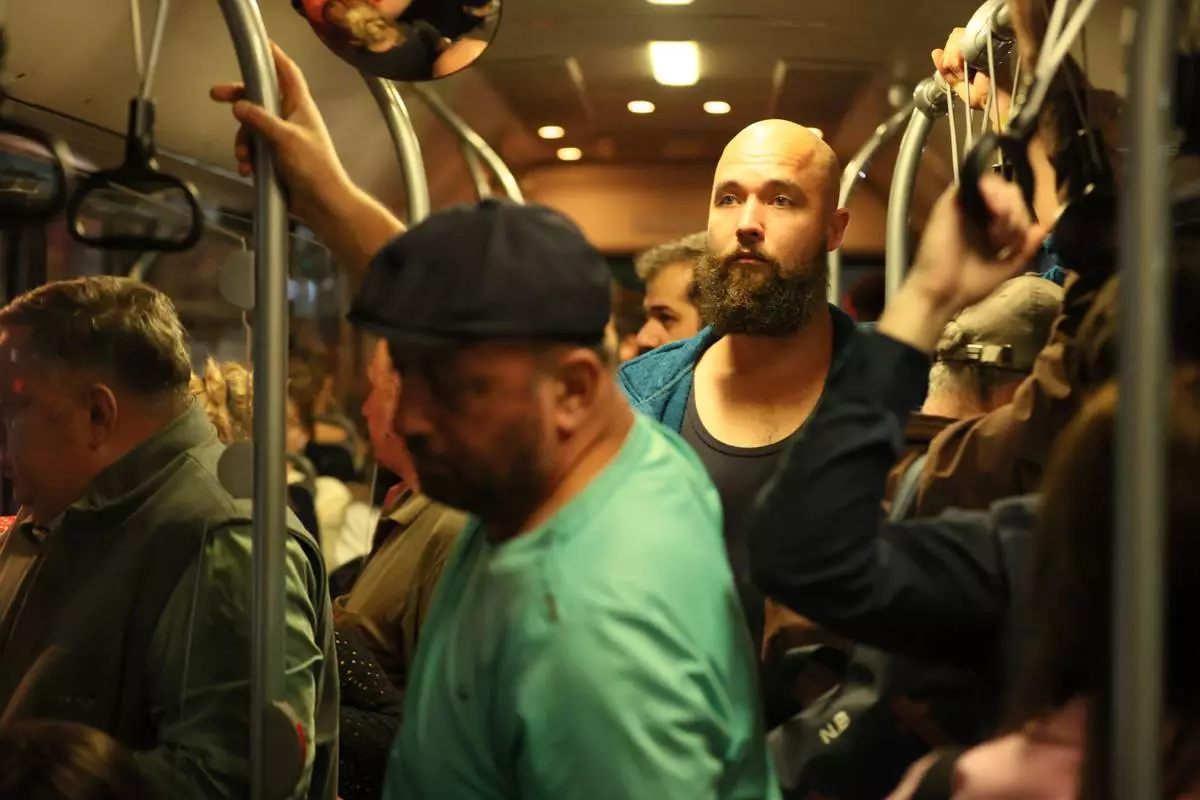
A 28-year-old digital content marketer who recently moved out of Russia rides a subway car in Tbilisi, Georgia, Tuesday, Sept. 8, 2026. He asked not to be identified because of security concerns. (AP Photo/Zurab Tsertsvadze)

A 28-year-old digital content marketer who recently moved out of Russia rides a subway car in Tbilisi, Georgia, Tuesday, Sept. 8, 2026. He asked not to be identified because of security concerns. (AP Photo/Zurab Tsertsvadze)

A 28-year-old digital content marketer who recently moved out of Russia is seen in Tbilisi, Georgia, Saturday, Sept. 5, 2026. He asked not to be identified because of security concerns. (AP Photo/Zurab Tsertsvadze)

A 28-year-old digital content marketer who recently moved out of Russia is seen in Tbilisi, Georgia, Saturday, Sept. 5, 2026. He asked not to be identified because of security concerns. (AP Photo/Zurab Tsertsvadze)

A 28-year-old digital content marketer who recently moved out of Russia takes photos in the Old Town in Tbilisi, Georgia, Saturday, Sept. 5, 2026. He asked not to be identified because of security concerns. (AP Photo/Zurab Tsertsvadze)

A 28-year-old digital content marketer who recently moved out of Russia takes photos in the Old Town in Tbilisi, Georgia, Saturday, Sept. 5, 2026. He asked not to be identified because of security concerns. (AP Photo/Zurab Tsertsvadze)

A 28-year-old digital content marketer who recently moved out of Russia enters the subway in Tbilisi, Georgia, on Tuesday, Sept. 8, 2026. He asked not to be identified because of security concerns. (AP Photo/Zurab Tsertsvadze)

A 28-year-old digital content marketer who recently moved out of Russia enters the subway in Tbilisi, Georgia, on Tuesday, Sept. 8, 2026. He asked not to be identified because of security concerns. (AP Photo/Zurab Tsertsvadze)

A 28-year-old digital content marketer who decided to leave Russia stands near his packed belongings at the railway station in Krasnodar, Russia, on Saturday, Aug. 29, 2026. He asked not to be identified because of security concerns. (AP Photo)

A 28-year-old digital content marketer who decided to leave Russia stands near his packed belongings at the railway station in Krasnodar, Russia, on Saturday, Aug. 29, 2026. He asked not to be identified because of security concerns. (AP Photo)

Recommended Articles