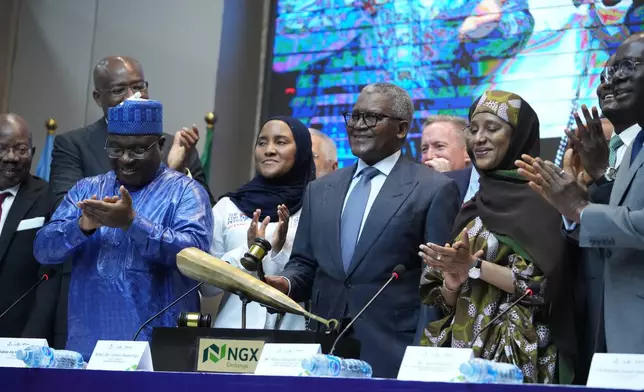
LAGOS, Nigeria (AP) — Nigerian industrialist Aliko Dangote opened his refinery to public ownership Monday with plans to raise $1.6 billion from retail investors across the continent in Africa’s biggest initial public offering, or IPO.
Dangote, Africa's richest man, dubbed the IPO one "for the people” and said he wants everyone to be able to own a share. Retail investors can buy a 10-share bundle in the sprawling Lagos-based refinery for 5,250 naira ($4), the minimum investment. Dangote retains 87% ownership of the refinery, Africa's largest.
Click to Gallery
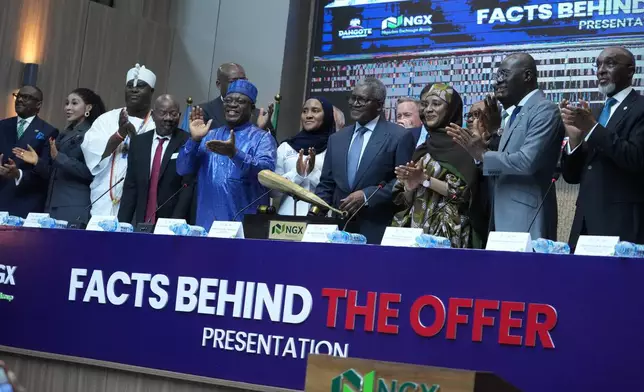
Nigerian industrialist Aliko Dangote, forth from Left, participates in the Opening Gong Ceremony of the Dangote Refinery Initial Public Offer at the Nigeria Stock Exchange in Lagos Nigeria, Monday, Sept. 14, 2026. (AP Photo/Sunday Alamba)
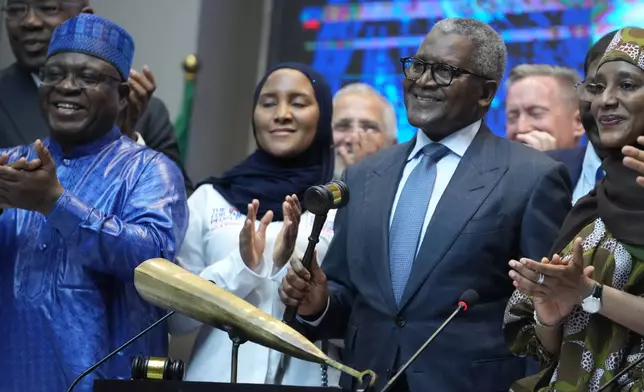
Nigerian industrialist Aliko Dangote, centre, participates in the Opening Gong Ceremony of the Dangote Refinery Initial Public Offer at the Nigeria Stock Exchange in Lagos Nigeria, Monday, Sept. 14, 2026. (AP Photo/Sunday Alamba)
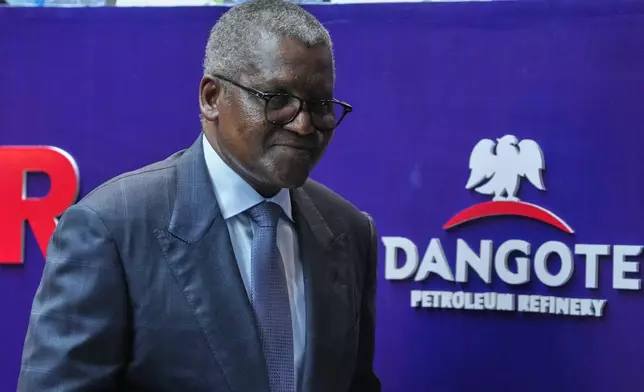
Nigerian industrialist Aliko Dangote, attends the Opening Gong Ceremony of the Dangote Refinery Initial Public Offer at the Nigeria Stock Exchange in Lagos, Nigeria, Monday, Sept. 14, 2026. (AP Photo/Sunday Alamba)
Nigerian industrialist Aliko Dangote, centre, participates in the Opening Gong Ceremony of the Dangote Refinery Initial Public Offer at the Nigeria Stock Exchange in Lagos Nigeria, Monday, Sept. 14, 2026. (AP Photo/Sunday Alamba)
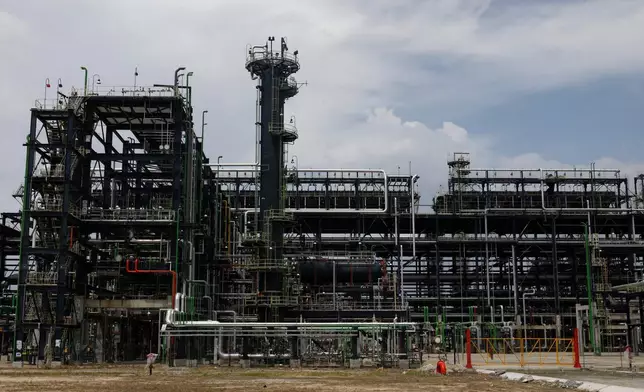
FILE - The Dangote oil refinery sits in Lagos, Nigeria, May 22, 2023. (AP Photo, File)
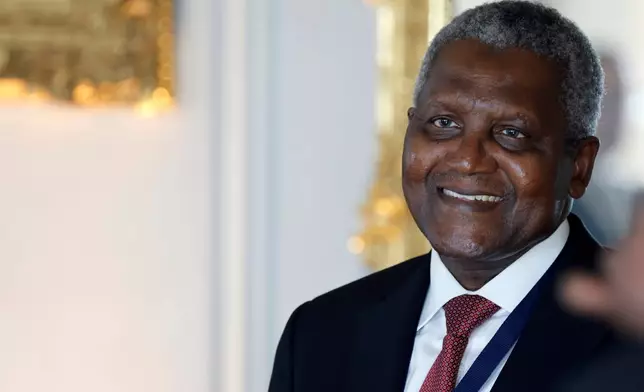
FILE - Nigerian multinational industrial conglomerate Dangote Group's CEO Aliko Dangote during the seventh "Choose France Summit", aiming to attract foreign investors to the country, at the Chateau de Versailles, outside Paris, Monday, May 13, 2024. (Ludovic Marin, Pool via AP, File)
The refinery's scale and potential returns, especially at a time when global oil prices have risen following the U.S.-Iran war, have generated excitement among retail investors.
“We are all going to fully share all our prosperity with the people and that is why we call it the people’s IPO,” Dangote said at Monday's launch at the Nigerian Exchange Group in Lagos, flanked by the refinery's officials and associates.
Although the refinery stock won’t be publicly listed in Nigeria until November, its IPO launch resulted in heavy traffic on some of the country’s digital investment platforms, with at least two knocked offline briefly.
“I will be a fool not to partake in it and see how it goes. I am placing a lot of emphasis on his name and on the refinery being the biggest in Africa,” Titi Adetoye, an Abuja-based operations manager who hopes to buy up to 1,000 shares, told The Associated Press.
Nigeria has relied for many decades on foreign refining of its oil due to decrepit state-run refineries, many of which operate below capacity or have remained stagnant for years due to poor maintenance.
But when the $19 billion refinery began production in 2024, it transformed the energy-rich country of more than 210 million people from an importer of refined oil into an exporter.
“It is going to be a game-changing IPO for Nigeria’s markets,” said Mohammed Saidu, head of research and investment analysis at Lagos-based TrustBanc. Saidu said he predicted there would be millions of new investors from the IPO.
The IPO has raised questions about Dangote retaining significant ownership and the refinery's purported valuation after the offering. At $49 billion, the valuation is more than twice what it cost to build it. The refinery's officials have denied that its valuation is inflated.
“It is not something someone can classify as people-driven if you still own 87% of the refinery and there are many ways that narrative breaks down,” Joachim McEbong, a senior West Africa analyst at Control Risks, said.
The IPO also has its skeptics. Abdulkabeer Tijani, a Lagos-based researcher who invests regularly in Nigerian stocks, said that, priced at 525 naira ($0.40) per share, it might already be too expensive.
“(The share price) puts a bigger duty on the refinery, which suggests that to justify an even higher valuation from the roughly 47 trillion naira ($49 billion), the refinery needs to generate very substantial profits and cash flow consistently,” Tijani said.
The Dangote refinery reached its full capacity of 650,000 barrels per day earlier this year. Dangote announced plans last year to increase capacity to 1.4 million barrels per day, a move its officials say will make it the world's largest refinery by surpassing India’s Jamnagar plant.
Dangote has also set out to expand into East Africa, and has proposed building a refinery in Kenya by 2030.
AP’s Africa coverage at: https://apnews.com/hub/africa
This version has been corrected to show that the price of 5,250 naira ($4) is for a 10-share bundle, not per share.
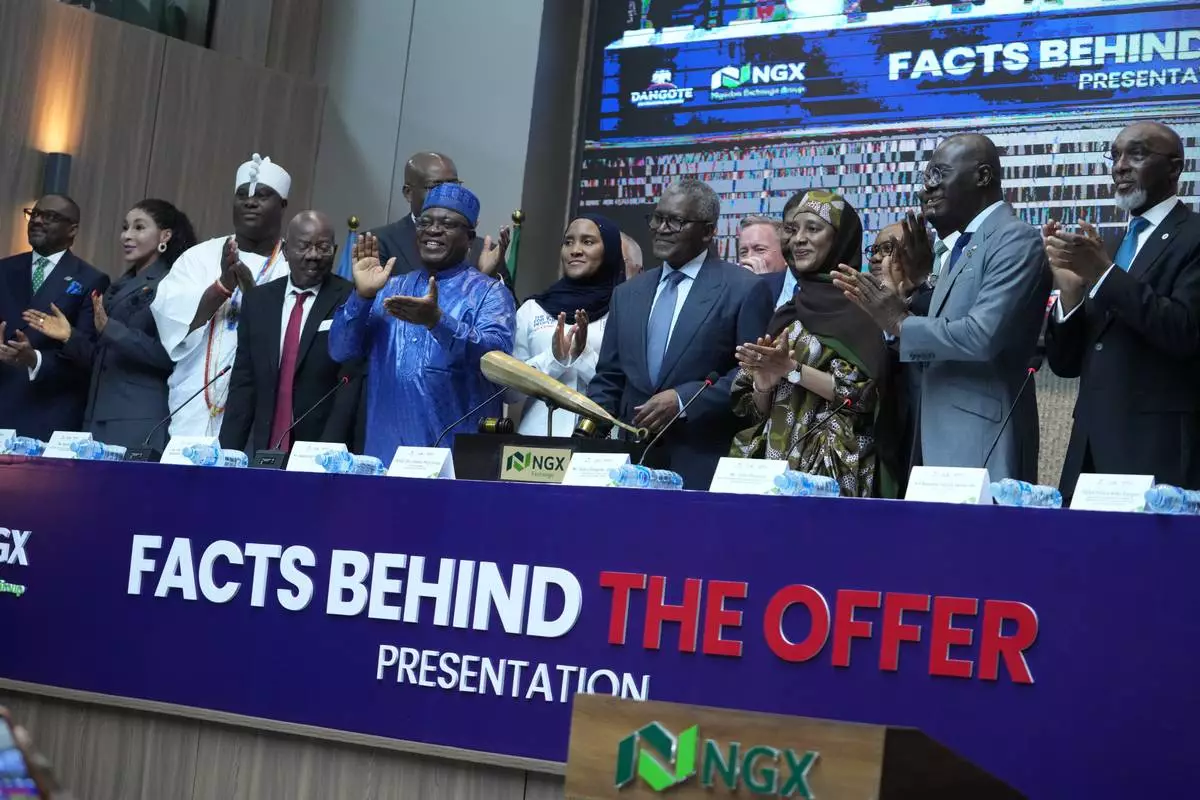
Nigerian industrialist Aliko Dangote, forth from Left, participates in the Opening Gong Ceremony of the Dangote Refinery Initial Public Offer at the Nigeria Stock Exchange in Lagos Nigeria, Monday, Sept. 14, 2026. (AP Photo/Sunday Alamba)
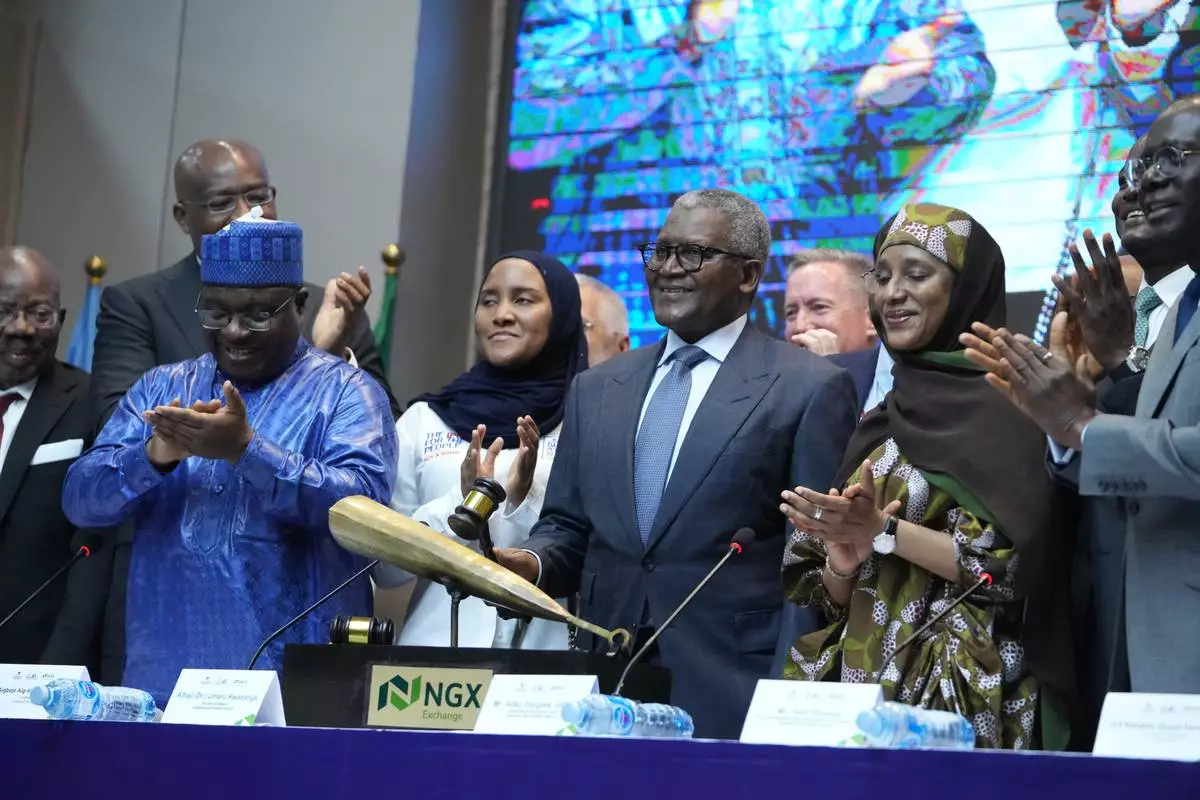
Nigerian industrialist Aliko Dangote, centre, participates in the Opening Gong Ceremony of the Dangote Refinery Initial Public Offer at the Nigeria Stock Exchange in Lagos Nigeria, Monday, Sept. 14, 2026. (AP Photo/Sunday Alamba)
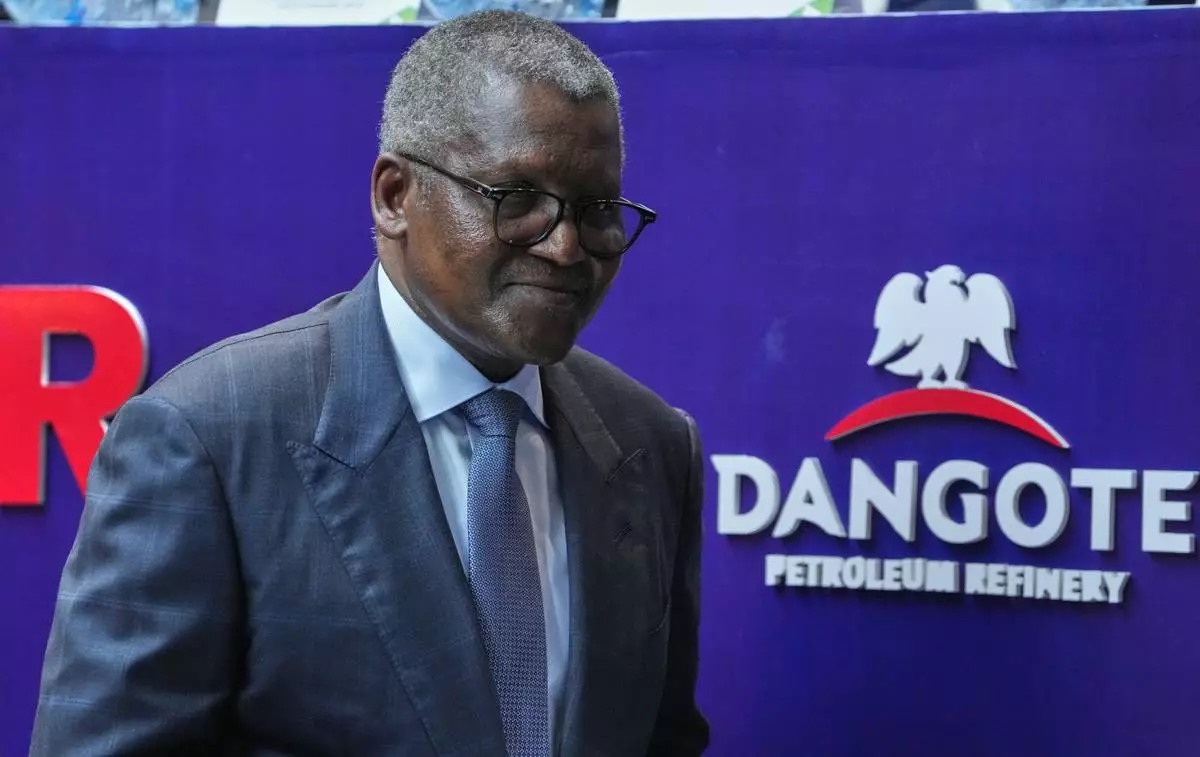
Nigerian industrialist Aliko Dangote, attends the Opening Gong Ceremony of the Dangote Refinery Initial Public Offer at the Nigeria Stock Exchange in Lagos, Nigeria, Monday, Sept. 14, 2026. (AP Photo/Sunday Alamba)
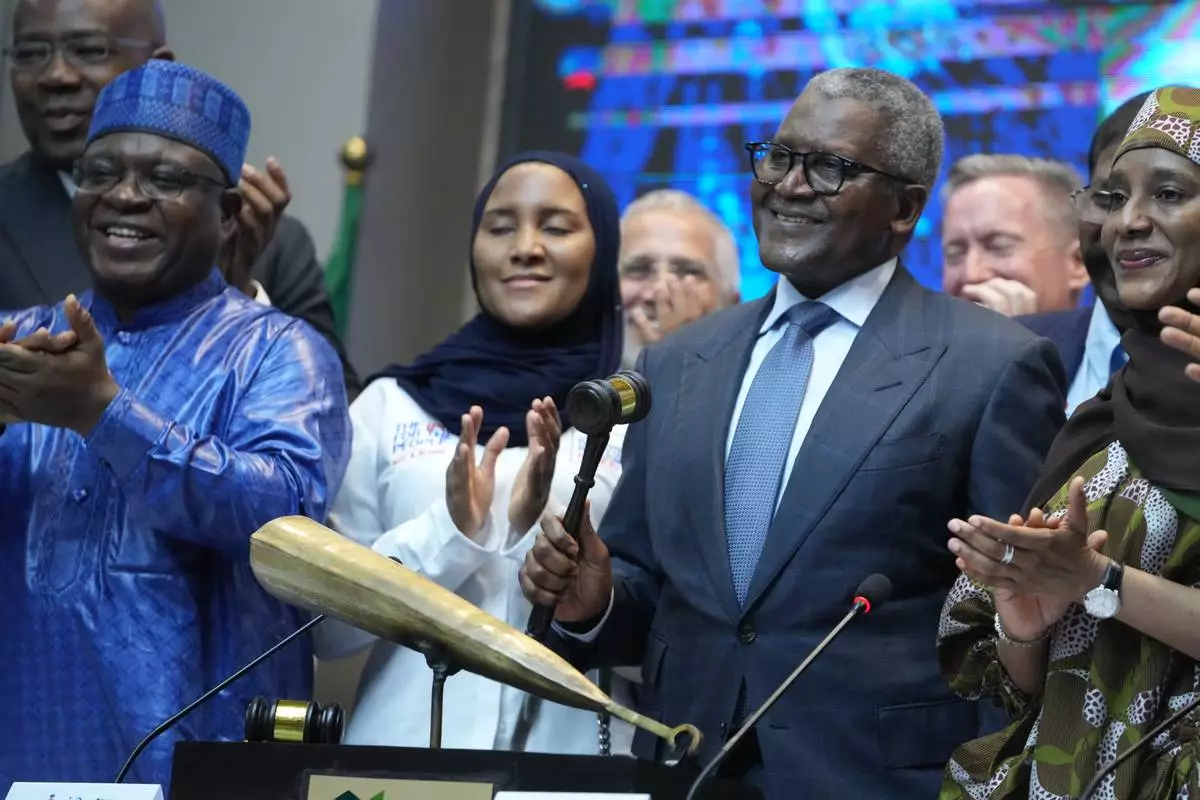
Nigerian industrialist Aliko Dangote, centre, participates in the Opening Gong Ceremony of the Dangote Refinery Initial Public Offer at the Nigeria Stock Exchange in Lagos Nigeria, Monday, Sept. 14, 2026. (AP Photo/Sunday Alamba)
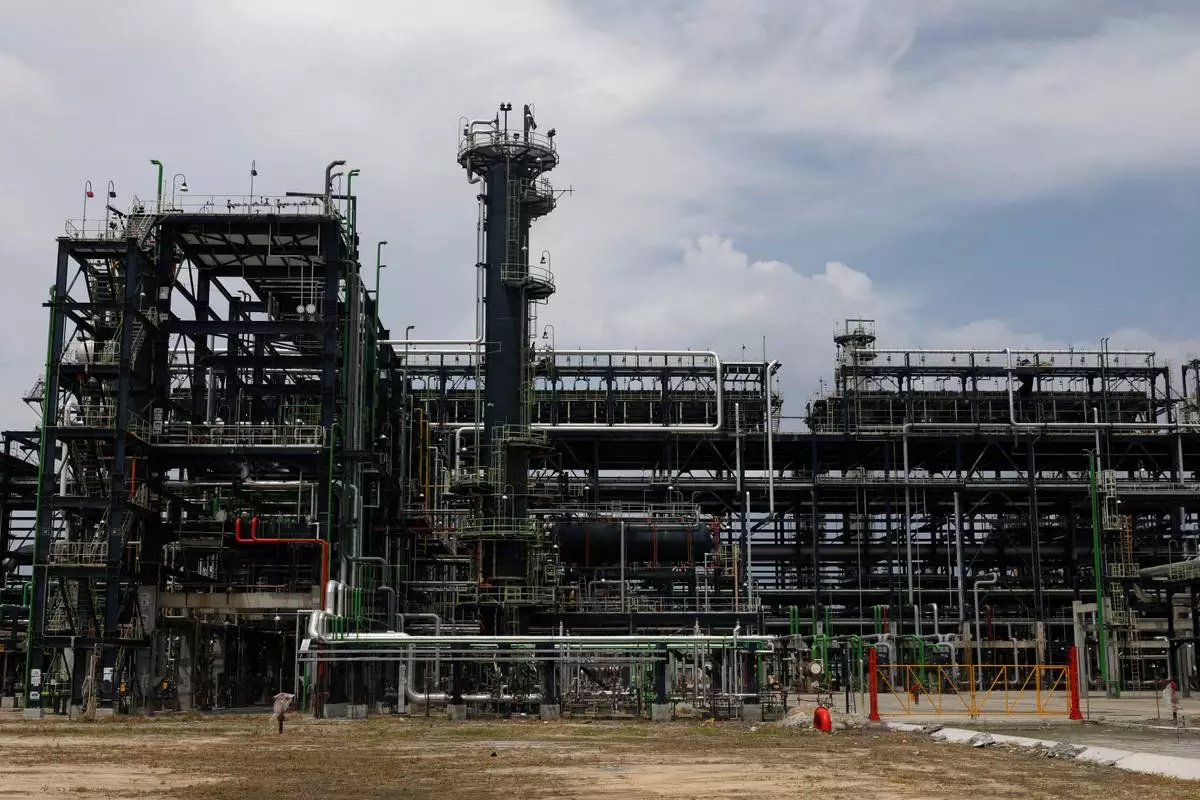
FILE - The Dangote oil refinery sits in Lagos, Nigeria, May 22, 2023. (AP Photo, File)
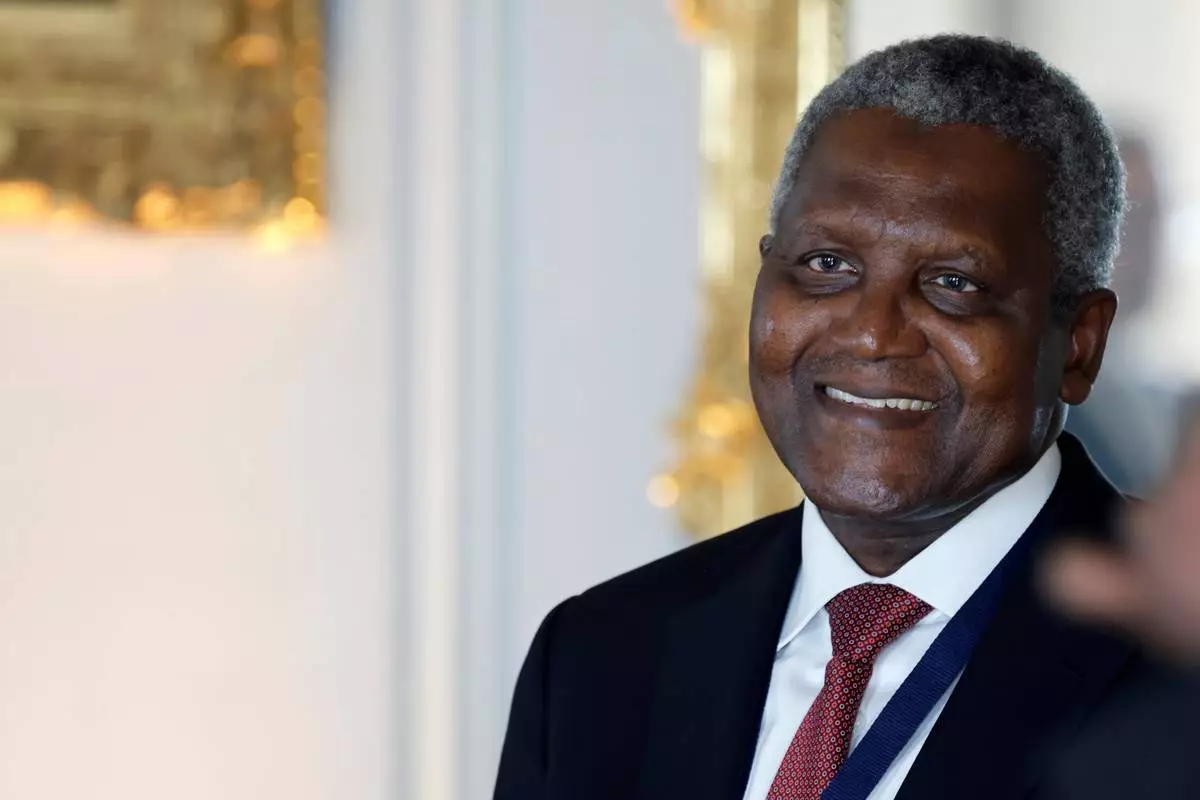
FILE - Nigerian multinational industrial conglomerate Dangote Group's CEO Aliko Dangote during the seventh "Choose France Summit", aiming to attract foreign investors to the country, at the Chateau de Versailles, outside Paris, Monday, May 13, 2024. (Ludovic Marin, Pool via AP, File)