Skip to Content Facebook Feature Image

For long jumper Sawyers, Ultimate payday gives her a chance to train ... and a new sewing machine

Sport

For long jumper Sawyers, Ultimate payday gives her a chance to train ... and a new sewing machine
Sport

Sport

For long jumper Sawyers, Ultimate payday gives her a chance to train ... and a new sewing machine

2026-09-14 15:52 Last Updated At:16:01

BUDAPEST, Hungary (AP) — The athlete who perhaps best summed up the meaning of track’s new experiment, the Ultimate Championship, isn’t an ultimate champion herself.

British long jumper Jazmin Sawyers took second in her event over the weekend, so she did not get a medal (nobody did) or a trophy (only winners did) or the first prize, $150,000.

More Images
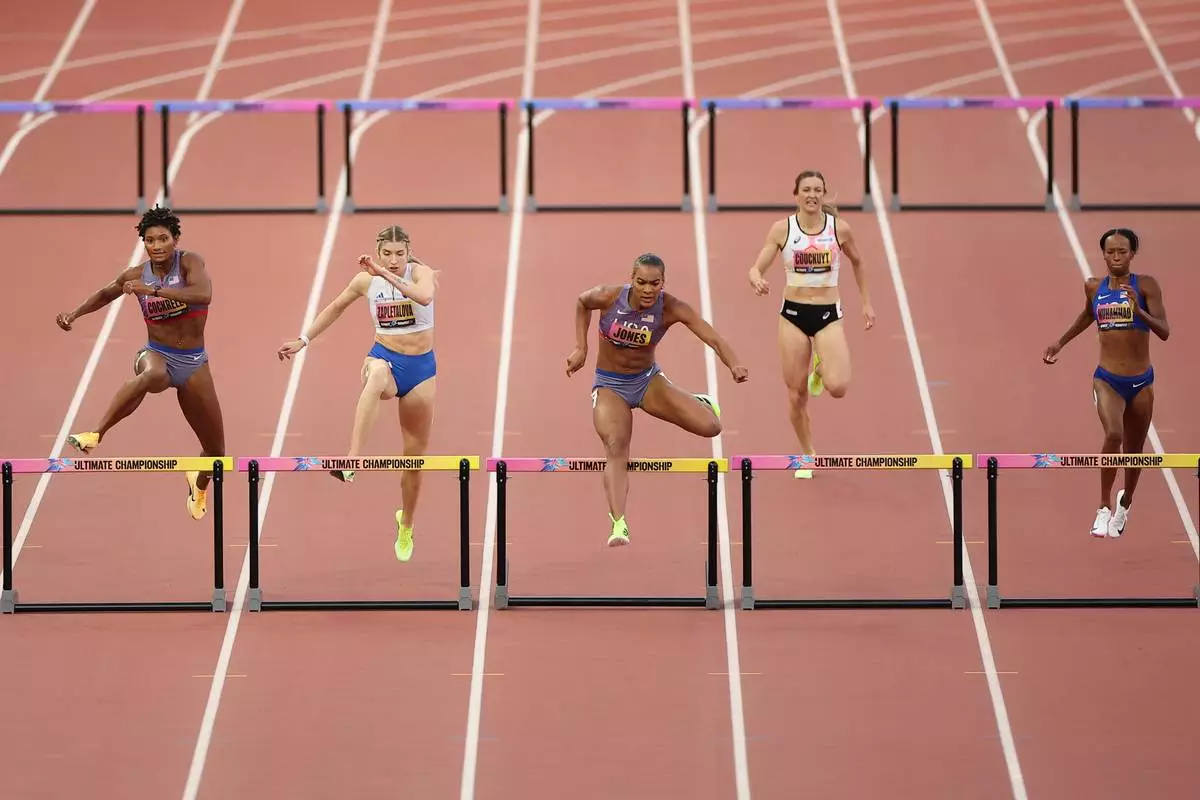
From left: Anna Cockrell, of the United States, Emma Zapletalova, of Slovakia, Jasmine Jones, of the United States, Paulien Couckuyt, of Belgium, and Dalilah Muhammad, of the United States, compete in the women's 400 meters hurdle final during the World Athletics Ultimate Championship in Budapest, Hungary, Sunday, Sept. 13, 2026. (AP Photo/Armin Durgut)
From left: Anna Cockrell, of the United States, Emma Zapletalova, of Slovakia, Jasmine Jones, of the United States, Paulien Couckuyt, of Belgium, and Dalilah Muhammad, of the United States, compete in the women's 400 meters hurdle final during the World Athletics Ultimate Championship in Budapest, Hungary, Sunday, Sept. 13, 2026. (AP Photo/Armin Durgut)

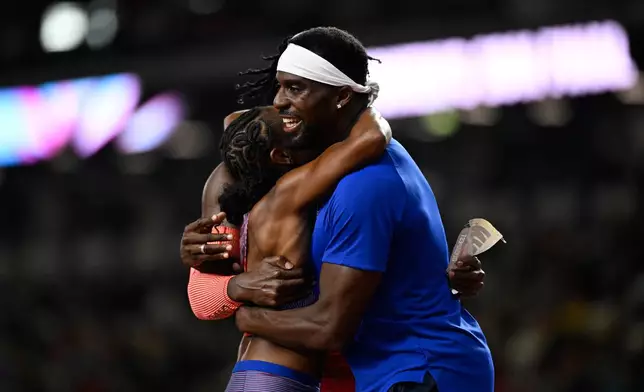
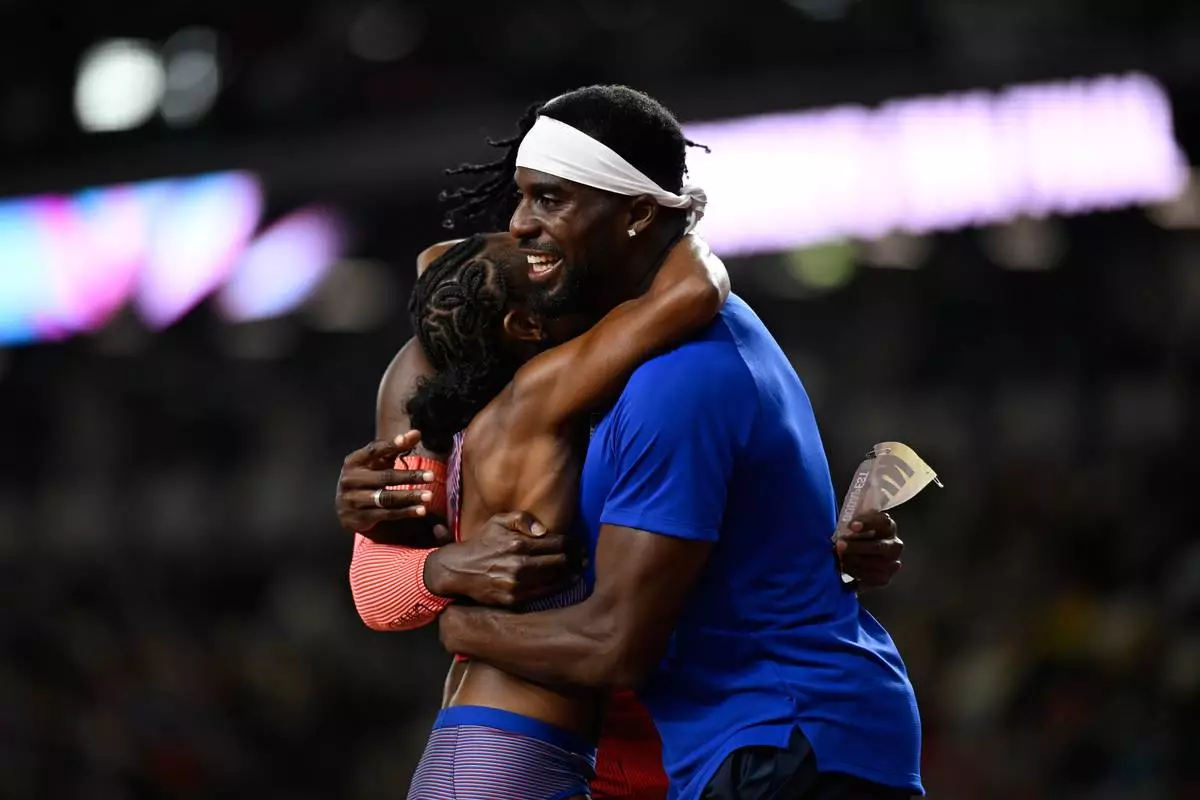
Melissa Jefferson-Wooden, of the United States, and Kenneth Bednarek, of the United States, right, hug each other after winning the women's 200 meters final and the men's 200 meters final, respectively, during the World Athletics Ultimate Championship in Budapest, Hungary, Sunday, Sept. 13, 2026. (AP Photo/Denes Erdos)

Melissa Jefferson-Wooden, of the United States, and Kenneth Bednarek, of the United States, right, hug each other after winning the women's 200 meters final and the men's 200 meters final, respectively, during the World Athletics Ultimate Championship in Budapest, Hungary, Sunday, Sept. 13, 2026. (AP Photo/Denes Erdos)

Melissa Jefferson-Wooden, of the United States, poses with her trophy after winning the women's 200 meters final at the World Athletics Ultimate Championship in Budapest, Hungary, Sunday, Sept. 13, 2026. (AP Photo/Matthias Schrader)

Melissa Jefferson-Wooden, of the United States, poses with her trophy after winning the women's 200 meters final at the World Athletics Ultimate Championship in Budapest, Hungary, Sunday, Sept. 13, 2026. (AP Photo/Matthias Schrader)

Jazmin Sawyers, of Britain, makes an attempt in the women's long jump final at the World Athletics Ultimate Championship in Budapest, Hungary, Friday, Sept. 11, 2026. (AP Photo/Matthias Schrader)

Jazmin Sawyers, of Britain, makes an attempt in the women's long jump final at the World Athletics Ultimate Championship in Budapest, Hungary, Friday, Sept. 11, 2026. (AP Photo/Matthias Schrader)

She did get $75,000, though, which for the majority of track and field athletes, can make a huge difference.

“I look at the next year now, and I don’t need to necessarily worry about being able to train full-time,” Sawyers said.

A 32-year-old with five national titles in Britain, Sawyers said she came into the season ranked in the 30s and climbed her way into the top 10.

Injuries suffered by the two top-ranked jumpers, Tara Davis-Woodhall and Malaika Mihambo, landed Sawyers in the Ultimate Championships and she took advantage.

She said she’s aware that $150,000 or $75,000 isn’t life-changing for every athlete here. But for some, it is. Suddenly, Sawyers can see a pathway to making her third Olympics.

“I will buy myself something. I’m going to upgrade my sewing machine,” she said. “Aside from that, I’m excited to know there won’t be a scramble to be able to train the way I want to be able to train for the next two years.”

About this time in the last Olympic cycle, it seemed a matter of when, not if, Florence Griffith Joyner’s decades-old world records of 10.49 in the 100 and 21.34 in the 200 would fall.

Then, injuries to two Jamaican sprinters, Elaine Thompson-Herah and Shericka Jackson, put that talk on hold and led to a reshuffling of the deck in women’s sprints.

Coming out on top: Melissa Jefferson-Wooden, who added the 100 and 200 titles at Ultimate to her world championships from last year. More impressive were her times. She ran 10.62 in the 100 — where she is the fourth woman ever in that event — then followed it up with a 21.47 in the 200 that even she did not expect.

The 21.47 made her the third-fastest woman ever in that event behind Flo Jo and Jackson.

It was the fastest time ever run into a headwind and, maybe most impressively, it came 24 hours after her 100-meter win. She’ll have far more rest between events when she hits the track for her next shot at the 100-200 double, next year at worlds in Beijing.

“It’s insane,” she said. “I can’t wait to go back and look at the race. It’s like one of those things where, you don’t know until you know.”

When Usain Bolt was on the track, the drama almost always had to do with whether he would set a record, not who would win the race.

For years, the mystery that was absent was a price worth paying because of the show the Jamaican great put on before, during and after all those sprints.

He’s nearing 10 years in retirement and now watching a sport where, in so many cases, nobody knows who’s going to win the sprints.

As a sign of how long it's been, Bolt, who was in Budapest for the meet, was cheering wildly for Kenny Bednarek as Bednarek cruised to his 200-meter victory Sunday night in 19.52. Afterward, Bolt caught up with Bednarek to offer congratulations.

“It was the first time I'd actually met him in person,” said the 27-year-old Bednarek, who is 13 years younger than Bolt. “I've looked up to him since I was a kid.”

Who will Bolt congratulate next? Hard to know.

Over the last three years, Noah Lyles (Paris), Oblique Seville (Tokyo) and Bednarek (Budapest) have won the biggest 100-meter races of the year. The 200s have gone to Letsile Tebogo (Paris), Lyles (Tokyo) and Bednarek.

“To see different people winning makes it more exciting,” Bolt said. “Now, you show up on the day and you don’t know who’s going to win. I think that’s good for the sport.”

Before a teenager named Sydney McLaughlin started setting world records and winning everything there was to win in the 400-meter hurdles, Dalilah Muhammad gave her and everyone else a preview of what was possible.

Muhammad, the American who broke a 16-year-old world record in 2019 that eventually led to McLaughlin's lowering of the mark to 50.37 over the next five years, bid adieu to competitive track Sunday night.

Muhammad finished fourth with a season-best time of 53.11, which made for a $25,000 payday, though that was hardly the point of the evening for her.

“I think just being one of the leaders in this event and pushing what was possible in the event,” Muhammad said when asked what she wants to be remembered for.

Though she had been a four-time All-American at USC from 2009-12, she was almost an afterthought by the time she won the Olympics in Rio in 2016.

She set the record in 2019 (52.20), then lowered it with a .07-second win over McLaughlin at world championships three months later. That helped light a fire under McLaughlin, who switched coaches, to Bobby Kersee, knowing if she couldn’t handle Muhammad, she’d never be the best.

McLaughlin, now married and with a 2-month-old daughter, has lowered the record that once belonged to her rival six times since those world championships. Muhammad won a silver medal behind McLaughlin at the Tokyo Games, a bronze at worlds in 2022 and leaves as one of the greats of the event.

“I think you had that motivation knowing this high school kid is coming into college and she’s going to be the one to beat,” Muhammad said. “I’m just truly honored to be a person who’s been part of her journey.”

Among the biggest tests for the future of the Ultimate Championship is whether World Athletics will get as much buy-in from athletes when it holds the event around two months after the LA Olympics in 2028.

World Athletics President Sebastian Coe said he's more impressed with the deep talent pool across events in track and field than he is concerned over the sport's awkward calendar.

American pole vaulter Sandi Morris, who pocketed $150,000 for her win over the weekend, might have summed it up best for a sport where the majority of athletes still need paychecks and sponsors to pay for their training.

“I mean, they put the stakes out there and athletes are going to compete,” she said.

https://apnews.com/sports
From left: Anna Cockrell, of the United States, Emma Zapletalova, of Slovakia, Jasmine Jones, of the United States, Paulien Couckuyt, of Belgium, and Dalilah Muhammad, of the United States, compete in the women's 400 meters hurdle final during the World Athletics Ultimate Championship in Budapest, Hungary, Sunday, Sept. 13, 2026. (AP Photo/Armin Durgut)
From left: Anna Cockrell, of the United States, Emma Zapletalova, of Slovakia, Jasmine Jones, of the United States, Paulien Couckuyt, of Belgium, and Dalilah Muhammad, of the United States, compete in the women's 400 meters hurdle final during the World Athletics Ultimate Championship in Budapest, Hungary, Sunday, Sept. 13, 2026. (AP Photo/Armin Durgut)

Melissa Jefferson-Wooden, of the United States, and Kenneth Bednarek, of the United States, right, hug each other after winning the women's 200 meters final and the men's 200 meters final, respectively, during the World Athletics Ultimate Championship in Budapest, Hungary, Sunday, Sept. 13, 2026. (AP Photo/Denes Erdos)

Melissa Jefferson-Wooden, of the United States, and Kenneth Bednarek, of the United States, right, hug each other after winning the women's 200 meters final and the men's 200 meters final, respectively, during the World Athletics Ultimate Championship in Budapest, Hungary, Sunday, Sept. 13, 2026. (AP Photo/Denes Erdos)

Melissa Jefferson-Wooden, of the United States, poses with her trophy after winning the women's 200 meters final at the World Athletics Ultimate Championship in Budapest, Hungary, Sunday, Sept. 13, 2026. (AP Photo/Matthias Schrader)

Melissa Jefferson-Wooden, of the United States, poses with her trophy after winning the women's 200 meters final at the World Athletics Ultimate Championship in Budapest, Hungary, Sunday, Sept. 13, 2026. (AP Photo/Matthias Schrader)

Jazmin Sawyers, of Britain, makes an attempt in the women's long jump final at the World Athletics Ultimate Championship in Budapest, Hungary, Friday, Sept. 11, 2026. (AP Photo/Matthias Schrader)


Jazmin Sawyers, of Britain, makes an attempt in the women's long jump final at the World Athletics Ultimate Championship in Budapest, Hungary, Friday, Sept. 11, 2026. (AP Photo/Matthias Schrader)
Yemen’s Houthi rebels have seized the strategic islands of Greater and Lesser Hanish in the southern Red Sea, bolstering the Iranian-backed rebels' ability to control a key maritime shipping route.

Meanwhile, Iran says Saudi Arabia was behind Oman’s decision to postpone a meeting bringing together Iran with other regional countries to discuss the Strait of Hormuz.

In Iraq, two people died and more than 100 others were injured after an ammonia gas leak at a fertilizer plant in the country’s south.

Here’s a look at the latest news in the Middle East. Full coverage can be found here.

Houthi officials said Monday they had taken over the two islands just as Saudi-backed government forces tried to claw back territory from the rebels' swift advances around the Bab el-Mandeb Strait, a crucial shipping alternative to the Strait of Hormuz.

Iran effectively closed the Strait of Hormuz — through which a fifth of the world’s traded oil and gas transits in peacetime — in the opening days of the war. The Saudis have since used Bab el-Mandeb Strait that leads out of the Red Sea for crude oil exports.

The Houthis’ newest takeover, following the seizure of the Red Sea port of Mokha and a strategic island last week, puts more pressure on Saudi shipments and, in turn, global oil supplies and prices.

This could give Iran additional leverage in its war with the United States.

China, a major Middle East oil importer, on Monday called Houthi attacks on Saudi energy infrastructure “unacceptable” and said it was “deeply concerned” about further escalations by the rebels against Saudi Arabia.

Foreign Ministry spokesperson Guo Jiakun said “attacks on civilian infrastructure that is important to people’s livelihoods are unacceptable.”

He called on all sides to exercise restraint and resolve disputes through dialogue.

Iranian Foreign Ministry spokesman Esmail Baghaei said Monday Saudi Arabia had “demanded" that a meeting bringing together Iran with other regional countries to discuss the Strait of Hormuz be scrapped “for the time being.”

Baghaei called the meeting, which was to be hosted by Oman, a “proper opportunity” to restore security in the region.

The spokesman said an agreement between Iran and Oman on the Strait of Hormuz has been finalized and it will be announced later.

Saudi Arabia had submitted amendments to the agreement, citing concerns it could have lasting implications for the Strait of Hormuz, negatively impacting other Gulf Cooperation Council countries, according to a Gulf official familiar with the matter who was not authorized to comment publicly and spoke on condition of anonymity.

Iran denounced on Monday Austria’s refusal to issue visas to the Iranian nuclear chief and other delegation members for the International Atomic Energy Agency’s General Conference in Vienna, calling the decision “completely unjustified.”

Esmail Baghaei, Iran's Foreign ministry spokesman, said Tehran summoned the Austrian chargé d’affaires, saying Austria was obligated as the host country to issue the visas.

Baghaei accused Western countries of denying Iran an opportunity to defend itself and blamed the U.S. for pressuring Austria to deny the visas.

The refusal is part of U.N. sanctions on Iran, reinstated last year, that include a travel ban on Iranian officials.

Last week, the U.N. atomic watchdog’s board reported Iran to the U.N. Security Council for the first time in 20 years, citing failure to cooperate in a long-running investigation into uranium traces detected by inspectors at undeclared sites.

The B’Tselem human rights group said Monday Israel is carrying out a systematic and accelerated project aimed at “dismantling the foundations of Palestinian existence” in the occupied West Bank.

The group made the accusation in a new report that claims Israeli actions against Palestinians in the West Bank by settlers and the military are designed to undermine Palestinian collective life “while entrenching a permanent system of Jewish supremacy” across the territory.

Settler violence in the West Bank has surged under the ultranationalist government of Israeli Prime Minister Benjamin Netanyahu. Rights groups say the military frequently turns a blind eye to the violence, and that when it intervenes it often focuses on protecting the settlers.

The B’Tselem report also claims that Israeli actions rely heavily on open cooperation between state authorities and armed settlers who attack Palestinian communities using weapons and vehicles supplied by the state while the military either fails to prevent the violence or, in some cases, participates in it.

The report adds that as of July, Israel had taken control of more than 264,402 acres – nearly a fifth of the West Bank — through “armed settler militias.”

Most of the international community views settlements as illegal.

Iraq’s health ministry said Monday an ammonia gas leak at a fertilizer plant in the southern province of Basra killed two people and injured 114 others.

Health Ministry spokesman Saif al-Badr said most of the injuries were minor, but 21 people remain hospitalized.

This report will be updated throughout the day as new developments emerge.

A man walks in front of a mural symbolising restrictions on shipping through the Bab el-Mandeb Strait, one of the world's key shipping lanes, in Sanaa, Yemen, Monday, Sept. 14, 2026. (AP Photo/Osamah Abdulrahman)

A man walks in front of a mural symbolising restrictions on shipping through the Bab el-Mandeb Strait, one of the world's key shipping lanes, in Sanaa, Yemen, Monday, Sept. 14, 2026. (AP Photo/Osamah Abdulrahman)

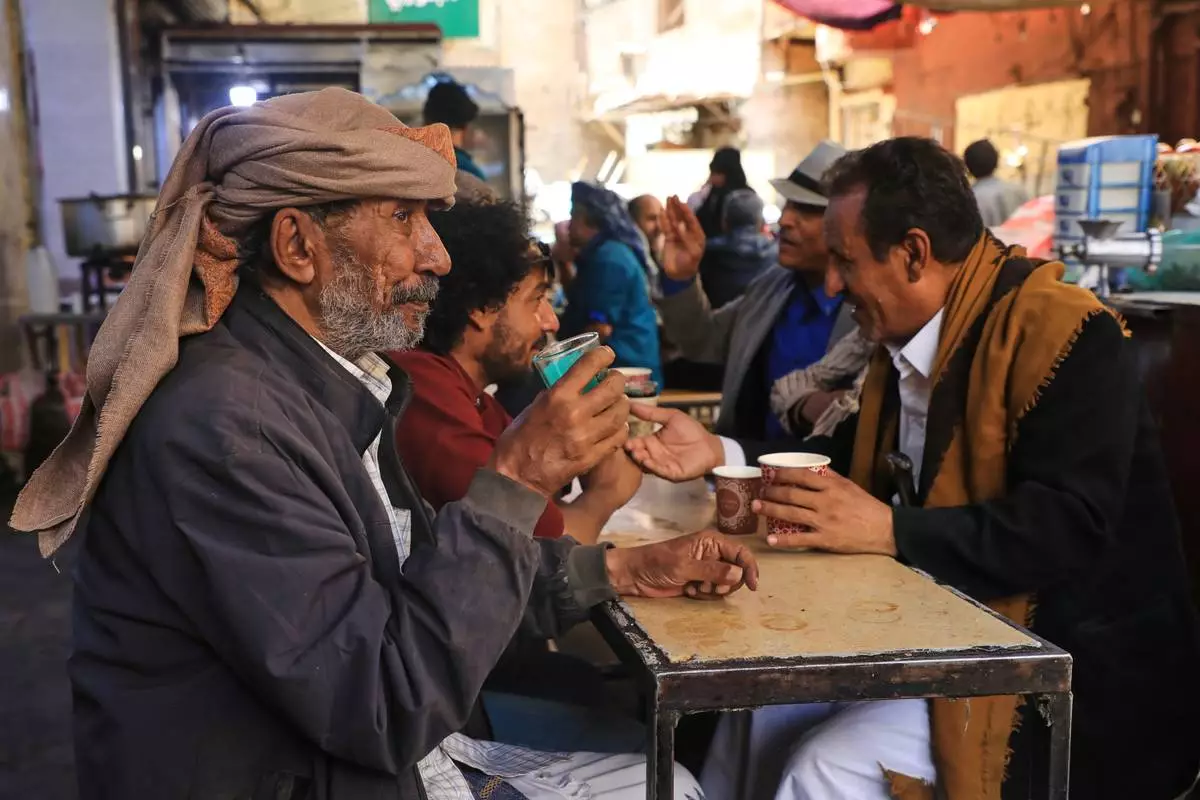
People chat at a coffee shop in Sanaa, Yemen, Monday, Sept. 14, 2026. (AP Photo/Osamah Abdulrahman)

People chat at a coffee shop in Sanaa, Yemen, Monday, Sept. 14, 2026. (AP Photo/Osamah Abdulrahman)

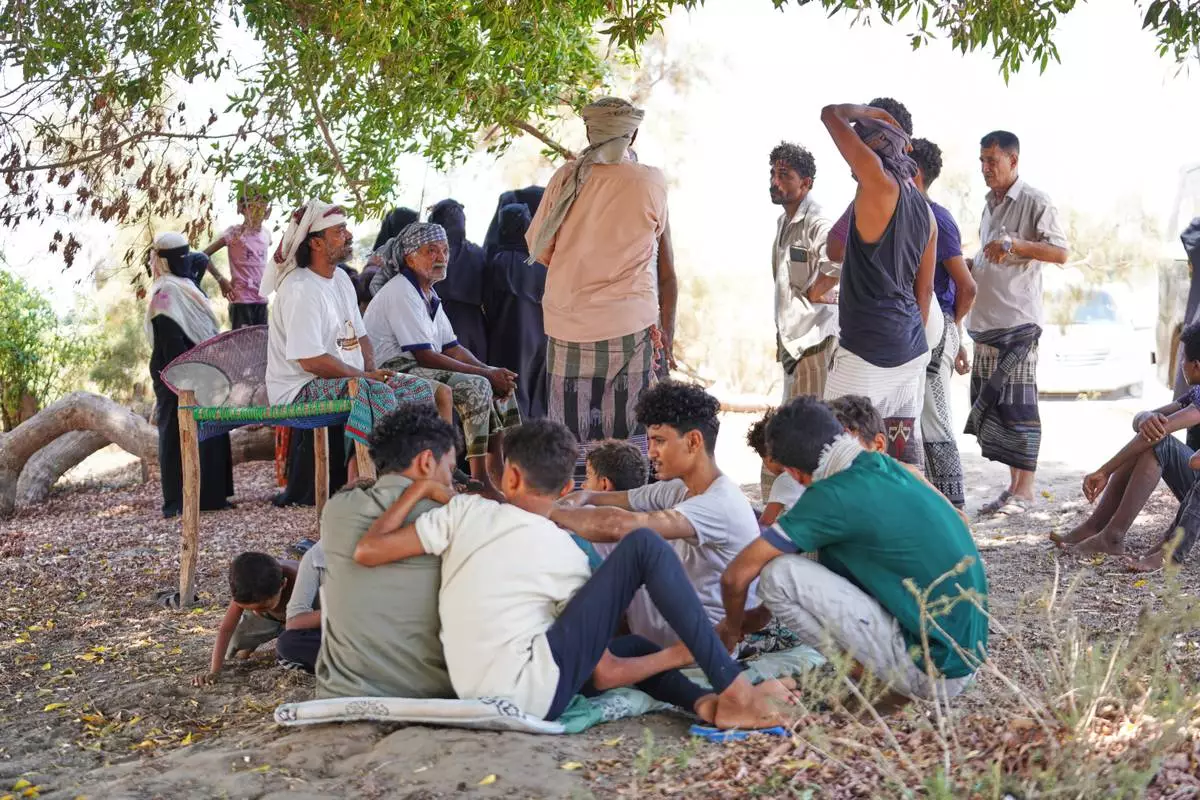
Displaced Yemenis, from Al Khawkhah city, 400 kilometers (249 miles) south west of Sanaa, wait to enter a temporary shelter in Aden, Yemen, Sunday, Sept. 13, 2026. (AP Photo/Abdulnasser Alseddik)

Displaced Yemenis, from Al Khawkhah city, 400 kilometers (249 miles) south west of Sanaa, wait to enter a temporary shelter in Aden, Yemen, Sunday, Sept. 13, 2026. (AP Photo/Abdulnasser Alseddik)

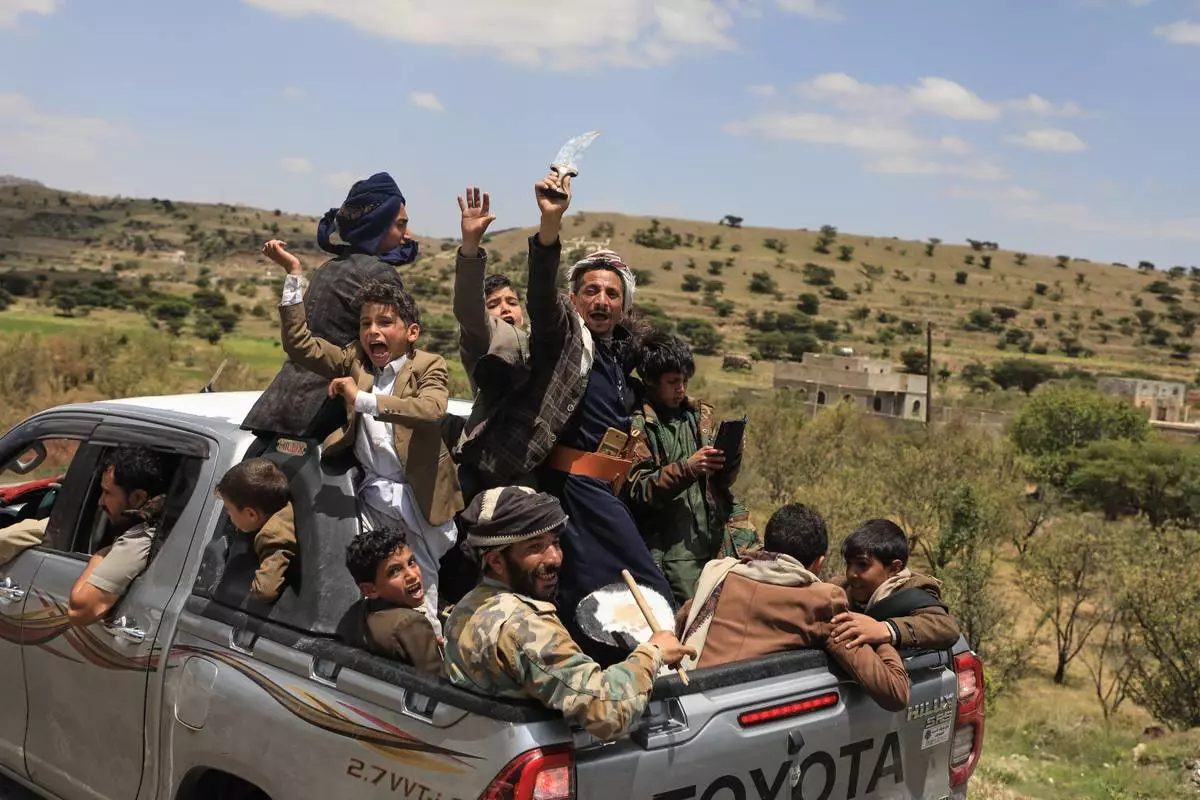
Yemeni civilians celebrate while riding in the back of a pickup truck in the Bani Matar district, Yemen, Saturday, Sept. 12, 2026, as they follow a convoy carrying Houthi prisoners freed in Mokha on its way to Sanaa following the Houthi takeover of the southern Red Sea port city. (AP Photo/STR)

Yemeni civilians celebrate while riding in the back of a pickup truck in the Bani Matar district, Yemen, Saturday, Sept. 12, 2026, as they follow a convoy carrying Houthi prisoners freed in Mokha on its way to Sanaa following the Houthi takeover of the southern Red Sea port city. (AP Photo/STR)

Recommended Articles