PONTIANAK, Indonesia (AP) — Thick smoke from forest fires has disrupted airline flights for several days in Indonesia's West Kalimantan province as an intensifying El Niño weather pattern and a prolonged dry season worsen the impact of blazes.
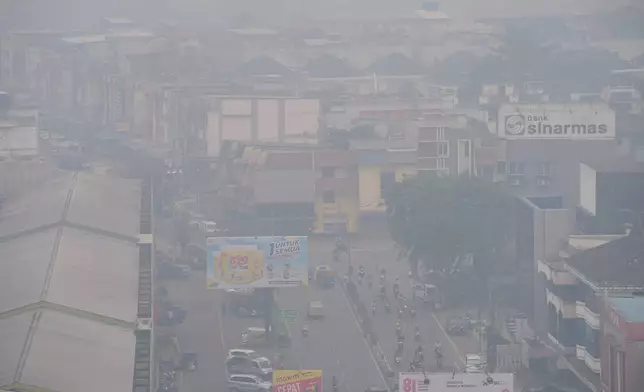
Since Friday, a thick white and yellowish haze has blanketed the city of Pontianak, reducing visibility to less than 1 kilometer (0.62 miles).
Click to Gallery
Workers load a boat amid the haze from forest fires at a pier in Pontianak, West Kalimantan, Indonesia, Monday, Sept. 14, 2026. (AP Photo/Tatan Syuflana)
People fish at the bank of Kapuas River amid the thick haze from forest fires, in Pontianak, West Kalimantan, Indonesia, Monday, Sept. 14, 2026. (AP Photo/Tatan Syuflana)
Thick haze from forest fires blanket the city of Pontianak in West Kalimantan, Indonesia, Monday, Sept. 14, 2026. (AP Photo/Tatan Syuflana)
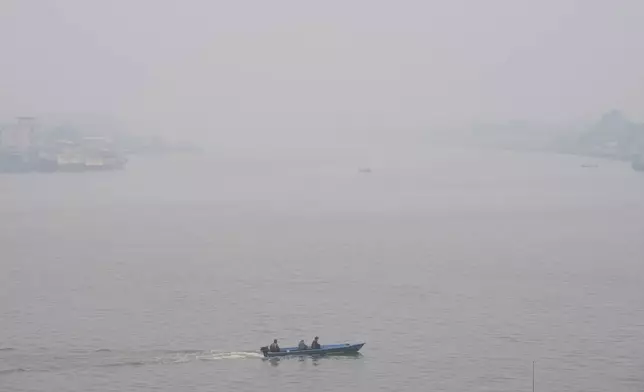
A boat cruises on Kapuas River amid the thick haze from forest fires, in Pontianak, West Kalimantan, Indonesia, Monday, Sept. 14, 2026. (AP Photo/Tatan Syuflana)
Poor air quality and limited visibility have also hampered firefighting efforts, carried out with equipment from Japan that arrived on Thursday.
Across Indonesia, seasonal forest fires are beginning to subside, but thick haze still shrouds parts of the island of Kalimantan. In a written statement on Monday, the Ministry of Forestry stated that the latest monitoring data shows a significant decrease in so-called “high-confidence” hot spots, strongly suspected to be caused by forest fires, in Central Kalimantan and West Kalimantan. There are no high-confidence hot spots in Riau province.
“The thick smoke we’re currently experiencing, if we look in the direction the wind is blowing, is also smoke carried here from other provinces on the island of Kalimantan that are also on fire,” said the head of the Disaster Information Task Force at the West Kalimantan Provincial Disaster Management Agency, Daniel, who like other Indonesians only uses a single name.
Residents are also beginning to hope that the smoke from the forest fires, which have been burning for over a month, will soon dissipate so that it no longer poses a health threat.
“Hopefully, we pray to God for His protection; may we be blessed by Allah, and may rain fall once again on the land of Pontianak,” said Aminah, a resident of Pontianak.
Fires continue to burn in several parts of Kalimantan, particularly in the provinces of West and Central Kalimantan, according to Indonesia’s National Disaster Management Agency. The Forestry Ministry recorded more than 202,000 hectares of burned land between January and July, an area nearly three times the size of Singapore.
Toxic haze and smoke have caused a health crisis in neighboring countries.
The smoke has drifted as far as the Philippines, more than 800 kilometers (500 miles) away, and breached Malaysia’s emergency-level threshold for air pollution, forcing authorities to declare an emergency last week in the Malaysian part of Boa town in Sarawak state, the Malaysian part of Borneo.
The air pollution has also affected several areas on the Indonesian island of Sumatra, forcing schools to suspend learning activities at school. The toxic haze has affected more than 1.4 million students across the country.
Indonesian authorities have intensified firefighting operations across several provinces in an effort to contain the blazes. The response has included aircraft provided by regional and international partners, including Japan, the United States, Russia, Australia, Canada and Ukraine.

Workers load a boat amid the haze from forest fires at a pier in Pontianak, West Kalimantan, Indonesia, Monday, Sept. 14, 2026. (AP Photo/Tatan Syuflana)

People fish at the bank of Kapuas River amid the thick haze from forest fires, in Pontianak, West Kalimantan, Indonesia, Monday, Sept. 14, 2026. (AP Photo/Tatan Syuflana)
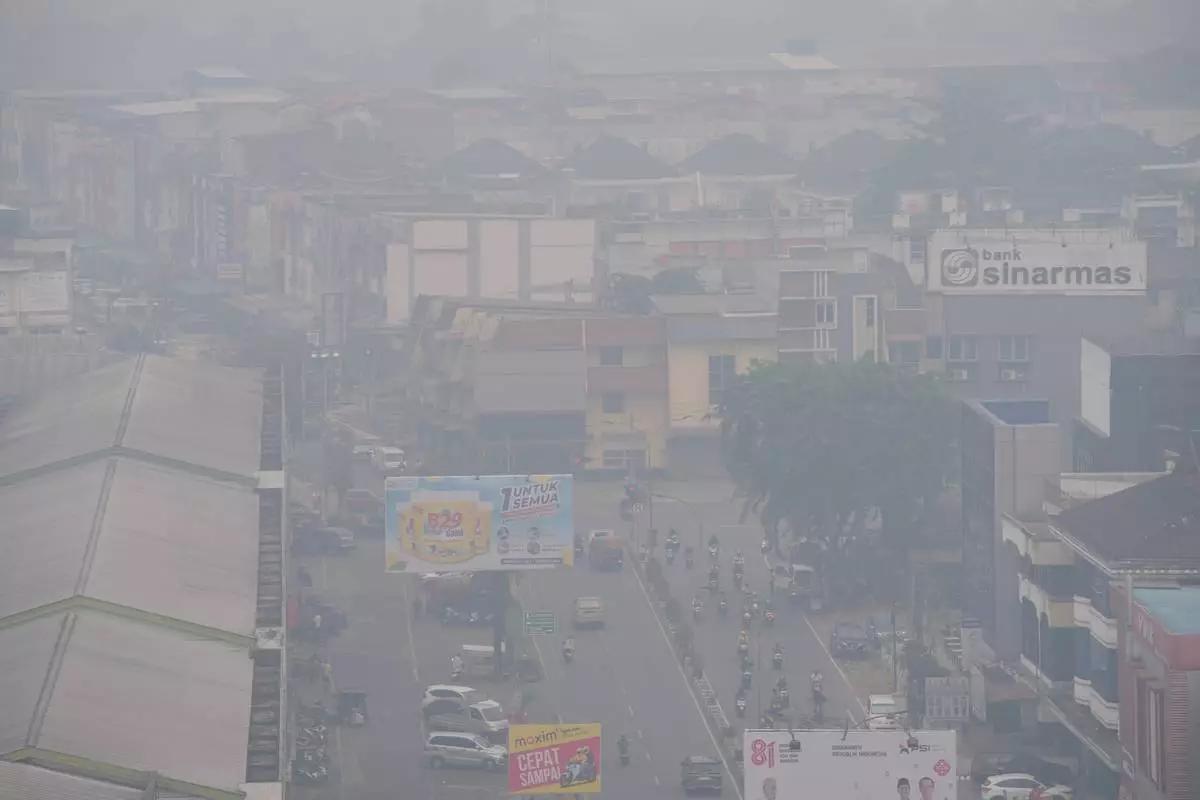
Thick haze from forest fires blanket the city of Pontianak in West Kalimantan, Indonesia, Monday, Sept. 14, 2026. (AP Photo/Tatan Syuflana)
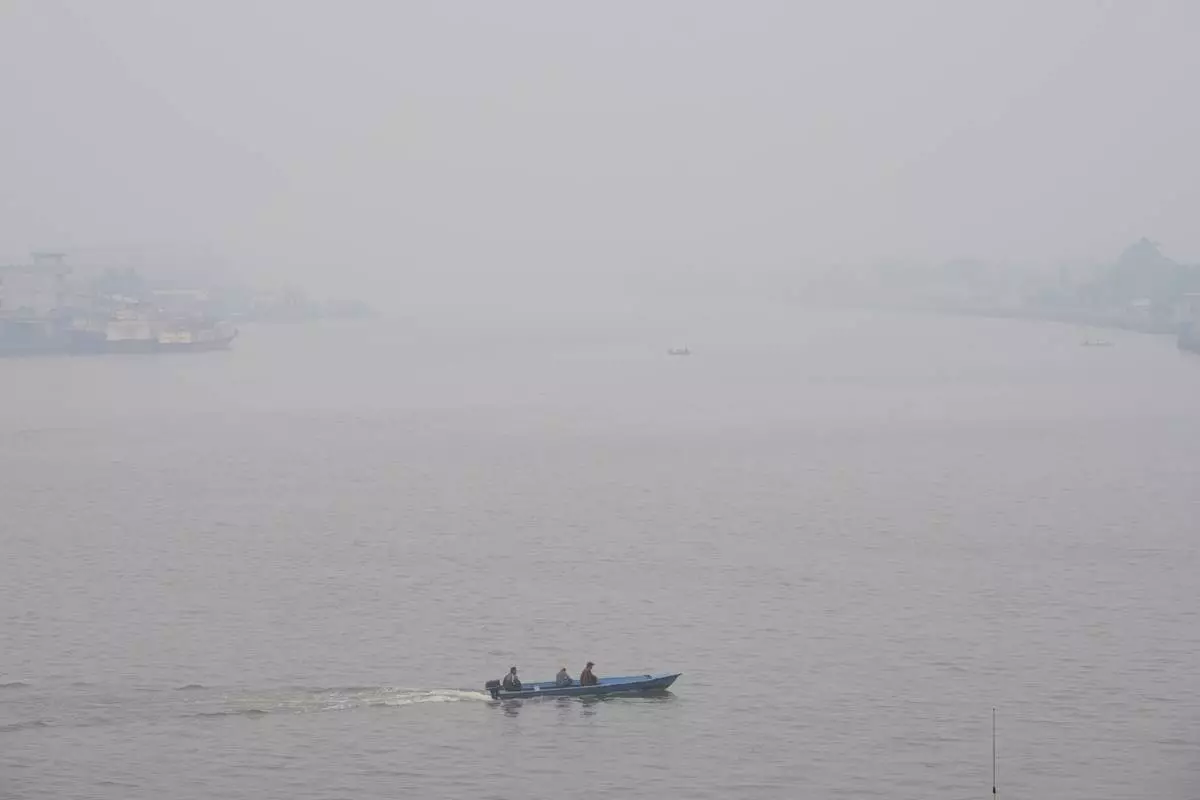
A boat cruises on Kapuas River amid the thick haze from forest fires, in Pontianak, West Kalimantan, Indonesia, Monday, Sept. 14, 2026. (AP Photo/Tatan Syuflana)
NEW YORK (AP) — Technology stocks are sliding worldwide Monday after leaders of the artificial-intelligence industry warned a slowdown is needed for safety, while another jump in oil prices is pressuring financial markets.
The S&P 500 fell 0.8% and was on track for its fifth loss in six days, even though more stocks rose within the index than fell. The Nasdaq composite, which has many more tech stocks, tumbled a market-leading 1.2%, while the Dow Jones Industrial Average was down 158 points, or 0.3%, as of 9:35 a.m. Eastern time.
AI stocks have been under pressure a while because of worries their prices shot too high in the frenzy around the technology. The concerns jumped to another level over the weekend after one of the industry’s leading voices, Anthropic CEO Dario Amodei, called for a deliberate and global slowdown in the development of AI.
He cited safety issues, including the risk that AI becomes capable of leading a swarm of agents that could take over the entire internet within six to 12 months.
Nvidia, whose profits have soared because its chips are helping to train AI models, sank 3.9% and was the heaviest weight on the market because of its massive size.
SpaceX, which gets a chunk of its business from AI, fell 1.7% after Elon Musk said over the weekend that he agrees with Amodei. Softbank Group, the Japanese giant that is a major investor of OpenAI, lost 10.7% in Tokyo after OpenAI’s Sam Altman likewise supported the concept of a slowdown.
Altman also said in an interview with Fortune published on Saturday that OpenAI would likely wait until next year for a sale of its stock on Wall Street, potentially delaying a potential gusher of cash for Softbank and other early investors in OpenAI.
In South Korea, the Kospi index dropped 3.3% due to losses for its two most influential stocks, Samsung Electronics and SK Hynix.
It wasn’t just tech stocks. Other beneficiaries of the boom around AI likewise fell, such as companies in the power industry electrifying hungry data centers. GE Vernova sank 7.3%, and Constellation Energy Group dropped 3.5%.
President Donald Trump on Sunday played down the need for his administration to check the development of AI, saying he worried about ceding America’s edge over China in a global competition and that winning would help address the risks from the advancing technology.
All the while, another jump in oil prices continued to pressure the global economy.
The price for a barrel of Brent crude rose 3.9% to $108.73 and got as high as $109.80 in the morning as fighting in the Middle East keeps squeezing the global flow of oil.
An important Saudi oil pipeline will mostly be out of service for weeks following an attack last week, two regional officials told The Associated Press. The pipeline offered a way for Saudi Arabia to shift exports to the Red Sea and avoid the Persian Gulf’s Strait of Hormuz, where Iranian attacks have stifled the movement of oil tankers.
Brent has jumped from less than $72 in early July as doubts rise that the United States and Iran can come to an agreement that would allow oil tankers to freely exit the Persian Gulf through the strait again.
While the prospect of a de-escalation of war in Iran may have dimmed, ING commodities strategists Warren Patterson and Ewa Manthey wrote in a commentary on Monday that the situation is still fluid and “sizable” volumes of oil have still been moving through the strait.
So far, the jump in oil prices has helped send the average cost of a gallon of regular gasoline across the country to nearly $4.32 from $4.08 a month ago and $3.18 a year ago, according to AAA.
Such upward pressure on inflation has much of Wall Street expecting the Federal Reserve will hike its main interest rate on Wednesday at the end of its next meeting.
That’s the traditional way the Fed tries to rein in high inflation. Such a move then filters out through the rest of the bond market, makes it more expensive for U.S. households and businesses to borrow money, slows the overall economy and undercuts prices for investments. That hopefully would remove some of inflation’s fuel, though Trump has been lobbying for lower interest rates instead of higher.
Besides high inflation, worries about rising debt for the U.S. and other governments have helped send longer-term Treasury yields to their highest levels in years.
The yield on the 10-year Treasury rose to 4.98% from 4.96% late Friday and just 3.97% before the war with Iran began in February.
AP Business Writers Chan Ho-him and Michelle Chapman contributed to this report.
FILE - A general view shows the New York Stock Exchange, Friday, Aug. 7, 2026, in New York. (AP Photo/Yuki Iwamura, File)
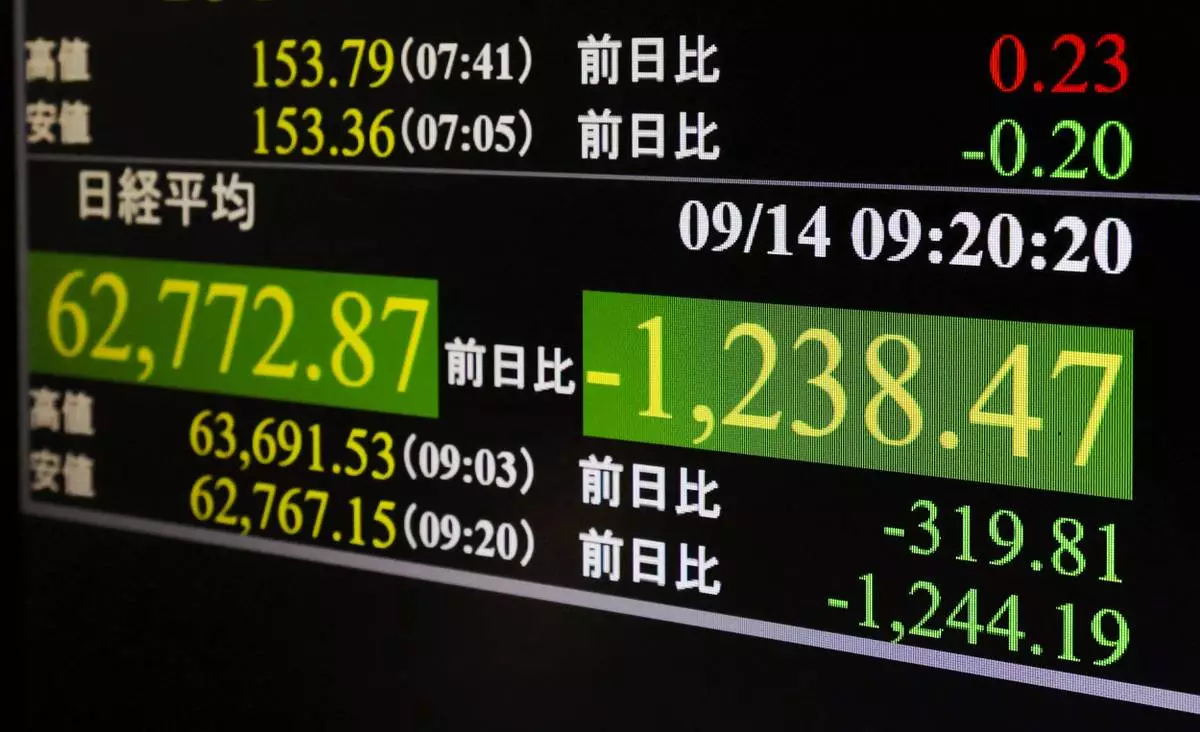
A monitor shows the Nikkei 225 stock index in Tokyo Monday, Sept. 14, 2026. (Miyuki Saito/Kyodo News via AP)