China's financial resources have accelerated their convergence on scientific innovation and computing infrastructure so far in 2026, according to the first half of the year's credit data released by China's central bank -- the People's Bank of China (PBOC) -- on Tuesday.
The data show new yuan loans expanded by 10.72 trillion (about 1.58 trillion in U.S. dollars) in the first six months, with real estate lending decelerating and credit targeting technological innovation surging, marking a clear structural shift.
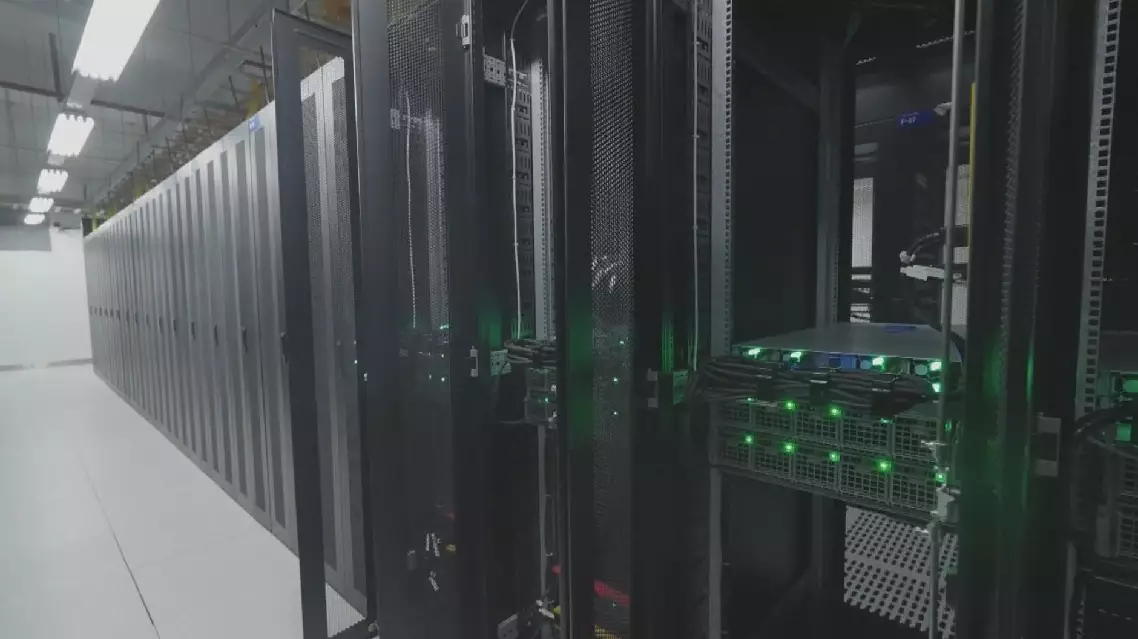
At an intelligent computing center in east China's city of Lianyungang, staff said computing demand continues to rise and large-scale intelligent computing centers, being heavy-asset projects, generally face financing difficulties with massive funding needs and long payback periods.
"We can feel that computing resources are still very scarce. However, the construction cost of computing power is very high, and building one by ourselves would also require massive operating expenses," said Jiang Yi, general manager of Jiangsu Wukong Digital Industry Group.
To address financing bottlenecks for new infrastructure such as computing centers, the China Development Bank has designed an exclusive financial services solution, providing the Wukong intelligent computing center project with 1.5 billion yuan (221.7 million U.S. dollars) in long-term credit support.
The PBOC data also show tech-oriented small and medium-sized enterprises (SMEs) received significantly more credit support in the first half of the year. By the end of June, loan growth for tech SMEs outpaced overall loan growth by 15 percent.
In north China's Tianjin, a company making intelligent brake core components for vehicles was held back by a funding gap when advancing to mass production.
"For technology research and development enterprises like us, the research and development investment has always remained high, and working capital is prone to shortfalls. Whether funding can keep up in time directly determines whether mass production can proceed smoothly," said Zhang Kuang, research and development center president of Tianjin Yinshi Jinggong Technology.
Local financial institutions launched a "startup loan" for new enterprises, with relaxation of rigid financial criteria such as revenue requirements. By assessing future potential based on patents and existing orders, they issued the company a two-million-yuan (295,600-U.S.-dollar) unsecured credit loan.
The data show that by the end of June, over half of China's tech SMEs had received credit support, totaling 305,600 enterprises. In the first half of the year, loans to high and new technology enterprises grew by nearly 15 percent.
China's financing accelerates support for computing infrastructure