NEW YORK--(BUSINESS WIRE)--Jul 29, 2026--
Pangram, the AI research lab known for its industry-leading 1 in 10,000 false positive rate, is announcing two new products. Pangram 4, its latest text detection model, offers major improvements in distinguishing AI-assisted writing and mixed human-AI content, plus greater robustness against AI humanizer programs. The company also released a research preview of an AI image detection model which is 99.5% accurate in internal benchmarks. Pangram 4 is available to all customers today, and Pangram AI Image Detector Research Preview is open to the public.
This press release features multimedia. View the full release here: https://www.businesswire.com/news/home/20260729222515/en/
The launches follow a $9M funding round led by Menlo Ventures, with participation from Haystack, ScOp Venture Capital, Script Capital, and Cadenza. Pangram is using this capital to push forward on two fronts: improving the accuracy of its core text detection, as well as expanding into new modalities, starting with images.
“Fully AI-generated content is everywhere now, and much of it is undisclosed,” said Max Spero, cofounder and CEO of Pangram. “Pangram exists to make authorship legible for publishers, teachers, journalists, and anyone who relies on the truthful and authentic communication of information.”
Yet, as familiarity with AI writing has grown, so has the demand for products that obfuscate the true origin of AI-generated writing. Pangram 4 is trained to counter these kinds of “humanizer” tools, accurately identifying AI-written text even after it has been passed through a tool that paraphrases, rewords, or otherwise modifies it in order to evade detection. The new model also delivers major accuracy gains on mixed human-AI writing, while still maintaining a 0.01% false positive rate.
Menlo Ventures partner Deedy Das frames the problem in terms of trust. "With LLMs, the cost of producing language collapses to zero, and the cost of trusting language goes to infinity," he said. "Pangram has emerged a clear #1 in quality and is trusted across Substack, Quora, and other platforms to power detection across their website."
Currently in research preview, Pangram’s AI Image Detector represents a new frontier for the company. “AI image detection is challenging because real and AI content is often blended, like in a photo of an AI-generated ad on a billboard,” said Bradley Emi, cofounder and CTO of Pangram. “That’s why we tried to cast as wide a net as possible: whether you're browsing social media or assessing photographic evidence in a courtroom, everyone deserves to know what's real.”
Pangram 4 is live today for all customers, and the research preview for Pangram’s AI Image Detector is open to the public for testing and feedback. As generative AI continues to proliferate across every format, Pangram plans to bring the same standard of reliability to detecting all modalities of AI-generated content. To try Pangram 4 or Pangram AI Image Detector Preview, visit www.pangram.com.
About Pangram
Pangram Labs is the technology leader in AI detection systems, surpassing other detection providers in accuracy and reliability. Pangram’s detection systems are used today by thousands of businesses. Founded by classmates at Stanford University, Pangram has been adopted by academic institutions, content moderators, journalists, media, and consumers concerned with transparency.

Pangram Image Detection research preview dashboard
SOUTH SAN FRANCISCO, Calif.--(BUSINESS WIRE)--Oct 14, 2026--
Shenandoah Therapeutics, a biotechnology company developing a new class of cancer therapeutics that use chemically induced proximity to rewire cancer drivers to activate programmed cell death, today announced the appointment of Steve Worland, Ph.D., as President and Chief Executive Officer and a member of its Board of Directors. Co-Founder and founding CEO Isabella Graef, M.D., has transitioned to Chief Scientific Officer and will continue to lead Shenandoah’s scientific strategy.
This press release features multimedia. View the full release here: https://www.businesswire.com/news/home/20261014661985/en/
The leadership transition comes as Shenandoah advances its lead oncology program toward IND-enabling studies. In preclinical studies, the company’s lead molecules have demonstrated potent activity and complete and durable tumor regression in models of B-cell lymphoma, including patient-derived models harboring multiple cancer-driving mutations.
Shenandoah Therapeutics was founded in 2022 based on scientific work originating at Stanford Medicine by Gerald R. Crabtree, M.D., and Nathanael S. Gray, Ph.D., bringing together expertise in chemically induced proximity, chemical biology and drug discovery. Crabtree developed the first induced proximity molecules and has used them to define the roles of chemically induced proximity in biology and medicine. Gray has spearheaded the development of several induced proximity modalities and has broad experience in bringing drugs to market. In 2025, the company closed a $21.5 million seed financing, co-led by Samsara BioCapital and YK Bioventures, with participation from First Spark Ventures and Time BioVentures, among others, to advance its TCIP platform and lead oncology program targeting BCL6 in B-cell malignancies.
“I’m delighted to welcome Steve to Shenandoah at this important stage in the company’s evolution,” said Dr. Graef. “We have made significant progress translating our science into molecules with compelling activity in cancer models, and our lead program is now approaching IND-enabling studies. Steve brings a rare combination of scientific depth, drug development experience and company-building expertise, and I look forward to working closely with him as we advance toward the clinic.”
“Shenandoah brings together compelling science, an experienced founding team and a platform with the potential to generate multiple new medicines,” said Dr. Srinivas Akkaraju, Founder and Managing General Partner, Samsara BioCapital. “We are pleased to support the team as they advance the company’s lead oncology program and build a broader pipeline.”
Dr. Worland brings more than 30 years of biotechnology leadership, drug discovery and development experience to Shenandoah. Most recently, he served as Chief Executive Officer of Numerion Labs. He previously co-founded eFFECTOR Therapeutics and served as its President, Chief Executive Officer and Board Member, leading the oncology company from inception through its public listing in 2021 and advancing two product candidates from target concept into Phase 2 clinical development. During his tenure, eFFECTOR raised more than $250 million in private and public equity financing and established a major research collaboration with Pfizer. Prior to eFFECTOR, Dr. Worland served as President and Chief Executive Officer of Anadys Pharmaceuticals, where he led the company through its $230 million acquisition by Roche. He has also held senior leadership roles spanning research, development and corporate strategy across the biotechnology industry.
“I’m excited to join Shenandoah at a point when the company is positioned to translate its scientific foundation into a clinical-stage pipeline,” said Dr. Worland. “The team has generated compelling preclinical results, and I look forward to working with Isabella and the broader team to advance promising new therapies to patients and position the company for its next stage of growth.”
Most targeted cancer therapies inhibit or degrade proteins that drive tumor growth. Shenandoah’s TCIPs instead use chemically induced proximity to redirect cancer-driving proteins to activate programmed cell death, effectively turning the cancer driver against the cancer cell itself. The company’s lead program targets BCL6, an oncogenic driver in B-cell malignancies that normally represses genes involved in programmed cell death, rewiring it to activate pro-apoptotic genes and trigger cancer cell destruction.
In preclinical studies, Shenandoah’s lead TCIP molecules have demonstrated potent activity and complete, durable tumor regression in models of B-cell lymphoma, including patient-derived models with multiple cancer-driving mutations. The foundational science has been published in Nature and Science and Cell. Shenandoah is advancing its lead BCL6 program toward IND-enabling studies while applying its TCIP platform to additional oncogenic drivers and solid tumors.
“With his track record of successfully bridging science and business, Steve is ideally suited to lead Shenandoah through its next stage of growth,” said Gary Yeung, Managing Partner, YK Bioventures and a member of Shenandoah’s Board of Directors. “The company is entering an important phase as its lead program advances into IND-enabling studies and toward clinical development, while the platform expands into solid tumors and other therapeutic areas. Steve and Isabella bring highly complementary experience to advancing this next phase of the company’s development.”
About Shenandoah Therapeutics
Shenandoah Therapeutics is developing a new class of small-molecule cancer medicines designed to rewire cancer-driving proteins to activate programmed cell death. Founded in 2022 based on science originating at Stanford University, the company’s proprietary Transcriptional/Epigenetic Chemical Inducers of Proximity (TCIP) platform uses a gain-of-function approach to transform disease-driving proteins into therapeutic activities. Shenandoah is advancing a lead TCIP program targeting BCL6 in B-cell malignancies while expanding the platform across additional cancer drivers and solid tumors. For more information, visit www.shenandoah-tx.com.
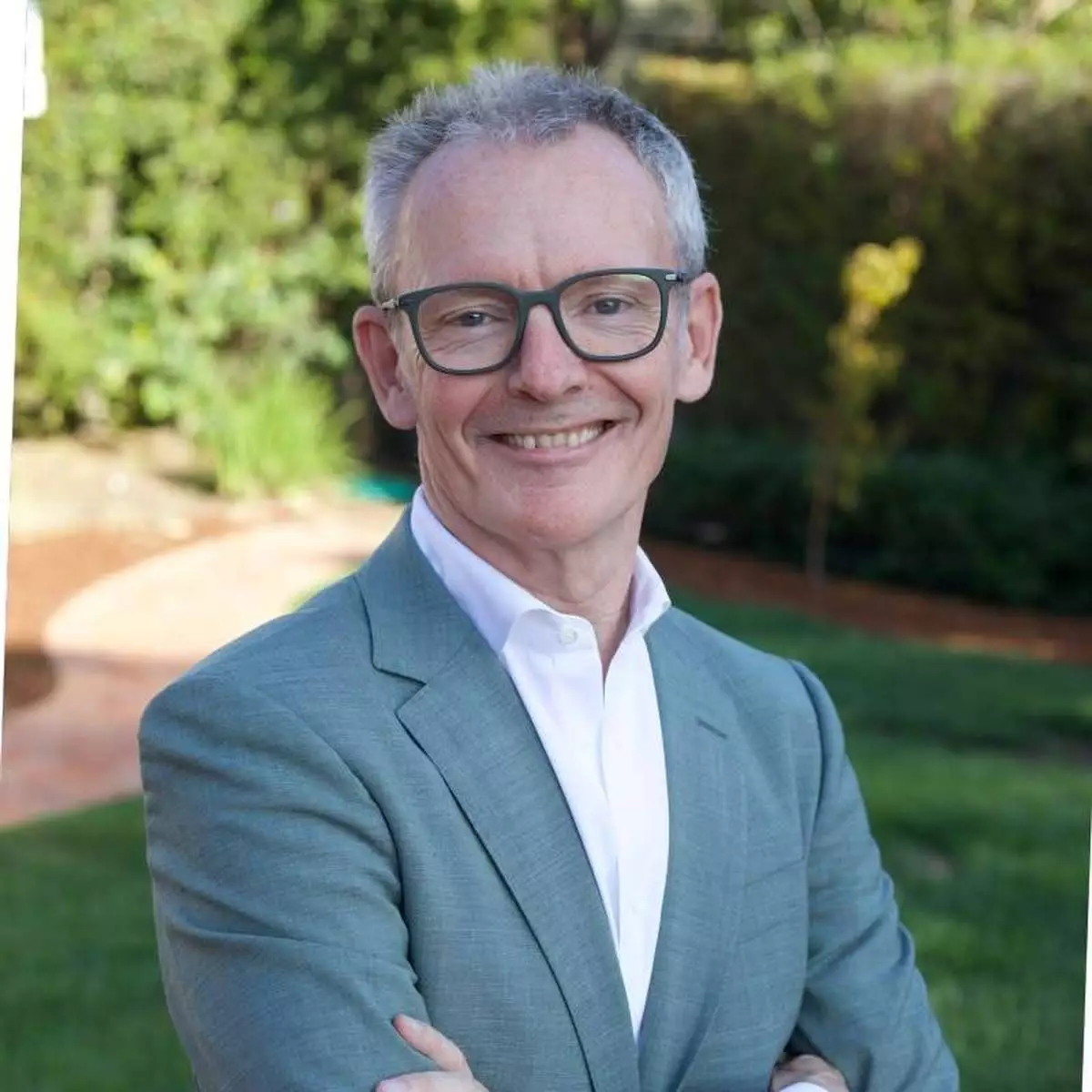
Steve Worland, Ph.D., CEO, Shenandoah Therapeutics