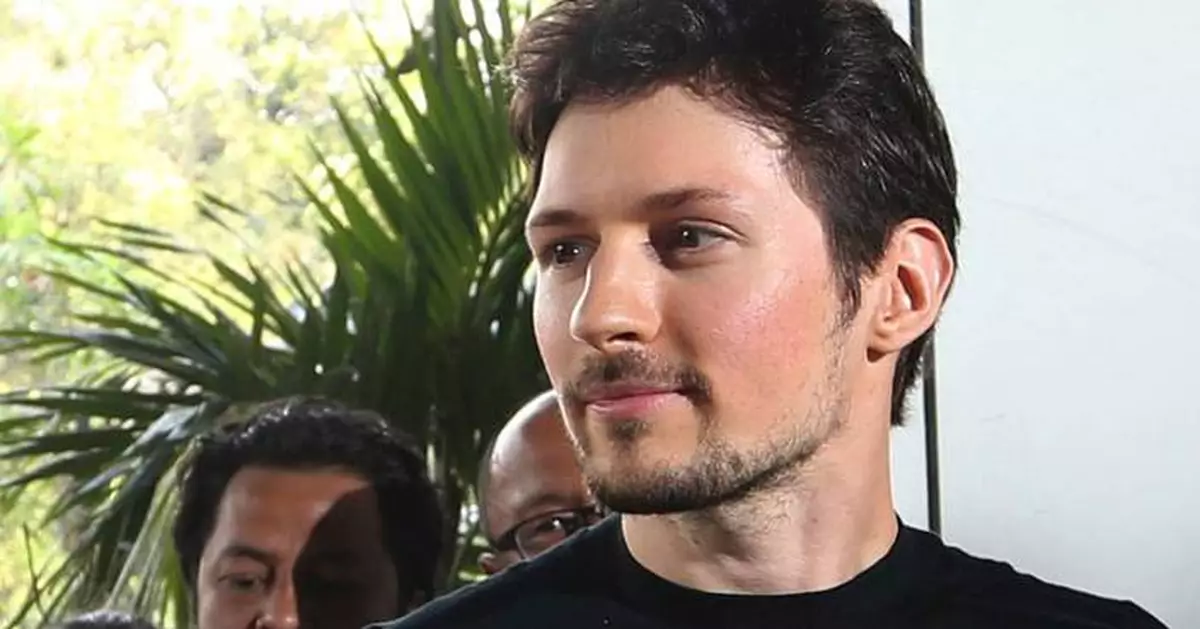
Pavel Durov, the billionaire founder and CEO of the Telegram messaging app, has repeatedly run into trouble with both the Kremlin and Western officials as he cast himself as a champion of free speech.
On Wednesday, Russia's Federal Security Service, or FSB, accused him of aiding what it called terrorist activities. It also said it was adding Durov’s name to international wanted lists.
The Russian-born Durov, 41, responded to the charges by posting an image of himself raising a middle finger on Telegram's official account on X. He has denounced previous Kremlin attempts to restrict Telegram as an attack on freedom of expression.
The case marks an escalation of the Kremlin’s efforts to tighten control over the internet and digital communications as it prepares for parliamentary elections in September amid rising public fatigue with the 4-year-old war in Ukraine and its growing economic fallout.
What to know about Durov, Telegram and the charges against him:
Durov was born in Leningrad, now St. Petersburg, and now also holds citizenship in France, the United Arab Emirates and the Caribbean island nation of St. Kitts and Nevis.
In 2006 at age 22, Durov and his brother, Nikolai, founded VKontakte, Russia’s largest social network that is similar to Facebook. The company later came under pressure from authorities after mass anti-Kremlin protests in 2011-12, eventually prompting Durov to sell his stake in VKontakte.
In 2013, he and Nikolai founded Telegram. In 2014, Durov left Russia and moved to Dubai.
Durov, who has a net worth of $6.6 billion according to Forbes, said in a 2024 interview with conservative talk show host Tucker Carlson, that Dubai was “the best place for a neutral platform like ours to be in if we want to make sure we can defend our users’ privacy and freedom of speech.”
A disciple of fitness and healthy living, Durov shared photos of his lean and muscular build achieved via a daily regimen of 300 pushups, intense gym sessions and outdoor activities. He promotes a strict diet excluding processed foods and alcohol.
He has six children from three former partners and once declared he had donated sperm that fathered 100 children in 12 countries
Telegram, which Durov and his brother launched in 2013, boasts over 1 billion monthly active users worldwide.
It allows for one-on-one conversations, group chats and large “channels” that let people broadcast messages to subscribers. Unlike rivals such as Meta’s WhatsApp, Telegram’s group chats allow as many as 200,000 people, compared to a maximum of 1,024 for WhatsApp. Experts have raised concerns that misinformation spreads easily in such large group chats.
Telegram offers users end-to-end encryption for their communications, but users must manually activate the option. It’s only available for individual conversations and doesn’t work with group chats. That contrasts with rival Signal and Facebook Messenger, where chats are encrypted end-to-end by default.
Telegram long has faced criticism in both Russian and the West for a lack of content moderation, which experts say opens up the platform for potential use in money laundering, drug trafficking and sharing material linked to the sexual exploitation of minors. Russian authorities and Western governments have criticized Telegram for refusal to share information about suspected bad actors when required by law.
Russian authorities tried but failed to block Telegram between 2018 and 2020.
Since Moscow's full-scale invasion of Ukraine in 2022, Russian authorities have taken methodical steps to control the internet. WhatsApp and Telegram have been restricted and many social media platforms, including Facebook, Instagram and X, have been banned. YouTube has been throttled, as well. Vkontakte has come under the control of Kremlin-friendly companies. Telegram has been repeatedly fined for failing to comply with official regulations.
It's still possible to bypass some of the restrictions by using virtual private network services, but many are blocked.
Even as Telegram has been throttled, the Kremlin and the ministries of defense and foreign affairs, as well as other government agencies, still use it regularly.
Earlier this year, Durov has announced that the Russian authorities opened a criminal inquiry against him and accused them of fabricating pretexts to restrict access to Telegram as part of efforts to “suppress the right to privacy and free speech.”
In August 2024, Durov was arrested in Paris amid allegations that his platform was being used for illicit activity including drug trafficking and the distribution of images of child sexual abuse. He was released after four days of questioning on bale of 5 million euros.
Commenting on Durov's arrest at the time, Russian President Vladimir Putin described the French action as “selective,” arguing that many countries, including Russia, have raised concerns about bad actors using Telegram for harmful activities, and “all platforms of this kind are guilty of this.”
Kremlin officials have cast the French case against Durov as proof of the West’s double standard on freedom of speech.
Moscow has rejected Western accusations of using Telegram to coordinate and recruit people to carry out acts of arson and sabotage in Ukraine and across Europe.
The FSB accused Telegram’s administration failed to remove channels allegedly used by “Ukrainian intelligence agencies, terrorist and extremist organizations to prepare and coordinate acts of sabotage and terrorism, mass murder, and cyberfraud” in Russia.
It accused Ukrainian security services of using a popular dating chatbot on Telegram to lure and recruit Russians for “sabotage and terrorist activities.” The Daivinchik or Leo-Dating chatbot has 13.6 million monthly active users.
The FSB said 46 users of the chatbot aged from 12 to 22 have been detained across Russia over the past year for assaulting law enforcement officers, arson and other acts.
Durov could faced up to life in prison if convicted.
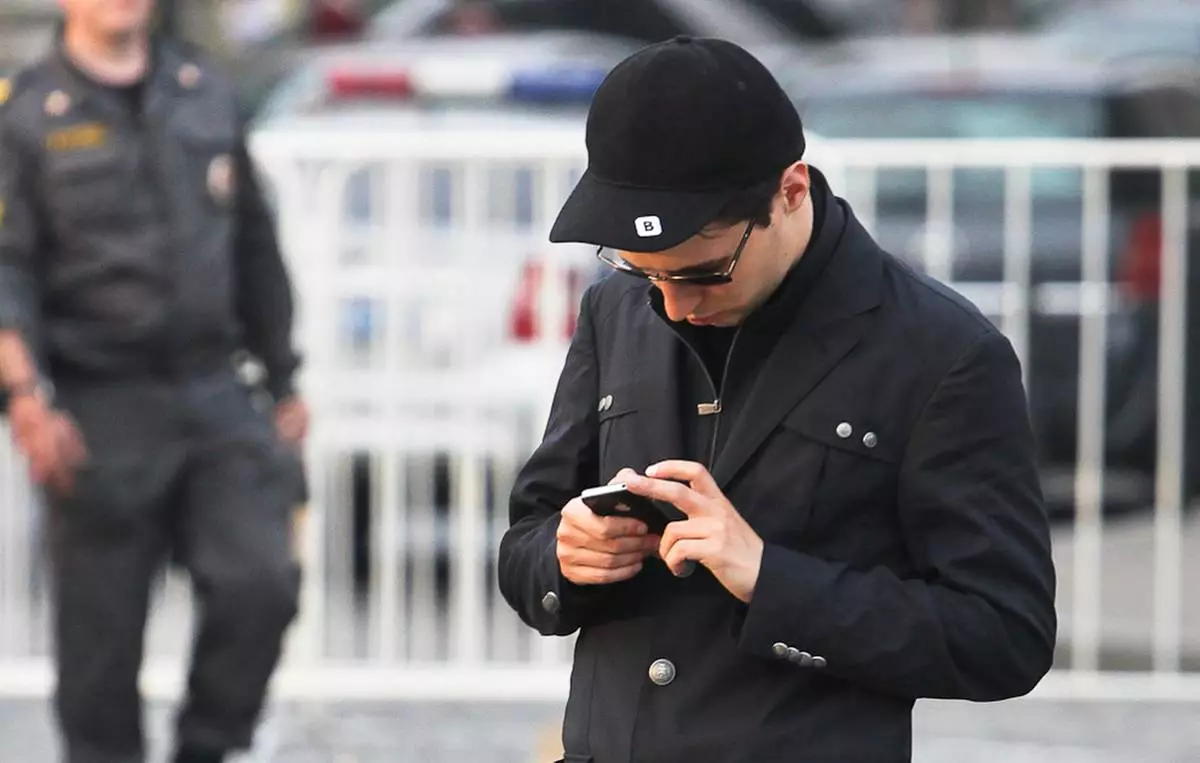
FILE - Pavel Durov, founder of Russia's leading social network site VKontakte, or "in contact", stands in Red Square in Moscow, Russia, on Saturday, May 19, 2012. (AP Photo/Roman Kulik, File)
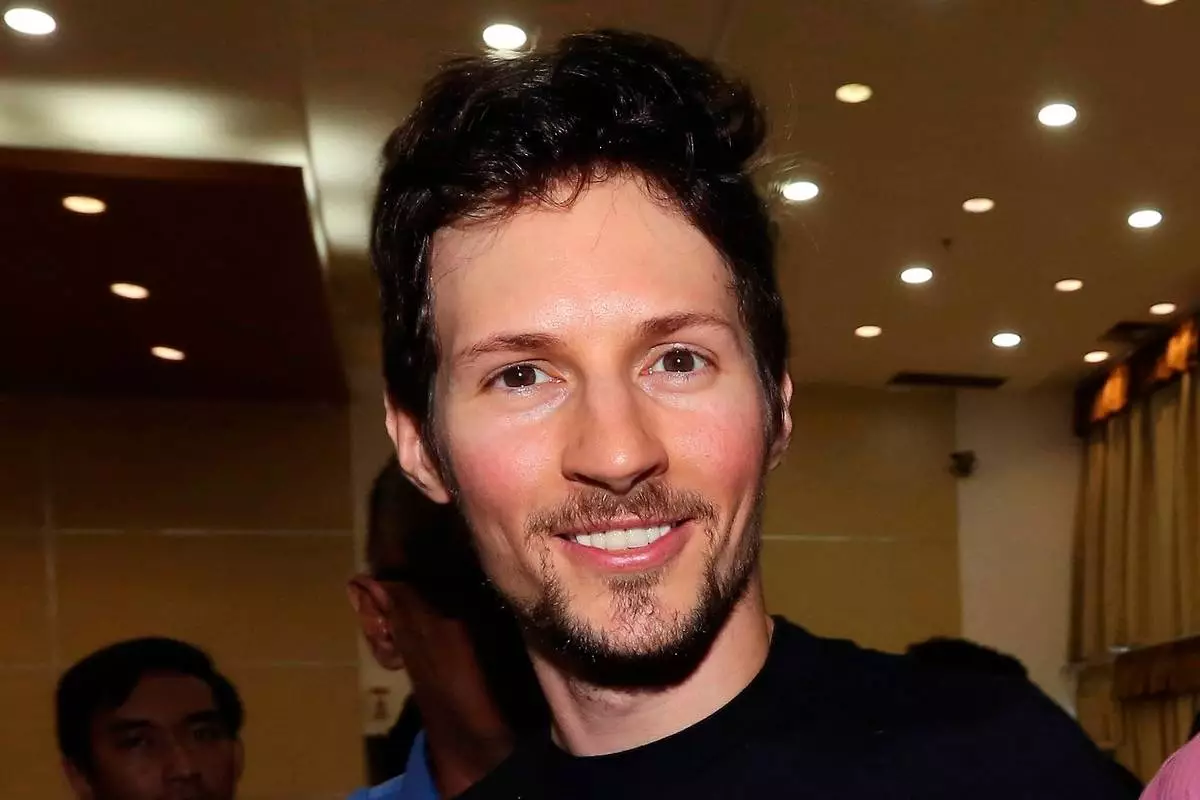
FILE - Telegram co-founder Pavel Durov smiles following his meeting with Indonesian Communication and Information Minister Rudiantara in Jakarta, Indonesia, on Aug. 1, 2017. (AP Photo/Tatan Syuflana, File)

FILE - Telegram co-founder Pavel Durov appears at an event on Aug. 1, 2017 in Jakarta, Indonesia. (AP Photo/Tatan Syuflana, File)
KYIV, Ukraine (AP) — Ukrainian forces hit two of Russia’s biggest oil refineries overnight in its latest long-range strikes, officials said Wednesday, as Kyiv deepened its economic, military and diplomatic pressure on Moscow.
Ukraine’s almost daily long-range drone and missile strikes using domestically developed weapons have battered Russian oil facilities for months. The operation has brought a fuel crisis that is embarrassing the Kremlin more than four years after Russia’s all-out invasion of its neighbor.
The overnight attacks started fires at a Lukoil refinery in Russia’s Perm region, more than 1,500 kilometers (900 miles) from Ukraine, and a refinery in Ryazan, about 400 kilometers (180 miles) from the border, Ukraine’s Security Service and General Staff said in separate statements.
The refineries have a combined annual production capacity of around 220 million barrels of oil, according to Ukraine, and make a vital contribution to Russia's military effort and its government revenue.
It was not immediately possible to independently verify the claims. Ryazan Gov. Pavel Malkov said only that six people were taken to a hospital after a drone attack. He said drone debris caused fires at unidentified “industrial sites.”
Russian online retailer Wildberries, a major supplier likened to Amazon that Ukraine has targeted in recent days, said it evacuated employees from a facility in Ryazan but provided no further details.
Russia has sophisticated air defenses but its vast territory is hard to comprehensively cover.
The attacks came hours after President Volodymyr Zelenskyy visited Washington on Tuesday for talks with U.S. President Donald Trump to push for more vital American help for Ukraine’s fight against its much bigger enemy.
“Russia must feel that every day of this war will only come at a higher cost for it. We need to weaken the aggressor and keep up the pressure to bring an end to this war closer,” Zelenskyy said on social media.
Ukraine’s recent high-profile successes against Russia have impressed Washington and helped restore U.S. goodwill after Trump’s reluctance at the start of his second term to keep supporting Kyiv. That stance had raised the specter of Ukraine and Europe having to stand up to Russian aggression alone.
Zelenskyy said he had a “good meeting” with the American president, and Trump described the meeting as a “Great Honor.” The talks took place behind closed doors.
“Many things were discussed. The meeting went very well!” Trump wrote on Truth Social.
Zelenskyy said he also had a meeting in Washington with representatives of both parties in the U.S. Senate, with more than 60 senators in attendance, as Ukraine pushes for more sanctions on Russia. He also met with representatives of Lockheed Martin, days after he welcomed a delegation from Raytheon to Kyiv.
The U.S. weapons manufacturers are a crucial source of sophisticated weaponry, such as Patriot air defense systems, that Ukraine hopes to make itself. Trump said earlier this month he would grant Ukraine licenses to manufacture the Patriots it needs to counter Russia’s ballistic missiles.
Zelenskyy says Ukraine is discussing joint production and technology exchange with both Lockheed Martin and Raytheon.
Ukraine is ready to share its cutting-edge — and battle-tested — drone technology. Its swift technical innovation has paid dividends as it helps pin down Russia’s bigger army on the front line and denies it supplies by hitting rear areas.
That has impressed countries around the world. Matthew Whitaker, the U.S. Ambassador to NATO, said during a visit to Ukraine earlier this week: “From reconnaissance and logistics to precision strikes, Ukraine has shown the world how unmanned systems can give smaller forces a decisive edge.”
Prospects for a settlement to stop the fighting appear dim, despite a yearlong diplomatic push by the Trump administration.
But U.S. officials also agreed that Steve Witkoff and Jared Kushner, the president’s main envoys, would make a trip to Kyiv sometime in the future, according to a person familiar with the talks who was granted anonymity to discuss the closed-door meeting.
Maj. Gen. Mykhailo Drapatyi, the new commander-in-chief of Ukraine's military, said in a social media post on Wednesday that he had held his first phone conversation with Gen. Alexus G. Grynkewich, the Supreme Allied Commander Europe and Commander of U.S. European Command.
“I outlined my vision of Ukraine’s victory and the capabilities required to achieve it,” said Drapatyi, who was appointed last week as part of a government reshuffle.
“At this stage of the war, we must strengthen operations across multiple domains, prevent enemy infiltration into our defensive lines, and expand both long-range and medium-range precision strikes against the enemy,” he added.
Ukrainian units also have struck 201 Russian vessels over the past three weeks in the Black Sea and Sea of Azov, which border both countries, a senior military official said.
The tally doesn’t include vessels hit by Ukraine’s Security Service and other military groups, a Ukrainian military commander who could be identified only by his call sign Magyar, in keeping with the rules of the Ukrainian military, said late Tuesday.
Ukrainian forces also struck a naval base used by Russia’s Black Sea, according to the General Staff.
It reported other strikes on a radar station in Russia’s Bryansk region on the border and on a drone launch site and a road bridge in the occupied part of Ukraine’s eastern Donetsk region.
The Russian Defense Ministry reported Wednesday that its air defenses shot down 295 Ukrainian drones overnight above a number of Russian regions and occupied Crimea.
Russian glide bombs struck the northeastern city of Kharkiv and 17 other places in the region of the same name over the previous 24 hours, wounding 11 people, the head of the regional military administration, Oleh Syniehubov, said.
Hatton reported from Lisbon, Portugal.
Follow the AP’s coverage of the war in Ukraine at https://apnews.com/hub/russia-ukraine
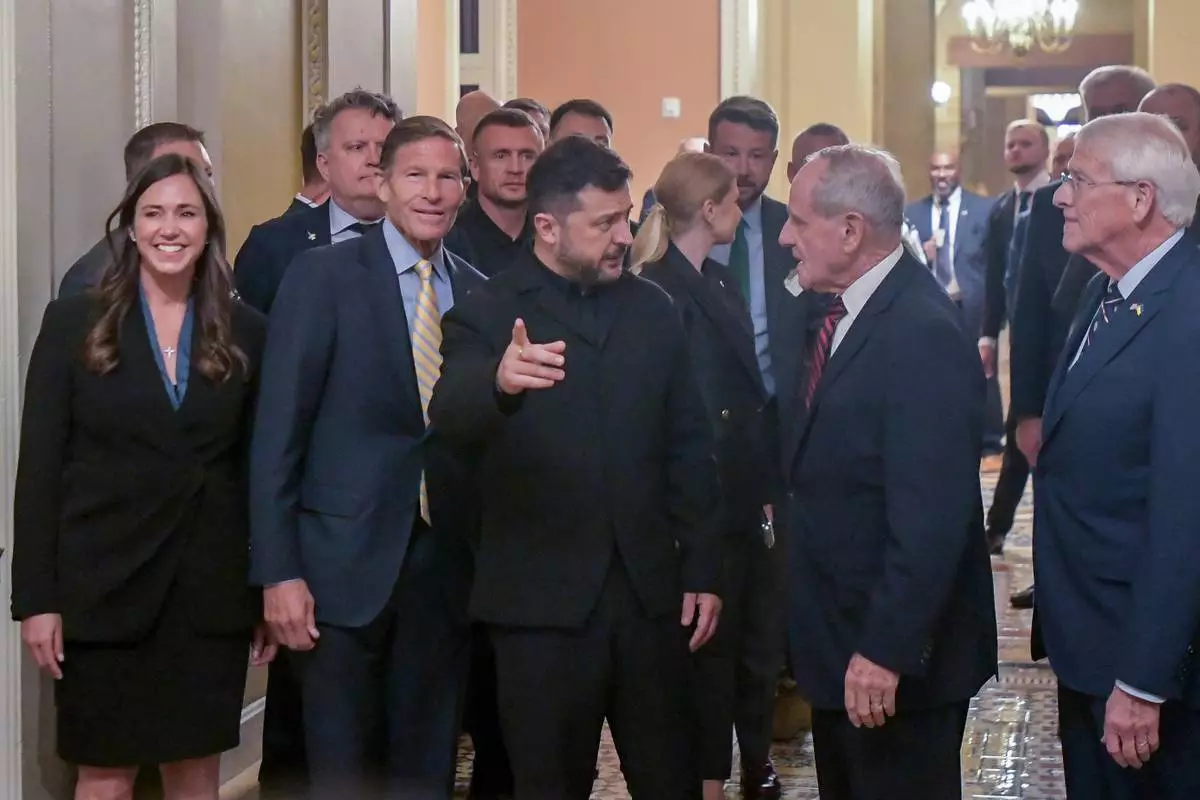
Ukraine's President Volodymyr Zelenskyy, center, is joined by from left: Sen. Katie Britt, R-Ala., Sen. Richard Blumenthal, D-Conn., Sen. James Risch, R-Idaho, and Sen. Roger Wicker, R-Miss., as he arrives at the U.S. Capitol for a meeting of bipartisan leaders of the Lindsey O. Graham Sanctioning Russia and Iran Act of 2026, Tuesday, July 28, 2026, in Washington. (AP Photo/Rod Lamkey, Jr.)
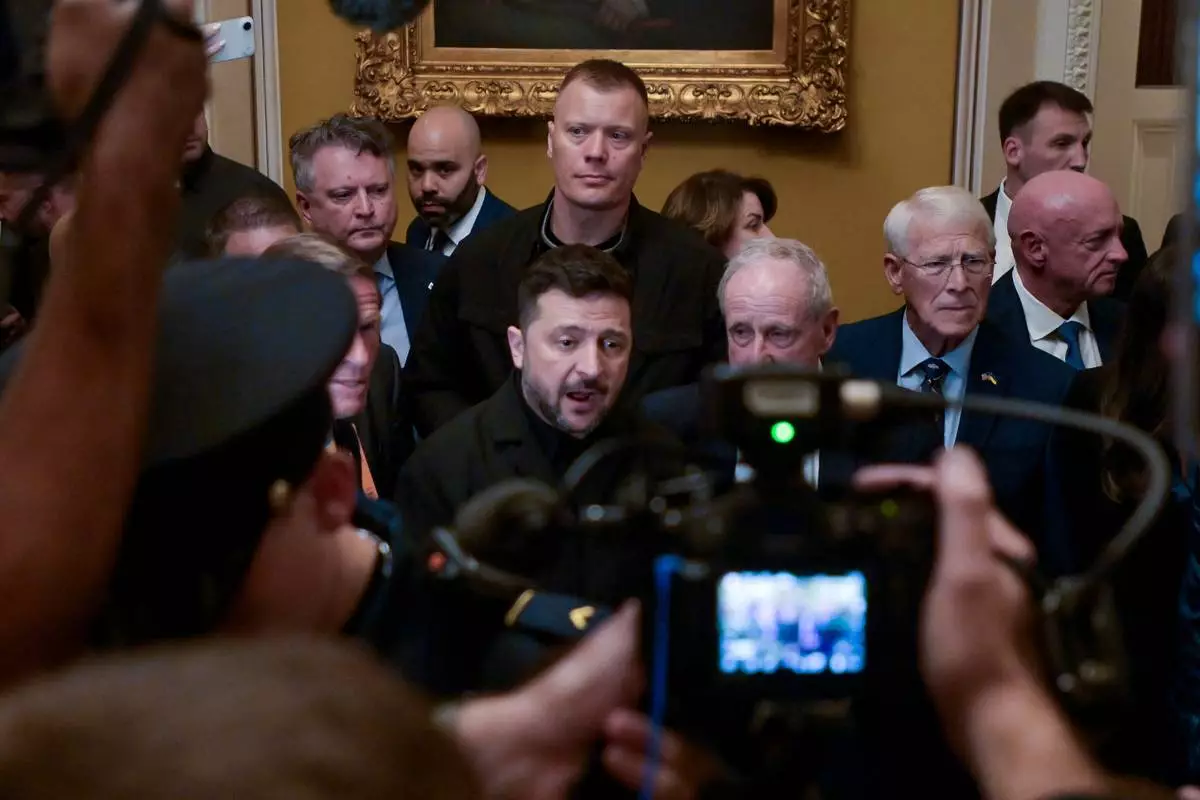
Ukraine's President Volodymyr Zelenskyy, center, speaks to reporters at the U.S. Capitol with from left: Sen. Richard Blumenthal, D-Conn., Sen. James Risch, R-Idaho, Sen. Roger Wicker, R-Miss., and Sen. Mark Kelly, D-Ariz., following a meeting of bipartisan leaders of the Lindsey O. Graham Sanctioning Russia and Iran Act of 2026, Tuesday, July 28, 2026, in Washington. (AP Photo/Rod Lamkey, Jr.)
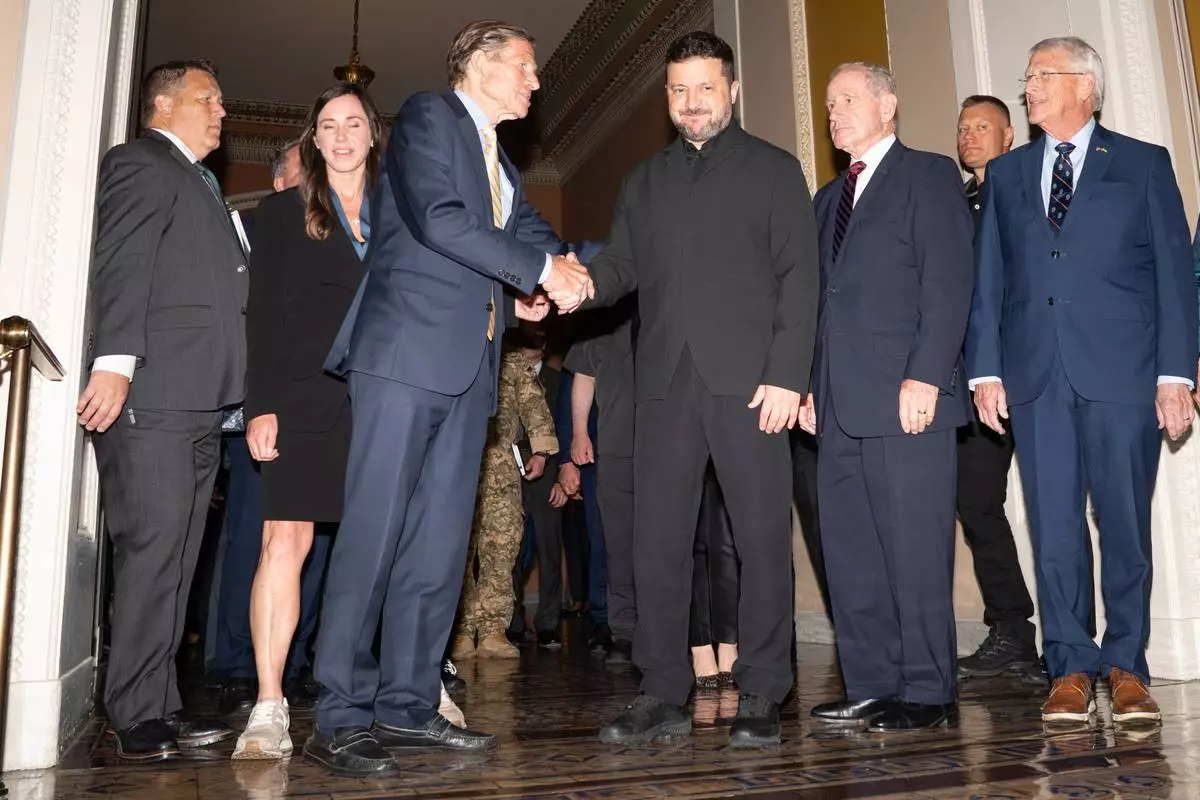
Ukraine's President Volodymyr Zelenskyy stands with a bipartisan group of Senators in the Capitol building, Tuesday, July 28, 2026, in Washington. (AP Photo/Allison Robbert)
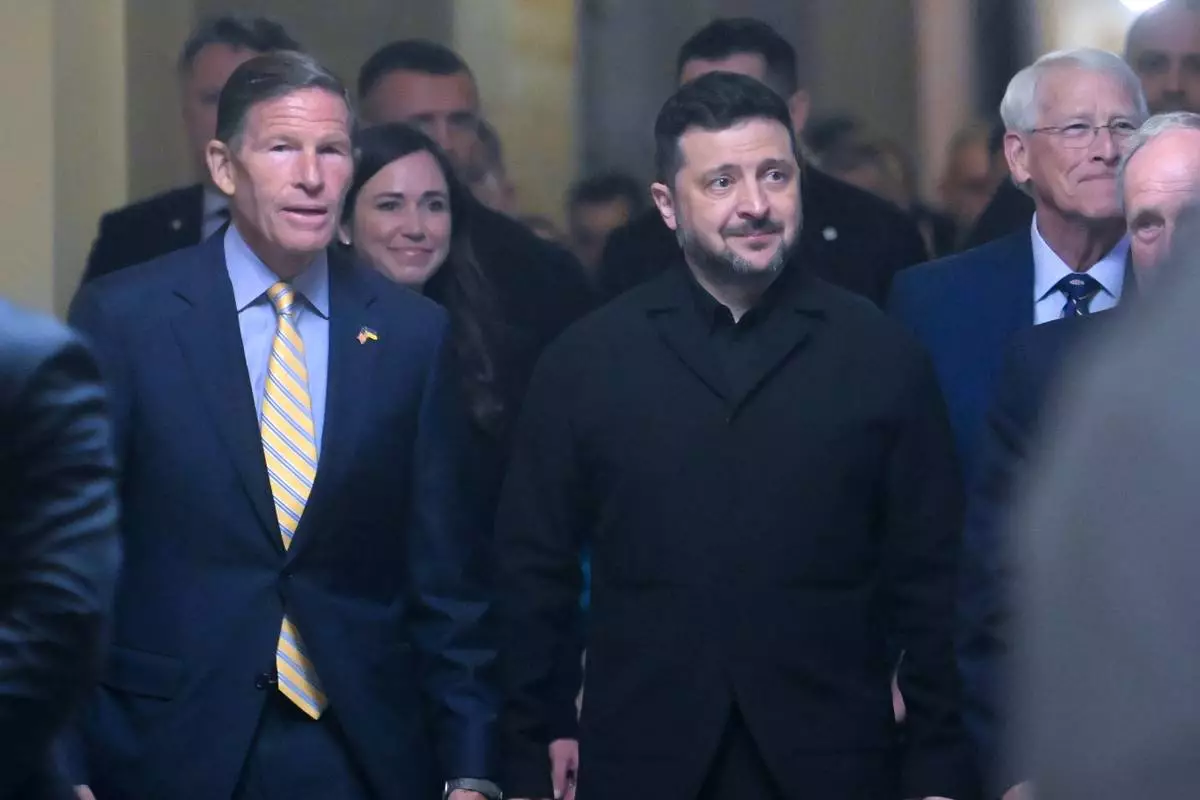
Ukraine President Volodymyr Zelenskyy, is joined by from left: Sen. Richard Blumenthal, D-Conn., Sen. Katie Boyd Britt, R-Ala., Sen. Roger Wicker, R-Miss., and Sen. James Risch, R-Idaho, as he arrives at the U.S. Capitol for a meeting of bipartisan leaders of the Lindsey O. Graham Sanctioning Russia and Iran Act of 2026, Tuesday, July 28, 2026, in Washington. (AP Photo/Rod Lamkey, Jr.)