Skip to Content Facebook Feature Image

US Biathlon considers joining US Ski & Snowboard in rare merger of Olympic sport organizations

Sport

US Biathlon considers joining US Ski & Snowboard in rare merger of Olympic sport organizations
Sport

Sport

US Biathlon considers joining US Ski & Snowboard in rare merger of Olympic sport organizations

2026-07-29 12:30 Last Updated At:12:40

U.S. Biathlon is poised to move under the control of U.S. Ski & Snowboard, a rare merger of two Olympic sport organizations that officials say is necessary to boost biathlon’s revenues and performance but athletes worry will hurt the sport.

U.S. Biathlon Association's board of directors is set to vote on the plan Wednesday. They began working on the proposal in March after the U.S. failed, once again, to win a biathlon medal at the Winter Olympics, and told members in May.

U.S. Biathlon CEO Jack Gierhart told members that the U.S. Olympic and Paralympic Committee is cutting 22% of its funding and sponsors are pulling back. That led the board to consider an offer to join USSS, where biathlon would have access to more money, could add athlete services and expose more skiers to biathlon.

“We feel that we can help take biathlon to the next level,” USSS CEO Sophie Goldschmidt told the AP.

But the effort has sparked pushback and ethics complaints from longtime biathletes and supporters, who spoke out during town halls and started an opposition website, saying the board has fast-tracked a plan that threatens the sport’s future. Biathlon would get lost among larger, more popular sports like Alpine skiing, they said. Decisions would be made by people who don’t know the sport and many fear losing financial support for the national team.

“I don’t want to see biathlon disappear into another organization,” said Art Stegen, author of the book, “Unique and Unknown: The Story of Biathlon in the United States.”

Merging Olympic sport organizations is rare. Goldschmidt tried to take over USA Surfing last year, but dropped the bid after opposition from members. She's now in talks with USA Skateboarding, she said.

Geirhart said USBA worked carefully to comply with federal law and ensure US Biathlon’s independence while taking advantage of a USSS collaboration.

USSS is a powerhouse in winter sports, overseeing 11 sports and 250 elite athletes, including Alpine ski champion Mikaela Shiffrin and cross-country ski superstar Jessie Diggins. They have a budget of $70 million and 40,000 members compared to biathlon's $4 million budget and 1,407 members. Biathlon, which combines cross-country skiing and rifle shooting, has never won an Olympic medal. It's wildly popular in Europe.

Cross country ski Olympian Kikkan Randall, who's on the USSS board, said the collaboration would benefit both groups.

“There's a recognition of how big biathlon is in Europe. Being able to tap into that popularity and marketability is really intriguing," Randall said.

But some biathletes fear USSS would cut the sport's funding, as it did for U.S. Ski Jumping in 2010 and Nordic Combined in 2014. Longtime biathletes Jon Schafer of Colorado and Marc Sheppard of Montana conducted interviews with people in biathlon and cross-country ski communities and produced an analysis of the merger that concluded working with USSS should be a “last resort.”

“The overwhelming consensus is that everyone is terrified of destroying the long-term future of the organization for possible short-term financial gain," they wrote.

US. Biathlon has held town halls, athlete meetings and working groups to discuss the merger. USSS has not reached out to clubs or members, but has had board discussions, Goldschmidt said.

Stegen, sports lawyer Ed Williams and Olympian Joan Wilder filed a complaint Friday with the USBA ethics committee against board chair Bob Hall, saying he improperly hosted meetings on the merger without notifying members. They alleged board member Dexter Paine has a conflict of interest because he also sits on the USSS board.

The committee on Monday said “it appears there is merit to some of the allegations,” but they dismissed the complaints saying they don’t have authority to remove a board member.

Steven Bank, a law professor at University of California, Los Angeles, who specializes in sport law, said USSS has more diversified revenue sources, so it’s not surprising that the US Olympic Committee would want biathlon connected to it.

But a federal law could be an obstacle, he said.

Under the 1978 Ted Stevens Olympic and Amateur Sports Act, a National Governing Body, like USSS and US Biathlon, can’t be overseen by multiple international federations. USSS is under the International Ski and Snowboard Federation, while biathlon is under the International Biathlon Union.

The law was created to avoid legal disputes that can arise over things like picking national teams, governing standards and rules, he said.

Biathlon's funding would stay with its programs. Biathlon's board, which would expand to include USSS representation, would keep making decisions about governing the sport. Biathlon staff would transfer to USSS and biathlon would have two seats on the USSS board.

Biathletes who oppose the plan say there are other ways to grow the sport, pointing to existing programs that are already attracting more skiers.

Gierhart said the alliance could bring in more resources so they can help clubs get equipment and expand existing programs.

“The long-term implications of what this could bring is really profound from a growing-the-sport perspective and pushing support out to the communities and clubs that need it," he said. __ EDITOR’S NOTE — Martha Bellisle is an amateur biathlete who has won several U.S. national and world championship gold medals in the master’s division. She is a member of the U.S. Biathlon Association.

FILE - Campbell Wright, of the United States, right, competes in the men's 4x7.5-kilometer relay biathlon race at the 2026 Winter Olympics in Anterselva, Italy, Feb. 17, 2026. (AP Photo/Andrew Medichini, File)


FILE - Campbell Wright, of the United States, right, competes in the men's 4x7.5-kilometer relay biathlon race at the 2026 Winter Olympics in Anterselva, Italy, Feb. 17, 2026. (AP Photo/Andrew Medichini, File)

Russia’s main domestic security agency said Wednesday that Pavel Durov, founder of the messaging app Telegram, has been charged with aiding terrorism and put on an international wanted list.

The charges against Durov, who was born and began his career in Russia but later moved abroad, came as the Russian authorities restrict Telegram, one of the most popular messaging apps in the country. It is part of a long-term effort to bring the internet under the Kremlin’s full control that has intensified since Moscow launched its full-scale invasion of Ukraine in February 2022.

The Federal Security Service, also known as the FSB, accused Telegram’s administration in a statement of failing to remove “numerous channels, chats and bots” that are “actively used by Ukrainian intelligence agencies, terrorist, and extremist organizations to prepare and coordinate acts of sabotage and terrorism, mass murder, and cyberfraud" in Russia, which resulted in “numerous human casualties.”

The agency accused Ukrainian security services of using a popular dating chat bot on Telegram to lure and recruit Russians for “sabotage and terrorist activities,” and said 46 users of the chat bot, from 12 to 22 years old, have been detained across Russia since July 2025.

Durov earlier this year announced that the Russian authorities opened a criminal investigation against him and accused them of fabricating pretexts to restrict access to Telegram as part of an attempt to “suppress the right to privacy and free speech.”

If convicted, Durov could face up to life in prison in Russia.

Under President Vladimir Putin, Russian authorities have engaged in multipronged efforts to rein in the internet. They have adopted restrictive laws and banned websites and platforms that don’t comply and focused on improving technology to monitor and manipulate online traffic.

Multiple popular social media platforms, such as Facebook, Instagram and X, have been banned in Russia; YouTube has been throttled; popular messaging apps, such as Signal and Viber, have been blocked, and the most popular ones — WhatsApp and Telegram — have been restricted.

While it’s still possible to circumvent some of the restrictions by using virtual private network services, many of them are routinely blocked, too.

At the same time, Russia actively promotes the “national” messaging app known as MAX, which critics say could be used for surveillance. The platform is touted by developers and officials as a one-stop shop for messaging, online government services, making payments and more. It openly declares it will share user data with authorities upon request, and experts also say it doesn’t use end-to-end encryption.

Durov has faced criminal investigations elsewhere. In 2024, he was arrested in Paris over allegations that his platform was being used for illicit activity, including drug trafficking and the distribution of child sexual abuse images.

This story has been corrected to show the potential penalty is life in prison, not 15 years.

FILE - Pavel Durov, founder of Russia's leading social network site VKontakte, or "in contact", stands in Red Square in Moscow, Russia, on Saturday, May 19, 2012. (AP Photo/Roman Kulik, File)

FILE - Pavel Durov, founder of Russia's leading social network site VKontakte, or "in contact", stands in Red Square in Moscow, Russia, on Saturday, May 19, 2012. (AP Photo/Roman Kulik, File)

FILE - Protesters hold a portrait of messaging app Telegram co-founder Pavel Durov designed as an icon, protesting against the blocking of the app in Russia, during a May Day rally in St. Petersburg, Russia, Tuesday, May 1, 2018. (AP Photo, File)

FILE - Protesters hold a portrait of messaging app Telegram co-founder Pavel Durov designed as an icon, protesting against the blocking of the app in Russia, during a May Day rally in St. Petersburg, Russia, Tuesday, May 1, 2018. (AP Photo, File)

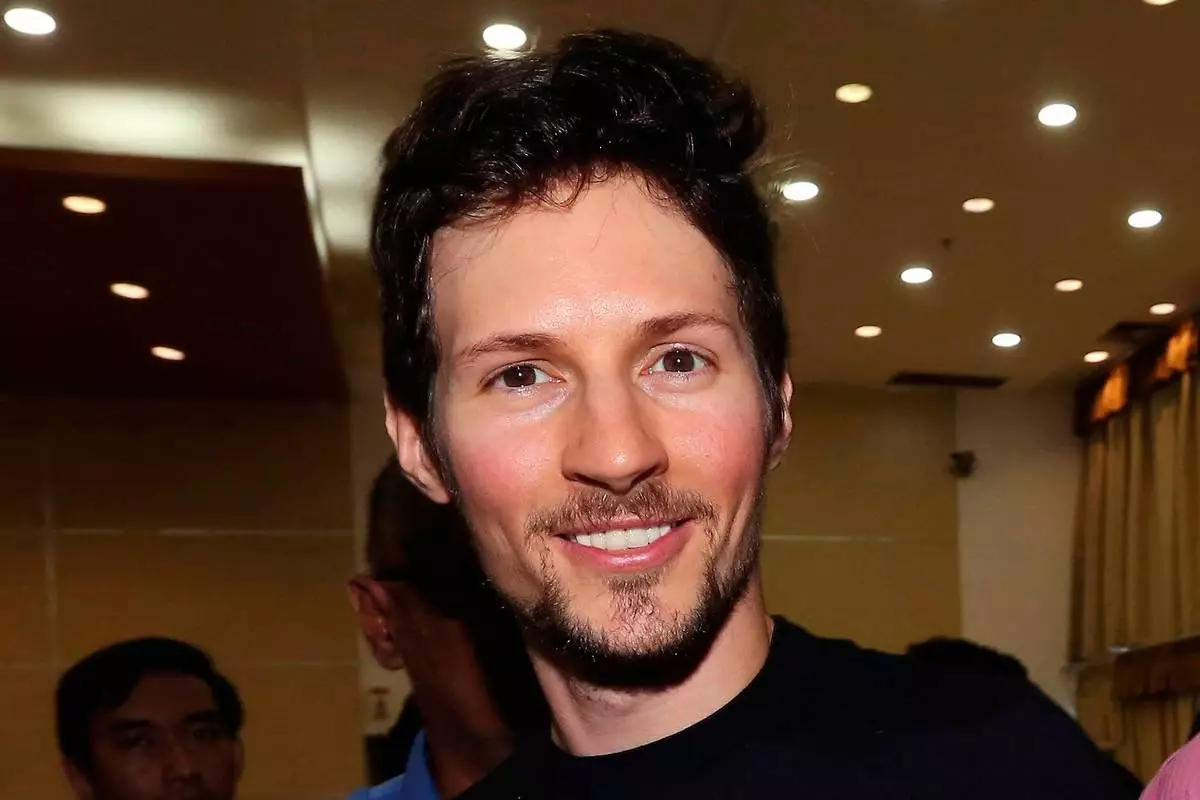
FILE - Telegram co-founder Pavel Durov smiles following his meeting with Indonesian Communication and Information Minister Rudiantara in Jakarta, Indonesia, on Aug. 1, 2017. (AP Photo/Tatan Syuflana, File)

FILE - Telegram co-founder Pavel Durov smiles following his meeting with Indonesian Communication and Information Minister Rudiantara in Jakarta, Indonesia, on Aug. 1, 2017. (AP Photo/Tatan Syuflana, File)

The app Telegram, center, a popular messenger app in Russia restricted by authorities, is shown on a smartphone in Moscow, Russia, Wednesday, July 29, 2026. (AP Photo)

The app Telegram, center, a popular messenger app in Russia restricted by authorities, is shown on a smartphone in Moscow, Russia, Wednesday, July 29, 2026. (AP Photo)

The app Telegram, a popular messenger app in Russia restricted by authorities, is shown on a smartphone in Moscow, Russia, Wednesday, July 29, 2026. (AP Photo)

The app Telegram, a popular messenger app in Russia restricted by authorities, is shown on a smartphone in Moscow, Russia, Wednesday, July 29, 2026. (AP Photo)

FILE - Telegram co-founder Pavel Durov appears at an event on Aug. 1, 2017 in Jakarta, Indonesia. (AP Photo/Tatan Syuflana, File)

FILE - Telegram co-founder Pavel Durov appears at an event on Aug. 1, 2017 in Jakarta, Indonesia. (AP Photo/Tatan Syuflana, File)

Recommended Articles