DETROIT (AP) — Two people who attended a prestigious Michigan fine arts school reported conduct of a sexual nature by Jeffrey Epstein, a major donor, according to an investigation that also uncovered dozens of allegations spanning decades against nearly 50 other people.
Interlochen Center for the Arts operates a summer camp and performing arts school that draws students from around the world. It hired a law firm in 2024 to investigate reports of sexual abuse by faculty and staff. Subsequently, it expanded the work to include information about Epstein, the 66-year-old financier who killed himself in jail in 2019.
Interlochen removed Epstein's name from a lodge after he was convicted of sex offenses in Florida in 2008. The building, renamed the Green Lake Lodge, was recently demolished after the U.S. Justice Department released millions of pages about him that had been compiled over the years.
Sanghavi Law Office says it collected 70 accounts from alumni alleging “physical conduct of a sexual nature” by 47 faculty and staff members affiliated with Interlochen from the 1950s through the 2010s, most before 2000.
“The information gathered during this investigation is, simply, devastating,” the 97-page report says, noting that alumni reported grooming, flirting, sexual touching and sex.
Interlochen said it has provided names of people accused of misconduct to Grand Traverse County authorities in northern Michigan to determine what steps, if any, might be taken. None are currently employed there, and more than a third are dead.
“We are deeply sorry for the harm experienced by members of our community and extend our apologies to those impacted by abuse at Interlochen,” president Trey Davey and board chair Barrett Rollins said in a letter to the community posted online.
“While the vast majority of the incidents described in the investigation took place many decades ago, and reports of abuse at Interlochen have significantly decreased over the past 25 years, the passage of time does not diminish the experiences of our alumni,” they said. “Sexual abuse committed by an adult in a position of power or trust against a student is wrong, then and now.”
Interlochen today “is fundamentally different from the institution described in this report,” Davey and Rollins wrote, with comprehensive safety policies and a changed culture.
Epstein, who played the bassoon, was an Interlochen camper in 1967. He donated more than $400,000 to the school between 1990 and 2003.
Two women told investigators that Epstein engaged in conduct of a sexual nature with them, one of them at the Interlochen lodge that bore his name.
He brushed against her body “over her clothes, in a manner in which he indicated was accidental,” according to the report.
Epstein also paid for her to visit him in New York while she was a student. She said “every time he was ‘handsy’ with her, she would freeze until he would stop,” the report states.
The other woman said she gave Epstein a massage at his home, according to the report, and he may have asked her to remove her top. She never had any further contact with Epstein or his girlfriend, Ghislaine Maxwell.
Outside of the school investigation, at least two Interlochen alumnae made allegations of grooming and abuse against Epstein and Maxwell, according to federal records and media reports. Their identities were not made public.
One testified against Maxwell in 2021 when she was convicted of sex trafficking. It’s unclear whether those women spoke to the law firm hired for the Interlochen investigation.
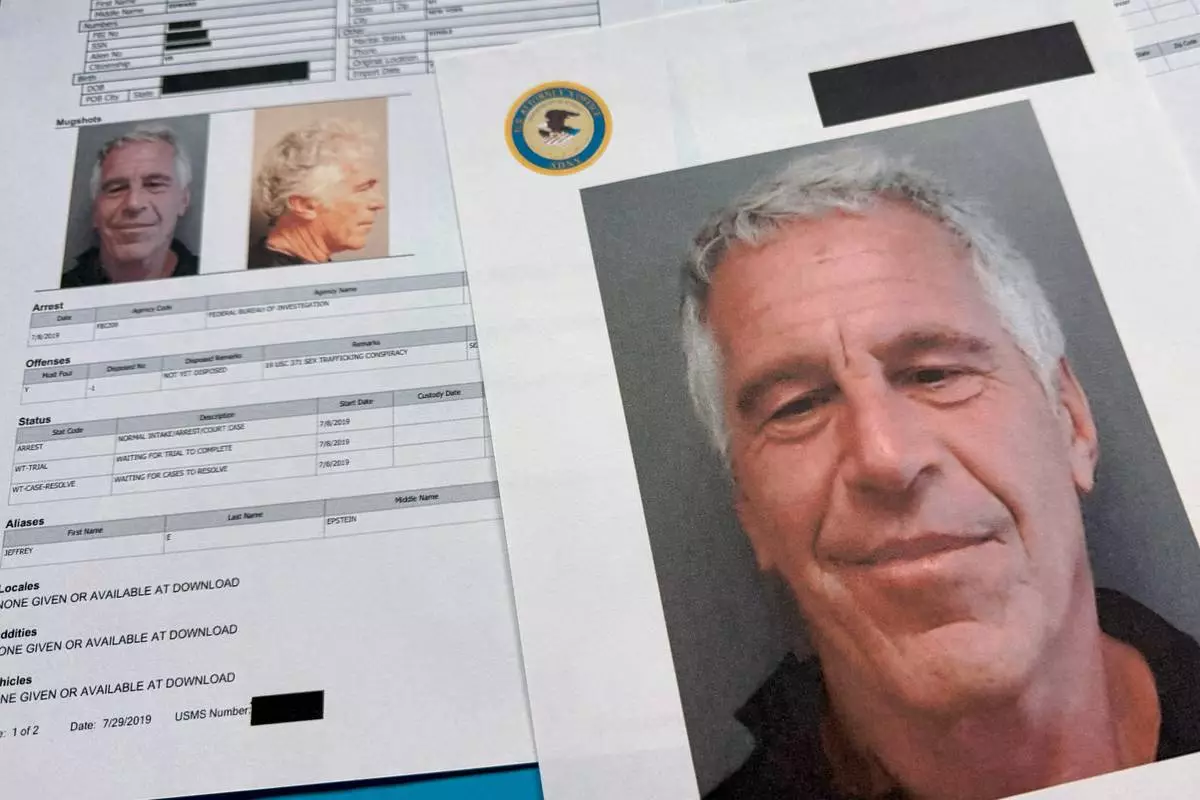
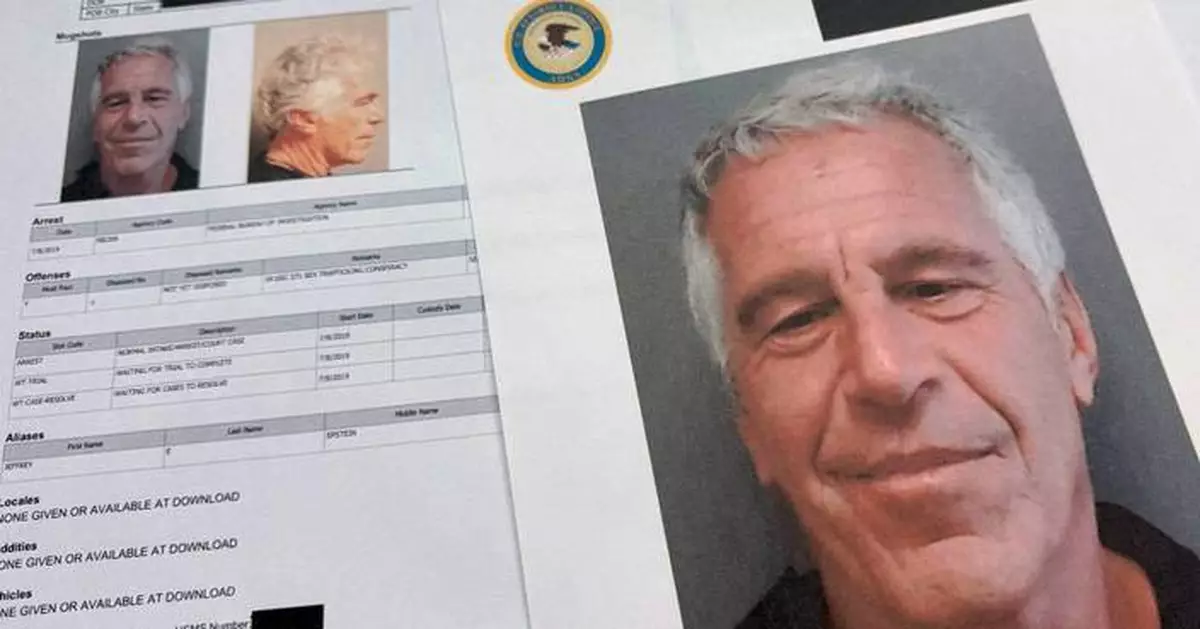
FILE - Documents that were included in the U.S. Department of Justice release of the Jeffrey Epstein files are photographed on Jan. 2, 2026. (AP Photo/Jon Elswick, File)
BUNIA, Congo (AP) — The fastest growing Ebola outbreak ever recorded is leaving thousands more people hungry in eastern Congo, a region engulfed in conflicts and a fight over precious minerals, the head of the U.N. food agency warned on Wednesday.
The World Food Program's acting executive director, Carl Skau, told The Associated Press during a visit to the hard-hit Ituri province that the outbreak is a “crisis on top of a crisis” that has compounded a catastrophic situation with over 5 million Congolese already experiencing emergency-level food insecurity.
The long-running conflict in eastern Congo has driven nearly 10 million people into crisis or emergency levels of hunger, with Ituri — the epicenter of the Ebola outbreak — among the most affected with 1.9 million in need of food, according to the WFP.
“My number one message is that this situation requires much, much more attention,” Skau later told a video news conference with U.N. correspondents. “This is the fastest growing Ebola crisis ever.”
Since the outbreak was declared on May 15, it took just over two months for 1,000 people to die of Ebola in eastern Congo, compared to the 2014-2016 outbreak in West Africa that had been considered the worst in history and when it took about eight months to reach that number.
The dramatic surge shows the urgent need to scale up food, protective equipment, trained staff and funding, Skau said, stressing that the lack of money has forced WFP to cut the number of people it is assisting in Congo from 3 million last year to 1 million this year.
U.N. senior Ebola coordinator Julien Harneis, who was with Skau on the visit to Ituri, said the $2.1 billion humanitarian appeal for Congo is only 45% funded.
The separate Ebola response appeal is being revised upward because it only covered two provinces and now there are four, he said.
The outbreak has been particularly difficult to fight because the Bundibugyo virus responsible for it has no approved vaccines or treatments, unlike most of Congo’s past outbreaks. Harneis said a vaccine trial is underway, but getting a vaccine to Congo is months away.
The United Nations is working with the government and community workers to build trust so that people with symptoms will seek treatment quickly, Harneis said. If they do, he added, “they have a very good chance of surviving Ebola.”
Across some 48 health zones affected with Ebola, WFP said more than 2.7 million people face acute food insecurity, including 628,000 in emergency conditions.
“Now with the Ebola crisis, this is getting worse. Markets are impacted, supply routes are impacted and so people are struggling even more to have enough to eat,” Skau told the AP, and malnutrition is rising.
Since it erupted, the ongoing Ebola outbreak has recorded 3,360 confirmed cases, including 1,487 deaths. Harneis said that in the last 24 hours, 50 people died of Ebola.
Measures introduced to slow the spread — including border closures and restriction of movements and large gatherings — have disrupted life and businesses, driving up food and fuel prices, the WFP has said. The agency said it has so far delivered more than 160,000 hot meals to patients, contacts and front line workers in 17 treatment and isolation centers.
In Mongbwalu, a mining town about 69 kilometers (43 miles) from Bunia, Ituri's provincial capital, residents said Ebola and the measures introduced to fight it have made it difficult for some families to feed their children.
Kahambu Deborah, a 40-year-old mother of six, said she had been struggling to access her farmland due to rebel violence, and that the restrictions linked to Ebola had made things more challenging.
“Sometimes, because of the insecurity, we can’t even go to our fields, and our children are suffering as a result,” she said.
Dr. Richard Lokudu, director-general of the Mongbwalu General Hospital, said health workers are seeing more malnutrition cases in the region, compared to before the outbreak, “even at the Ebola treatment center.”
In Mongbwalu, the U.N. agency’s food support program has helped to “limit the movement of people seeking the means to survive,” said Tourne Kasereka, a monitoring assistant with the WFP.
A critical aspect of that response is getting food to those in need of it, according to Skau.
“The World Food Program needs resources (and) donors to step up so that we can do more, to alleviate the pressures on the people here in Ituri,” he said.
Lederer reported from the United Nations. Associated Press writer Wilson McMakin in Dakar, Senegal, contributed to this report.
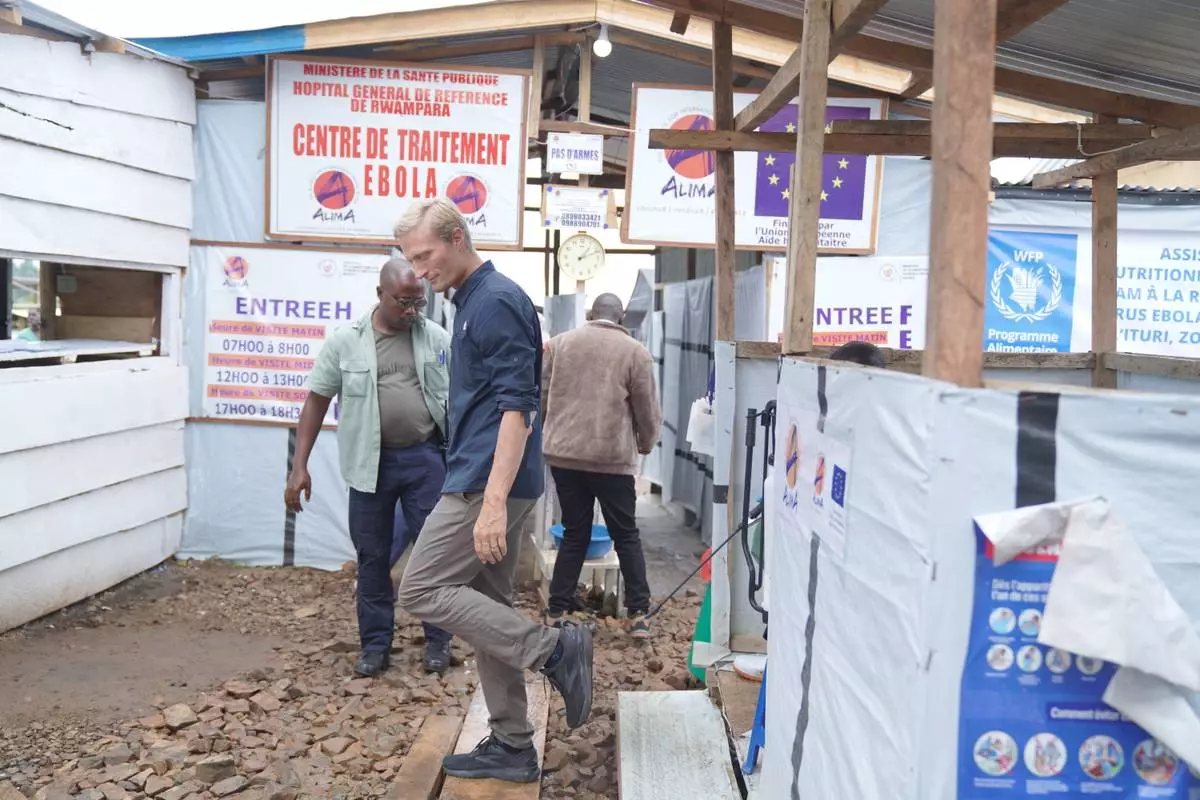
Carl Skau, acting executive director of the World Food Programme, holds up his shoe during a disinfection process at the Rwampara Ebola treatment center in Ituri, eastern Congo, Wednesday, July 29, 2026. (AP Photo/Dieudonne Dirole)
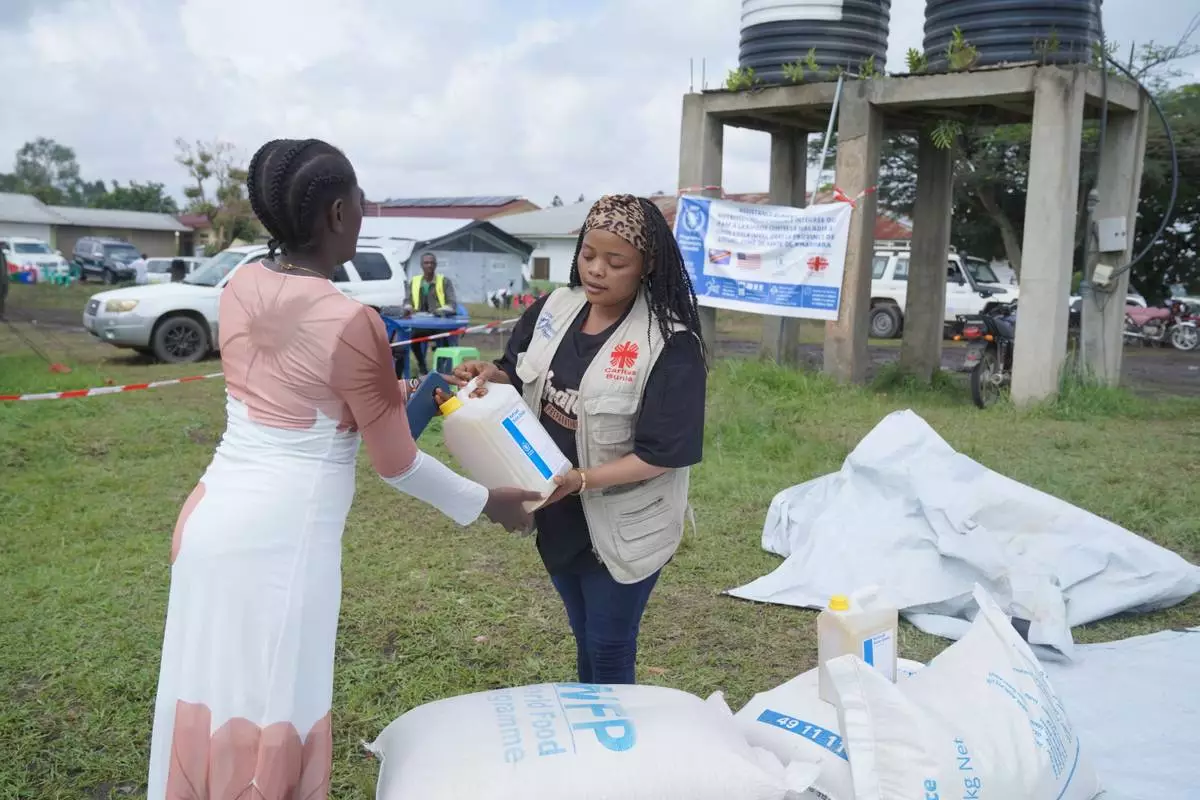
A woman collects a food donation from the World Food Programme at the Rwampara Ebola treatment center in Ituri, eastern Congo, Wednesday, July 29, 2026. (AP Photo/Dieudonne Dirole)
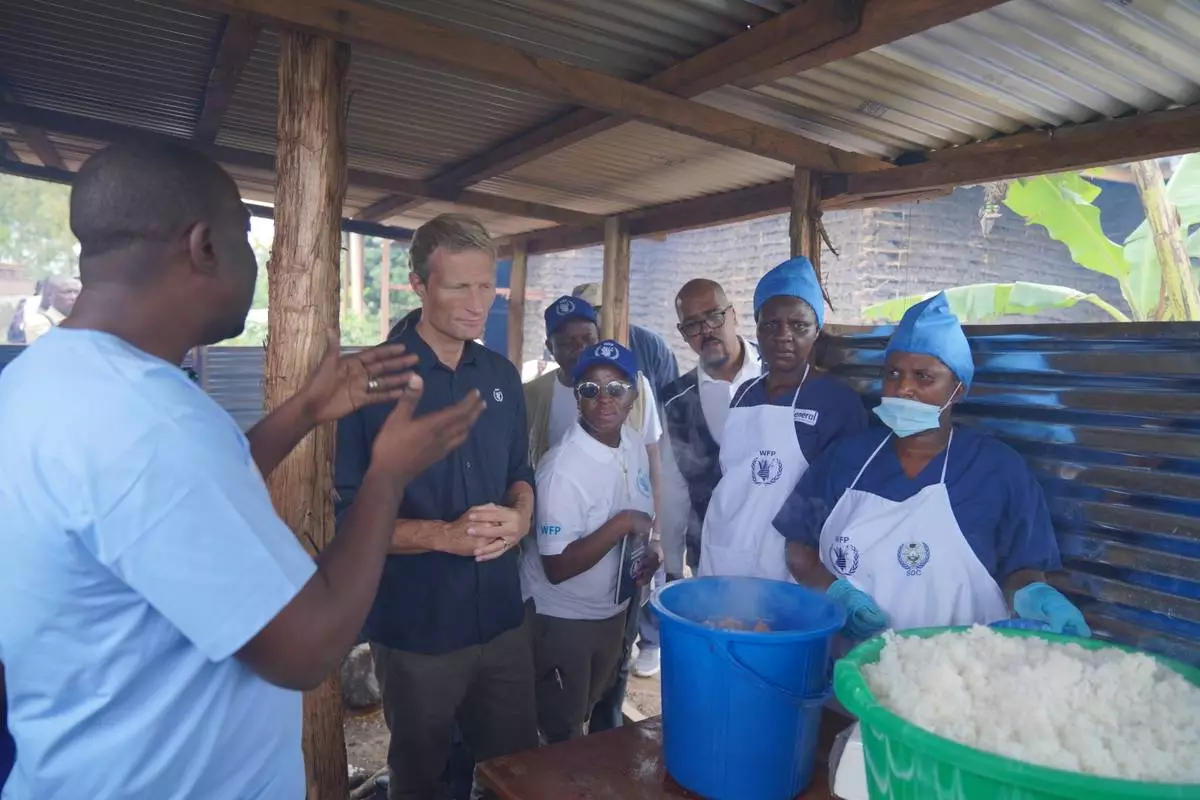
Carl Skau, acting executive director of the World Food Programme (WFP), second from right, meets with frontline workers and WFP staff at the Rwampara Ebola treatment center in Ituri, eastern Congo, Wednesday, July 29, 2026. (AP Photo/Dieudonne Dirole)
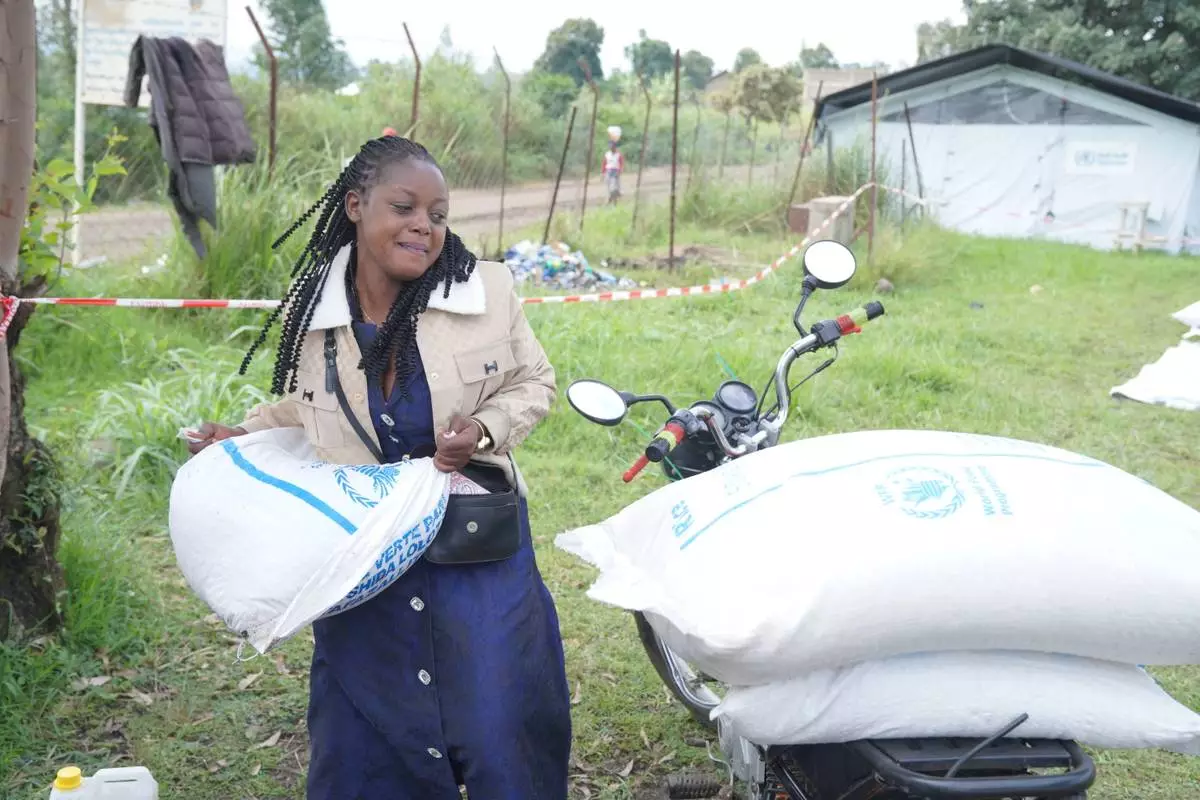
A woman collects a food donation from the World Food Programme at the Rwampara Ebola treatment center in Ituri, eastern Congo, Wednesday, July 29, 2026. (AP Photo/Dieudonne Dirole)
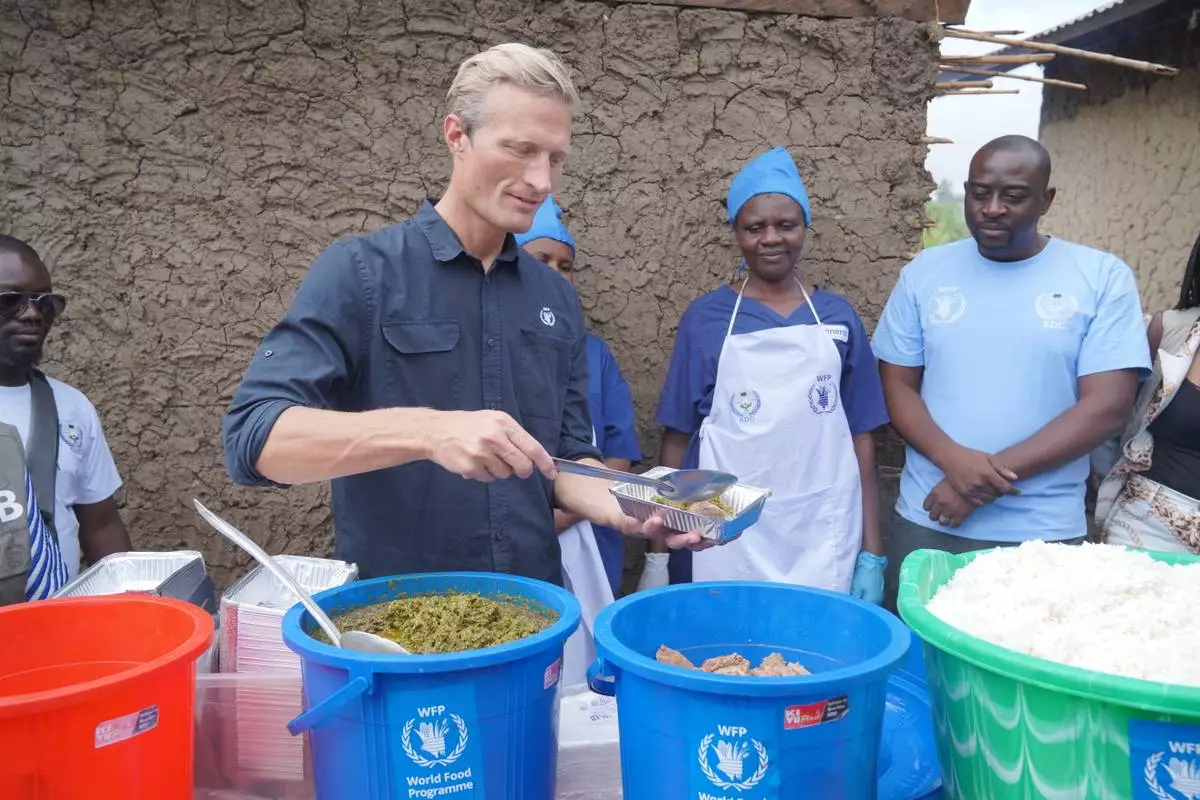
Carl Skau, acting executive director of the World Food Programme, pepares a container of food at the Rwampara Ebola treatment center in Ituri, eastern Congo, Wednesday, July 29, 2026. (AP Photo/Dieudonne Dirole)
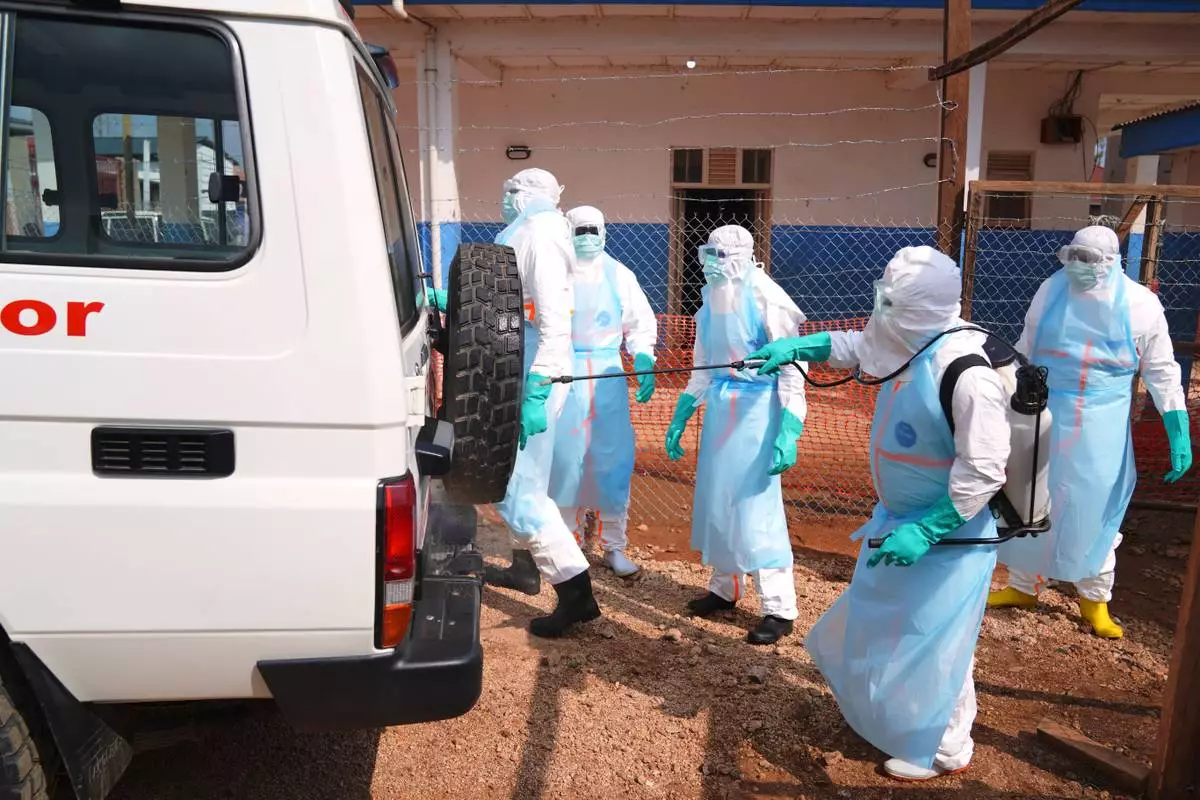
Health workers disinfects an ambulance at Ebola Treatment Center at Bunia General Hospital in Ituri, Congo, Wednesday, July 22, 2026. (AP Photo/Dirole Lotsima Dieudonne)
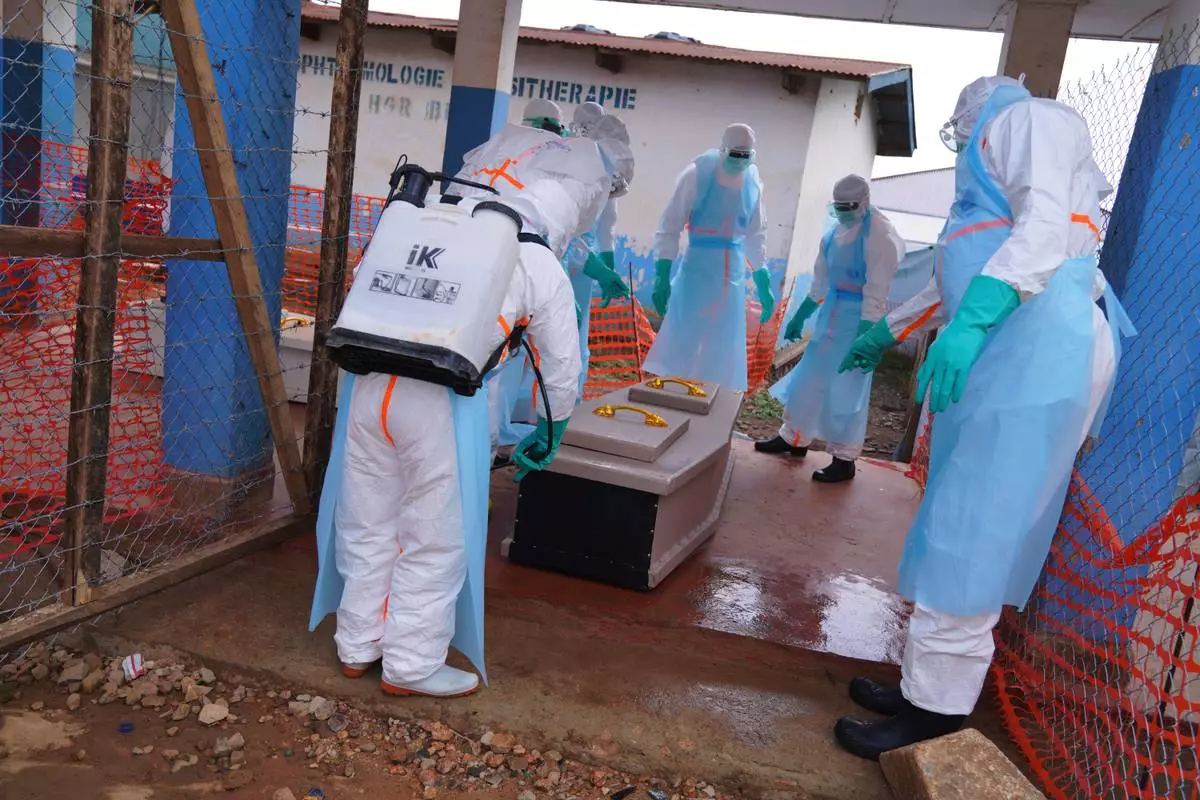
Health workers disinfect a coffin of an Ebola victim at Ebola Treatment Center at Bunia General Hospital in Ituri, Congo, Wednesday, July 22, 2026. (AP Photo/Dirole Lotsima Dieudonne)