It’s been a choppy year for restaurants that lean into lettuce.
Lettuce prices rose sharply in the first half of 2026 due to hot weather in Arizona, where about one-third of America’s lettuce is grown. Now, restaurants are dealing with the fallout from a cyclospora outbreak linked to shredded lettuce that has sickened thousands of Americans.
Taco Bell will likely see the biggest sales impact from the outbreak, which began in late June. Federal health officials first tied the outbreak to shredded iceberg lettuce served at Taco Bell restaurants in Indiana, Kentucky, Michigan, Ohio and West Virginia. Later, the U.S. Food and Drug Administration said customers in Illinois, Kansas, Oklahoma and Pennsylvania were also affected.
Taco Bell said on July 17 that it had voluntarily removed shredded iceberg lettuce supplied by Taylor Farms from its U.S. restaurants. But its customer volume has suffered. As of July 23, Taco Bell visits were 21% lower than average across the U.S., according to Placer.ai, a market research company.
Cases have continued to grow, however, and it’s becoming clear that Taco Bell wasn’t the outbreak's sole source, said Craig Hedberg, a food safety researcher at the University of Minnesota. As the FDA investigation progresses, officials should get a better understanding of which illnesses are connected and “how complex this outbreak actually has become.”
In the meantime, consumers remain cautious. Foot traffic at Chopt, a salad-focused chain with 105 locations, was down 12% as of July 23, according to Placer.ai. M Science, another market research firm, found that weekly spending at the salad chain Sweetgreen dropped 10 percentage points compared to last year during the first half of July.
Chopt didn't respond to a request for comment from The Associated Press. Sweetgreen, which has 285 U.S. locations, did not confirm a drop in sales and said in a statement that its food hasn’t been connected to the current cyclospora outbreak.
“We follow rigorous food safety standards and can trace our ingredients from restaurant to farm,” the company said.
The outbreak came on top of an already difficult year for the lettuce industry and people who love eating salads. The retail price of a pound of iceberg lettuce jumped nearly 20% between January and June of this year, according to government data. Consumers paid an average of 33% more last month for all fresh lettuce compared to a year earlier, the U.S. Department of Agriculture said.
Lettuce prices advertised by major grocery stores last week averaged $1.86 for a head of iceberg, 25 cents more than the same week a year earlier, according to the USDA. A head of red leaf lettuce cost 52 cents more at $1.66, and a bunch of romaine had an advertised price of $2.49 — $1.55 higher, the department reported.
Shoppers caught a break with some types of salad mixes, though, which stores advertised at prices 7 to 24 cents cheaper than a year prior, the USDA said.
Elizabeth Canales, an associate professor of agricultural economics at Mississippi State University, said unusually hot weather in Arizona early in the year caused crops to mature too early. That caused big supply gaps until California production began in late April.
Fuel costs, which increased after the U.S. and Israel launched strikes on Iran and Iran blocked most oil tankers from leaving the Persian Gulf, have also been an issue, according to Canales. Lettuce is especially perishable and requires energy for cooling from the time it's picked to the time it's sold, Canales said.
“The cold chain needs to be maintained. Cooling and transporting it is very important,” Canales said.
Lettuce has been linked to multiple food poisoning outbreaks in the past, including two in 2018 involving E. coli linked to romaine lettuce grown in Arizona and California.
Associated Press Writer Mike Stobbe contributed from New York.

FILE - Organic lettuce is displayed in Falls Church, Va., Saturday, March 11, 2017. (AP Photo/J. Scott Applewhite)
KUMAMOTO, Japan (AP) — Rural communities in southwestern Japan were struggling to get their lives back to normal Thursday, two days after a powerful earthquake set off an explosion at a mall, toppled a factory chimney and flattened homes, killing at least 25 people.
Time was running out to find survivors, as rescuers continued to work in the Kumamoto area on Japan ’s southern main island of Kyushu, where the magnitude 7.1 earthquake hit Tuesday.
The number of those missing was unclear. Of the deaths given in the latest tally, 25 have been confirmed as related to the disaster, but there were nine more deaths under investigation as likely to be connected, the Kumamoto prefectural government said. The quake left at least 86 people injured, five of them seriously, it said.
Survivors spoke about coming home and desperately pulling family members out of the wreckage. Some had suffered injuries and were rushed to the hospital.
Thousands of people spent another night at evacuation centers set up throughout the area in gymnasiums and other big spaces. Some homes were still without water or electricity, while others were simply afraid to go back.
Nearly 19,000 homes were still without electricity and more than 9,000 people were staying in the roughly 400 shelters, where power sources were being added to provide air conditioning.
Concerns were growing about illness, including from the sweltering heat. The Ministry of Environment sent out a heatstroke alert for the Kumamoto area, with temperatures expected to reach as high as 33 C (91 F) Thursday.
In the town of Hikawa, one of the hardest-hit areas in Kumamoto, many residents are without water or electricity, or both, and some are staying inside their vehicles in parks or at the town hall parking lot.
At the front entrance of the town hall, officials delivered bottled water and packaged instant rice, while the Ground Self-Defense Force service members came with a trolley to provide fresh water.
Yoshiaki Nakashima, a 66-year-old resident who came with two bottles and his beloved pet dog to get water, said he is staying in a car because of his reluctance to stay at one of the three evacuation centers in the area. He also said he doesn’t want to sleep at home because aftershocks made him feel uneasy.
“It’s difficult to turn over while sleeping in a car,” he said, but that living at a shelter is even more difficult.
Akiko Inazaki, another resident in her 30s, is living in a tent set up in the yard of her home, which has been without water and electricity since the quake. Inazaki, who also came to get water, said she will use it little by little.
“Fresh water is so valuable,” she said. Inazaki said she drank so little that she almost had a heatstroke.
Risks of heatstroke are a major concern among officials.
Yutaka Kobayashi, a doctor dispatched from central Japan's Aichi prefecture, said he was touring evacuation centers Thursday to assess the condition of evacuees, especially elderly people and those with injuries as they cope with a harsh environment.
“We have to make sure elderly people are not developing heatstrokes or dehydration,” he said in Hikawa.
While the town parking lot was nearly packed the first night, some residents have moved to three public schools where air-conditioning is running, Hikawa officials said.
A town official, Yuzuru Tamura, said they are starting to run out of emergency food supply, such as canned bread and instant rice.
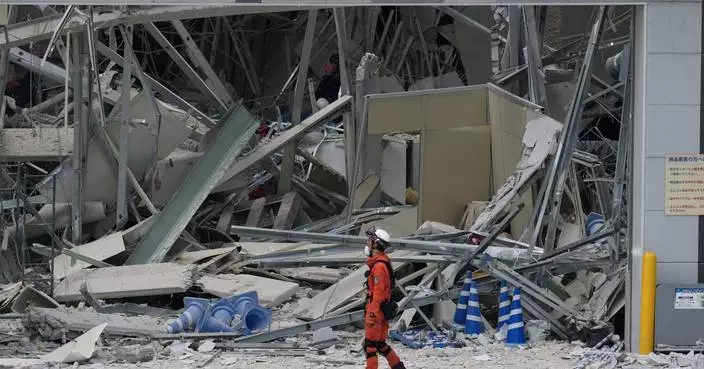
The most serious damage was at the Aeon Mall shopping center in the town of Kashima, which was bustling with thousands of people when the quake struck in the late afternoon.
The company said some 3,000 customers were evacuated to a parking lot before the explosion happened in another part of the mall, where some people were still working. The mall’s second floor collapsed, trapping people.
As of early Thursday, six people were confirmed to have died at the mall site among the 11 people pulled out of the wreckage, according to Kumamoto authorities.
In the Yatsushiro area, where a chimney collapsed at a Nippon Paper Industries factory, 10 people were rescued, but eight others died, and one remained missing, according to the Kumamoto prefectural government disaster team.
Footage provided by the Japanese government and military showed rescue workers drilling through the collapsed parts of the building in an attempt to get to anyone who may still be trapped inside.
Prime Minister Sanae Takaichi told reporters the central government will take a lead role in coordinating the various rescue efforts. Restoring electricity, gas and water to stricken areas, while providing a supply of fresh water is key, she said.
“The needs on the ground are constantly changing. To put to rest the people's feelings of uncertainty, we will do all that needs to be done,” she said.
Associated Press writer Yuri Kageyama in Tokyo contributed to this report.
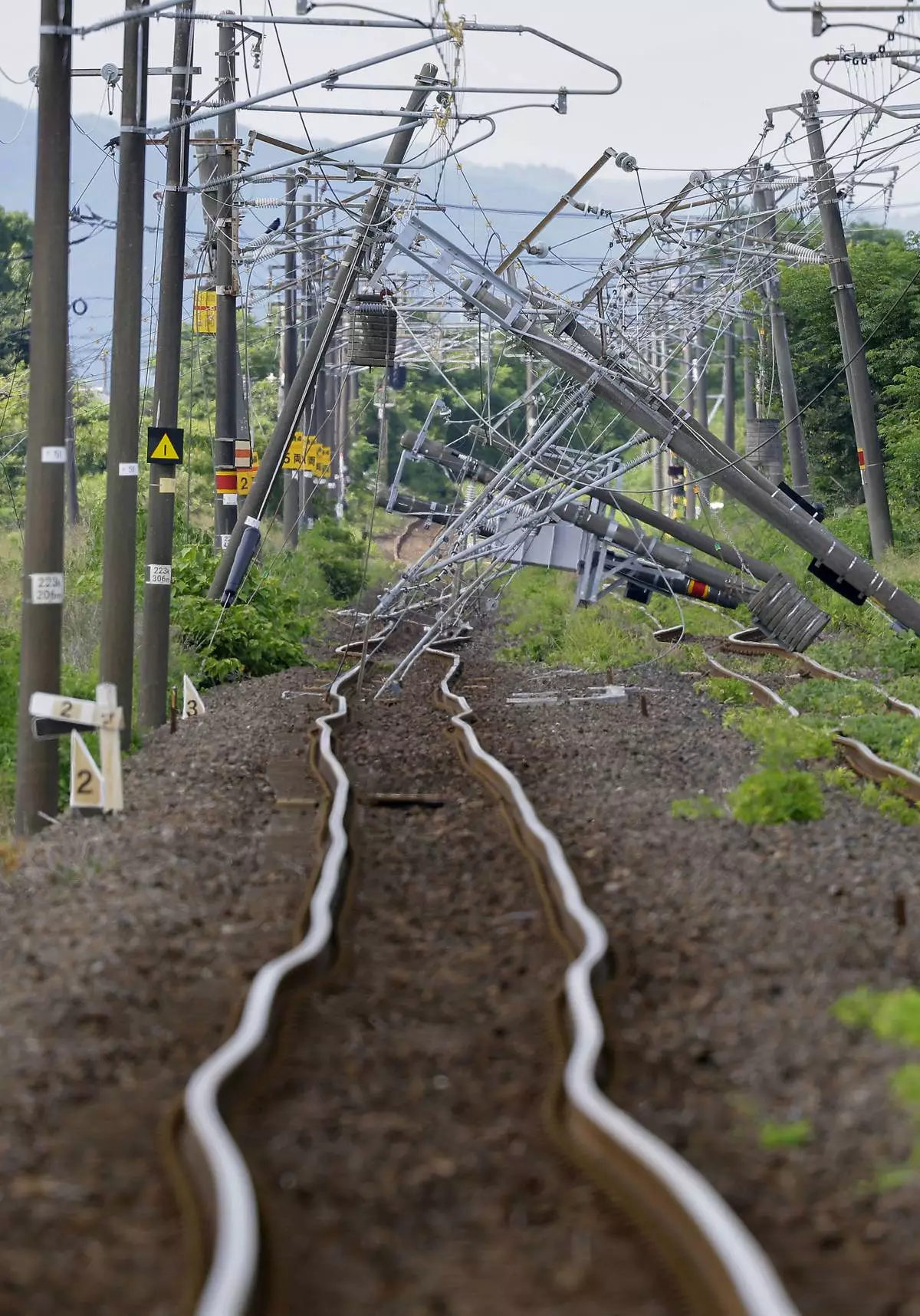
A warped railway track and fallen utility poles between Ogawa and Arisa stations on the JR Kagoshima Line, following an earthquake in Hikawa, Kumamoto Prefecture, Thursday, July 30, 2026. (Atsuhiro Maeda/Kyodo News via AP)
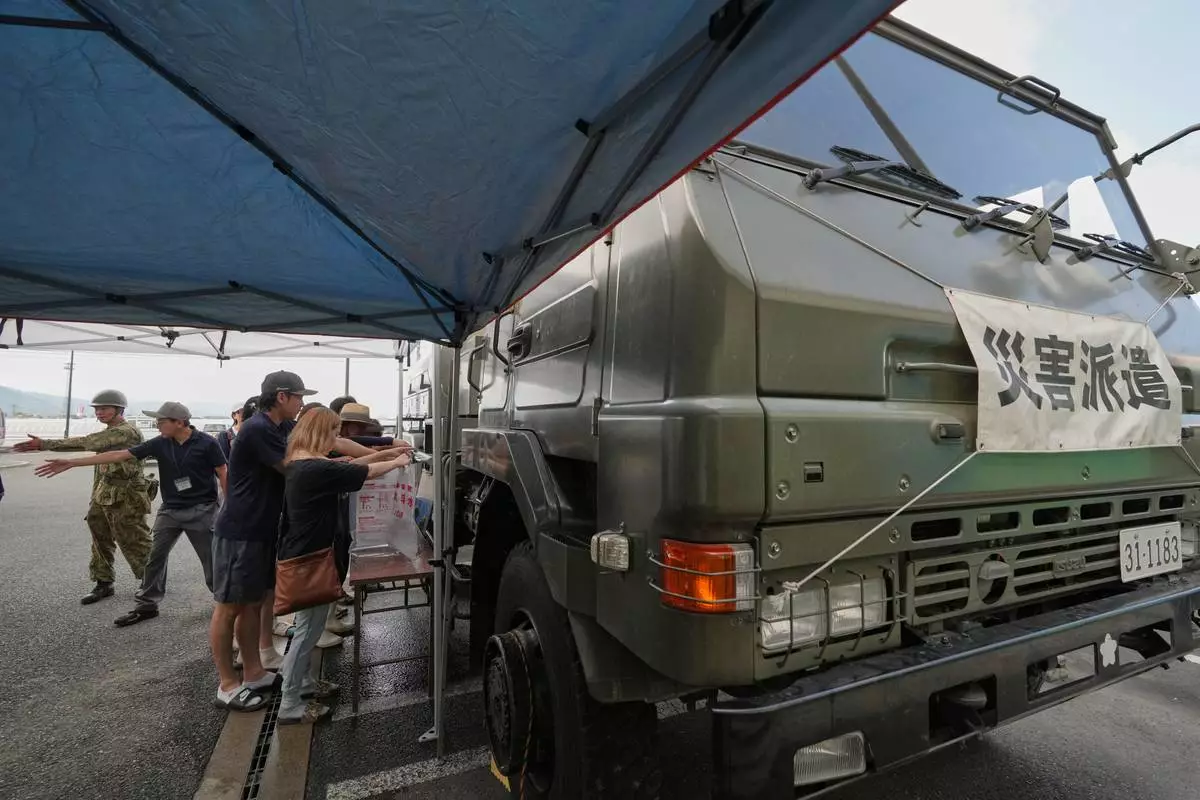
Residents receive a water supply after water service was disrupted following an earthquake in Hikawa, Kumamoto Prefecture, southern Japan, Thursday, July 30, 2026. (AP Photo/Hiro Komae)
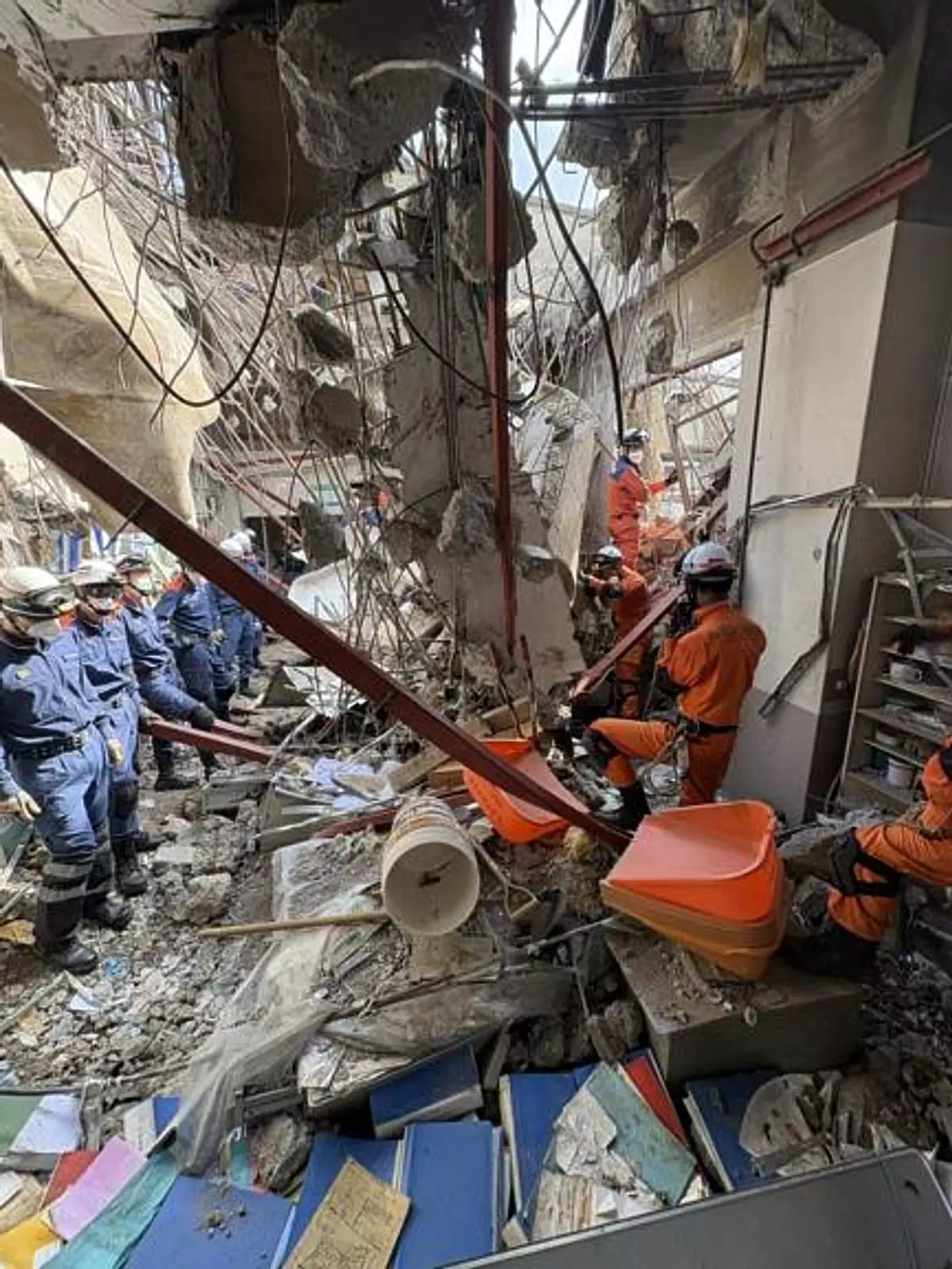
This image provided by Japan's Fire and Disaster Management Agency shows firefighters during rescue operation inside Nippon Paper Industries factory, which was damaged by an earthquake, in Yatsushiro, Kumamoto Prefecture, southern Japan, Thursday, July 30, 2026. (Japan's Fire and Disaster Management Agency via AP)
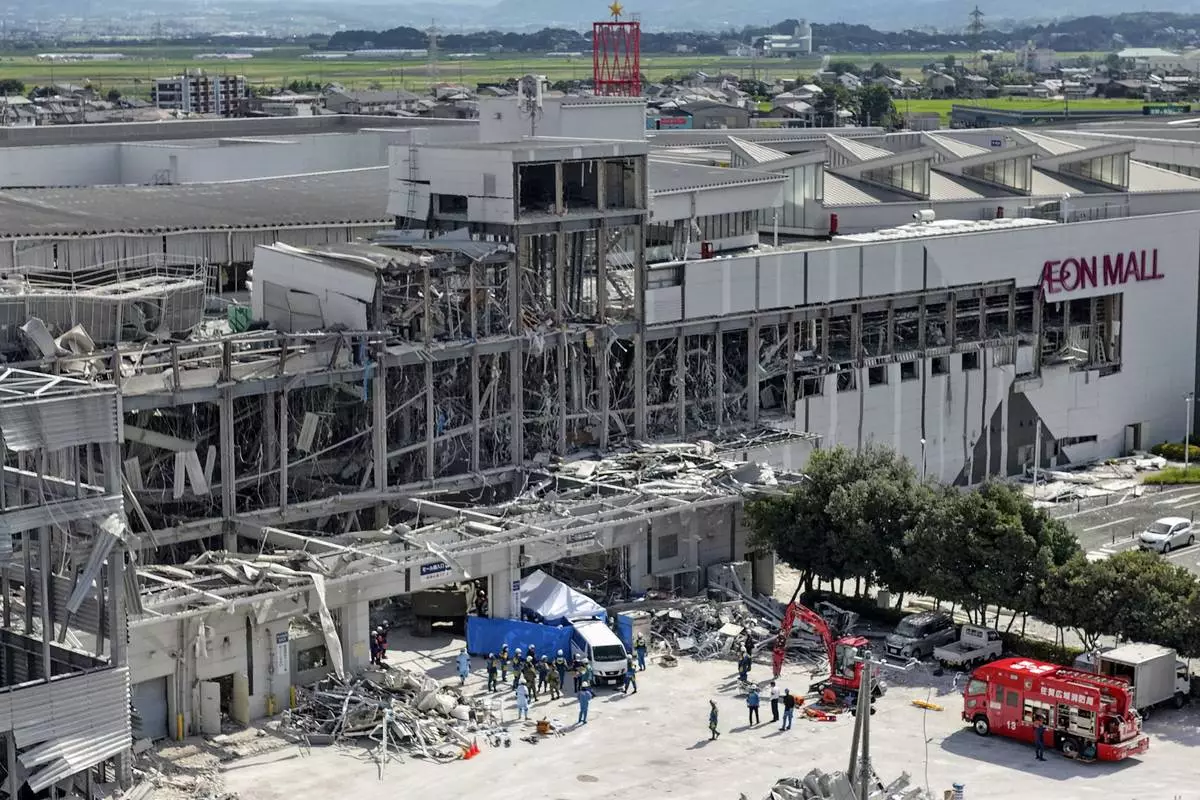
In this aerial image taken with a drone, responders work outside AEON Mall Kumamoto after an explosion occurred following an earthquake, in Kashima, Kumamoto Prefecture, southern Japan, Thursday, July 30, 2026. (Koji Harada/Kyodo News via AP)
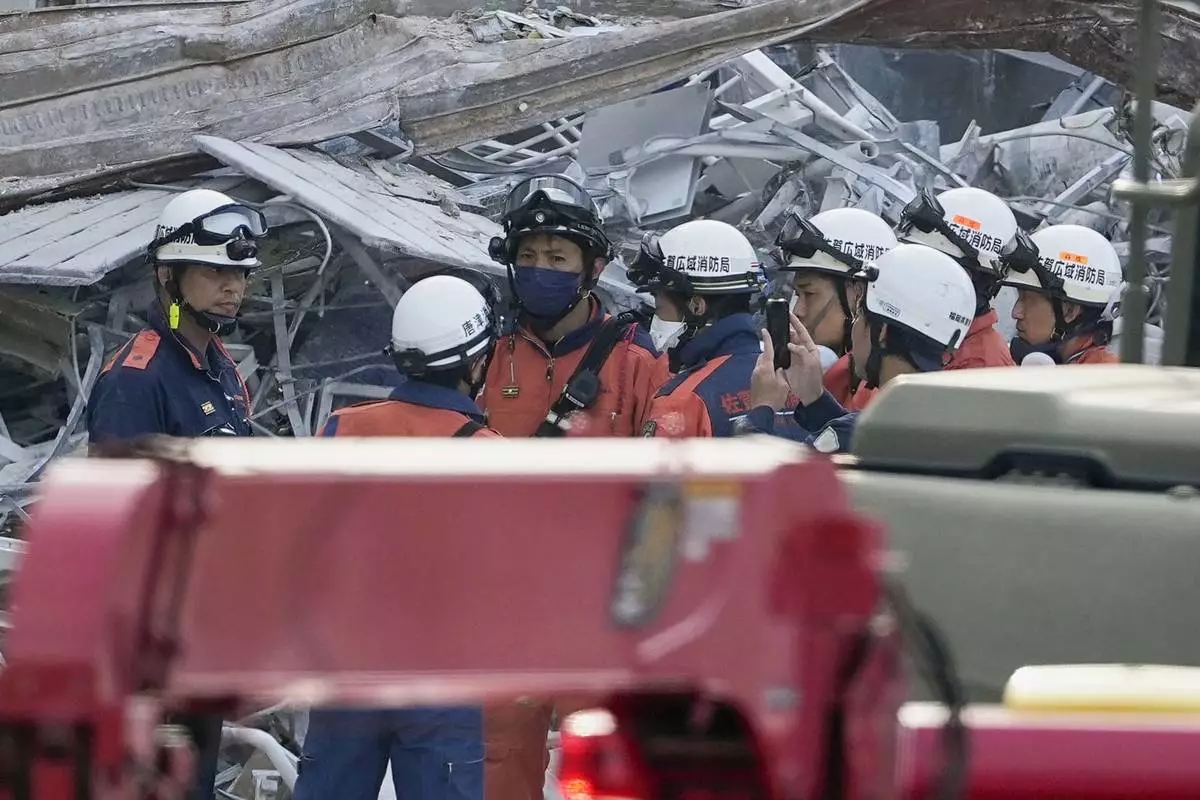
Firefighters gather at AEON Mall shopping center, where an explosion occurred following a powerful earthquake, in Kashima, Kumamoto Prefecture, southern Japan, Thursday, July 30, 2026. (Kai Naito/Kyodo News via AP)
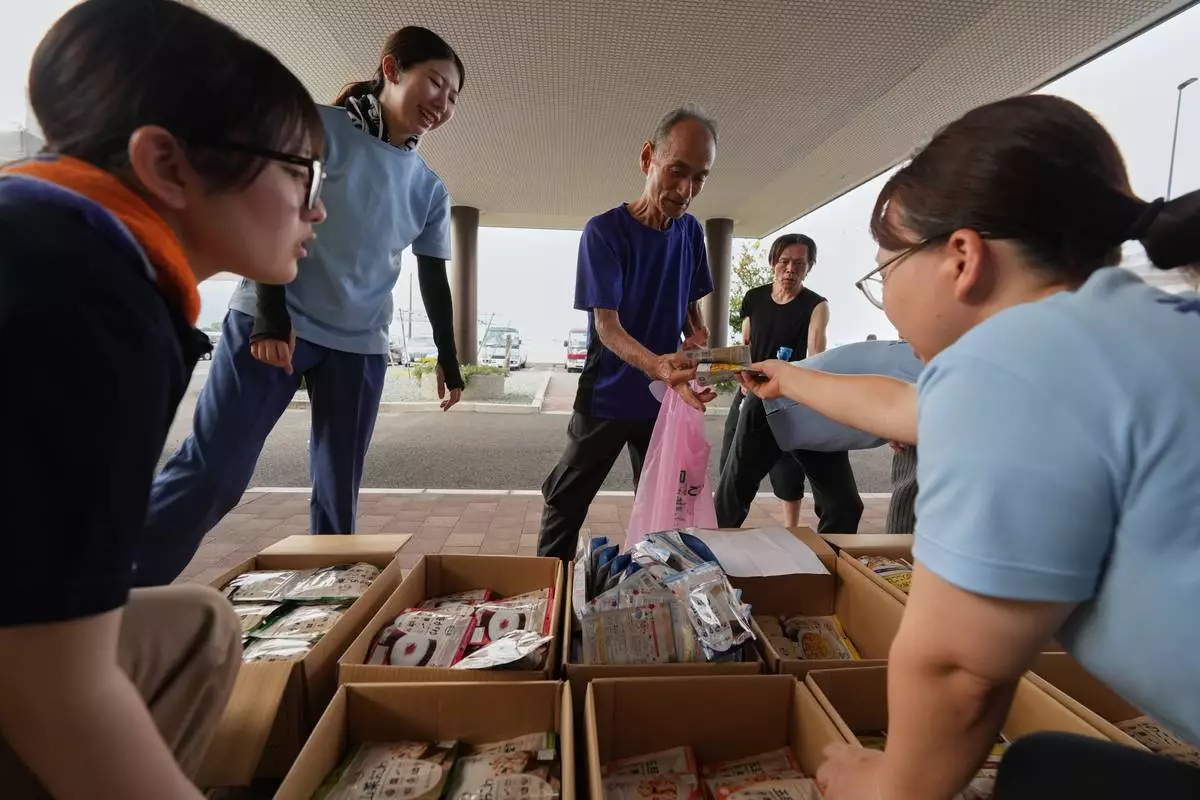
Residents receive food supply following an earthquake in Hikawa, Kumamoto Prefecture, southern Japan, Thursday, July 30, 2026. (AP Photo/Hiro Komae)
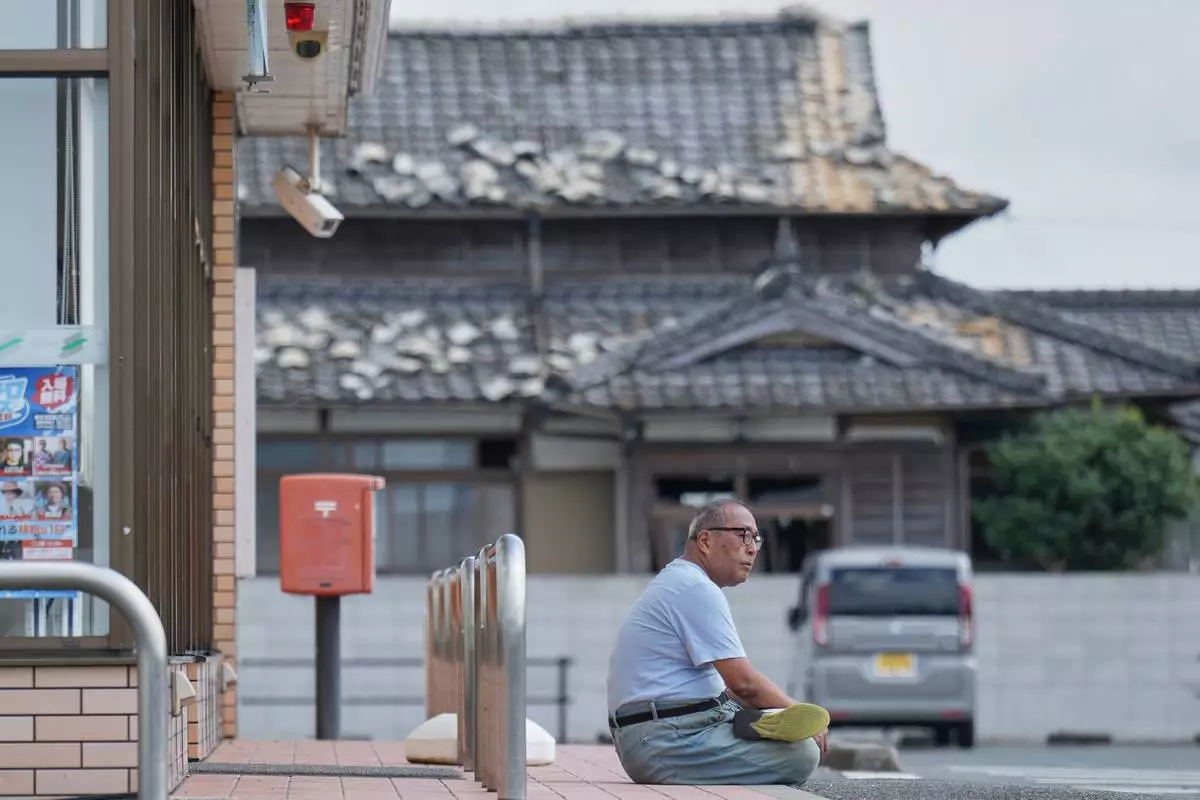
A person sits near a house damaged following an earthquake in Uki, Kumamoto Prefecture, southern Japan, Thursday, July 30, 2026. (AP Photo/Hiro Komae)
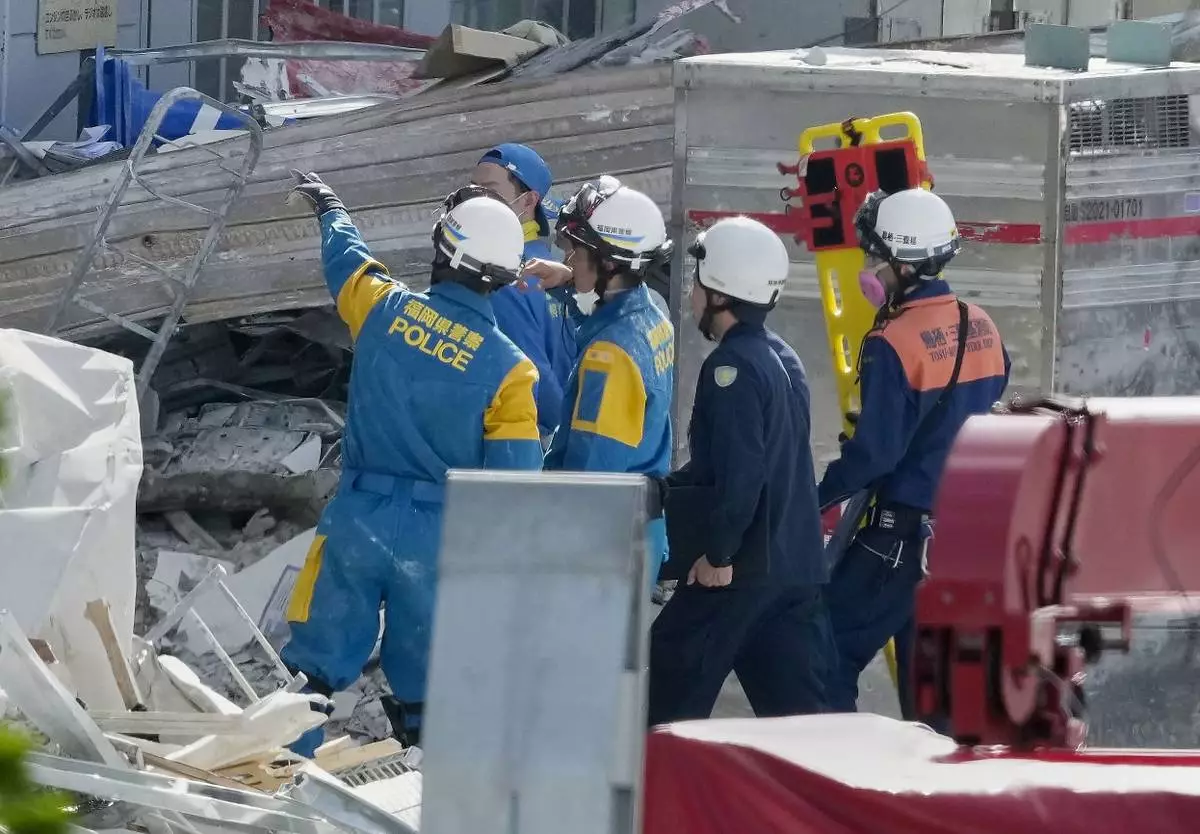
A firefighter carries a stretcher at AEON Mall shopping center, where an explosion occurred following a powerful earthquake, in Kashima, Kumamoto Prefecture, southern Japan, Thursday, July 30, 2026. (Kai Naito/Kyodo News via AP)
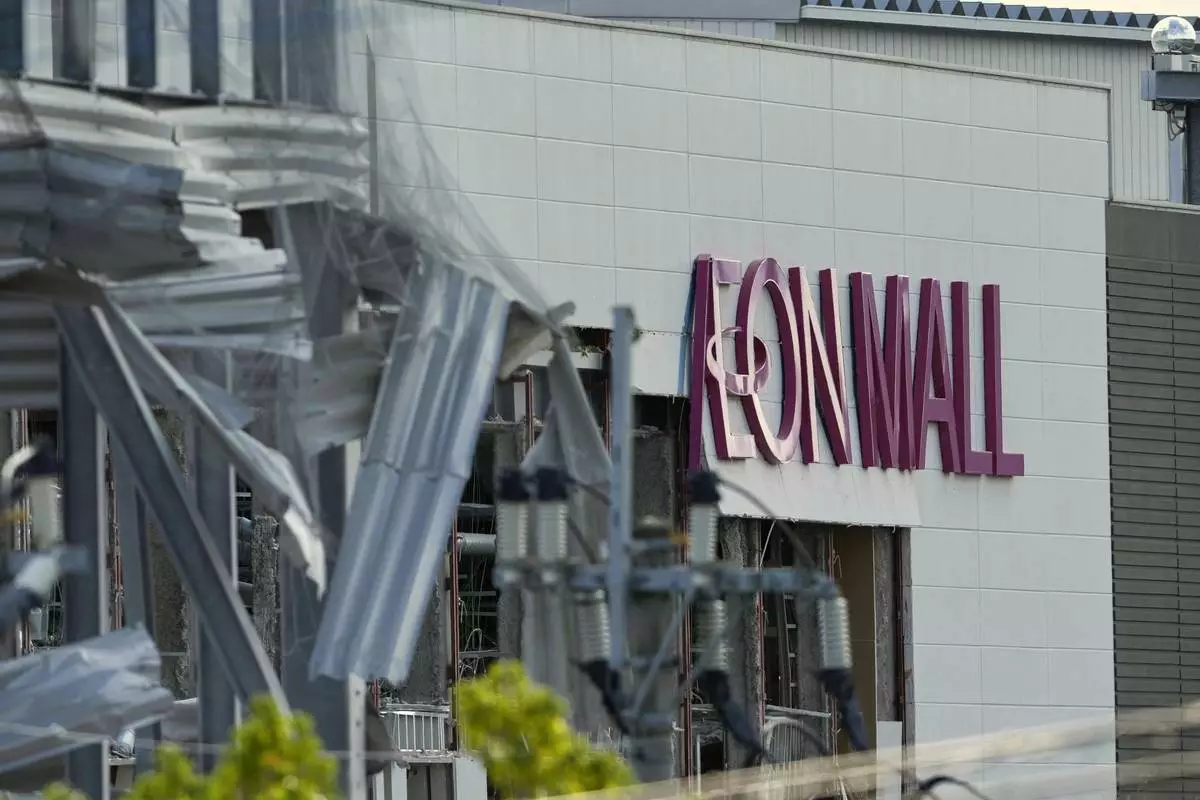
AEON Mall shopping center, where an explosion occurred following a powerful earthquake, is seen in Kashima, Kumamoto Prefecture, southern Japan, Thursday, July 30, 2026. (Kai Naito/Kyodo News via AP)