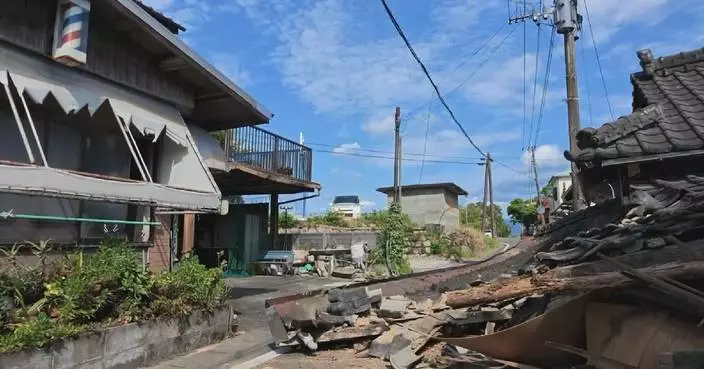
The 7.1-magnitude earthquake that struck Japan's Kumamoto Prefecture on Tuesday caused severe damage to homes and vital infrastructure, disrupting the lives of local residents.
Japanese Prime Minister Sanae Takaichi said Thursday that the death toll from the powerful earthquake in Kumamoto Prefecture has risen to 30.
At a disaster response headquarters meeting held Thursday morning, Kumamoto Prefecture officials said that power outages caused by the earthquakes have affected approximately 22,950 households in the southwestern prefecture.
In Uki City of Kumamoto, one of the hardest-hit areas, many buildings suffered serious structural damage, with some partially collapsing.
"The earthquake caused the ceilings of buildings to collapse and walls to crumble. The whole building is now completely unusable. About 90 percent of the entire house was damaged. Almost all of the damage was caused by the first tremors. After that, only a few fragments fell here and there. All the damage basically was caused by that quake," one resident said.
Kumamoto Prefecture was previously struck by a major earthquake in April 2016. Some residents said Tuesday's quake felt even more powerful than the magnitude 7.0 quake that hit the area in 2016.
"Compared with the earthquake that happened ten years ago, this one was far more severe. It felt like something suddenly shot up from underground with a 'boom' and then dropped back down. I couldn't move at all. When I went outside, the house in front of mine had already collapsed. This earthquake was completely different from the one ten years ago. This was truly terrifying," said one resident.
Beyond damaged homes, the earthquake severely disrupted essential infrastructure, including water and gas supplies, making it difficult for residents to maintain basic living conditions.
"We still have food for today, but I don't know what will happen tomorrow. Especially with this hot weather, I think the most important thing is securing the water supply, for both drinking water and water for the toilet. Also, the gas hasn't been restored yet. Our household uses gas, so we can't cook. I hope the stores can restock more bread, boxed meals, and other food. If those things start running out, I'm really worried about what will happen next," one resident said.
Meanwhile, many locals remain concerned about possible aftershocks.
"If there are more aftershocks, I think these things might fall over, so for now I'm just leaving them as they are. There are also glass fragments and other things, and we'll have to wait and see before deciding what to do. The first thing for us is to restore the basic conditions for normal daily life," said one resident.
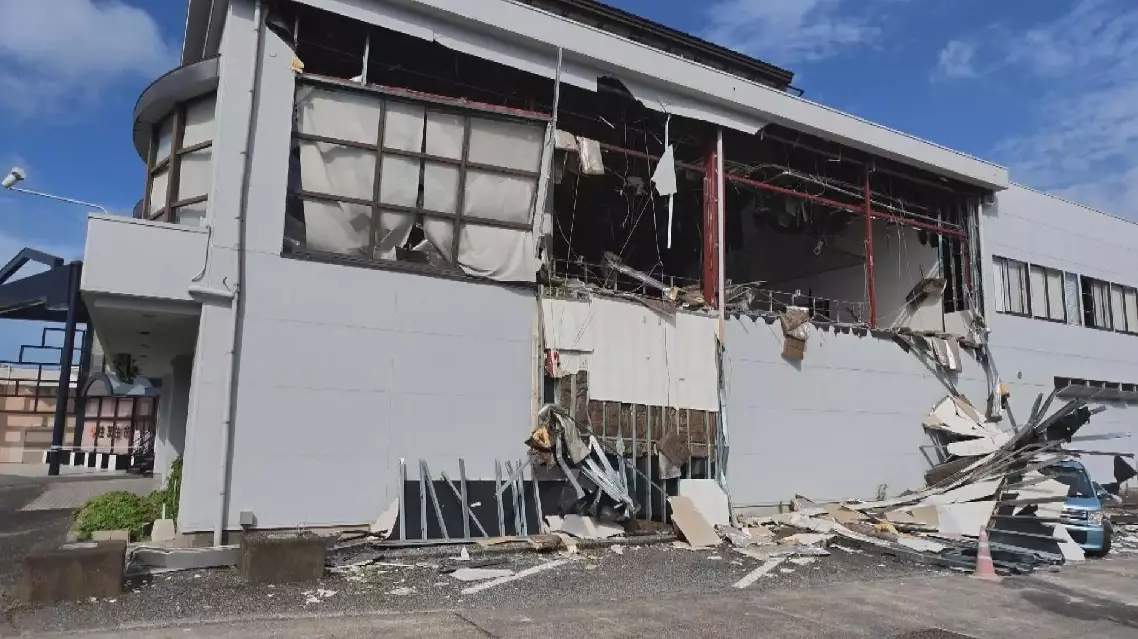
Kumamoto quake causes damage to homes, utilities across prefecture
Kumamoto quake causes damage to homes, utilities across prefecture
Kumamoto quake causes damage to homes, utilities across prefecture
China's sports industry is now positioned as a dynamic growth engine for the national economy, with the General Administration of Sport recently releasing a plan for building a leading sports nation during the 15th Five-Year Plan period (2026-2030).
Setting a target of exceeding 7 trillion yuan (about 1.03 trillion U.S. dollars) in total industry value by 2030, the plan identifies event economy as the core lever for driving sports industry development. It explicitly calls for improving the competitive sporting performances industry chain, and establishing an event economic ecosystem centered on independent intellectual property events.
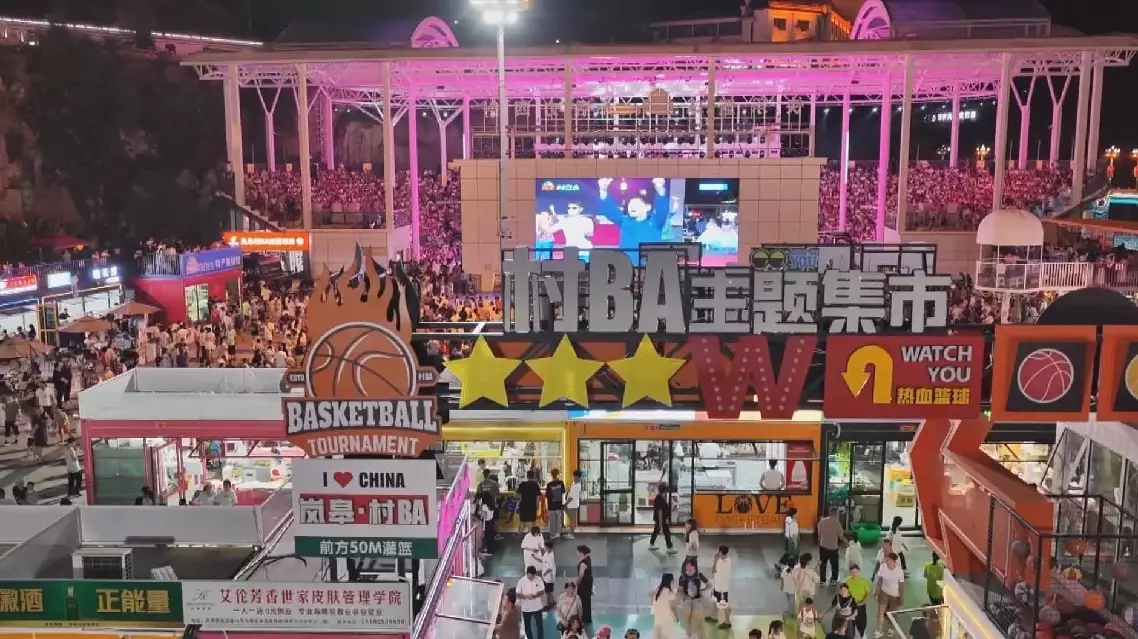
"The plan, on the one hand, leverages the influence and comprehensive driving effect of city leagues such as for football and basketball. On the other hand, it continues to support grassroots mass events such as Village Super League, Village Basketball Association, and Village Volleyball, strengthening the sports event economy at different levels," said Wang Zhaohong, vice dean of the School of Physical Education and Sports at Beijing Normal University.
In Rongjiang County, Qiandongnan Miao and Dong Autonomous Prefecture, southwest China's Guizhou Province, this year's "Village Super League" has reached new heights in scale, with 137 village teams actively participating and more than 520 exciting matches held so far, fully demonstrating the vigorous vitality of mass sports.
The local authorities have integrated the new season's events with intangible cultural heritage performances, creating an entirely new "Village Super League Village Gala". This uniquely rural-flavored event intellectual property has attracted approximately 5.06 million visits over the past six months through the "traveling with events" trend, which led to an increase in the number of visitors by 7.20 percent year on year.
Professional events are equally booming. Since the start of the 2026 season, attendance figures for the Chinese Super League have continued to climb, repeatedly setting records. Tickets to multiple home stadiums including Beijing Workers' Stadium, Chengdu Phoenix Hill Stadium, Dalian Suoyuwan Stadium, and Shanghai Stadium have been sold out like hot cakes. With its overall booming market, the Chinese Super League firmly holds the top spot in Asia for average attendance per match.
"Clubs are no longer focusing solely on 90-minute matches. Instead, through various home venue activities, they are transforming their home grounds into destinations for fan socializing, cultural check-ins, and family consumption, turning fans from 'spectators' into 'participants', and from 'consumers' into 'co-creators'," said Li Kemin, president of the Chinese Professional Football League (CFL).
From hosting international comprehensive sports events to independently creating event intellectual properties, China is innovatively building a distinctive and diversified sports event ecosystem.
"Sports will be an important field for unlocking the potential of service consumption. A single event drives not only ticket consumption, but also related consumption including dining, accommodation, transportation, tourism, and cultural and creative products. Looking ahead to the next five years, sports will be more deeply integrated into economic and social development," said Wei Guoxue, Director of the Strategic Planning Research Office, Institute of Social Development Research, National Development and Reform Commission (NDRC).
China targets 7 trillion-yuan sports industry, building event-driven economic ecosystem