China's exports of robotics, artificial intelligence (AI), and innovative drugs, which all represent the country's new core strategic industries and fresh economic growth engines, saw significant growth in the first half of the year, and are becoming new calling cards on the shipping lists of Chinese-made goods.
Since the beginning of this year, exports of AI products have grown rapidly. From optical fibers and optical modules to servers, products along the AI industry chain now account for more than 50 percent of the increment in mechanical and electrical product exports.
AI technology is no longer confined to standalone hardware exports. It is now exporting algorithms, computing power, and digital solutions to the world.
At a factory in Dongguan City of south China's Guangdong Province, production is in full swing for liquid cooling products used in computing server heat dissipation, with shipments destined for overseas markets. As the Chinese server hardware provider accelerated building its global computing centers, its export orders have continued to surge.
"Our export revenue for the first half of this year doubled, compared with the same period last year. Our export orders for the second half are already booked through the first quarter of next year," said Shan Xiaojun, general manager of Dongguan Liminda Electronic Technology Co., Ltd.
Meanwhile, Chinese robotics exports have formed a complete product echelon, with consumer, industrial, and cutting-edge humanoid robots all flourishing. In the first half of this year, China's combined exports of cleaning robots and bionic robots reached 18.09 billion yuan (about 2.67 billion U.S. dollars), while its industrial robot exports hit 6.29 billion yuan (about 927 million U.S. dollars), up 18.6 percent year on year, with products sold to 141 countries and regions worldwide.
At a robotics company in the eastern Chinese city of Suzhou, a variety of cleaning robots are being tested in different scenarios. It only began production in the first half of this year, but overseas orders are already scheduled through December.
Behind this order growth lies an ever-accelerating pace of innovation. In the Wuzhong District of the city, more than 1,600 upstream and downstream enterprises, including radar, sensor, and core motor suppliers, have clustered around the robotics industry, shortening the supply chain radius to within 10 kilometers.
"Our project cycle has been shortened from nine months to as little as six months. We used to release one generation of products per year, but we can now rapidly iterate and launch two core generations annually," said Wu Qi, global product director of Ecovacs Robotics.
Innovative drugs have also posted impressive export performance. In the first half of the year, the total transaction value of out-licensing deals for Chinese innovative drugs exceeded 100 billion U.S. dollars, setting a new record high. These deals cover 10 therapeutic areas, such as oncology, metabolism, immunology, and neurology, with buyers spanning more than 20 countries and regions, including the United States, the United Kingdom, France, and Italy.
"From the 'old trio' that opened up international markets, to the 'new trio' that consolidated high-end manufacturing, and now to the 'new new trio' to lead the future, the evolution and iteration of three generations of signature products showcase China's systemic leap from the world's factory to 'made in China' and to 'innovated in China', indicating that China is moving from a global manufacturing center to a global innovation hub. This transition will steer China's economy from a 'scale dividend' toward an 'innovation dividend'," said Jin Ruiting, a researcher with the Institute of Foreign Economics under the National Development and Reform Commission.
The 'old trio' refers to labor-intensive clothing, furniture, and home appliances which were the backbone of China's early export boom while the 'new trio' is represented by electric vehicles, lithium-ion batteries, and solar cells which showcase China's competitive edge in the global energy transition. The 'new new trio' is marked by robotics, AI, and innovative drugs.
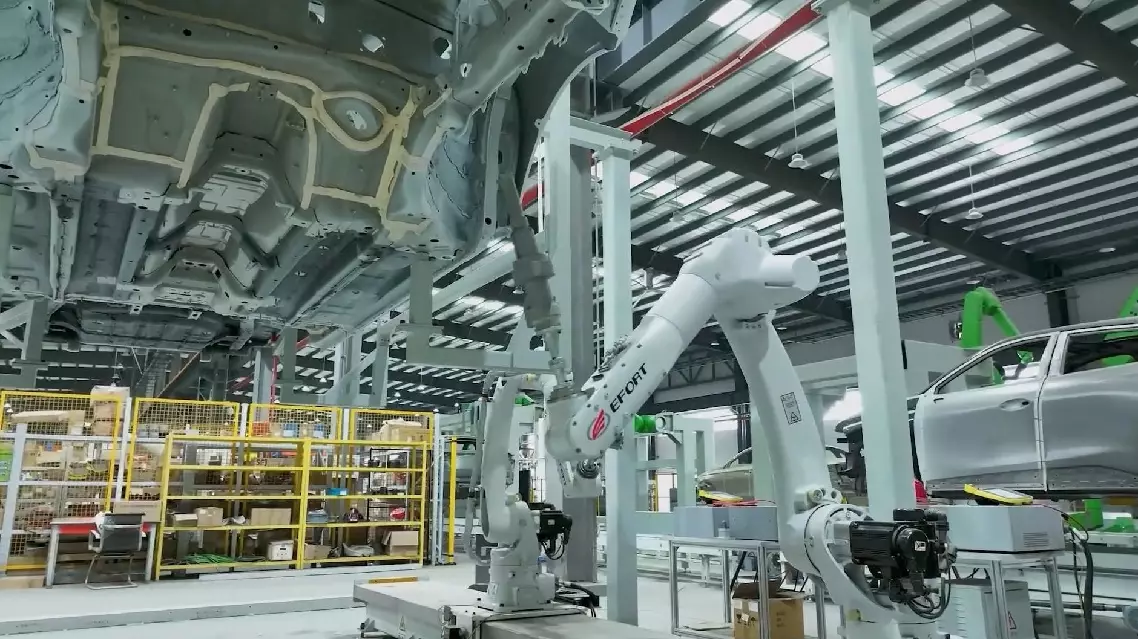
Robots, AI, innovative drugs emerge as China's new export calling cards
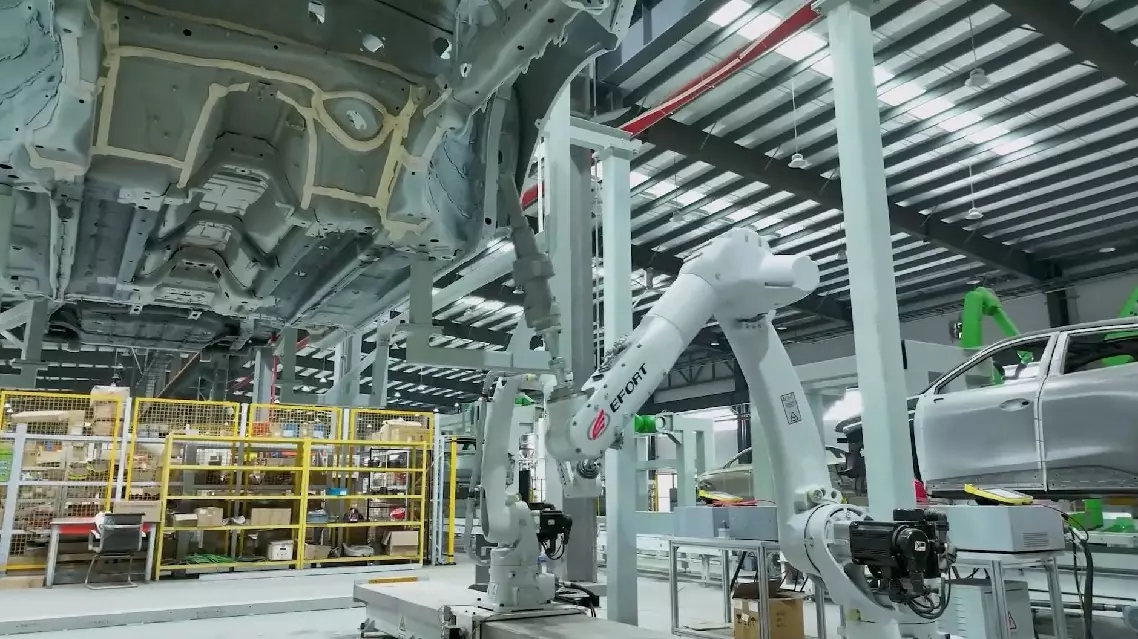
Robots, AI, innovative drugs emerge as China's new export calling card