Demonstrators gathered around the Shimbashi Station in Tokyo on Tuesday afternoon to protest against the government's attempts to undermine the country's pacifist constitution through constitutional revision and military expansion policies.
Since Prime Minister Sanae Takaichi took office last October, the Japanese government has accelerated a series of military expansion measures, including increasing defense spending, deploying long-range missiles, and easing restrictions on arms exports.
Protesters said that the Takaichi government is pushing the constitutional amendments without sufficient public consent. They also stressed that Japan must never again repeat the tragedies of war.
"Shortly after Sanae Takaichi took office, she made erroneous remarks that a potential contingency in Taiwan could constitute a 'survival-threatening situation' for Japan. Instead of seriously reflecting on its past, Japan continues to incite tensions. As a Japanese citizen, I am deeply concerned. For example, they deployed long-range missiles in Kumamoto Prefecture without public consent. I am here today to oppose these actions," said one protester.
"I absolutely do not want the constitutional revision. Once it happens, many of the bills pushed by the Takaichi government will begin to be carried out. While it looks like that these bills will be implemented anyway, my concern is that even worse measures will keep moving forward. I have studied history, so I have a deep-seated fear of this," said another protester.
Protesters also criticized Defense Minister Shinjiro Koizumi's remarks on nuclear-related policies, saying he appears unaware of the risks of nuclear power.
Earlier this month, Koizumi said Japan should discuss nuclear-related policies "without taboo." These developments have been criticized by observers as preparations for war, triggering concern both at home and from abroad.
"I am from Niigata Prefecture, and my home is near the Kashiwazaki-Kariwa nuclear power plant. Koizumi knows nothing, and that's all. Regarding how dangerous nuclear power is, the people of Hiroshima and Nagasaki have been speaking to the public about their experiences and lessons, but Koizumi didn't listen to any of these voices. I feel he never considered us from the beginning," said the first protester.
Japan's current constitution, which took effect in 1947, contains the famous Article 9, under which the country renounces war as a sovereign right of the nation and the threat or use of force as a means of settling international disputes. The article also stipulates that Japan will not maintain war potential, leading the constitution to be widely known as the "pacifist constitution."
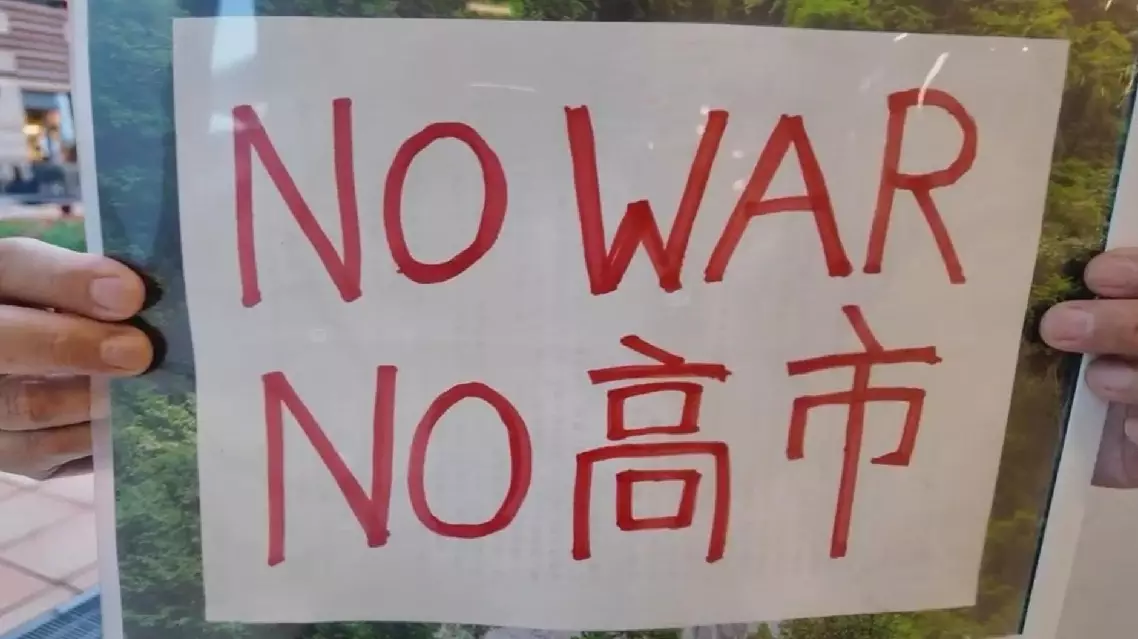
Protesters rally in Tokyo against Takaichi government's push to revise pacifist constitution