Skip to Content Facebook Feature Image

New Mexico AG sues for return of teen forced to cross border by foster care staff

News

New Mexico AG sues for return of teen forced to cross border by foster care staff
News

News

New Mexico AG sues for return of teen forced to cross border by foster care staff

2026-07-31 07:07 Last Updated At:07:10

The New Mexico attorney general is requesting the state's foster care system work to return a 15-year-old American citizen from Mexico after staff took the child to a Texas border crossing and allegedly forced him to walk across the border to be reunited to his estranged mother.

A civil lawsuit filed by state Attorney General Raúl Torrez against New Mexico's Children, Youth and Families Department said its staff drove the minor to El Paso, Texas, on July 6. The complaint, filed July 28, said the youth was instructed to cross the border bridge alone to find his mother, a Mexican national who was arrested on drug-related charges and deported earlier this year.

Torrez’s office is also asking a state judge to issue a temporary restraining order to block future reunifications that involve removing children from the U.S., unless those have court approval.

“The State of New Mexico cannot claim to protect children while abandoning one of its own at an international border,” Torrez said in a news release.

The documents said the child crossed into Mexico, wasn't immediately able to find his mother and then ran back across several lanes of traffic and reentered the U.S.

At that time, U.S. Customs and Border Protection urged New Mexico's child welfare agency to drive the child back to New Mexico, the attorney general's complaint says. But the documents state staff refused and allegedly said the child was now a “Texas problem” before leaving him at the border.

“The most important thing is that the child is safe and living with his mother, who CYFD has been in frequent contact with,” said Jake Thompson, a CYFD spokesperson in a statement Wednesday. “CYFD is reviewing the complaint and the order and will respond to them in court.”

After the border incident, the 15-year-old was left with the Texas Department of Family and Protective Services, the complaint states. Despite efforts to communicate with CYFD, Texas officials were allegedly forced to return the child to his mother in Mexico weeks later, according to the complaint. Email and phone messages to the Texas welfare agency were not returned Thursday.

Torrez said the boy remains in Mexico with his mother despite multiple attempts to reenter the U.S. Torrez called the case part of a broader pattern of neglect within the state’s foster care system and demanded CYFD staff do what they could to repatriate the teenager.

In a statement, CYFD denied the child’s safety was ever at risk and said his mother had requested he be reunited with her in Mexico. They said staff conducted two virtual home visits, concluding the situation was safe for him.

CYFD’s Office of Advocacy includes immigration specialists, which help children reunite with family members in other countries, according to its website.

“There is nothing in New Mexico state law that prohibits reuniting a child with a parent in another country, assuming it is done safely,” said Cristen Conley, director at the Corinne Wolfe Center for Child and Family Justice at the University of New Mexico.

Michael Coleman, a spokesperson for New Mexico Gov. Michelle Lujan Grisham, said the office, which is responsible for overseeing CYFD, has been in regular contact with the agency throughout the case.

“New Mexico and Texas authorities, and a New Mexico judge, independently concluded that the child should be with his mother,” Coleman said in a statement. “The Attorney General’s office is now asking for the child to be returned to New Mexico. The filing does not state where the child will live or who will take care of him if that happens.”

In April, the New Mexico Department of Justice released a 200-page report detailing what it alleged were systemic failures in the welfare agency that meant children were returned to dangerous environments while department staff prioritized reunification over safety. The case also comes as the Trump administration seeks to deport immigrant children by accessing data from the Office of Refugee Resettlement and attempting to bypass previous court rulings.

After the border incident, the teenager contacted the Office of the Child Advocate, an independent government watchdog that monitors the child welfare system, which eventually referred the case to the New Mexico Department of Justice.

The child's parents are two Mexican nationals, but he had been living with his siblings and godmother in the U.S. and hadn't had contact with either parent in years, according to the attorney general's complaint.

According to the complaint, the godmother attempted to send him to Mexico to live with family earlier this summer, but he ran away and ended up at a New Mexico hospital near the border. When he was ready to be discharged in June, the hospital refused to release him to his godmother because she was not the official guardian and instead contacted CYFD. He eventually was placed in foster care, the complaint reads.

Torrez's office alleges that CYFD didn't conduct proper risk assessments of the child's mother and instructed a minor to cross an international border on foot without an adult. Documents also say the child has a heart condition that requires daily medication, but CYFD staff didn't make a sufficient attempt to ensure continued medical care following the reunification.

Schuettler is a corps member for The Associated Press/Report for America Statehouse News Initiative. Report for America is a nonprofit national service program that places journalists in local newsrooms to report on undercovered issues.
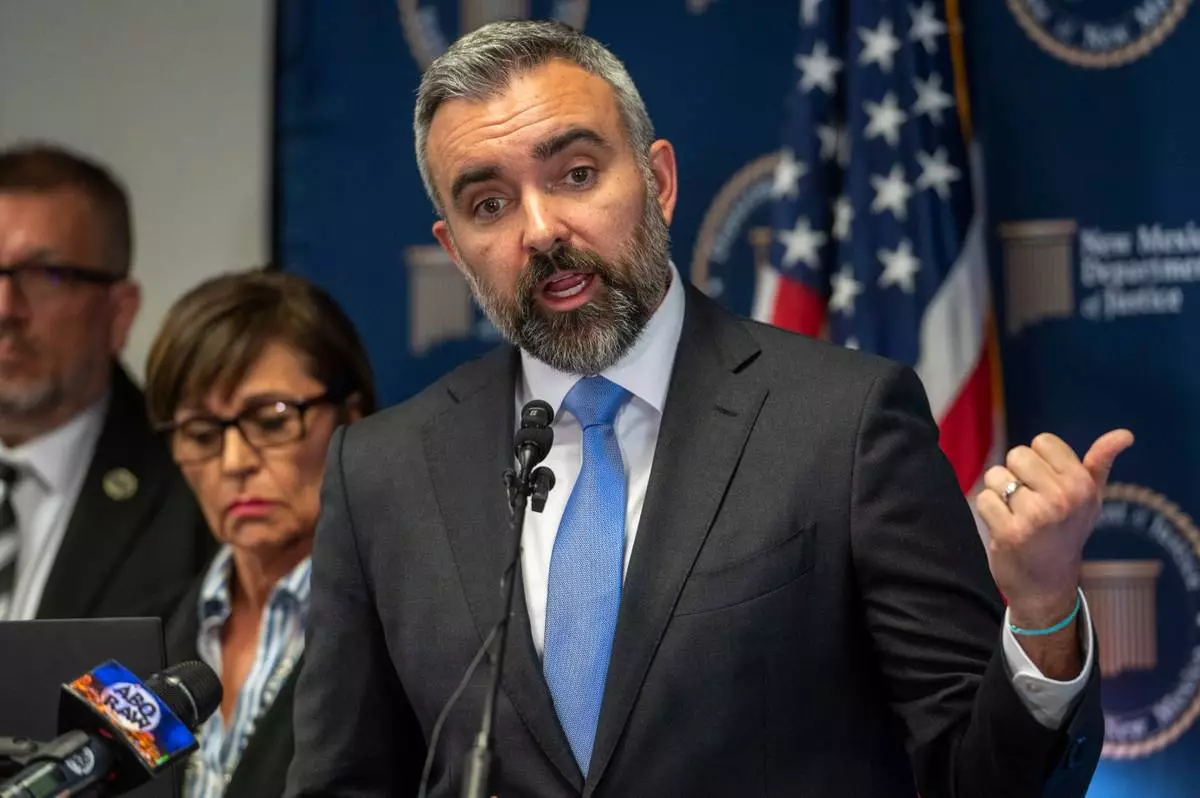
FILE - New Mexico Attorney General Raúl Torrez speaks on Wednesday, May 8, 2024, in Albuquerque, N.M. (Jon Austria/The Albuquerque Journal via AP, File)

FILE - New Mexico Attorney General Raúl Torrez speaks on Wednesday, May 8, 2024, in Albuquerque, N.M. (Jon Austria/The Albuquerque Journal via AP, File)
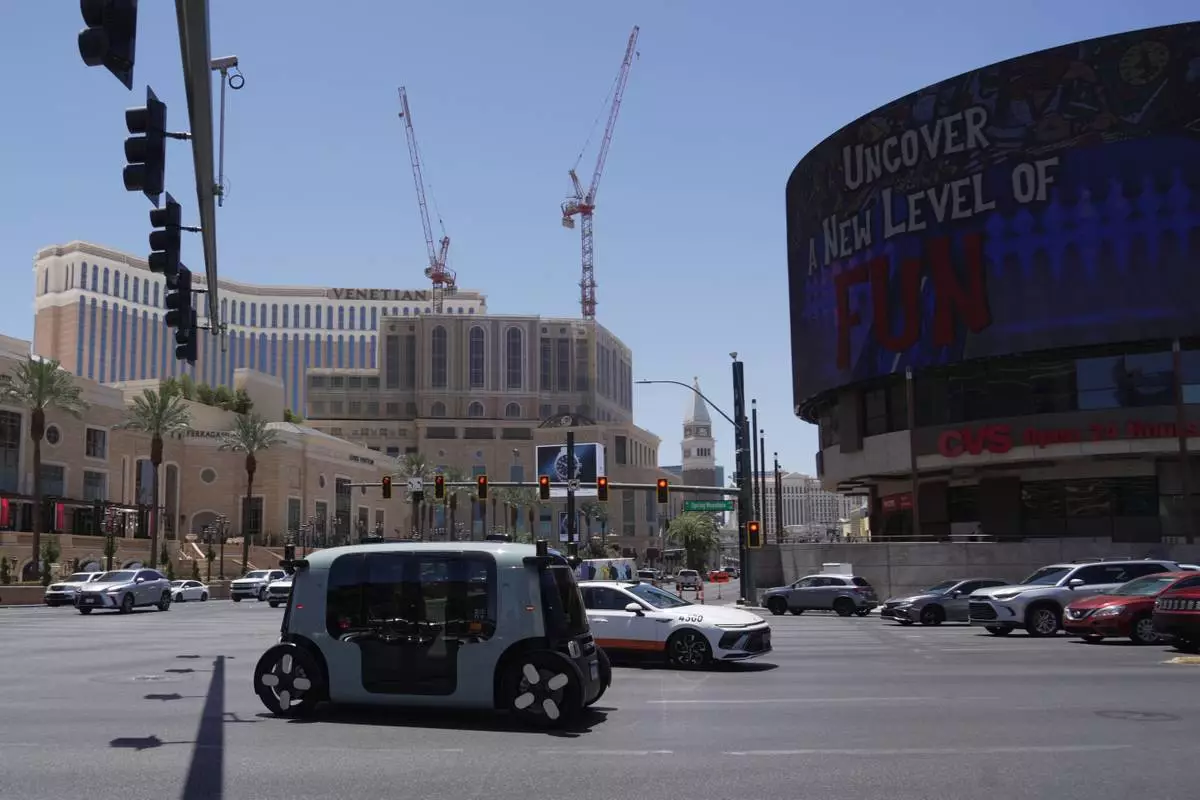
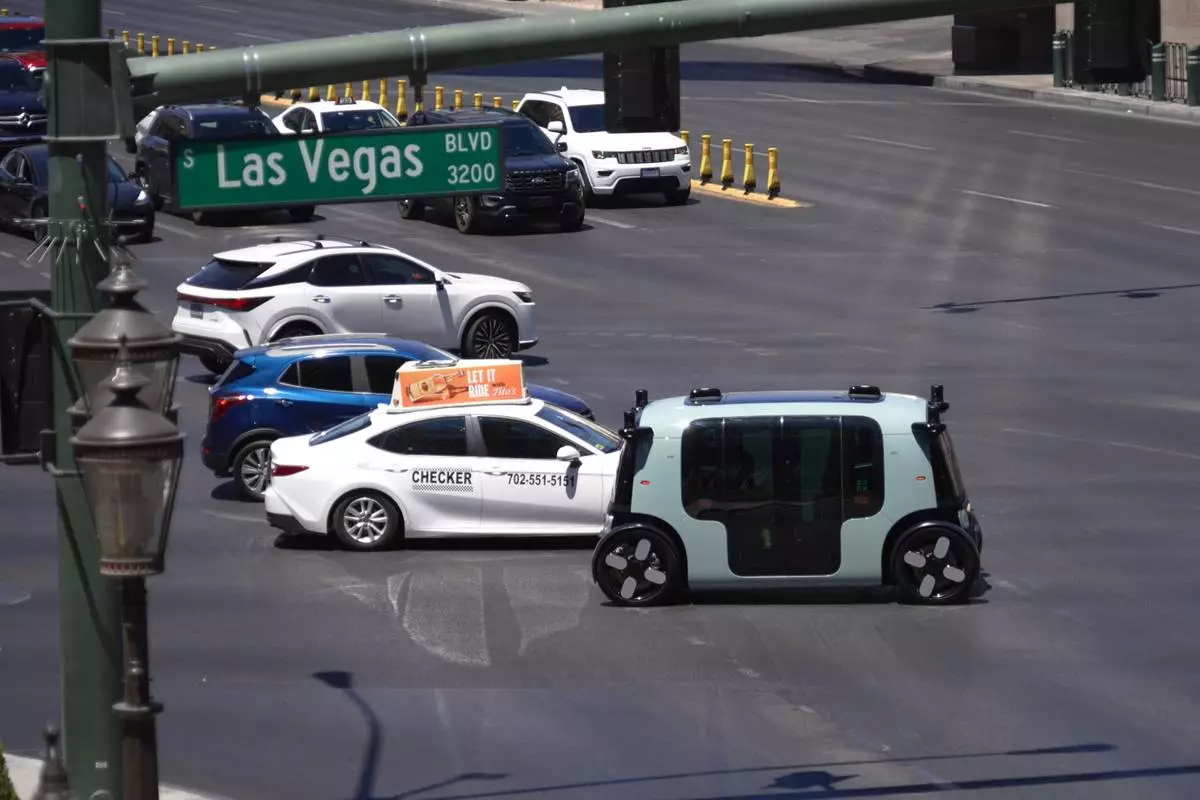
LAS VEGAS (AP) — Federal regulators are clearing the way for robotaxis to operate without manual controls like steering wheels or eventually even brake pedals as the rules start to catch up to the evolving technology.

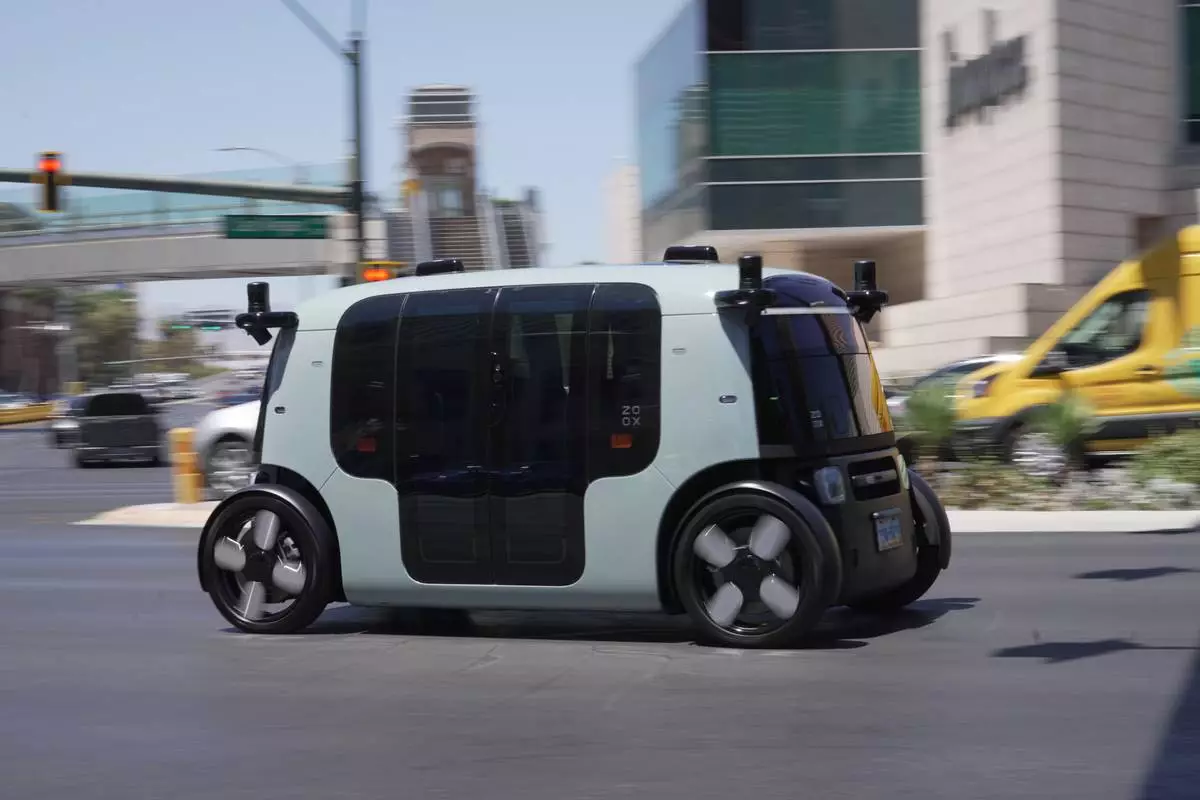
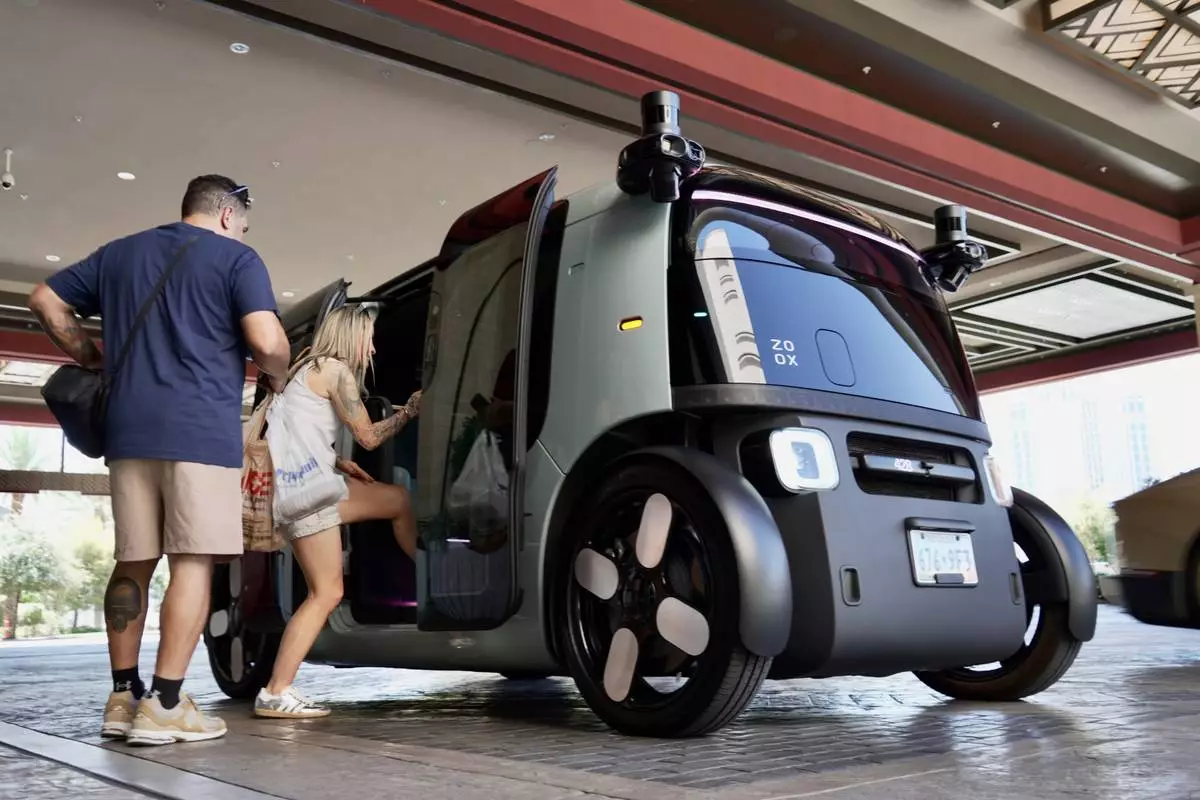
Amazon’s fully autonomous Zoox vehicles got approval Thursday to begin charging customers for rides in the specially designed cars that feature four inward-facing seats once they secure state and local approval. Zoox has already been offering free rides in Las Vegas and San Francisco since last year. At least a couple people were waiting at most stops Thursday afternoon for rides up and down the Vegas strip aboard one of the distinctive boxy-shaped vehicles.

“It’s kind of scary at first, but when I just got used to it, it’s really cool and chilling. I really liked the music and how you can adjust the temperature,” Chloe Huu from Ann Arbor, Michigan, said after taking a ride in a Zoox Thursday. But the projected wait time for the ride kept changing, which made it hard to plan.

The National Highway Traffic Safety Administration also proposed a rule last month to allow robotaxis to operate without brake pedals, but that proposal is still pending. Administrator Jonathan Morrison said his agency wants to update the regulations to fit these fully autonomous vehicles while still acting as the “cop on the beat to make sure that this is being done right.”

Most vehicle safety regulations were written decades ago, always with the assumption that there would be a human driver behind the wheel. But Morrison said that things like steering wheels, windshield wipers and side-view mirrors aren't really needed in an autonomous vehicle.

“If you’re going to be developing a standard in the 1970s, 1980s, 1990s, nobody at that time had this imagination, nobody had a crystal ball that you might have technologies that would enable the vehicle to drive itself,” Morrison said.

The Advocates for Highway and Auto Safety group raised concerns about Zoox’s plan to operate without a steering wheel or other standard controls because the company didn’t provide detailed evidence to show that its vehicles could operate safely on public roads.

“Lots of promises, lots of glossy language, lots of ‘We believe, we think we’ll do this.’ Yet there really was no data behind the promises, and that’s really concerning to us,” said Peter Kurdock, who is general counsel for the Advocates group.

Morrison said this technology does offer the promise of never driving distracted or drunk like human drivers do, but robotaxis have had some problems. Sometimes they're just weird behaviors like stopping in the middle of the road or struggling to get out of a parking lot. But he said NHTSA responded to the incidents of autonomous cars passing school buses or interfering with first responders, with investigations, recalls and calls to action.

“Sometimes we have seen unsafe behaviors, and we jump on that really quickly again. That’s our job at NHTSA,” Morrison said. But he said Americans shouldn't be terribly worried about the safety of these robotaxis.

“By and large we’re really excited about the promise of this technology and we want to see that promise fulfilled,” he said.

The Insurance Institute for Highway Safety said recently that the limited crash data the government requires autonomous vehicle companies to submit makes it hard to assess the safety record of these robotaxis as they continue to expand across the country.

Most companies don't report how many miles their autonomous vehicles drove, which makes it impossible to calculate a crash rate, according to the IIHS. And there isn't a clear standard for which incidents must be reported. So autonomous vehicle companies are reporting many more minor incidents than human drivers, who tend to only report a crash when there is significant damage or injuries.

Zoox and Tesla are working to catch up to the industry-leading Waymo that already operates in multiple cities. Waymo is owned by Google's parent company, Alphabet.

Zoox CEO Aicha Evans said this approval is an important milestone for autonomous vehicles.

“This achievement reflects a shared commitment to enabling innovation while maintaining the highest standards of safety,” Evans said.

Amazon hopes to eventually produce as many as 10,000 robotaxis a year at a plant near Silicon Valley as it works to challenge Waymo. Amazon paid $1.2 billion to acquire self-driving startup Zoox. Initially, Zoox will only be allowed to deploy up to 2,500 vehicles without steering wheels over the next two years as it works to prove the technology is safe. The company said that more than half a million people have already ridden in its vehicles.

AP Transportation Writer Josh Funk reported from Omaha, Nebraska.

An Amazon Zoox taxi with no steering wheel drives down the Las Vegas strip, Thursday, July 30, 2026. (AP Photo/Ty ONeil)

An Amazon Zoox taxi with no steering wheel drives down the Las Vegas strip, Thursday, July 30, 2026. (AP Photo/Ty ONeil)

A Zoox taxi with no steering wheel drives down the Las Vegas strip on Thursday, July 30, 2026 (AP photo/Ty ONeil)

A Zoox taxi with no steering wheel drives down the Las Vegas strip on Thursday, July 30, 2026 (AP photo/Ty ONeil)

A Zoox taxi with no steering wheel drives down the Las Vegas strip on Thursday, July 30, 2026 (AP photo/Ty ONeil)

A Zoox taxi with no steering wheel drives down the Las Vegas strip on Thursday, July 30, 2026 (AP photo/Ty ONeil)

Passengers load into an Amazon Zoox taxi with no steering wheel Thursday, July 30, 2026, in Las Vegas. (AP Photo/Ty ONeil)

Passengers load into an Amazon Zoox taxi with no steering wheel Thursday, July 30, 2026, in Las Vegas. (AP Photo/Ty ONeil)

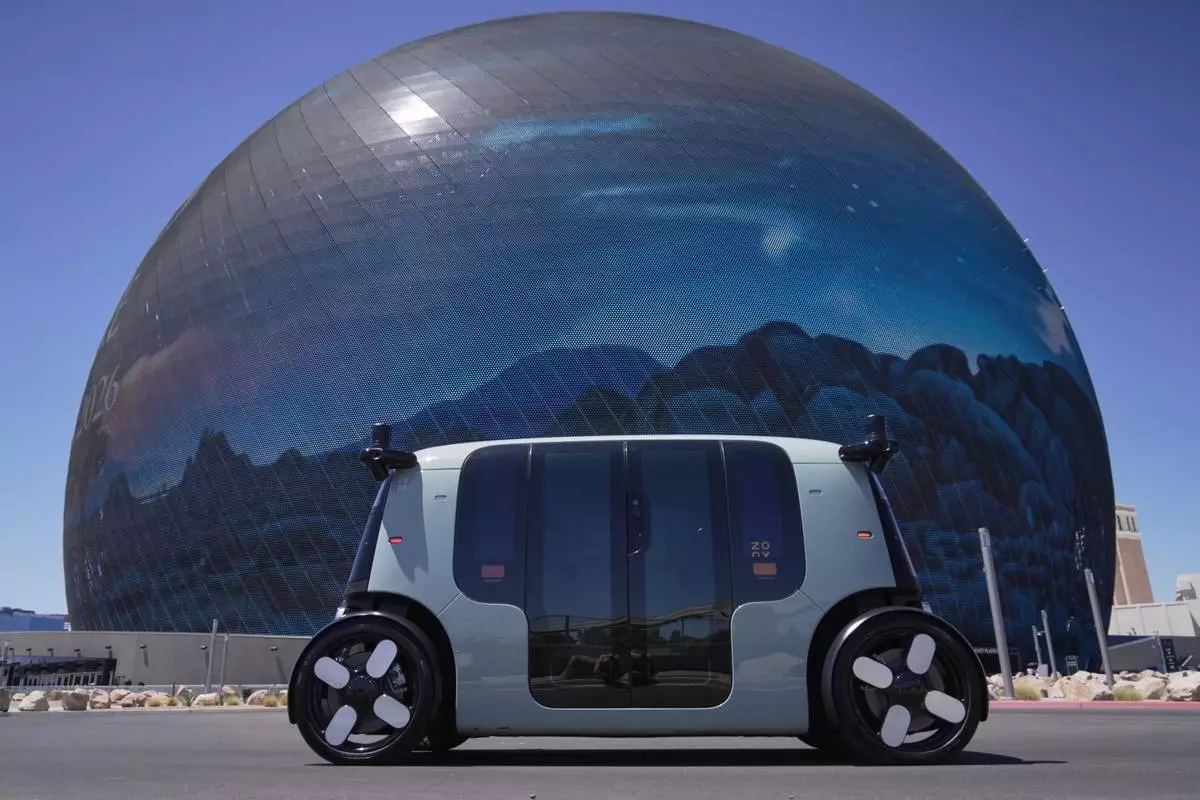
An Amazon Zoox taxi with no steering wheel drives in front of The Sphere on the Las Vegas strip, Thursday, July 30, 2026. (AP Photo/Ty ONeil)

An Amazon Zoox taxi with no steering wheel drives in front of The Sphere on the Las Vegas strip, Thursday, July 30, 2026. (AP Photo/Ty ONeil)

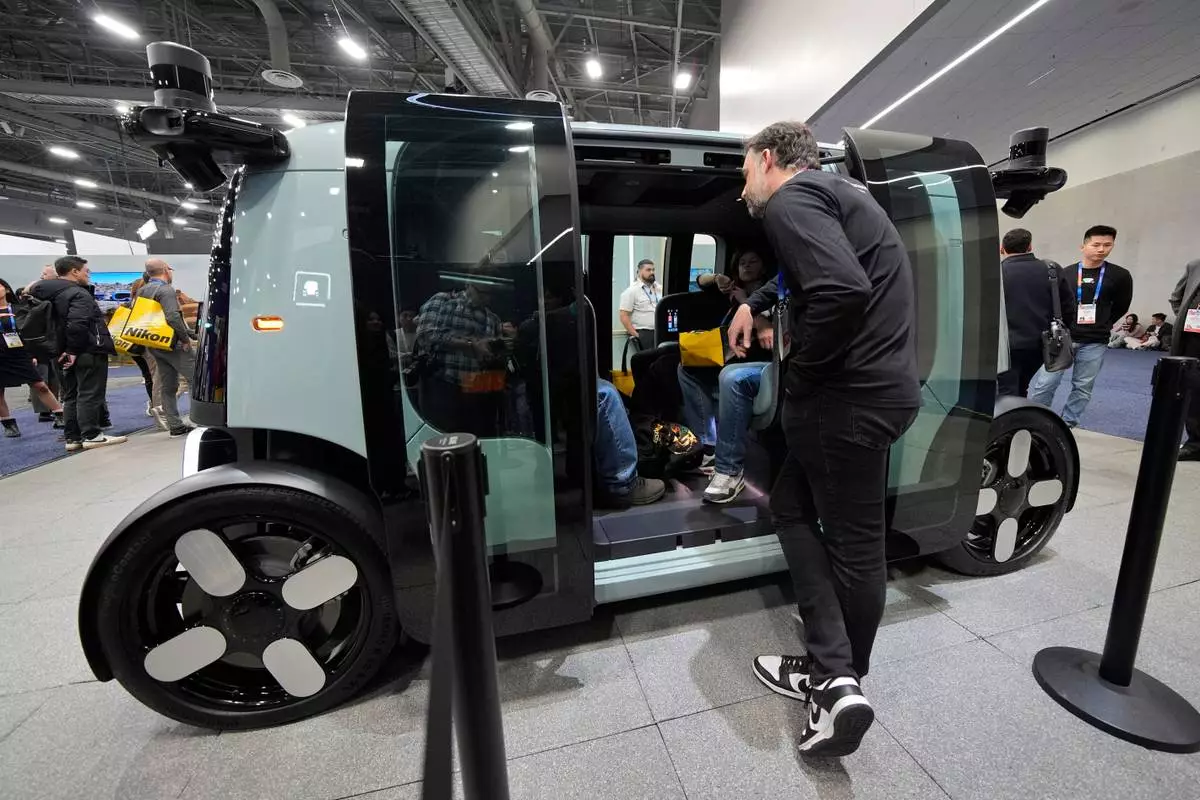
FILE - People view a Zoox self-driving vehicle at the company's booth during the CES tech show, Jan. 7, 2025, in Las Vegas. (AP Photo/John Locher, File)

FILE - People view a Zoox self-driving vehicle at the company's booth during the CES tech show, Jan. 7, 2025, in Las Vegas. (AP Photo/John Locher, File)

Recommended Articles