LD reminds contractors to ensure scaffolding safety during tropical cyclone season
With the approach of the tropical cyclone season, the Labour Department (LD) today (July 31) reminds contractors and site management that they must implement appropriate measures to ensure the stability of scaffolding before the hoisting of tropical cyclone warning signals and after their cancellation, thereby safeguarding the safety of workers.
The Labour Department, Photo source: reference image
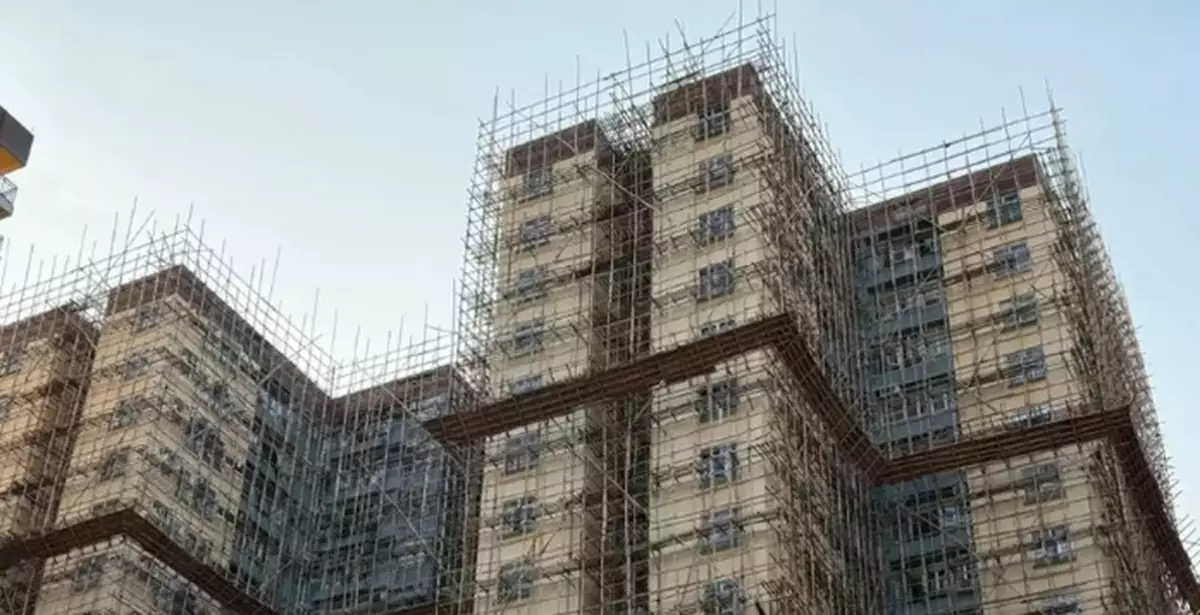
Contractors and site management shall assess the potential risks of scaffolds collapse and implement appropriate precautionary measures as soon as possible before the approach of tropical cyclones. A competent person appointed to carry out inspection and assessment of the structural safety of scaffolds must perform due professional responsibility by inspecting the scaffolds for any defects, and whether they have sufficient strength and stability to withstand strong winds, as well as making a report in a statement to the effect that the scaffolds are in safe working order according to the requirements of the law.
During adverse weather conditions, contractors shall immediately cease work on the scaffolds and arrange for workers to take shelter in a safe place. After adverse weather has passed, contractors and site management shall also inspect the structural safety of the scaffolds and conduct necessary remedial measures to ensure that the scaffolds are stable and safe before use.
Before the approach of tropical cyclones
Before adverse weather, contractors and site management shall ensure that scaffolds have adequate structural strength and stability and take necessary precautions to prevent the scaffolds from collapsing during adverse weather. The precautions include, but are not limited to, the following measures:
(i) Close attention should be paid to weather forecasts issued by the Hong Kong Observatory. Before adverse weather such as tropical cyclones or strong winds, a competent person should be appointed to carry out a thorough inspection of scaffolds and assess whether the number and strength of the typing-in/supporting components connecting the scaffolds to external walls, like putlogs, struts, rakers, bracings, ties and steel support frames, are sufficient. Improvement or enhancement measures should be carried out on the scaffolds as required; and
(ii) Before the onset of tropical cyclones or strong winds, protective screens or canvas of scaffolding should also be lowered and properly tied up or dismantled, with materials kept on the scaffolds removed.
After the passage of tropical cyclones
After scaffolds have been exposed to weather conditions that may have affected their strength or stability or displaced any part of the scaffolds, contractors and site management shall arrange for a competent person to inspect the strength and stability of the scaffolds again and ensure that they are in safe working order before use.
The general duty provisions of the Occupational Safety and Health Ordinance require employers to provide safe working environments, plant and systems of work for their employees. Those who contravene the relevant provisions are liable to a maximum fine of $10 million and imprisonment for two years.
A competent person appointed to carry out inspection and assessment of the structural safety of scaffolds who delivers to a contractor any false certificate or report is liable to a fine of $200,000 and imprisonment for 12 months.
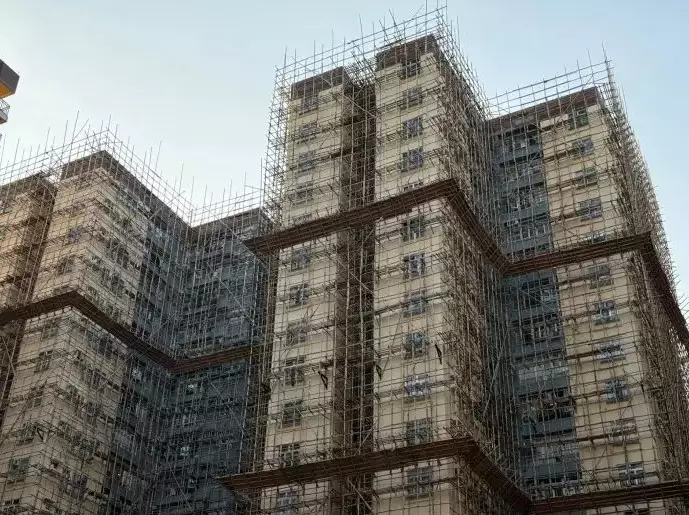
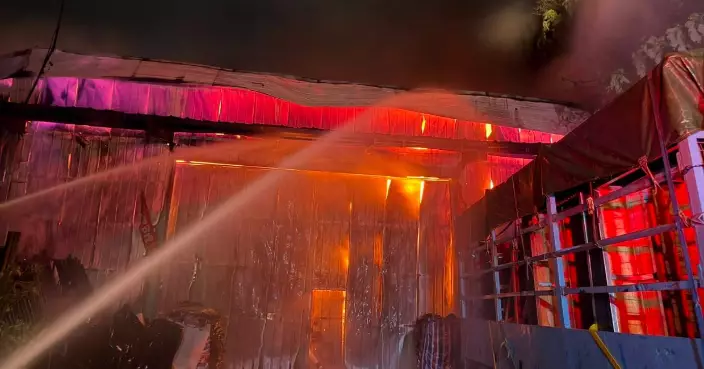
Bamboo scaffolding, Photo source: reference image
Regular quotas for Hong Kong private cars using HZMB to Macao open for application
The Transport Department (TD) announced today (July 31) that a total of 1400 regular quotas for Hong Kong cross-boundary non-commercial private cars using the Hong Kong-Zhuhai-Macao Bridge (HZMB) to Macao (Hong Kong quotas) will be open for application from August 7, making better use of the HZMB's carrying capacity and promoting convenient cross-boundary travel.
This batch of quotas accepts individuals or companies engaged in specific employment or business activities in Macao to apply for individual or company quotas respectively under "quotas with eligibility criteria". All Hong Kong permanent residents and registered companies may apply for "open quotas".
A spokesman for the TD said, "The 'open quotas' not subject to the eligibility criteria were first introduced in May 2026 and were well received by the public and local companies. By relaunching both 'quotas with eligibility criteria' and 'open quotas', we aim to offer different options to enable Hong Kong residents to drive to Macao for work, business, visiting families or sight-seeing conveniently. The Hong Kong and Macao governments will continue to adhere to the principle of making better use of the HZMB's carrying capacity and improve the arrangements concerned, thereby strengthening ties between the two places."
Application details
The 1400 Hong Kong quotas in this batch comprise 400 additional quotas agreed between the governments of Hong Kong and Macao, and 1000 reallocated quotas upon expiry. Details of different categories and their eligibility criteria are tabulated below:
| Category of Hong Kong quotas | Quotas with eligibility criteria (allocated based on existing eligibility criteria) | Open quotas (open to all individuals/companies) |
| Individual quotas | 500 (reallocated quotas) - open to Hong Kong permanent residents who are employed with remuneration in Macao or who have established a registered company in Macao
| 200 (new quotas) - open to all Hong Kong permanent residents
|
| Company quotas | 500 (reallocated quotas) - open to companies registered in both Hong Kong and Macao, or companies registered in Hong Kong that are associated with another company registered in Macao
| 200 (new quotas) - open to all companies registered in Hong Kong
|
| Total | 1 000 | 400 |
(allocated based on existing eligibility criteria)
(open to all individuals/companies)
- open to Hong Kong permanent residents who are employed with remuneration in Macao or who have established a registered company in Macao
- open to all Hong Kong permanent residents
- open to companies registered in both Hong Kong and Macao, or companies registered in Hong Kong that are associated with another company registered in Macao
- open to all companies registered in Hong Kong
The TD reminds applicants that:
- Any individual or company can only hold one Hong Kong quota. Holders of existing individual or company quotas issued in or after July 2024 are not eligible for this batch;
- Each individual or company can only submit one application under quotas with eligibility criteria or open quotas. They will be disqualified if otherwise;
- To further ensure applicants' eligibility, during ballot registration, all applicants must fill in the reference numbers of their valid required supporting documents; and
- Applicants under quotas with eligibility criteria are also required to upload a copy of the required supporting documents (including a valid Business Registration Certificate of a Macao-registered company, a valid Non-resident Worker's Identification Card issued by the Macao Public Security Police Force or a Macao Permanent Resident Identity Card and a valid employment contract with receipts of income covering the recent three months issued by the employer in Macao).
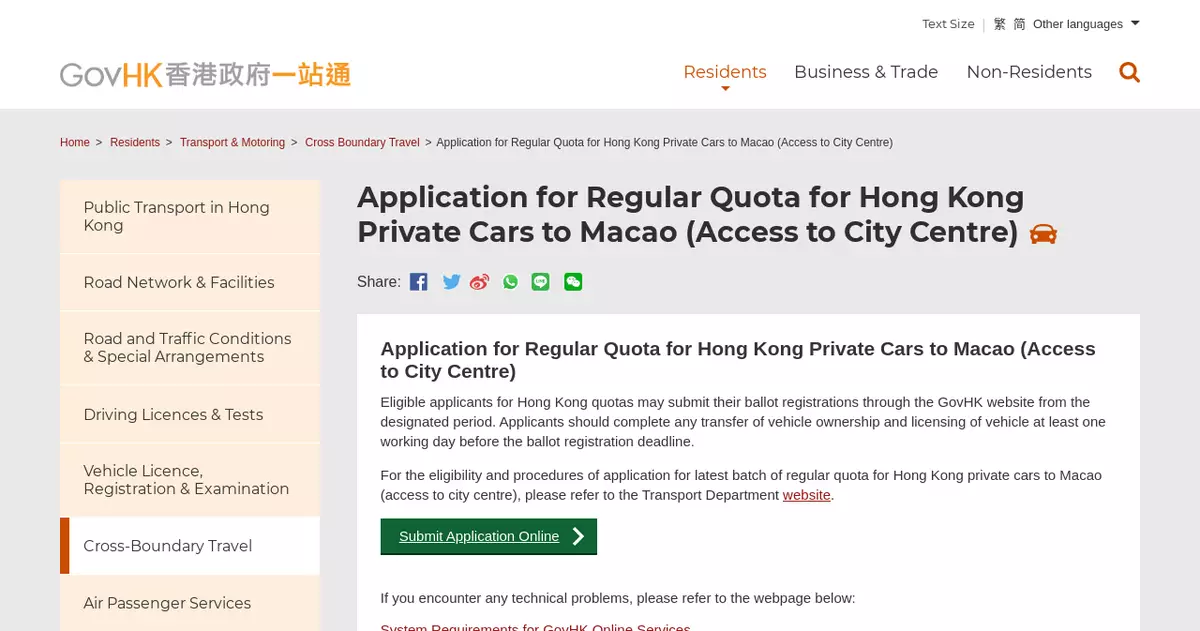
Eligible applicants may submit their applications from 9am on August 7 until 5pm on August 20, 2026, through the GovHK website (www.gov.hk/en/residents/transport/crossboundary/hzmballot.htm), after which a ballot will be conducted. Successful balloting applicants must submit the required documents for the TD's vetting to prove that they have met the eligibility criteria on or before August 20.
Validity period of quotas
The new quotas will be valid starting from September 30, 2026, or after (subject to application progress) until September 29, 2029. The TD will arrange open applications for and reallocation of the quotas upon their expiry.
For details of the application criteria, procedures and licensing requirements of Hong Kong quotas, please visit the TD's website or call the hotline 2804 2600 for enquiries.
Source: AI-found images