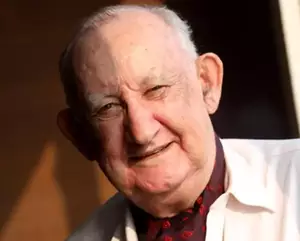
US economist Stephen Roach just can’t help himself. He continues to condemn Hong Kong by syndicating his one-sided opinions to regional newspapers, but changing his tactic by referring to the “old Hong Kong.”
He sits among the few remaining doomsday armchair critics who declare Hong Kong is over, dead since the handover in 1997. But he should know better. In his younger days he was chairman of US investment bank, Morgan Stanley Asia, based in Hong Kong. And now at 80 he is a senior fellow at Yale University’s Jackson Institute for Global Affairs and senior lecturer at Yale School of Management.
His latest outburst has appeared in the Bangkok Post, Manila Times, Mumbai Financial Express and Singapore’s Think China (part of the Singapore Press Holdings' flagship Chinese daily Lianhe Zaobao) to name just a few, all with the same theme “Hong Kong of old is over.”
As a former Hong Kong taipan, Roach is still living in the past. After a considerable backlash from his previous comments about the death of Hong Kong, he is now inferring that all of his previous comments were referring to an unknown past. He doesn’t mention a new Hong Kong, just an old one.
His change in tactic has come about as a result of a barrage of criticism late last year from indignant Hong Kongers and others more knowledgeable in Hong Kong matters, who drew attention to the city’s runaway success as a leading financial center.
While acknowledging Hong Kong’s success, he wrote that beneath the surface, the story is very different. He noted that Hong Kong is just another big Chinese city and that “the Mandarin name Xiānggǎng celebrates the city’s precolonial heritage seems more apt than Hong Kong, a phonetic translation from Cantonese, the city’s long dominant dialect. This dramatic transformation into Xiānggǎng is the real story. Hong Kong’s defenders are in denial about this new chameleon-like identity, instead viewing it as another example of the city’s inherent resilience. Nice try,” he writes.
This shows just how much Roach is out of touch with reality. Hong Kong has been Xiānggǎng ever since China switched to Hanyu pinyin in 1958 to standardize the pronunciation of Mandarin sounds throughout the country. Xiānggǎng is the official Mandarin name for Hong Kong. But for all intents and purposes, Hong Kong is still Hong Kong.
Yes, Hong Kong is another Chinese city, but with very important different characteristics – the rule of law being one of them. Hong Kong inherited Britain’s Common Law system as its legal base, which is different but more recognizable in the West than the Chinese Civil Law system.
But Roach won’t let it go. “The rule of law,” he said,” long regarded as one of Hong Kong’s greatest institutional advantages, has been severely compromised.” He cited the introduction of the national security laws “which stifled open debate.” However, he failed to acknowledge that the law was introduced immediately after Hong Kong was rocked by deadly riots by activists, and external forces. And, ironically, the new national security law for the UK virtually mirrors the Hong Kong law.
He also cites the resignation of six foreign judges from the Court of Final Appeal “calling the independence of the city’s highest judicial authority into serious question.” In this he found an ally in Lord Jonathan Sumption, a China hawk who wrote in the Financial Times that a Mainland strain of judicial patriotism was poisoning the city’s legal system. He did not mention that many resigned simply because of old age and as Canadian judge Beverley McLachlin, who resigned citing her wish to spend more time with her family told the BBC: "I continue to have confidence in the members of the Court, their independence, and their determination to uphold the rule of law.”
Gazing into his dusty crystal ball, Roach believes that the Hong Kong government seems to think that the Chinese-style central planning offers new hope for its economy and recently launched its first five-year plan. “But, as China is painfully learning, such plans can often over-promise and under-deliver. This suggests that until there is a meaningful test of the downside — for the economy or the equity market — any conclusions drawn about Hong Kong’s resilience are premature,” he wrote. He is apparently oblivious of Hong Kong’s ambitious billion-dollar Northern Metropolis project which will transform land, one third of Hong Kong’s total, into a futuristic science hub with universities, hospitals and new town facilities to meet a new population of 2.5 million.
Hong Kong’s Deputy Financial Secretary Michael Wong Wai-lun, without referring directly to Roach, rebutted: “Some critics appear to be driven by bias against China rather than objective analysis. Their criticism is neither backed by evidence nor aligned with facts. On the contrary, investors and talent have full confidence in Hong Kong, drawn by our global connectivity and international character.”
Just the other day, Roach wrote, a leading reporter messaged me: “Hong Kong is over’ seems over. What would you say about it?” Well, let me be clear: the Hong Kong of old is, indeed, over. Go to Xiānggǎng and see for yourself.”
Much of Roach’s ramblings is old news and repeats of what he has said before. There is nothing new in his latest outbursts. He appears to be an old man living in the past without acknowledging the present or future.
Mark Pinkstone
** 博客文章文責自負,不代表本公司立場 **
It is said that sport promotes a healthy body, a healthy mind…and a healthy economy. In Hong Kong’s case that is worth about HK$51 billion (US$6.5 billion), or 1.5 per cent of our $3.4 trillion (US$ 434.2 billion) gross domestic product.
On top of that, it provides for about 84,000 jobs, according to figures released by the Census and Statistics Department.
Already Hong Kong draws on a fine reputation for hosting international sporting events, such as the Rugby Sevens, ATP and WTA tennis championships, the LIV golf tournament, equestrian events, snooker championships to name just a few. Every month The Leisure and Cultural Services Department’s calendar is filled with sporting events, both local and international, to keep sporting facilities fully booked.
Due to its high class sports facilities, low tax regime, location as the center of Asia and lifestyle appeal, Hong Kong has attracted super stars like snooker champions Ronnie O’Sullivan, Judd Trump and Jimmy White to take up residence here under the government’s Quality Migrant Admission Scheme (QMAS). The Scheme is designed to attract highly skilled or talented persons to settle in Hong Kong to enhance the city's economic competitiveness. Applicants are not required to have secured an offer of local employment before applying for entry or being admitted to Hong Kong for settlement under the Scheme. Accordingly, the trend is continuing as high-profile figures continue to join the city's registry. More than 100 active and retired international athletes have relocated to Hong Kong under these programs in recent years, and officials continue to process applications from prominent global sports icons.
A number of sports events in Hong Kong have been given an “M” (for Mega) ranking by the Major Sports Events Committee for their ability to draw in large international followers, thus adding to the city’s tourism coffers. The ranking is for world-level events and goes with dollar-for-dollar matching grants from the government with funding based entirely on the event’s quality, media coverage and economic tourism potential.
Events which have received the “M” rating, and thus government financial support, includes the ATP and WTA tennis tournaments, rapid and blitz chess championships, international dragon boat races, volleyball nations league, the international invitation horse racing event, fencing world championships and, of course, the famed Rugby Sevens, Rugby Sevens which last year generated some HK$780 million (US $100 million) to the city’s economy.
All “M” events are a magnet for drawing foreign visitors to Hong Kong. For example, the Rugby Sevens earlier this year drew in about 150,000 foreign visitors and rising Filipina tennis star Alex Eala, who has taken the US open by storm, filled the 15,000 seat Wimbledon Centre Court with her fans, many of whom are expected to follow her to Hong Kong for the Prudential WTA Open in November.
Hong Kong’s HK$30 billion Kai Tak Sports Park with its 50,000-seat stadium drew 2.4 million spectators in its first year of operation. The main stadium is built to serve as a multi-purpose mega-venue. Overcoming Hong Kong's unpredictable summer weather it is equipped with a retractable roof and advanced climate control, to host premier sports tournaments alongside massive pop concerts.
Hong Kong’s role in the Greater Bay Area (GBA) provides an ideal opportunity for greater interplay between the nine cities in Guangdong and the Special Economic Zones of Hong Kong and Macao. Prime examples would be the 15th National Games and historic cross-border marathons and cycling races, where athletes seamlessly travel across Guangdong, Hong Kong, and Macao. The lead for cross-border sport is being taken by the Hong Kong Jockey Club, which has made major proposals in our first Five Year Plan for Economic and Social Development, by transforming the GBA into an international equestrian and equine sports hub.
The club envisions a seamless multi-destination racing tourism circuit that links its world-class facilities in Sha Tin and Happy Valley with the Conghua Racecourse in Guangzhou. To further solidify this ecosystem, the proposals suggest expanding Hong Kong's successful disease-free zone management and biosecurity protocols to other regions in the mainland, such as Xinjiang.
Under this equine hub framework, the club also advocates establishing a World Organization for Animal Health collaboration center in Hong Kong and advancing institutional connectivity by expanding the mutual recognition of veterinary qualifications across the border.
Both the Outline Development Plan for the Guangdong Hong Kong-Macao Greater Bay Area and the Culture and Tourism Development Plan for the Guangdong-Hong Kong Macao Greater Bay Area gives a fresh impetus to the development of the tourism industry within the GBA. With the platform of the Tourism Federation of Cities in the GBA, the Tourism Commission has been actively fostering co-operation with the tourism authorities of the Macao Special Administrative Region and the nine Chinese Mainland cities in the GBA in developing more “multi-destination” tourism products.
As the consultation scope of the Five-Year Plan has been wide to incorporate most of Hong Kong’s society, tourism leaders including event organizers, travel agents, hotels and airlines have been promoting an integrated culture-sports-tourism synergy as a total package in fostering tourism to Hong Kong.
By working together as an industry and with our neighbors, Hong Kong becomes an even more attractive sports destination offering packages for foreign visitors to stay longer in this Pearl of the Orient.